

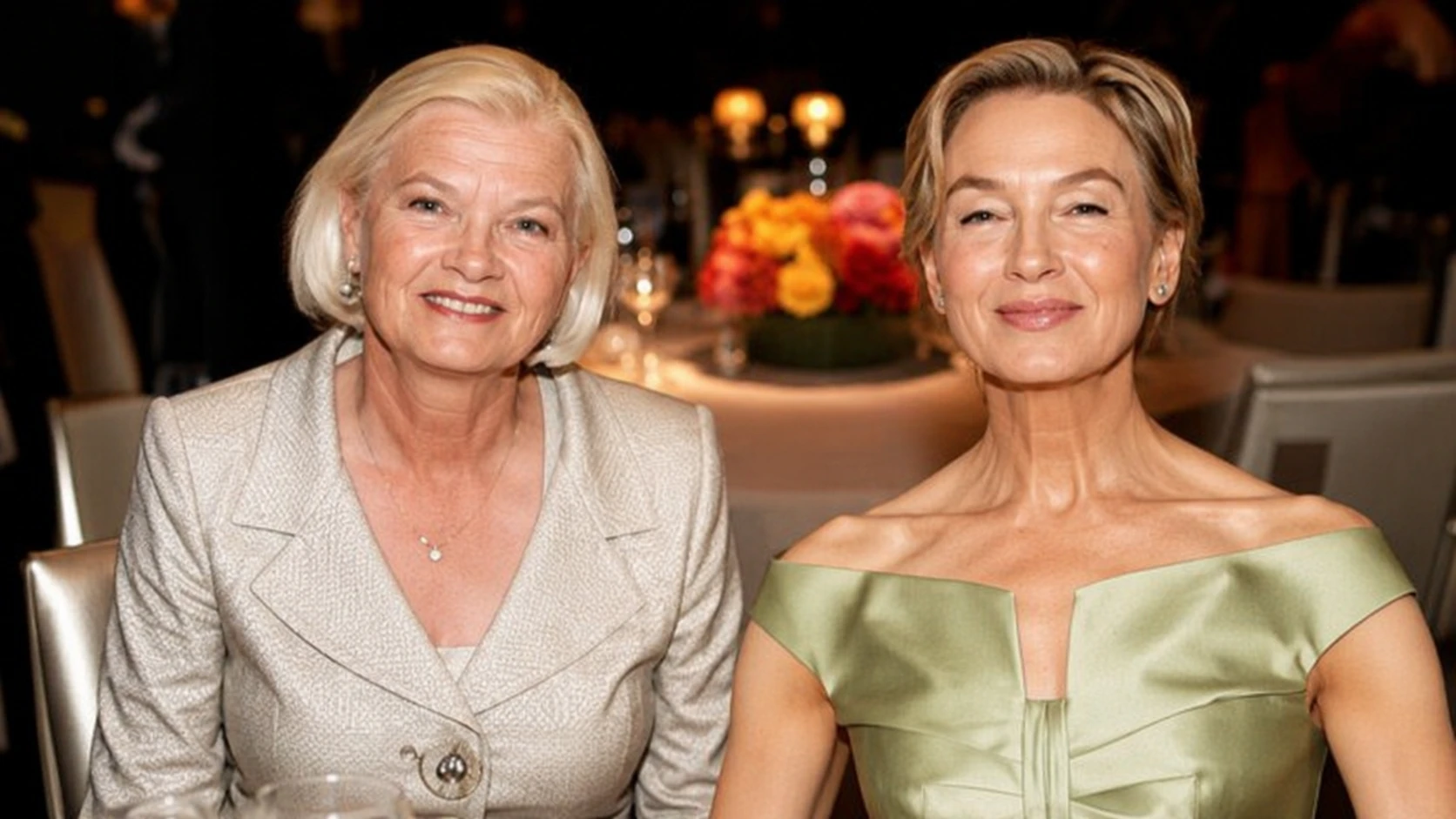
Kjellfrid Irene Andreassen is best known to the public as the Norwegian-born mother of Renée Zellweger, but that description captures only a narrow part of her life. Before her daughter became an Academy Award-winning actor, Andreassen had already lived through a childhood shaped by wartime Norway, trained in health care, crossed the Atlantic, married a Swiss engineer, and built a family in Texas. Her story is not one of celebrity in the usual sense. It is the quieter biography of a woman whose influence is most visible through the values, endurance, and family history her daughter has often credited.
The public record around Andreassen is limited, and that matters. She did not build a career in public life, did not court attention, and has not been the subject of an authorized biography. Much of what is known comes from reputable profiles of Renée Zellweger, Norwegian reporting, public biographical summaries, and Zellweger’s own comments about her parents. A careful biography of Kjellfrid Irene Andreassen therefore has to do two things at once: tell the story clearly, and resist filling private spaces with invented detail.
Early Life in Northern Norway
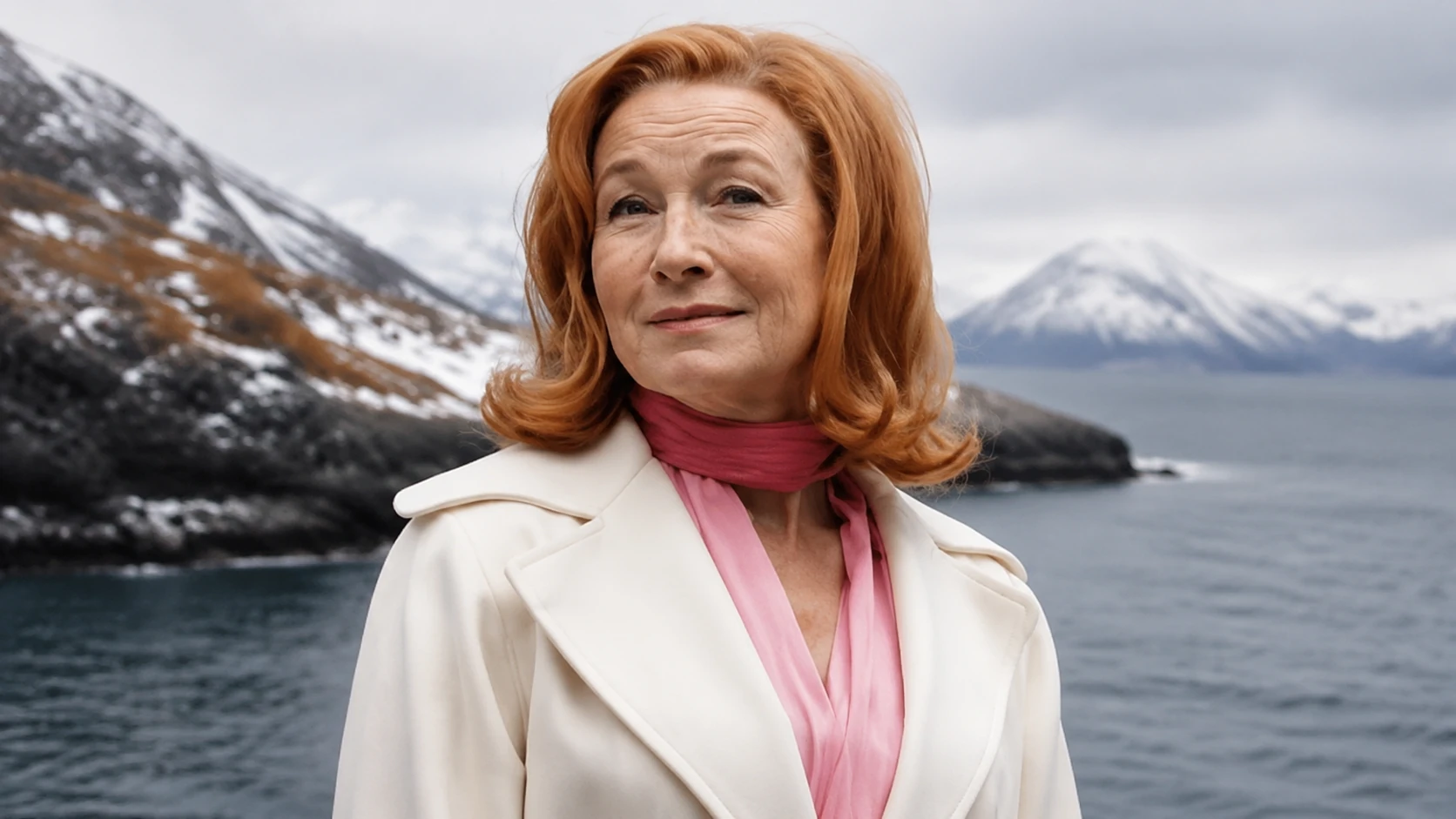
Kjellfrid Irene Andreassen was born in Norway, with Norwegian reporting placing her roots in Finnmark, the country’s far northern region. Finnmark is not just a point on a map; it is a place marked by borderland history, harsh climate, wartime destruction, and overlapping Norwegian, Finnish, Kven, and Sámi cultural currents. Public sources have sometimes connected Andreassen with the area around Vadsø and Ekkerøy, though not every local detail has been documented with the same level of certainty. What is firm is that she came from northern Norway, a region whose history helps explain the resilience later associated with her family story.
Her childhood fell against the backdrop of the Second World War and the German occupation of Norway. Renée Zellweger has spoken publicly about her mother’s wartime memories, including the danger children encountered in occupied Norway. Those recollections give Andreassen’s early life a gravity that celebrity-family summaries often miss. For a child in northern Norway during that period, fear and scarcity were not abstractions; they were part of the everyday world.
The war left deep marks on Finnmark. During the German retreat in 1944 and 1945, much of the region was destroyed through scorched-earth tactics, and many communities were emptied or burned. Andreassen’s own exact childhood experiences are not publicly documented in full, so it would be wrong to narrate them as if every scene were known. Still, the larger historical setting is clear enough to understand why Renée Zellweger has described her mother as someone formed by hardship, discipline, and survival.
Education, Nursing, and Early Ambitions
Andreassen trained for a serious working life at a time when nursing offered women both purpose and independence. She is widely described as a nurse and midwife, and Norwegian reporting has connected her with work at Rikshospitalet in Oslo. That detail matters because it places her not simply in domestic biography, but in a demanding profession built around skill, composure, and care. Nursing and midwifery were practical callings, but they were also intimate forms of service at life’s most fragile moments.
Her move from northern Norway to Oslo suggests ambition and adaptability, even if the public record does not preserve her private reasons. For a young woman from Finnmark, working in the capital would have meant a move into a larger professional world. It would also have meant leaving the familiar rhythms of the far north for an urban medical setting. Those transitions are easy to flatten in retrospect, but they often require courage long before anyone calls them remarkable.
Some public biographical summaries also describe Andreassen as having worked as a governess, especially in connection with her eventual move to the United States. That claim appears often enough to mention, but it is less securely documented than her nursing and midwifery background. The safest account is that Andreassen’s early working life centered on care, both medical and possibly domestic. In either form, her labor belonged to the kind of work that keeps families and communities functioning while rarely making headlines.
Meeting Emil Erich Zellweger
Kjellfrid Irene Andreassen married Emil Erich Zellweger, a Swiss-born engineer who became Renée Zellweger’s father. Public accounts agree on the broad outline: a Norwegian woman and a Swiss man met in Europe, married, and later built their family life in the United States. Some reports describe their meeting during travel by boat, while Norwegian coverage has linked it to a coastal journey. The exact details vary, which is common in family stories that have been retold through interviews rather than preserved in a single official record.
Their marriage brought together two European backgrounds. Andreassen came from Norway, while Emil Zellweger came from Switzerland and worked in engineering. Their partnership later became part of Renée Zellweger’s public account of her own identity: a Texas-born daughter of immigrants whose parents carried different languages, customs, and memories into American life. That combination gave the Zellweger household a distinct family texture, even as the children grew up in Texas.
The couple’s move to the United States fits the postwar pattern of educated and working Europeans seeking opportunity abroad. For Andreassen, that meant leaving Norway behind and building a new life in a country whose language, customs, and distances were different from the world she knew. For Emil, engineering work connected the family to Texas industry and the Gulf Coast economy. Their American story was not glamorous at the start; it was practical, hopeful, and built through work.
Immigration and a New Life in Texas
Andreassen’s move to the United States brought her to Texas, where she and Emil Zellweger eventually raised their children. Their daughter Renée was born in Katy, Texas, in 1969, and her older brother Drew was born before her. The family lived in a world far removed from northern Norway’s fishing villages and Switzerland’s Alpine geography. Texas gave their children an American childhood, but the household still carried the memory of Europe.
Immigration is often described in broad, heroic language, but the lived reality is usually more ordinary and more difficult. Andreassen had to adapt to new social codes, a different health care system, a different climate, and a culture that could be both welcoming and isolating. She was not entering America as a celebrity or public figure. She was a working woman, wife, and mother making a life in a place where her past was not always visible to others.
Renée Zellweger has described her parents as believers in the American dream, and she thanked them in that spirit during her 2020 Academy Awards acceptance speech. The line resonated because it connected her success to the lives that made it possible. Behind that public moment was the quieter reality of two immigrants who had crossed oceans and languages before their daughter ever walked onto a film set. Andreassen’s biography is inseparable from that wider family journey.
Marriage, Children, and Family Life
Kjellfrid Irene Andreassen and Emil Erich Zellweger raised two children, Drew and Renée. Drew Zellweger has lived outside the intense spotlight that surrounds his sister, while Renée Zellweger became one of the most acclaimed actors of her generation. The family was based in Texas, where Renée grew up in Katy and later attended the University of Texas at Austin. That Texas upbringing became a core part of her public image, even as interviewers often showed interest in her European surname and family background.
Andreassen’s role as a mother is mostly known through Renée’s reflections rather than through Andreassen’s own interviews. Zellweger has spoken with affection and respect about both parents, often emphasizing their immigrant experience and work ethic. She has also linked her mother’s wartime childhood to a sense of perspective that shaped the family. Those comments suggest a household where gratitude, endurance, and self-reliance mattered more than showy ambition.
There is a temptation, in celebrity biography, to turn parents into simple explanations for their children’s success. That would be too easy here. Andreassen did not “produce” a movie star as if fame were the inevitable result of parenting. What she appears to have given her children was steadier and more useful: a model of discipline, adaptability, and seriousness about life.
Renée Zellweger and the Public Family Story
Renée Zellweger’s fame brought Kjellfrid Irene Andreassen’s name into public view. Zellweger broke through in the 1990s, became widely known through films such as Jerry Maguire, Nurse Betty, Bridget Jones’s Diary, Chicago, Cold Mountain, and later Judy, and won two Academy Awards. As her profile grew, journalists became curious about her family background. That curiosity turned Andreassen from a private mother into a recurring footnote in entertainment profiles.
The family story appealed to journalists because it complicated the surface image. Renée Zellweger was often seen as a Texas actor with an all-American screen presence, yet her parents were European immigrants. Her mother’s Norwegian roots and father’s Swiss origins gave reporters a richer background to discuss. For Zellweger, though, those details were not branding; they were family.
Andreassen’s name appears most often in this context, which can make her biography feel dependent on her daughter’s fame. That is partly true in a public-record sense, since most readers encounter her through Renée Zellweger. But it is also incomplete. A woman’s life does not begin to matter only when a famous child mentions it, and Andreassen had already lived through major personal and historical transitions before Hollywood entered the picture.
Public Image and Privacy
Kjellfrid Irene Andreassen has maintained a largely private public image. There are no major memoirs, public campaigns, business ventures, or media tours attached to her name. That absence should not be treated as a mystery to solve. Some people connected to fame choose privacy, and some never chose public attention in the first place.
The limited record has created room for low-quality online claims. Some pages repeat dates, ancestry labels, and family-tree details without showing strong documentation. Others use her name mainly to attract searches related to Renée Zellweger. A responsible biography should acknowledge that readers are curious while refusing to turn uncertainty into false certainty.
Her privacy also changes how “current status” should be handled. There is no widely confirmed public record that establishes a detailed account of her present life, health, finances, or day-to-day activities. Some websites make claims about whether she is living or deceased, but conflicting and weakly sourced material should not be treated as settled fact. The honest answer is that her current personal status is not publicly documented in a reliable, detailed way.
Heritage and Identity
Andreassen is consistently described as Norwegian-born. Some public sources have also referred to possible Kven or Sámi background, reflecting the history of northern Norway and the communities around Finnmark. Those claims should be handled carefully because ethnic identity is not casual trivia. It involves family history, culture, language, state policy, and self-identification.
Northern Norway has long been home to Norwegian, Sámi, Kven, Finnish, and Russian influences. In that setting, family histories can be layered, and names alone do not tell the full story. Public biographies that attach ethnic labels without documentation may be repeating something accurate, but they may also be oversimplifying. Without a direct statement from Andreassen or a reliable primary record, the safest wording is that she was Norwegian-born and came from a region with strong Kven and Sámi historical connections.
That distinction may seem cautious, but it is necessary. Sámi and Kven communities have faced assimilation policies and language loss, and Norway has formally examined that history through truth and reconciliation work. Treating those identities as decorative details in a celebrity-family story would be disrespectful. Andreassen’s northern roots are meaningful even when the public record does not allow every ancestry claim to be stated as fact.
Work, Money, and Net Worth
There is no credible public estimate of Kjellfrid Irene Andreassen’s personal net worth. She is not a public business figure, entertainer, politician, or executive whose assets have been tracked by financial media. Any website claiming a precise net worth for her without documentation should be treated skeptically. In her case, money is one of the least reliable areas of online biography.
Her known income sources were likely connected to her professional and family life rather than public ventures. She is described as a nurse and midwife, and possibly as a governess earlier in life. Emil Zellweger worked as an engineer, and the family lived a middle-class life in Texas before Renée Zellweger became famous. There is no public evidence that Andreassen built independent wealth through entertainment, endorsements, or business ownership.
This matters because search users often look for “net worth” even when the subject is a private person. The most accurate answer is also the least sensational: no reliable figure is available. Estimating her finances from her daughter’s career would be misleading, because Renée Zellweger’s earnings are not the same as her mother’s wealth. A fact-checked biography should not invent a number just because the internet expects one.
Relationship With Renée Zellweger’s Career
Andreassen did not become a public stage mother, and there is no evidence that she managed or directed Renée Zellweger’s career. Renée’s path into acting began through education and early work in Texas before she moved into film. Her rise came through auditions, small roles, critical attention, and career choices made in the entertainment industry. Andreassen’s influence appears to have been personal rather than professional.
That personal influence still mattered. Zellweger has often presented her parents as models of humility and work ethic, and she has spoken about the perspective their immigrant backgrounds gave her. In a business known for exaggeration and image-making, that grounding may have helped her keep some distance from fame. It also shaped the way she spoke about success, especially during awards seasons when family stories often become part of public meaning.
The 2020 Oscar speech remains the most visible public connection. By thanking her immigrant parents in front of a global audience, Zellweger placed Andreassen and Emil Zellweger inside the emotional frame of her achievement. It was not a detailed biography, but it was a tribute. For many viewers, that moment was the first time they understood Zellweger’s success as part of a longer family migration story.
Misunderstandings and Online Rumors
The main misunderstanding about Kjellfrid Irene Andreassen is that more is known than the public record actually supports. Online biography pages often create the impression of certainty by listing full names, dates, jobs, ancestry, and family details in a clean format. The format feels authoritative, but the sourcing is often thin. With a private person like Andreassen, that can mislead readers quickly.
Another misunderstanding is that her life can be reduced to one label: “Renée Zellweger’s mother.” That label is accurate, but it is not enough. Andreassen was also a Norwegian-born woman shaped by war, trained in health care, and part of a European immigrant family in America. Her daughter’s fame explains why the public searches her name, but it does not define the whole life.
A third area of confusion involves her present status. Some sites imply certainty about whether she is alive or deceased, while others avoid the question. Without a reliable public obituary, family statement, or official record available in mainstream sources, a careful writer should not state more than can be supported. Privacy and uncertainty are not the same thing, and both should be respected.
Where Kjellfrid Irene Andreassen Is Now
Kjellfrid Irene Andreassen’s current life is not publicly documented in detail. That is not unusual for the parent of a famous actor who has chosen not to become a public figure. There are no widely reported recent interviews, official public appearances, or verified personal updates that provide a clear current portrait. Because of that, any detailed claim about her daily life now would go beyond the reliable record.
What remains public is her place in the Zellweger family story. She is remembered in interviews as a Norwegian immigrant mother whose life experiences shaped the values of her children. She is also part of the background to Renée Zellweger’s public identity as the daughter of European parents raised in Texas. That role continues to matter because it gives a fuller view of the actor’s roots.
The lack of current information should not be mistaken for absence of importance. Many lives are influential without being visible. Andreassen’s story reaches the public through memory, gratitude, and family context rather than through statements of her own. That is a quieter form of public presence, but it can still be meaningful.
Frequently Asked Questions
Who is Kjellfrid Irene Andreassen?
Kjellfrid Irene Andreassen is the Norwegian-born mother of actor Renée Zellweger. She is widely described as a former nurse and midwife, and she married Swiss-born engineer Emil Erich Zellweger. Her public profile is limited because she has lived mostly outside the entertainment world. Most people search for her because they want to understand Renée Zellweger’s family background.
Where was Kjellfrid Irene Andreassen born?
Public reporting places Kjellfrid Irene Andreassen’s origins in Norway, specifically in the northern region of Finnmark. Some sources connect her with the area around Vadsø or Ekkerøy, though local details vary across public profiles. The most careful statement is that she was Norwegian-born and had roots in northern Norway. That background is significant because Finnmark has a powerful wartime and borderland history.
What did Kjellfrid Irene Andreassen do for a living?
Andreassen is most often identified as a nurse and midwife. Norwegian reporting has linked her to nursing work at Rikshospitalet in Oslo before her move into family life in the United States. Some public summaries also describe her as a governess, but that detail is less firmly documented than her health care background. Her known working life was centered on care, service, and practical skill.
Who was Kjellfrid Irene Andreassen married to?
She was married to Emil Erich Zellweger, Renée Zellweger’s Swiss-born father. Emil worked as an engineer, and the couple built their family life in Texas after emigrating to the United States. Their marriage brought together Norwegian and Swiss family backgrounds. Their children, Drew and Renée, grew up in Texas within that immigrant household.
Is Kjellfrid Irene Andreassen Sámi or Kven?
Some public sources have suggested Kven or Sámi ancestry, but the most firmly established fact is that she was Norwegian-born and came from northern Norway. Because Sámi and Kven identity has deep cultural and historical meaning, those claims should not be stated carelessly without strong documentation. Northern Norway is a region where Norwegian, Kven, Sámi, and Finnish histories often overlap. A respectful biography should acknowledge that context without pretending to know more than the record shows.
Is Kjellfrid Irene Andreassen still alive?
There is no widely reliable public source that gives a clear, confirmed current status for Kjellfrid Irene Andreassen. Some online pages make claims about her life or death, but they are not consistent enough to rely on for a careful biography. Because she is a private person, the absence of current public updates is not surprising. The most accurate answer is that her current personal status is not clearly documented in trustworthy public reporting.
What is Kjellfrid Irene Andreassen’s net worth?
There is no credible public net worth estimate for Kjellfrid Irene Andreassen. She was not a public entertainer, business executive, or political figure whose finances have been reliably tracked. Any precise number attached to her name online should be treated with caution unless backed by strong evidence. Her daughter’s wealth should not be used as a substitute for her own financial information.
Conclusion
Kjellfrid Irene Andreassen’s life is best understood as a private biography with public echoes. She was a Norwegian-born woman shaped by the history of northern Norway, trained in nursing and midwifery, and later part of an immigrant family in Texas. Her name became widely searchable because of Renée Zellweger, but the life behind the name began long before Hollywood noticed.
The strongest portrait of Andreassen comes not from gossip pages, but from the recurring themes in the better public record: work, migration, wartime memory, and family. She crossed from Norway into an American life, raised two children, and became part of a story her daughter would later describe as rooted in belief, endurance, and possibility. That kind of influence is hard to measure, but easy to recognize.
A careful biography also has to leave some space blank. Not every date is settled, not every ancestry claim is fully documented, and not every private detail belongs in public view. In Andreassen’s case, restraint is not a lack of reporting; it is part of the truth.
What remains is a respectful picture of a woman whose life connected northern Norway, postwar Europe, Texas, and one of the most successful acting careers of the last several decades. Kjellfrid Irene Andreassen matters because she reminds us that the family stories behind public figures are often deeper, harder, and more human than fame allows us to see.
