

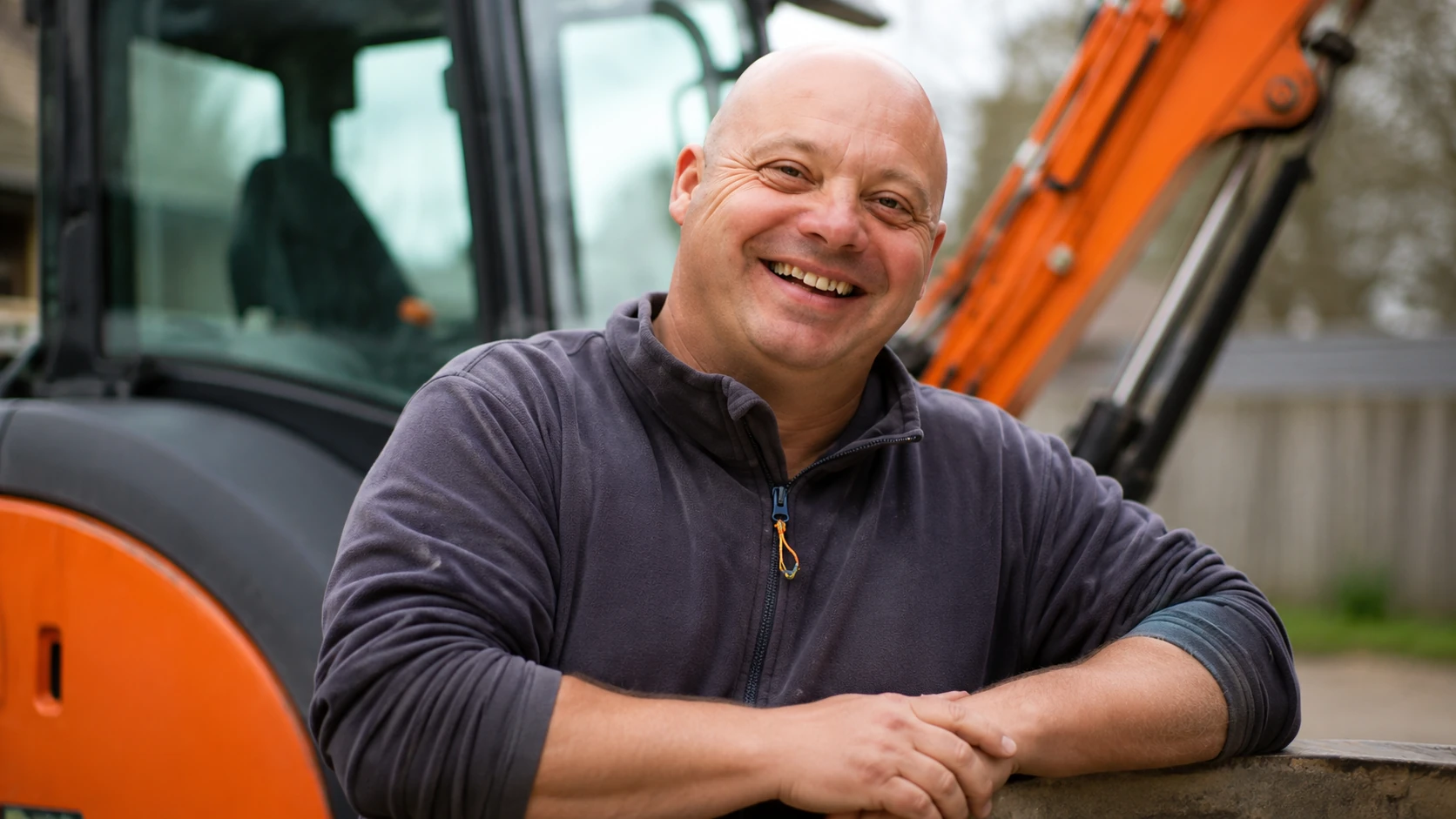
Julian Perryman became familiar to millions not by chasing the spotlight, but by looking at home in a hard hat. To viewers of DIY SOS, he is Jules, the builder in the purple shirt who seemed happiest when there was timber to cut, a wall to fix, or a family waiting for a home that finally worked for them. His appeal has always been plain: he looks like someone who knows the job, respects the people around him, and understands that the most emotional television moments often depend on very practical work.
That is why interest in Julian Perryman has stayed alive long after many viewers first saw him on BBC One. People search for him because they remember his warmth, his humour, and his place in one of Britain’s most recognisable home-transformation teams. They also want to know what is true about his life away from television, including his age, family, business, money, and recent absence from some DIY SOS appearances. The reliable public record does not answer every private question, but it does show a tradesman whose reputation rests on skill, steadiness, and a career built before the cameras arrived.
Who Is Julian Perryman?
Julian Perryman is a British builder and television personality best known for appearing on BBC’s DIY SOS and DIY SOS: The Big Build. Public company records identify him as Julian Thomas Perryman, a British company director born in July 1970. That makes him a long-serving tradesman first and a television figure second, which is a key part of why audiences responded to him. He was never presented as a polished celebrity host; he was one of the working people who made the programme believable.
To fans, Perryman is most often known as Jules. That nickname became part of the easy familiarity of DIY SOS, where the regular team members felt less like rotating television contributors and more like a group viewers had invited into their homes. Alongside figures such as Nick Knowles, Billy Byrne, Chris Frediani, Mark Millar, and others associated with the show’s best-known years, Perryman helped give the programme its practical backbone. He represented the part of the story where goodwill had to become measurements, foundations, plasterboard, fittings, and deadlines.
His public profile is not as heavily documented as that of a presenter or actor, and that matters. Many online biographies try to fill the gaps with guesses about his wife, private wealth, or day-to-day life. A careful biography has to do something different. It has to separate what can be verified from what fans may reasonably wonder about, without turning curiosity into invention.
Early Life and Family Background
The most firmly established early-life detail about Julian Perryman is that he was born in July 1970. Public records do not provide a full childhood biography, and there is no widely verified account naming his parents, school, or exact hometown. That absence is not unusual for a tradesman who became known through factual television rather than through a childhood in public life. Before DIY SOS, Perryman was not a celebrity with an archive of interviews behind him.
What has been reported about his early working life is more useful than a polished origin story. Perryman has been described as having started building at 16, working on new houses with his father. That detail fits the shape of his later public image: a builder whose authority came from years on sites rather than from television training. It also helps explain the confidence viewers saw when he handled both old properties and modern renovation demands.
A trade upbringing of that kind often creates a different relationship to work than a career planned through media ambition. Building is learned through repetition, mistakes, weather, materials, and people who expect a job to be done properly. Perryman’s calm on camera made sense because he did not appear to be performing competence. He appeared to be bringing an existing working life into a television format that needed exactly that kind of trust.
Learning the Trade Before Television
Before he became a familiar face on BBC One, Perryman built his reputation through the building trade. He has been described as a general builder with knowledge of both modern and traditional properties, a background that would have been especially useful on a show dealing with real homes rather than blank studio sets. British housing stock can be awkward, uneven, damp, extended, and full of surprises. A builder who knows how to read those problems is worth more than someone who simply looks good during a reveal.
That trade knowledge became part of his screen identity. Viewers could see that Perryman understood the difference between talking about a renovation and physically getting one over the line. On DIY SOS, that mattered because the programme often worked with tight timeframes, volunteer crews, donated materials, and families facing serious personal difficulties. The emotional finish depended on the duller, harder middle: planning, labour, coordination, and problem-solving.
There is a reason the regular tradespeople on the show became beloved in their own right. They offered a kind of credibility that no script could supply. Perryman’s presence said to viewers that the build was not just a television promise. It was a job being done by people who knew the consequences if it went wrong.
Career Breakthrough on DIY SOS
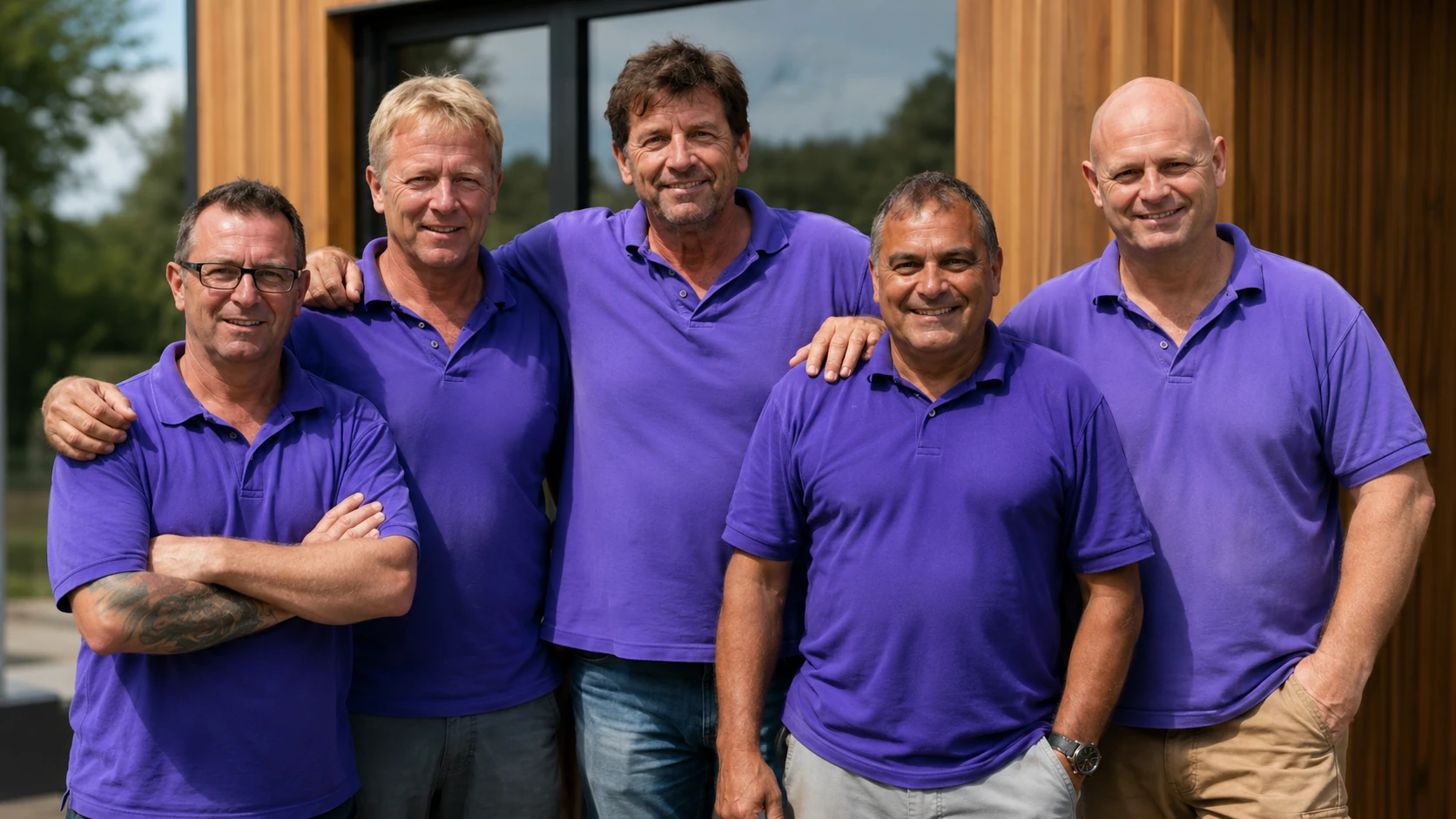
DIY SOS began as a home-improvement rescue programme, but its identity grew over time. The show became known for helping families and community groups facing serious need, often by transforming homes that were no longer safe, accessible, or fit for purpose. Perryman’s breakthrough came through his role as one of the regular building-team figures who made those transformations feel possible. He was not merely decorating the background; he was part of the machinery that made the programme work.
The success of DIY SOS rested on a mix of emotion and competence. Nick Knowles fronted the show with the authority of a presenter, but the tradespeople gave it texture and credibility. Perryman’s role was especially important because he came across as someone who could move between humour, pressure, and hands-on work without making the story about himself. That quality is easy to miss until a familiar face is absent.
For viewers, Jules became part of the programme’s rhythm. The purple shirts, the crowded building sites, the local volunteers, the race against time, and the final reveal all became familiar pieces of the same emotional machine. Perryman’s contribution was not a single dramatic moment. It was the accumulated trust built across years of appearances, where he helped turn hard circumstances into practical change.
The Big Build Era
The move into DIY SOS: The Big Build raised the stakes for everyone involved. The projects became larger, the community element grew stronger, and the homes or facilities being built often had a direct connection to illness, disability, bereavement, or long-term hardship. In that setting, Perryman’s skill set was not only technical. He also had to work inside a high-pressure public effort where tradespeople, suppliers, volunteers, families, and production crews all had to move together.
The Big Build format made visible something often hidden in construction: the social value of skilled manual work. A ramp, wet room, extension, bedroom, accessible kitchen, or adapted garden can change daily life more than any speech about compassion. Perryman’s role on the team helped show that kindness on this scale requires craft. Good intentions are not enough if the walls are unsafe, the drainage is wrong, or the family still cannot move through the house.
This is where Perryman’s public image found its strongest shape. He was not famous because he delivered dramatic monologues. He was known because he seemed to belong to the part of the programme where the promise had to become real. For a show built on public generosity, that quiet competence became part of the emotional payoff.
Business Work and JT Perryman & Co Limited
Away from television, Julian Perryman is linked to JT Perryman & Co Limited, a private limited company incorporated in October 2010. Public company records list him as a director and identify the business activity as building completion and finishing. That kind of record is dry, but it matters because it confirms the trade base behind the public persona. Perryman’s career is not only a set of screen credits.
The existence of the company also gives a clearer picture of how someone like Perryman earns a living. Television recognition may raise a tradesperson’s profile, but building work, contracts, specialist projects, and trade partnerships can remain the core of the business. Perryman has been associated with groundworks and building services in Devon, and local reporting has described him as heading up JT Perryman Groundworks. That suggests a working life rooted in practical construction rather than celebrity appearances alone.
There is no reliable public evidence that turns this business activity into a precise personal fortune. Companies House records can confirm directorships, filings, and broad business categories, but they do not reveal a person’s full net worth. Any biography that gives a neat figure for Perryman’s wealth without solid evidence should be treated with caution. The responsible view is that his income likely comes from a mix of building work, television appearances, and trade-related partnerships, but the exact total is not publicly confirmed.
Local Work and Community Projects
One of the more revealing public glimpses of Perryman away from national television came through his involvement with Meadowside Residential Home in Newton Abbot. The home provides residential care for adults with learning disabilities, including people with physical disabilities and complex care needs. Reporting on the project described Perryman helping with access improvements, including work connected to vehicle access and usable outdoor space. It was not a glossy prime-time reveal, but it reflected the same practical instinct that made him useful on DIY SOS.
The project mattered because access is not a decorative issue. For care homes, emergency services, nurses, contractors, residents, and families, poor access can create daily stress and real risk. Perryman’s involvement showed the off-screen version of a familiar television pattern: identify a practical barrier, gather support, and get the work moving. It also suggested that his public identity as a builder willing to help communities was not confined to BBC cameras.
In that context, Perryman publicly connected the work to his own family experience, saying his daughter is autistic. That is one of the few personal family details he has shared in a reported public setting. It should be handled with respect and not stretched beyond what was said. The detail is meaningful because it shows why a project involving disabled and neurodivergent people may have felt personally important to him.
Marriage, Children, and Private Life
Julian Perryman has kept much of his private life out of public view. There is no widely verified public record confirming his marital status, the name of a spouse, or the full structure of his family life. Some online profiles make claims about a wife or personal relationships, but many do so without clear sourcing. In a careful biography, those claims should not be repeated as fact.
What can be said is that Perryman has referred publicly to having a daughter. The reported context was his support for a care-related project, where he spoke about autism in connection with his own family. That kind of disclosure gives readers a small window into his personal motivations without making his family public property. It also helps explain why reports that he has taken time away from television for family reasons should be accepted without unnecessary speculation.
The truth is, Perryman’s privacy is part of why his public image has remained steady. He has not built a career on oversharing or scandal. Fans may want more detail because they feel affection for him, but affection does not create a right to private information. The most respectful account is one that gives readers what is known and clearly marks what is not.
Public Image and Why Viewers Trust Him
Julian Perryman’s public appeal comes from a quality television cannot easily fake: usefulness. He looked like someone who could solve a problem, not just talk around it. On a programme where families often faced deep practical strain, that mattered. His humour and relaxed manner made him likable, but his trade credibility made him reassuring.
British audiences have a long affection for skilled, unshowy workers on factual television. Perryman fits that tradition, but he also avoided becoming a caricature. He could be funny without seeming unserious, warm without becoming sentimental, and visible without pulling focus from the people the show was helping. That balance is harder than it looks.
His image also benefited from the wider trust viewers placed in the DIY SOS team. The programme’s emotional power came from the sense that a group of people had shown up for a family at exactly the right time. Perryman became one of the faces of that promise. For many viewers, seeing him on screen meant the job was in safe hands.
Brand Partnerships and Trade Credibility
Perryman’s television profile also led to work with construction-sector brands. He has been associated with Geocel, a company known for sealants, adhesives, and trade products. Partnerships like that may look ordinary from the outside, but they reveal something about his position in the building world. A brand choosing Perryman was not only buying a familiar face; it was borrowing credibility from someone viewers and tradespeople believed understood the job.
These trade campaigns are a natural extension of his public persona. Perryman’s value in that space depends on the idea that he knows how products behave on site, not just how they look in an advert. That distinction matters in construction, where reputations are often built through reliability rather than polish. A product endorsed by a working builder carries a different message from one promoted by a general celebrity.
His connection to trade causes also fits the wider arc of his career. Construction can be physically hard, financially uncertain, and mentally demanding. Any public figure who can draw attention to support for tradespeople and their families has a useful platform. Perryman’s media profile gave him a way to speak not only to homeowners, but also to people who work in the industry that made him.
Other Television Work
Although DIY SOS remains the programme most closely linked to Julian Perryman, he has also appeared in other television contexts. Listings connect him to The One Show and to The Retreat with Nick Knowles, a series that featured Knowles and familiar faces outside the building-site format. These appearances show that Perryman’s screen recognition extended beyond one programme. Still, they did not redefine him.
That is important because some television figures use one hit show as a springboard into a broader entertainment career. Perryman’s public identity moved differently. Even when he appeared elsewhere, the reason viewers recognised him was his association with building, teamwork, and practical warmth. He did not need a reinvention because his core appeal was already clear.
This also explains why fans continue to search for him in connection with DIY SOS rather than as a general television celebrity. His career is tied to one of British factual television’s most emotionally durable formats. The show made him visible, but his trade background made that visibility believable. That is a stronger legacy than a scattered list of screen appearances.
Recent Status and Absence from DIY SOS
In recent years, many viewers have asked why Julian Perryman has not appeared as regularly on DIY SOS. Public reporting around newer episodes has said that Nick Knowles explained Perryman was taking time to be with family. That is the clearest public explanation available. There is no reliable evidence of a feud, firing, scandal, or dramatic exit.
The production context also changed around the show. DIY SOS has continued through different phases, production arrangements, specials, and returning series. Long-running factual programmes often shift personnel over time, even when viewers strongly associate particular faces with the format. A familiar team member’s absence can feel personal to fans, but it does not automatically point to conflict.
Perryman’s current status should be described with care. He remains strongly associated with DIY SOS, and his past contribution is central to how many viewers remember the programme. Whether he returns more regularly is a separate question. Until he or the programme gives a fuller statement, the most accurate answer is that he has been less visible on recent broadcasts, with family time given publicly as the reason.
Net Worth and Income Sources
There is no confirmed public net worth for Julian Perryman. Some websites may publish estimated figures, but those numbers should not be treated as verified unless they are tied to reliable financial evidence. Perryman is a private individual with a building business, television credits, and trade partnerships, not a public company whose personal assets are fully disclosed. A precise figure would be guesswork.
His likely income sources are easier to describe in general terms. Building work and company activity appear to form the base of his professional life. Television appearances on DIY SOS and related programmes likely added profile and income, while brand work may have created further commercial opportunities. None of that allows a responsible writer to calculate his personal wealth.
What can be said with confidence is that Perryman’s value has never rested only on celebrity. His earning power, such as it is publicly visible, appears tied to practical skill, reputation, and trust. That makes him different from personalities whose income depends almost entirely on fame. His public standing comes from being known as a builder who became famous, not a famous person pretending to build.
Lesser-Known Details
One lesser-known point about Perryman is that his public record is much quieter than his television presence might suggest. He has not filled the press with interviews, lifestyle features, or personal branding exercises. That restraint has left room for confusion, but it has also protected the sense that he is a working tradesman rather than a celebrity product. For many fans, that is part of the appeal.
Another meaningful detail is his connection to Devon. Company records and local reporting place his business activity in that part of England, and reports have connected him to local projects there. That gives his profile a grounded regional dimension. He is not simply a travelling TV face who appears for a shoot and disappears from the trade.
His reference to having an autistic daughter is also important, though it should not be overused. It offers context for why care, access, and disability-related projects may carry personal weight for him. It also reminds readers that the people who appear on emotional television formats have private lives of their own. Sometimes the reason a person shows up for others is shaped by experiences they do not choose to make fully public.
Cultural Influence and Place in British TV
Julian Perryman’s cultural influence is modest in the celebrity sense but meaningful in the television sense. He helped define a type of factual TV figure: the trusted tradesperson whose presence gives emotional programming practical authority. Viewers may not know every detail of his biography, but they know what he stands for on screen. That recognition is a real form of public standing.
The success of DIY SOS depended on more than format. It needed viewers to believe that the team cared and that the build would genuinely change lives. Perryman’s steady presence helped create that belief. He was part of a group that made skilled labour visible as an act of public service.
That may be why his absence has been felt so strongly. People often notice a familiar television figure only when they are gone. With Perryman, the reaction says something about how much viewers had folded him into the identity of the show. He was not merely one of the people in the background; he was part of the feeling that made the programme work.
Where Julian Perryman Is Now
Julian Perryman appears to remain connected to the building world through his company and trade profile, though his recent television presence has been reduced. Public records still associate him with JT Perryman & Co Limited, and past reporting links him to construction and groundworks activity in Devon. There is no credible public basis for saying he has left the building trade. His lower television profile should not be confused with disappearance.
The most likely current picture is quieter and more ordinary than some search users expect. Perryman seems to be a tradesman and former regular television face who has taken time away from some screen work, reportedly for family reasons. That explanation may not satisfy fans hungry for a dramatic update, but it fits the available record. Not every absence from television is a mystery.
For longtime viewers, his place in DIY SOS history is already secure. Whether or not he returns regularly, Perryman helped shape the public memory of the show during some of its most recognisable years. He brought craft, humour, and trust to a format that could not have survived on emotion alone. That is a solid legacy for someone who built his reputation by building for others.
Frequently Asked Questions
Who is Julian Perryman?
Julian Perryman is a British builder and television personality best known for appearing on BBC’s DIY SOS and DIY SOS: The Big Build. Viewers know him as Jules, one of the familiar tradespeople who helped give the programme its practical credibility. His career combines building work, television appearances, and construction-related business activity.
How old is Julian Perryman?
Julian Perryman was born in July 1970, according to public company records. That makes him 55 until July 2026, when he turns 56. His exact birth date is not widely confirmed in public sources.
Is Julian Perryman married?
Julian Perryman’s marital status has not been clearly confirmed through reliable public sources. Some online pages make claims about his wife or private relationships, but many do not provide strong evidence. A responsible account should treat his romantic life as private unless he chooses to share more.
Does Julian Perryman have children?
Julian Perryman has publicly referred to having a daughter, including in the context of a care-related community project. He has said his daughter is autistic, a detail reported in connection with his support for work involving people with disabilities and care needs. Beyond that, he has not made a full family profile public.
Why did Julian Perryman leave DIY SOS?
There is no confirmed evidence that Julian Perryman permanently left DIY SOS because of a dispute or controversy. Recent reporting has said Nick Knowles explained that Perryman was taking time to be with family. The most accurate description is that he has been absent from some recent appearances, with family time given as the public reason.
What is Julian Perryman’s net worth?
Julian Perryman’s net worth is not publicly confirmed. He likely earns or has earned money through building work, his company, television appearances, and trade partnerships, but no reliable source provides a verified personal fortune. Any precise number online should be treated as an estimate at best.
What business does Julian Perryman own?
Julian Perryman is linked to JT Perryman & Co Limited, a building-related private limited company incorporated in 2010. Public records list the company’s activity as building completion and finishing. Local reporting has also connected him to groundworks work in Devon.
Conclusion
Julian Perryman’s biography is not a story of instant fame or constant self-promotion. It is the story of a tradesman whose work put him in front of a national audience and whose manner made him memorable. Viewers trusted him because he seemed grounded in the job, not in the performance of the job.
The public record leaves some questions unanswered, especially around his marriage, personal finances, and full family life. That should not be seen as a flaw in the story. It is a reminder that a person can become familiar to millions while still keeping the most private parts of life offstage.
What remains clear is Perryman’s contribution to one of British television’s most loved factual formats. On DIY SOS, he helped turn construction into care and skill into something viewers could feel. His legacy is not only that he appeared on a successful programme, but that he made the work at the heart of it feel honest.
If Julian Perryman returns more fully to television, many viewers will welcome him back without needing a grand explanation. If he stays quieter, his place in the story is still set. Jules from DIY SOS remains a reminder that sometimes the most trusted people on television are the ones who look as if they would rather be getting on with the job.
