

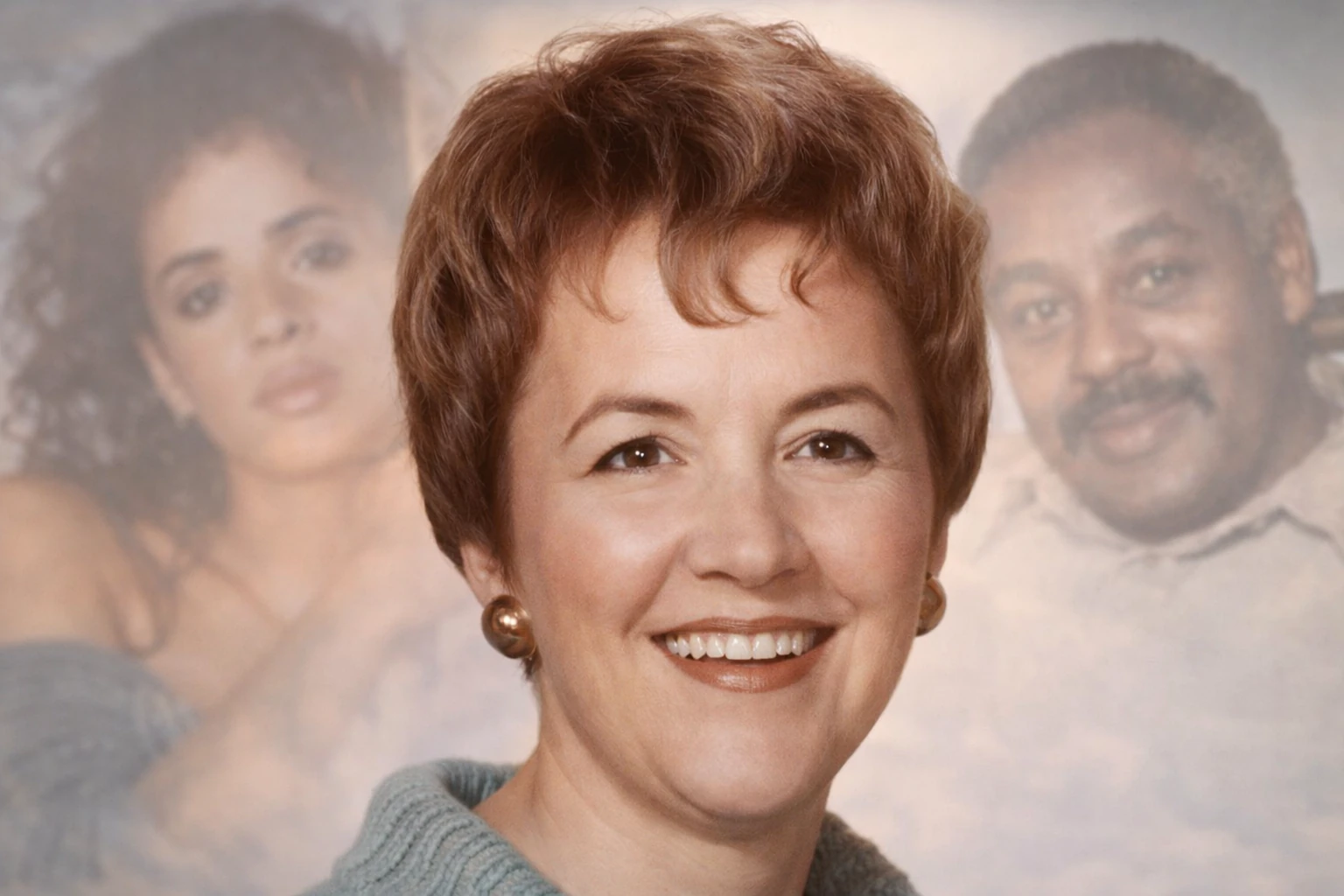
She never courted attention, and that alone makes her stand out in a culture obsessed with visibility. But here’s the thing: the people who don’t chase the spotlight often shape it the most. Arlene Litman lived a life that wasn’t documented in headlines, yet her influence traveled through generations, quietly shaping one of Hollywood’s most recognizable family lines.
Early Life and Family Background
Arlene Joyce Litman was born in 1940, part of a generation shaped by postwar America, when families were rebuilding, redefining, and trying to find stability after years of upheaval. While exact records of her early childhood remain limited, most accounts agree that she came from an Ashkenazi Jewish family with roots in Eastern Europe, likely Poland and Russia. That heritage would later become part of her daughter’s identity and, eventually, her granddaughter’s as well.
Growing up in mid-century America wasn’t always simple for Jewish families navigating assimilation and tradition at the same time. The truth is, many families like the Litmans balanced cultural pride with the pressure to fit into a broader American identity. That tension, subtle but real, often shaped how children were raised, what values were emphasized, and how resilience was taught at home.
Education appears to have been central in Arlene’s upbringing. By all accounts, she valued learning deeply enough to make it her career. Becoming a teacher wasn’t just a job in that era; it was a commitment to stability, discipline, and shaping young minds. Those values would later show up in how she raised her own child, especially during challenging years when life didn’t follow the script.
Marriage to Allen Bonet and a Changing Family
Arlene Litman’s life took a turn when she married Allen Bonet, an opera singer from Texas with a very different background. He was African American, deeply connected to music, and part of a cultural world that stood in contrast to Arlene’s own upbringing. Their union, which produced their daughter Lisa in 1967, came at a time when interracial marriages were still controversial in many parts of the United States.
That context matters more than people often realize. The late 1960s were a period of social change, but acceptance didn’t arrive overnight. Couples like Arlene and Allen navigated not only their personal relationship but also the expectations and judgments of the society around them. Raising a child in that environment required strength, adaptability, and a willingness to face uncomfortable realities.
Their marriage did not last long, and the couple separated when Lisa was still an infant. After the split, Arlene took on the responsibility of raising her daughter largely on her own. According to multiple accounts, Lisa Bonet had little contact with her father during her early years, which meant that Arlene became the central figure in her upbringing.
Raising Lisa Bonet in California
Life in the San Fernando Valley during the 1970s wasn’t glamorous, but it was real. Arlene Litman raised Lisa in a middle-class environment in Reseda, a place far removed from Hollywood’s polished image. She worked as a teacher while managing the demands of single motherhood, a balancing act that required both emotional strength and practical discipline.
Anyone who’s spent time around teachers knows how demanding that job can be. It doesn’t end when the school bell rings. Lesson planning, grading, and emotional investment all follow you home. Now imagine doing that while raising a child alone, navigating financial pressures, and trying to create a sense of belonging for a daughter growing up between identities.
Lisa Bonet later spoke openly about the challenges of being biracial in a time when society didn’t offer much language or support for that experience. She described feeling caught between worlds, not fully accepted by either. That kind of struggle doesn’t exist in isolation. It shapes family conversations, daily decisions, and the emotional tone of a household.
Arlene’s role in that environment becomes clearer when you look at the outcome. Bonet developed a strong sense of individuality early on, along with a refusal to conform to expectations. Those traits don’t appear overnight. They are often nurtured, intentionally or not, by a parent who encourages independence and self-trust.
Career as a Teacher
Arlene Litman’s professional life stayed largely out of public view, but the fact that she worked as a schoolteacher is consistently reported. Teaching, especially in public schools during the 1960s and 1970s, required patience, adaptability, and a deep sense of responsibility. It wasn’t a high-paying career, but it offered stability and purpose.
There’s something telling about the choice to become a teacher. It suggests a belief in structure and growth, in the idea that small, consistent efforts can shape a future. Those are the same principles that often define strong parenting. While there are no detailed records of her classroom career, it’s reasonable to assume that the discipline and empathy required for teaching carried over into her home life.
What’s surprising is how often that background shows up indirectly in Lisa Bonet’s life. Bonet pursued acting at a young age, attending Birmingham High School in Van Nuys and later studying at the Celluloid Actor’s Studio. A parent’s support is often invisible in those moments, but it’s rarely absent.
Influence on Lisa Bonet’s Rise
Lisa Bonet’s breakthrough came in the mid-1980s with her role as Denise Huxtable on The Cosby Show. She was still a teenager when she stepped into national fame, a transition that can overwhelm even the most grounded individuals. But Bonet carried herself with a kind of quiet confidence that stood apart from many of her peers.
That confidence didn’t come from nowhere. It reflected years of upbringing in a household where individuality was not only allowed but expected. Arlene Litman may not have been part of the entertainment industry, but her influence was present in the way Bonet navigated it.
Bonet’s career has always been marked by independence, even when that independence came at a professional cost. She turned down roles, made unconventional choices, and resisted being boxed into a single identity. Those decisions suggest a foundation built on self-assurance rather than external validation.
Family Legacy Through Zoë Kravitz
Arlene Litman’s legacy extends beyond her daughter. Through Lisa Bonet, she became the grandmother of Zoë Kravitz, an actress, singer, and filmmaker who has built her own career in Hollywood. Kravitz has spoken about her mixed heritage, which includes African American, Jewish, and Caribbean influences.
That lineage places Arlene Litman at the root of a family that reflects modern America’s diversity. Her Jewish heritage, combined with the cultural backgrounds of other family members, created a rich identity that continues to shape how the family is perceived and how they see themselves.
The connection across generations isn’t just biological. It’s cultural and emotional. Values passed down quietly, often without formal acknowledgment, tend to surface in how people approach their work, relationships, and public lives.
Personal Life and Character
There’s a certain humility in the way Arlene Litman’s life is remembered. She wasn’t known for grand gestures or public statements. Instead, her story is pieced together through the lives of those she influenced. According to the available accounts, she was a dedicated mother, a working professional, and someone who valued privacy.
That privacy makes it harder to construct a detailed portrait, but it also adds depth to the one that emerges. Not everyone leaves behind interviews or memoirs. Some leave behind people who carry their lessons forward.
Friends and family accounts are limited, but the consistency in how she’s described suggests a woman who prioritized stability and care. Raising a child alone, especially in the context of the 1970s, required resilience. That resilience likely defined much of her daily life.
Financial Standing and Net Worth
Unlike the celebrities in her family, Arlene Litman’s financial life was never part of public discussion. As a schoolteacher, her income would have been modest, consistent with middle-class standards of the time. There are no verified records of significant wealth or business ventures.
That doesn’t mean her life lacked value or impact. Financial success is only one measure, and often not the most meaningful one. The truth is, many of the most influential figures in people’s lives never accumulate large fortunes. They invest in people instead.
Her estimated net worth remains undocumented, which aligns with the broader pattern of her life staying outside public scrutiny. What remains clear is that her contributions were measured in stability and support rather than financial headlines.
Later Years and Passing
Arlene Litman is widely reported to have passed away in 1998, with breast cancer cited as the cause in many accounts. While detailed public records are limited, this date appears consistently across multiple sources. Her death marked the end of a life that had been largely private but deeply influential.
Loss often brings reflection, and in this case, it likely reinforced the importance of the values she instilled. For Lisa Bonet and the rest of the family, her absence would have been deeply felt, even if it wasn’t publicly discussed.
The limited documentation of her passing reflects the same pattern seen throughout her life. She remained outside the spotlight, even in death, leaving behind a legacy carried quietly by those closest to her.
Lesser-Known Aspects of Her Life
Not many people know this, but Arlene Litman’s story intersects with broader cultural shifts in ways that aren’t immediately obvious. Her interracial marriage in the 1960s placed her at the center of a social transition that was still unfolding. That experience likely shaped her perspective on identity and acceptance.
What’s surprising is how her profession as a teacher may have influenced her parenting style. Teaching requires patience and adaptability, qualities that are essential when raising a child in a complex social environment. Those skills likely helped her navigate the challenges of single motherhood.
Another detail that often gets overlooked is the geographic context of her life. Growing up and raising a child in California during that era meant exposure to cultural diversity and change. That environment may have contributed to the open-minded perspective reflected in her family.
Frequently Asked Questions
Who was Arlene Litman?
Arlene Litman was an American schoolteacher best known as the mother of actress Lisa Bonet. She also became the grandmother of Zoë Kravitz through Bonet’s later family. While she remained out of the public eye, her influence is visible through her family’s achievements and identity.
What was Arlene Litman’s background?
She was of Ashkenazi Jewish descent, with family roots traced to Eastern Europe. Her upbringing reflected the experiences of many Jewish American families in the mid-20th century, balancing cultural heritage with broader societal integration. That background became part of her daughter’s and granddaughter’s identities.
Did Arlene Litman raise Lisa Bonet alone?
Yes, after separating from Allen Bonet, she raised Lisa Bonet primarily on her own. Bonet has spoken about having limited contact with her father during her early years. Arlene’s role as a single mother was central to Bonet’s upbringing.
What did Arlene Litman do for a living?
She worked as a schoolteacher, a profession that required dedication and consistency. Teaching likely shaped her approach to parenting, emphasizing structure and independence. Her career remained outside the public spotlight.
When did Arlene Litman die?
Arlene Litman is widely reported to have passed away in 1998. Breast cancer is often cited as the cause, though detailed public records are limited. Her death marked the end of a life that had a lasting impact on her family.
Conclusion
Arlene Litman’s story isn’t one of fame, but it’s one of influence. She lived a life grounded in responsibility, raising a child who would go on to shape popular culture in her own way. That kind of impact doesn’t require recognition to be real.
What stays with you is the quiet strength behind her choices. She navigated single motherhood, cultural complexity, and professional demands without the safety net of public attention. Those experiences shaped not only her daughter but the generations that followed.
There’s something powerful about lives like hers. They remind you that the foundations of public success are often built in private, through consistency, care, and resilience. Arlene Litman may not have sought the spotlight, but her legacy continues to shine through those who carry her forward.
As more people search her name, they’re not just looking for facts. They’re looking for connection, for understanding, for the story behind the story. And in Arlene Litman’s case, that story is quietly extraordinary.
Meta description: Discover the life of Arlene Litman, Lisa Bonet’s mother, her background, family, and lasting influence across generations.
