


Ian Humphries is the kind of antiques dealer viewers remember before they remember the price of the object on the table. On The Bidding Room, where sellers arrive with family heirlooms, curios, furniture, collectables, and the hope of a good cash offer, Humphries stands out with an image that feels less formal than the old stereotype of the antiques trade. His tattoos are part of that first impression, but they are not the whole story. Behind the visible ink is a working dealer, business owner, television regular, and antiques professional whose public appeal comes from the contrast between old objects and modern personal style.
The search for “Ian Humphries tattoos” is really a search for context. Viewers want to know what his tattoos mean, whether he has spoken about them, how they fit his career, and who he is beyond the BBC programme that made him familiar to a wider audience. The honest answer is that Ian’s tattoos are publicly visible and have become part of his recognizable look, but he has not made a full public explanation of every design, meaning, or personal story behind them. That gap matters because it separates fair curiosity from guesswork.
What can be said with confidence is that the tattoos help mark Humphries as a different kind of antiques personality. He does not present as a dusty caricature of the trade, and that is part of why viewers notice him. His screen presence suggests a wider truth about antiques today: the business is no longer only about old-world polish, formal shops, and inherited expertise. It is also about taste, personality, instinct, salvage, interiors, and people who know how to see value in objects others might overlook.
Who Is Ian Humphries?
Ian Humphries is best known as one of the dealers on BBC One’s The Bidding Room, a daytime antiques programme hosted by Nigel Havers. The show brings members of the public into a selling room after their items have been assessed by an expert, then lets dealers compete to buy those pieces. Humphries appears as one of the professional buyers, judging objects not only for age and condition but also for resale potential, decorative appeal, and the kind of buyer who might want them next.
His public identity is tied closely to Manormonkeys Antiques, an antiques and interiors business based in Worcestershire. The business reflects the sort of stock that suits a character-led dealer: furniture, lighting, mirrors, decorative objects, and interior pieces with age and presence. That background is important because it shows that Humphries is not simply a television face added to an antiques format. He is part of the buying and selling world that gives the show its credibility.
For many viewers, though, the first question is not about stock or valuation. It is about the man’s look. Humphries’ tattoos, casual style, and relaxed manner make him visually distinct among television antiques experts, especially in a genre long associated with more traditional presentation. The tattoos make people look twice, but his knowledge is what keeps him in the room.
Early Life and Private Background
Ian Humphries has not turned his early life into a public story in the way some television personalities do. Details about his childhood, parents, schools, and early family background are not widely confirmed in reliable public sources. That does not mean there is no story there; it means the story has not been made public in a way that responsible writers should treat as established fact. For a figure like Humphries, who is known through a professional field rather than celebrity confession, that boundary deserves respect.
What can be inferred from his career is that he developed a strong eye for objects and a practical understanding of the antiques trade over time. Antiques dealing is rarely a career built only from classroom learning. It usually grows through handling stock, making mistakes, learning markets, watching what sells, understanding restoration, and developing instinct for condition, age, and appeal. Humphries’ television role suggests that he has earned that kind of practical confidence.
The private nature of his background also explains why search interest often drifts toward visible details such as tattoos. When a public figure does not share much about early life or family, viewers read the available clues more closely. In Humphries’ case, tattoos become part of that public clue system, even though they should not be treated as a full biography written on skin. They are visible, memorable, and personal, but not automatically open to outside interpretation.
Career Beginnings in Antiques
The antiques trade rewards people who can combine taste with nerve. A dealer has to buy before knowing for certain whether the market will agree, and that risk gives the profession much of its character. Ian Humphries appears to have built his career through the working side of antiques, where pieces must be found, priced, displayed, negotiated, and sold. That practical route is often more important than any formal title.
Manormonkeys Antiques gives a sense of the world he occupies. It is not simply about rare museum-grade pieces or elite collecting. The business sits in the broader antiques and interiors market, where objects are chosen for homes, shops, hospitality spaces, and people who want atmosphere rather than mass-produced sameness. That kind of trade requires a dealer to understand both history and current taste.
Humphries’ screen persona fits that background. He can look at a piece as an object with age, but also as something that has to live in the present. That is one reason his tattooed image makes sense rather than feeling like a costume. He represents an antiques world where personal style and professional judgment can sit comfortably together.
The Bidding Room and His Breakthrough
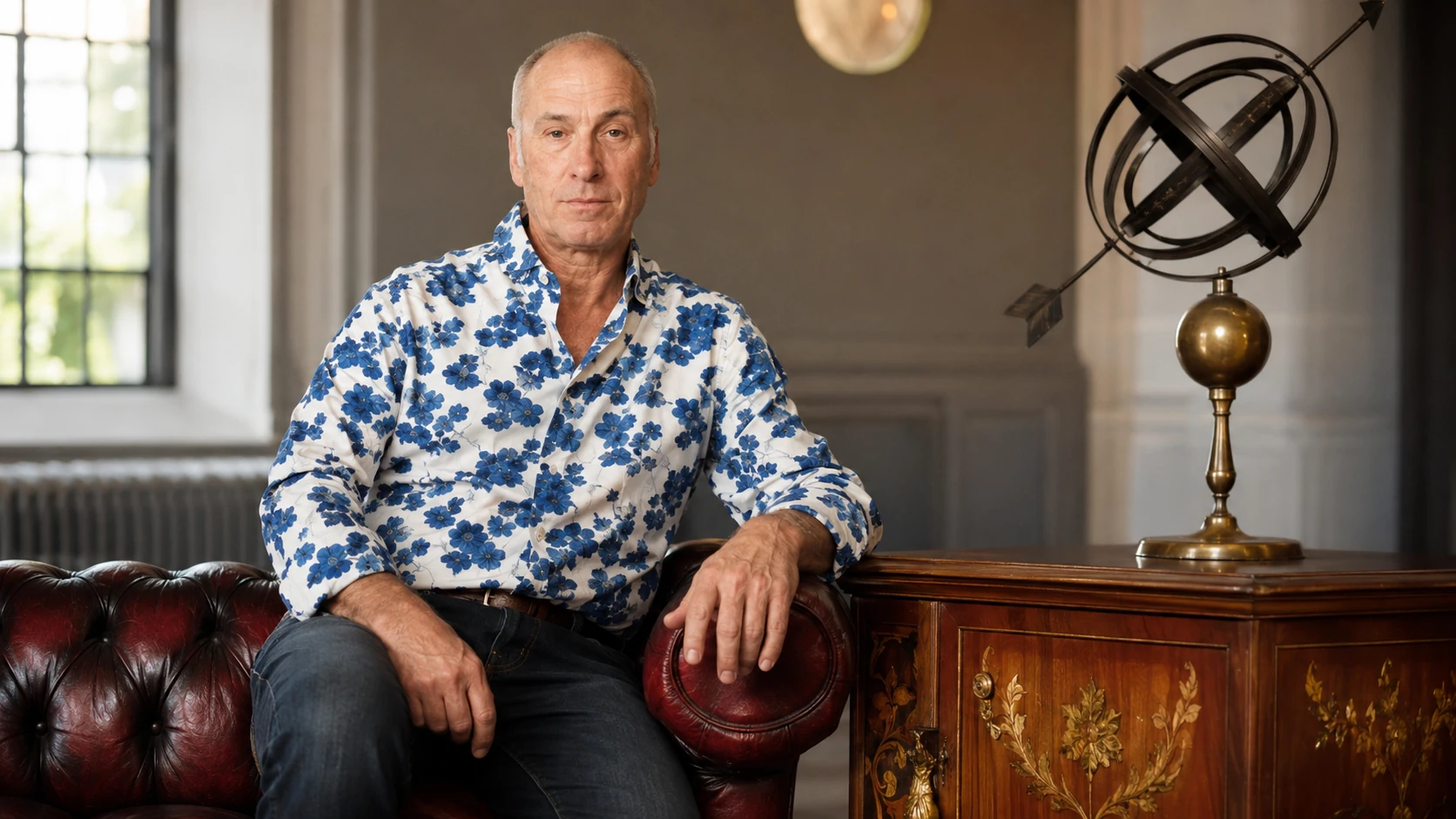
The Bidding Room gave Ian Humphries a national platform. The programme began airing on BBC One in 2020 and quickly found an audience among viewers who enjoy antiques, negotiation, and the small drama of ordinary people discovering what their possessions might be worth. The format is simple, but it depends on personality. Each dealer brings a different style of bidding, taste, humor, and risk tolerance.
Humphries became recognizable because he did not blend into the background. His look was part of that, but so was the way he occupied the dealer’s chair. In a format where viewers see only a limited slice of each person, visual identity matters. Tattoos, clothing, posture, and tone all help audiences remember who is who.
His presence also helped modernize the feel of the programme. Antiques television has always had room for characters, but Humphries brought a more informal edge. He looked like someone who might be as comfortable around salvage yards, warehouse stock, and interior pieces as around polished cabinets and traditional collectables. That made him feel accessible to viewers who like old things but do not necessarily identify with the more formal side of the antiques world.
Ian Humphries Tattoos: What Is Publicly Known
Ian Humphries’ tattoos are real, visible, and closely associated with his public image. They are one of the reasons viewers search his name after seeing him on television. The designs are most often noticed on his arms, where they are visible during appearances and public images. They add to the impression of a dealer who does not fit the old-fashioned mold.
What is not publicly confirmed is the complete meaning behind his tattoos. There is no widely established interview in which Humphries explains every design, when he got each one, who created them, or what personal events they may represent. Some online articles mention the tattoos, but many do so in a surface-level way. Responsible coverage should not turn that lack of detail into invented meaning.
The best way to understand the tattoos is as part of a public image that still leaves room for privacy. They help viewers recognize him, and they signal a certain confidence in personal style. They may carry deep personal meaning, or they may include designs chosen for aesthetic reasons, or both. Unless Humphries chooses to explain them in full, the fair approach is to describe what is visible and avoid pretending to know what only he can know.
Why His Tattoos Get So Much Attention
The attention around Ian Humphries’ tattoos says as much about the antiques world as it does about him. For years, many viewers imagined antiques dealers as older, formally dressed, and slightly distant. That image was never the whole truth, but television helped reinforce it. Humphries disrupts that expectation by looking more like a modern interiors dealer than a stereotype from an old auction room.
Tattoos also invite curiosity because they feel personal. A chair, lamp, or mirror can be inspected and priced, but a tattoo is attached to the body and often suggests a story. Viewers naturally wonder whether his designs reflect family, art, music, travel, loss, humor, or simply taste. The problem is that curiosity does not equal permission to invent answers.
There is another reason the search keeps growing. Humphries’ tattoos create a strong contrast with the objects around him. Antique furniture and old decorative pieces carry marks of age, ownership, repair, and use. Tattoos are also marks, but chosen ones. That visual echo gives his appearance a kind of quiet logic inside the antiques world, even if viewers first experience it as surprise.
Tattoos, Image, and Professional Credibility
Visible tattoos once carried a different weight in public-facing work. In many older industries, they were treated as signs of rebellion or informality, and people often felt pressure to cover them. That has changed across entertainment, hospitality, design, retail, and creative businesses. Viewers are now more likely to judge whether someone knows their field than whether their arms fit a narrow idea of professionalism.
Humphries benefits from that shift, but he also helps show it in practice. He is not presented as a tattooed outsider who wandered into antiques for novelty value. He is a dealer doing the work of a dealer: looking, judging, calculating, bidding, and deciding what an item might become in the market. His tattoos do not replace expertise; they sit beside it.
That distinction matters because appearance can be both memorable and misleading. It may draw viewers in, but credibility has to come from action. In Humphries’ case, his role on The Bidding Room and his connection to Manormonkeys Antiques give substance to the image. The tattoos make him recognizable, but the trade makes him credible.
Manormonkeys Antiques and His Business Identity
Manormonkeys Antiques is central to understanding Ian Humphries beyond television. It places him in the working world of antiques and interiors, where stock has to be sourced, stored, presented, and sold. A dealer in that space needs a flexible eye. Some buyers want traditional antiques, while others want industrial pieces, decorative salvage, statement lighting, or furniture with the right worn-in feel.
This part of the antiques market suits someone with a distinctive public identity. Interiors buyers often respond to mood and character, not only formal age or maker’s marks. A dealer’s own taste becomes part of the business, because customers learn to trust what that dealer chooses. Humphries’ tattooed image fits that world better than it might have fit a more rigid, old-fashioned shopfront.
The name Manormonkeys itself suggests a business with personality rather than stiff formality. That kind of branding matters in a competitive market where buyers can find objects through shops, fairs, auctions, websites, social media, and television. Humphries’ visual identity and business identity support each other. Together, they make him feel less like a remote expert and more like a dealer with a lived-in eye for objects.
Family, Marriage, and Personal Life
Ian Humphries keeps much of his personal life away from the center of his public profile. Searchers often look for information about his wife, children, family, and home life, but not all of those details are clearly confirmed through reliable public material. That privacy should not be treated as mystery for its own sake. Many people who appear on factual television remain private citizens outside the work that made them known.
This is especially important in articles about tattoos because body art can tempt writers to create emotional backstories. A tattoo may represent family, love, memory, or loss, but it may also represent art, taste, humor, or a moment in life that has no public explanation. Without a direct public statement from Humphries, it would be unfair to link his tattoos to family details or private relationships.
What can be said is that his public appeal does not depend on revealing his private life. Viewers respond to him because of his look, trade knowledge, and role on a familiar BBC format. The fact that he keeps some personal details out of the spotlight may even support the way many viewers see him: as a working antiques dealer who became known through his profession, not someone chasing celebrity for its own sake.
Net Worth, Income Sources, and Money Questions
Ian Humphries’ exact net worth is not publicly confirmed. Online estimates should be treated with caution because they often appear without financial records, direct confirmation, or transparent methods. For antiques dealers, wealth can be especially hard to estimate from the outside. Stock value, property, business turnover, television fees, and personal assets are not the same thing.
His likely income sources are easier to describe in general terms. They include antiques dealing, interior and decorative stock sales, business activity through Manormonkeys Antiques, and television work connected to The Bidding Room. Depending on the structure of his business, income may also come from sourcing, trade contacts, private sales, fairs, online listings, or related antiques services. But the precise figures are not part of the confirmed public record.
A careful estimate would avoid giving a number unless backed by reliable evidence. Many celebrity net worth pages publish figures that sound precise but are little more than guesses. In Humphries’ case, the better answer is that he appears to have built a professional career across antiques and television, but his personal finances remain private. That is a more honest answer than a neat but unsupported figure.
Public Image and Cultural Appeal
Ian Humphries’ public image rests on contrast. He works with old objects but looks contemporary. He belongs to a trade associated with tradition but appears comfortable resisting its visual clichés. He is polished enough for BBC daytime television but still carries the feel of a working dealer rather than a media-trained presenter.
That image connects with a broader audience for antiques and interiors. Many younger buyers, renters, homeowners, and collectors are interested in vintage and antique pieces for reasons beyond investment. They want sustainability, individuality, better materials, and rooms that do not look copied from a catalogue. Humphries’ style speaks to that audience because it suggests antiques can be personal, informal, and alive.
His tattoos also make him easier to remember in a crowded television field. Viewers see many experts across antiques shows, but only some become instantly identifiable. Humphries has that advantage, yet it would be too simple to say the tattoos alone explain his appeal. They work because they match the rest of his presentation: direct, characterful, and not overly polished.
Common Misunderstandings About Ian Humphries’ Tattoos
One common misunderstanding is that visible tattoos automatically reveal a person’s private life. They may reveal taste, confidence, or a willingness to be visually distinctive, but they do not give strangers a full biography. In Humphries’ case, there is no confirmed public guide to the meaning of his tattoos. Any claim that explains them in detail should be checked carefully.
Another misunderstanding is that tattoos somehow make him unusual in the antiques trade itself. They may make him unusual compared with older television stereotypes, but the real antiques world has always been full of individual characters. Dealers, restorers, pickers, warehouse owners, auction regulars, and salvage specialists often have strong personal style. Humphries is more visible because he is on television, not because personality is new to antiques.
A third misunderstanding is that his tattoos are a branding trick. There is no need to assume that. People have tattoos for many reasons, long before or beyond any media career. In Humphries’ case, they became part of how the public recognizes him, but that does not mean they were created for television. The more respectful view is that his personal style happened to fit a modern screen identity.
What Ian Humphries Is Doing Now
Ian Humphries remains associated with antiques, interiors, Manormonkeys Antiques, and his public role as a dealer from The Bidding Room. His profile continues to attract search interest because viewers still discover the programme through broadcasts, clips, repeats, listings, and online searches. In the antiques world, that kind of recognition can matter. It turns a working dealer into someone viewers feel they know.
His continuing appeal lies in the mix of accessibility and expertise. He does not need to explain every object in grand language to make it interesting. He also does not need to hide his personal style to fit a narrow professional mold. That balance helps explain why people search not only for his career, but also for details like tattoos, age, family, business, and net worth.
The truth is, Ian Humphries’ public story is still partly shaped by what he has chosen not to reveal. That gives the available facts more importance. He is a tattooed antiques dealer, a television personality, and a business figure connected to the interiors trade. Beyond that, the private meanings behind his tattoos remain his to share or keep.
Frequently Asked Questions
Does Ian Humphries have tattoos?
Yes, Ian Humphries has visible tattoos, and they are one of the features viewers often notice when they see him on The Bidding Room. His tattooed appearance has become part of his recognizable public image. The tattoos are most often discussed because they contrast with older expectations of what an antiques dealer might look like on television.
That said, the existence of the tattoos is much clearer than the story behind them. Viewers can see that tattoos are part of his look, but the meanings behind individual designs have not been fully explained in widely confirmed public sources. It is better to describe them as a visible part of his style than to make unsupported claims about their personal meaning.
What do Ian Humphries’ tattoos mean?
Ian Humphries has not publicly given a full, reliable explanation of what all his tattoos mean. Some may have personal meaning, some may be artistic choices, and some may reflect parts of his life that he has chosen not to discuss. Without direct confirmation, any detailed interpretation would be speculation.
That privacy is normal. Many public figures have visible tattoos without turning them into interview material. In Humphries’ case, the tattoos help shape how viewers recognize him, but they should not be treated as a public document that outsiders can decode with certainty.
Why is Ian Humphries famous?
Ian Humphries is best known as a dealer on BBC One’s The Bidding Room. The show features members of the public bringing in antiques, collectables, curios, and decorative objects, then negotiating with professional dealers. Humphries became familiar to viewers through his role as one of those dealers.
He is also associated with Manormonkeys Antiques, which connects his television presence to a real antiques and interiors business. That working background matters because his fame did not come from a general entertainment career. It came from a trade where taste, judgment, buying experience, and market instinct are central.
Is Ian Humphries a real antiques dealer?
Yes, Ian Humphries is publicly associated with the antiques and interiors trade through Manormonkeys Antiques. His role on The Bidding Room also places him among professional dealers who assess and bid on objects brought in by sellers. That combination supports his public identity as a working antiques figure, not simply a television personality.
Antiques dealing is a practical business that depends on judgment, sourcing, and buyer knowledge. Humphries’ screen role gives viewers a glimpse of that work, but it is only one part of the profession. His business connection gives a fuller picture of how he fits into the trade beyond the programme.
Is Ian Humphries married?
Ian Humphries’ personal relationship status is not as publicly documented as his antiques work and television role. Some online searches focus on his wife or family, but responsible coverage should avoid presenting private details as fact unless they are clearly confirmed. He has not made his personal life the main part of his public profile.
That does not make his life mysterious in a dramatic sense. It simply means he is known mainly through work rather than personal publicity. For readers, the safest approach is to focus on what is public: his antiques career, television presence, business identity, and distinctive style.
What is Ian Humphries’ net worth?
Ian Humphries’ exact net worth is not publicly confirmed. Any precise figure found online should be treated as an estimate unless it is supported by reliable financial reporting or direct confirmation. Antiques businesses can involve stock, assets, sales, expenses, and private ownership structures that are hard to judge from outside.
His income likely comes from antiques dealing, interiors stock, business activity, and television work. Those are reasonable categories based on his public career, but they do not produce a verified net worth figure. A careful profile should say plainly that the number is not known.
Why do people search for Ian Humphries’ tattoos?
People search for Ian Humphries’ tattoos because his look stands out on antiques television. The tattoos create a visual contrast with the traditional image of the antiques world, making him memorable to viewers. They also make people curious about his personal story and whether the designs have special meaning.
The search interest is also tied to how television turns visual details into identity markers. A viewer may forget a valuation but remember the tattooed dealer with a strong sense of style. Humphries’ tattoos are part of that recognition, even if the private story behind them remains mostly unrevealed.
Conclusion
Ian Humphries’ tattoos are a useful entry point into his public story, but they should not be mistaken for the whole story. They help make him visually distinctive, especially on a programme rooted in antiques and traditional objects. Yet his real standing comes from his work as a dealer, his connection to Manormonkeys Antiques, and his role on The Bidding Room.
What makes Humphries interesting is the way he bridges two worlds. He understands the appeal of old things, but he does not look trapped in an old image of the trade. His tattoos, business identity, and television presence all point toward a more open version of antiques culture, where expertise can come with personality and style.
The most honest answer to the search is also the most respectful one. Ian Humphries has visible tattoos, and they are part of why viewers remember him, but their full meaning has not been publicly confirmed. Until he chooses to share more, the ink remains one part of a wider profile: a modern antiques dealer with a clear screen identity and a career built on seeing value where others might pass by.
