

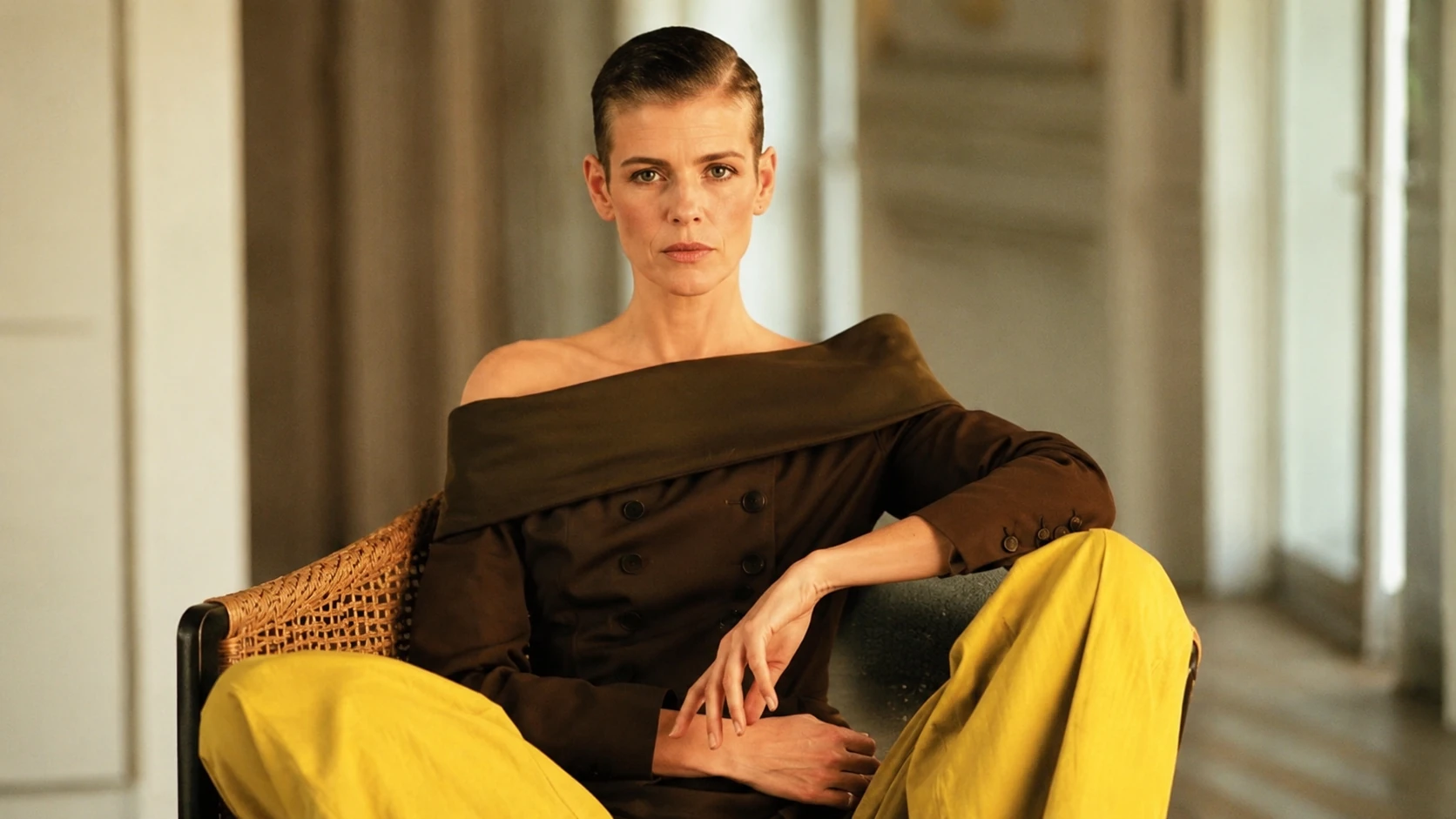
Jeny Howorth belongs to a rare group of fashion figures whose image lasted longer than the moment that made them famous. She was never the loudest public personality in modeling, and she did not build her name through tabloid attention. Her influence came from something more durable: a face, a haircut, a way of wearing clothes, and a cool self-possession that made designers and photographers pay attention.
For many readers, her name appears first in connection with 1980s fashion, Helmut Lang, short bleached hair, or her daughter, model Georgia Howorth. Others encounter her through more recent fashion work, including campaigns and editorials that show she has not vanished into archive status. That mix of past and present is what makes Jeny Howorth interesting. She is both a model of a specific era and a figure whose style still makes sense now.
Who Is Jeny Howorth?
Jeny Howorth is a British model and artist best known for her fashion work from the 1980s onward. She became associated with a sharp, punk-influenced look, especially her short blonde crop and strong, androgynous presence. Her career has included magazine editorials, runway work, advertising campaigns, and later appearances that connect her early reputation with a new generation of fashion audiences.
She is often remembered as one of the women who helped move fashion away from soft, predictable beauty and toward something cooler and more character-driven. Her look worked because it did not feel invented by a committee. It suggested London street style, youth culture, discipline, and a little defiance, all carried with the professional control expected of a high-fashion model.
Howorth is also known as the mother of Georgia Howorth, who has worked as a model in her own right. Their mother-daughter connection has brought fresh attention to Jeny’s career, especially as fashion has become more interested in family lines, archive references, and intergenerational casting. Still, Jeny Howorth’s place in fashion does not depend only on that relationship. Her own body of work gives her a clear standing.
Early Life and London Background
Public details about Jeny Howorth’s early life are limited, which is common for models from her generation who worked before the social-media age. She is widely identified as British, and she has described growing up in Hampstead, London. Her background places her close to the city’s creative energy during a period when music, clubs, street fashion, and youth subcultures were reshaping the look of British style.
Howorth has spoken about having supportive parents, including an engineer father and a mother who worked as a teacher. That detail gives a useful glimpse into the atmosphere around her early years. She did not come across as someone pushed into public life by a stage family. Instead, her route into fashion appears to have grown out of her own appearance, confidence, and early willingness to experiment.
One detail often repeated from her own recollections is that she dyed her hair green when she was still very young. That choice matters because it points to a personality already interested in visual self-expression. Long before fashion turned her into a reference, Howorth seemed to understand that hair, clothes, and attitude could say something before a person spoke.
How Jeny Howorth Started Modeling
Jeny Howorth’s modeling career reportedly began in 1979 after she was noticed in a Baker Street hairdresser’s in London. The story has the feel of another era, when model discovery could happen through a hair salon, a street sighting, or a friend of a friend connected to an agency. In Howorth’s case, the discovery came through the sister of someone at the salon, who was linked to the modeling business.
That beginning suited her image. She was not introduced to fashion as a polished society beauty or a conventional commercial face. She arrived with a look that already had character, and that character became her value. The industry did not need to erase her difference to use her; it needed to frame it.
The timing also helped. By the late 1970s and early 1980s, fashion was absorbing the shock of punk and the energy of London club culture. Designers, stylists, and photographers were looking beyond classic prettiness. Howorth’s face and presence fit that change because she brought sharpness without losing elegance.
The Haircut That Changed Her Image

Jeny Howorth’s short blonde haircut became one of the defining features of her public image. It was cropped, bleached, and direct, giving her a look that could read as punk, modern, and refined at the same time. In fashion, a haircut can be more than a beauty detail. It can turn a model into a visual idea.
The cut is often linked to the work of celebrated hairstylist Sam McKnight, who became one of the most respected names in fashion hair. His short-hair work across different decades helped shape the images of several famous women, and Howorth is one of the key early examples associated with that history. For her, the crop did not simply decorate the face. It clarified the whole persona.
That was the power of the look. It made Howorth instantly readable in photographs, but not simple. She could appear severe, cool, elegant, boyish, glamorous, or detached depending on the clothes and the photographer. Very few models can carry that many meanings without looking forced.
Breakthrough in 1980s Fashion
The 1980s were a strong period for models with distinctive identities. Fashion was playing with power dressing, street style, sportswear, club culture, and new ideas about gender presentation. Jeny Howorth’s look sat naturally in that mix because she did not represent one single mood. She could make tailored clothes look clean and modern, but she could also bring edge to more experimental styling.
Her breakthrough was not based on one single public moment that became famous outside fashion. Instead, it came through repeated work with photographers, stylists, magazines, and designers who understood what her presence could do. She became a face that belonged to a certain kind of image: cool, lean, alert, and slightly resistant to the obvious.
That kind of modeling is easy to underestimate. A good editorial model does more than stand in clothes. She understands line, posture, proportion, mood, and timing. Howorth’s reputation grew because she could make clothes look intentional without making the picture feel overworked.
Magazine Work and Editorial Presence
Jeny Howorth’s public fashion record includes magazine covers and editorials across several decades. She has been associated with titles such as i-D, Elle, Vogue, and other fashion publications that helped define the visual culture of their periods. Her editorial value came from the fact that she could look both highly styled and personally convincing.
In magazine work, Howorth’s strengths were especially clear. She had the kind of face that could hold a close-up, but she also had the body language to sell a full fashion story. Some models are remembered for beauty, others for movement, and others for attitude. Howorth’s appeal came from a combination of all three.
Her images from the 1980s remain important because they capture a mood that fashion still revisits. The short hair, sharp tailoring, pale skin, and direct gaze feel connected to an era, but they do not feel trapped there. That is why her name keeps returning in conversations about archive fashion and enduring style.
Working With Major Photographers and Stylists
Howorth has credited photographers such as Steven Meisel and Arthur Elgort with teaching her about the craft of modeling. That point is worth taking seriously because both photographers were central to fashion image-making. Working with people at that level requires more than looking good. It asks a model to understand the frame, the clothes, the story, and the speed of a professional set.
Arthur Elgort’s style often favored movement, ease, and a sense of life beyond the studio. Steven Meisel, by contrast, is known for images that can be controlled, cinematic, satirical, glamorous, or severe. A model who could learn from both would gain range. Howorth’s best work suggests that she understood how to adjust without losing herself.
The phrase “clothes hanger” has sometimes been used in fashion to describe a model who makes garments look their best. Outside the industry, it can sound dismissive, but inside it can point to a real professional skill. Howorth’s gift was that she could serve the clothes while still giving the image a memorable human charge.
Helmut Lang and the Power of Restraint
One of the most meaningful parts of Jeny Howorth’s career is her connection to Helmut Lang. Lang’s fashion world valued restraint, intelligence, utility, and cool distance. His clothes did not need theatrical posing. They needed models who could walk with personality while keeping the focus on cut, proportion, and mood.
Howorth fit that world because she looked believable in clothes that required confidence rather than performance. She has described Lang’s shows as small and almost familylike, with models chosen for character as much as appearance. That description explains why his casting remains so admired. The models did not look interchangeable; they looked like people with inner lives.
Her connection to Lang also helps define her wider career. She was not simply a commercial beauty booked to fill a runway. She belonged to the kind of casting that made fashion feel modern because the people wearing the clothes mattered. That is one reason her name continues to appear beside other distinctive models from that period.
Buffalo Style and London Fashion Culture
Jeny Howorth is also connected to the Buffalo style movement, one of the most influential currents in British fashion history. Buffalo was associated with stylist Ray Petri and a group of collaborators who mixed streetwear, sportswear, tailoring, music, and club references in a way that changed fashion imagery. It was not polished in the old sense. It felt alive, young, urban, and self-aware.
Howorth’s look made sense in that world. She had enough elegance for high fashion, but enough edge to avoid looking removed from real youth culture. That combination is exactly what made Buffalo-era images feel so powerful. They did not simply show clothes; they showed attitude, identity, and city energy.
The Buffalo connection also helps explain why younger designers and stylists still find Howorth relevant. Fashion constantly returns to moments when clothes felt connected to real subcultures. Howorth’s image carries some of that history. She represents a period when London style was not just being sold but lived.
Jeny Howorth as a Mother
Jeny Howorth is the mother of Georgia Howorth, who has also worked as a model. Their connection has drawn interest because fashion often pays attention to family lines, especially when a parent’s image has archive value. Georgia has appeared in editorials and fashion projects, and her career has introduced Jeny’s name to readers who may not have followed 1980s modeling.
The mother-daughter story is appealing, but it should not be oversimplified. Georgia Howorth has her own look and professional identity, while Jeny’s career belongs to an earlier and very different fashion moment. The best way to understand them is not as a copy-and-continuation story, but as two related women moving through the same industry at different times.
Their joint appearances have shown a warmer side of Jeny’s public image. In fashion history, she is often remembered as cool, sharp, and almost severe. Seen with her daughter, she appears in a softer frame, still stylish but less distant. That contrast adds depth to the public understanding of her life.
Private Life and Public Boundaries
Jeny Howorth has kept much of her private life away from public attention. That is one reason online searches about her often lead to thin biographies that repeat the same few facts. Her career is visible, but her personal relationships, household life, and financial details have not been documented in the way celebrity profiles often demand.
That privacy should be respected. There is no need to invent a dramatic backstory simply because a public figure has chosen not to share every detail. In Howorth’s case, the verified public record already offers enough to understand her importance. She was a working model with a strong identity, a mother, and later a figure still valued by fashion brands and editors.
Readers looking for marriage details, partner history, or family specifics may find little reliable information. That does not mean something is being hidden in a scandalous way. It more likely reflects the fact that Howorth built her public name through fashion work, not through public confession or celebrity exposure.
Later Career and Return to Fashion Visibility
Unlike many models whose careers are frozen in one famous decade, Jeny Howorth has remained visible in later fashion projects. Her later work includes editorials, runway appearances, and campaigns that use her not as a novelty, but as a model with presence and history. This is an important distinction. A nostalgic cameo reminds viewers of the past, while strong casting makes the past feel alive in the present.
Her appearance in Simone Rocha’s Fall/Winter 2019 world was one example of how designers have returned to experienced models. Rocha’s work often blends romance, toughness, femininity, and strangeness, which makes mature and distinctive casting especially effective. Howorth’s presence added authority because she brought memory without seeming outdated.
She has also been part of more recent British fashion storytelling, including work connected to Burberry. That kind of casting makes sense because Burberry often builds campaigns around heritage, character, and British identity. Howorth brings all of those things without needing to explain them in words.
Jeny Howorth’s Work as an Artist
Jeny Howorth has been publicly described not only as a model but also as an artist. That label is significant, though detailed public information about her artistic practice is limited. Unlike some public figures who heavily promote an art career, Howorth appears to have kept this side of her life quieter. That makes it difficult to speak with certainty about medium, exhibition history, or commercial output.
What can be said is that the artist description fits the way she has always moved through fashion. Her modeling was never only about surface beauty. It carried a strong visual sensibility, from hair and clothing to posture and mood. Many models from her generation worked creatively across fashion, image-making, and personal style even when those activities were not always documented under formal titles.
A careful biography should not stretch that label beyond what is known. Howorth’s artistic identity is part of her current public description, but the available record does not support a detailed catalogue of work. The safest reading is that she is a fashion figure whose creative life extends beyond modeling, even if much of that life remains private.
Net Worth and Income Sources
There is no reliable public figure for Jeny Howorth’s net worth. Some celebrity-style websites may publish estimates for models, but those numbers are often unsupported and should not be treated as fact. Howorth’s career spans a long period, but modeling income varies widely depending on contracts, markets, agency terms, usage rights, and the kind of work involved.
Her likely income sources over time would have included editorial modeling, runway work, advertising campaigns, and fashion-related creative projects. Editorial work can build reputation but does not always pay at the same level as major advertising. Campaigns and commercial bookings usually carry more financial weight, though exact fees are rarely public.
It is more accurate to discuss her professional standing than to guess at her wealth. Howorth has had a respected fashion career with enough longevity to remain bookable decades after her early rise. That tells readers something meaningful about her value in the industry. A made-up net worth number would tell them much less.
Public Image and Fashion Influence
Jeny Howorth’s public image rests on controlled cool rather than celebrity noise. She represents a type of model whose influence moves through mood boards, archives, casting references, and beauty conversations. Her short hair became part of fashion memory, but her real value came from the way she made clothes feel direct and modern.
Her influence can also be seen in how often fashion returns to androgyny, cropped hair, sharp tailoring, and models with strong personal identity. Howorth did not invent those ideas, but she embodied them convincingly at a moment when they mattered. That is why her images still feel useful to stylists and designers. They offer an example of how fashion can be tough and elegant at once.
What’s surprising is that her career has remained relevant without the machinery of constant public self-promotion. She did not need endless interviews or a celebrity brand to keep her name alive. The work itself carried enough force. That is one of the marks of a truly memorable model.
Where Jeny Howorth Is Now
Jeny Howorth appears to remain connected to fashion through selective modeling, creative work, and public projects. Her recent visibility shows that she is still seen as an active presence rather than only an archive figure. The industry’s growing interest in older models and women with distinctive histories has helped make space for figures like her.
She also remains linked to Georgia Howorth’s fashion world, though each woman has her own public identity. Their shared appearances have allowed readers to see Jeny not only as an iconic face from the past but also as a mother and a contemporary woman. That shift has made her story more rounded.
Her current appeal lies in the fact that she does not seem overexplained. In a culture where many public figures reveal everything, Howorth has kept a measure of mystery. That restraint suits her image. It leaves the focus where it has always belonged: on the clothes, the face, the attitude, and the career.
Frequently Asked Questions
Who is Jeny Howorth?
Jeny Howorth is a British model and artist best known for her fashion work from the 1980s onward. She became known for a sharp, punk-influenced look, especially her short blonde crop and cool editorial presence. Her career includes runway shows, magazine editorials, campaigns, and later fashion projects.
What is Jeny Howorth famous for?
She is famous for her distinctive modeling style, her short bleached haircut, and her connection to influential fashion moments in the 1980s and 1990s. She is also associated with Helmut Lang, Buffalo-style fashion culture, and later intergenerational fashion casting. Her look remains a reference for editors, stylists, and fashion history fans.
Is Jeny Howorth Georgia Howorth’s mother?
Yes, Jeny Howorth is widely known as the mother of model Georgia Howorth. Georgia has built her own modeling career, while Jeny remains respected for her earlier and continuing fashion work. Their mother-daughter connection has appeared in fashion features and campaigns.
How old is Jeny Howorth?
Jeny Howorth’s exact age is not clearly confirmed in the strongest public sources. Some websites may list dates or estimates, but many do not provide dependable sourcing. A responsible profile should avoid presenting an unsupported birth date as fact.
Was Jeny Howorth part of 1980s fashion?
Yes, Jeny Howorth is strongly associated with 1980s fashion. Her look matched the period’s interest in punk energy, short hair, and sharper forms of beauty. She became one of the models whose image helped define a cooler, more character-driven side of the decade.
Did Jeny Howorth model for Helmut Lang?
Yes, Jeny Howorth is associated with Helmut Lang’s fashion world. She has been discussed among the models who helped carry his understated, intelligent, character-based approach to runway casting. Her look suited Lang’s preference for confidence, restraint, and individuality.
What is Jeny Howorth doing now?
Jeny Howorth appears to remain active in fashion through selective modeling and creative work. She has appeared in later editorials, runway contexts, and brand campaigns, showing that her relevance did not end with her early career. She is also publicly described as an artist, though detailed information about that side of her work is limited.
Conclusion
Jeny Howorth’s career shows how lasting fashion influence often works. It does not always come from mass fame, awards, or constant public attention. Sometimes it comes from a strong image that keeps making sense to new people at new moments.
Her story is rooted in London, shaped by 1980s fashion, and carried forward by a look that was both elegant and resistant. The short hair mattered, but it was only part of the reason she lasted. Her real strength was the ability to make clothes look alive without turning the image into performance.
There are gaps in the public record, especially around her private life and financial details. Those gaps should be treated honestly rather than filled with guesswork. What is clear is that Jeny Howorth earned a respected place in fashion history and still carries the kind of presence that designers, photographers, and readers remember.
