

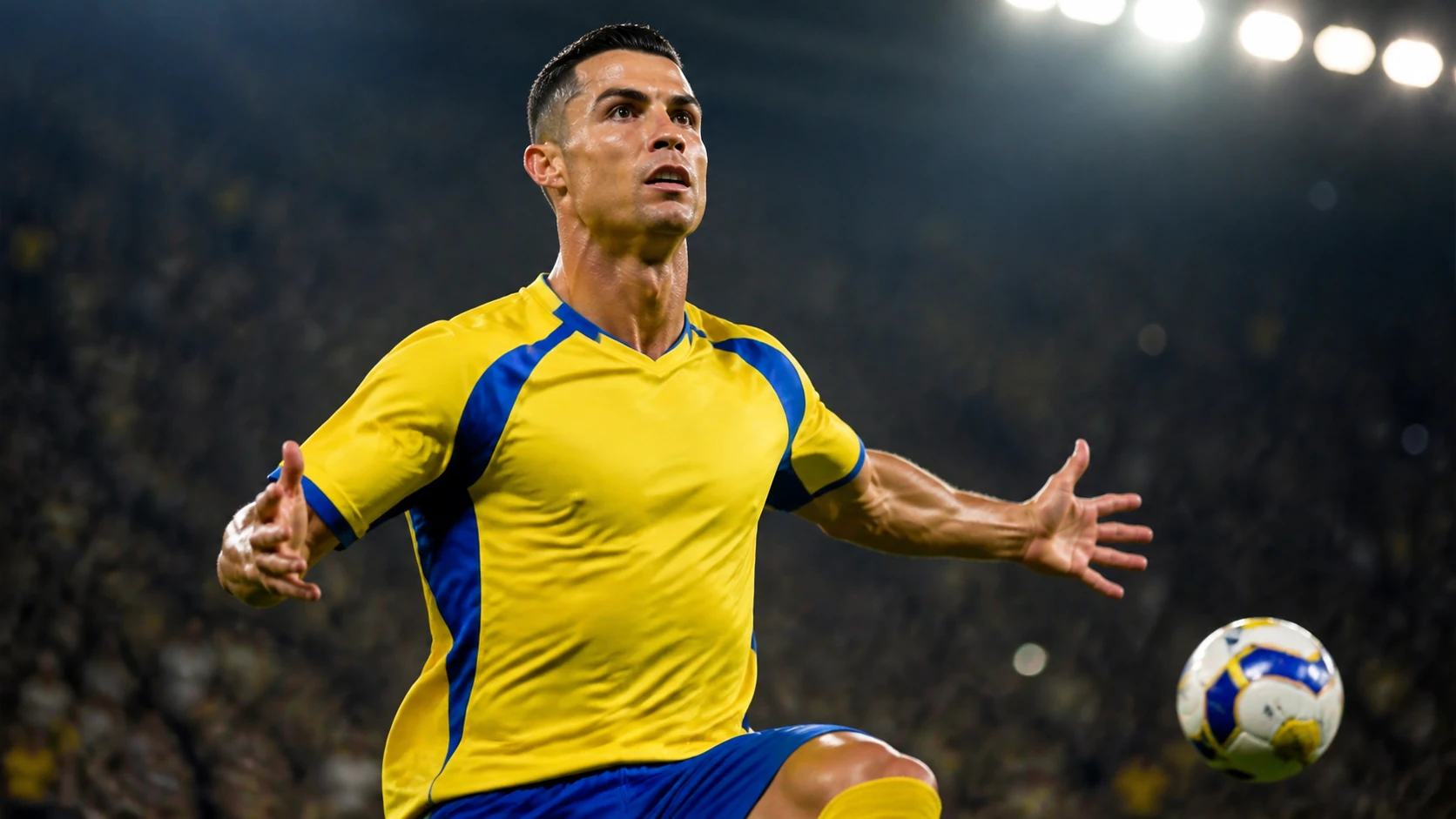
Cristiano Ronaldo has built his public identity around goals, records and extraordinary longevity. As of August 5, 2026, the widely accepted count places him on 976 official senior goals for club and country, leaving him 24 short of 1,000. That figure includes 830 club goals and a record 146 goals for Portugal, although Real Madrid’s own accounting creates a one-goal difference in some published totals.
The number is only one part of his story. Ronaldo rose from a working-class childhood on the Portuguese island of Madeira to become a five-time Ballon d’Or winner, a Champions League record-holder and one of the most recognizable athletes in the world. His career has covered Sporting CP, Manchester United, Real Madrid, Juventus, Al Nassr and more than two decades with Portugal.
Early Life and Family
Cristiano Ronaldo dos Santos Aveiro was born on February 5, 1985, in Funchal, Madeira, Portugal. He is 41 years old as of August 2026 and holds Portuguese nationality. His parents were Maria Dolores dos Santos Aveiro and José Dinis Aveiro.
Ronaldo grew up in a large family with his brother, Hugo, and sisters, Elma and Liliana Cátia, who is commonly known as Kátia Aveiro. The family had limited financial resources, and Ronaldo has often connected his drive to the conditions of his childhood. His father worked in several roles, including as a municipal gardener and kit man for the local football club Andorinha.
Football became Ronaldo’s main focus at an early age. He played for Andorinha and Nacional in Madeira before joining Sporting CP’s academy in Lisbon. Moving away from his family as a child was a major personal adjustment, but it placed him inside one of Portugal’s leading development systems.
Ronaldo’s father died in 2005, when Ronaldo was 20. His mother and siblings later became visible parts of his public life, although the family has retained control over many private details.
Sporting CP and the Move to England
Ronaldo progressed quickly through Sporting’s youth system and made his senior debut in 2002. He scored five official first-team goals for the Lisbon club before leaving Portugal. His speed, balance and confidence in one-on-one situations attracted attention from leading European teams.
Manchester United moved decisively after facing Sporting in a preseason match in August 2003. Sir Alex Ferguson signed the 18-year-old, who became the first Portuguese player in Manchester United’s senior team. Ronaldo received the No. 7 shirt previously worn by figures including George Best, Bryan Robson, Eric Cantona and David Beckham.
His early years in England were marked by flair but also inconsistency. He arrived as a wide player who relied on dribbling and acceleration, then developed greater strength, sharper movement and a more direct approach to goal. By the 2006-07 season, he had become one of United’s central attacking figures.
Ronaldo’s first Manchester United spell produced 118 goals between 2003 and 2009. His finest season came in 2007-08, when he scored 42 times in all competitions as United won the Premier League and UEFA Champions League. He received his first Ballon d’Or later in 2008.
Real Madrid and His Greatest Scoring Period
Real Madrid signed Ronaldo in 2009 for a then-world-record transfer fee. The move began the most productive section of his career and placed him in direct competition with Lionel Messi, whose performances for Barcelona helped define the same era.
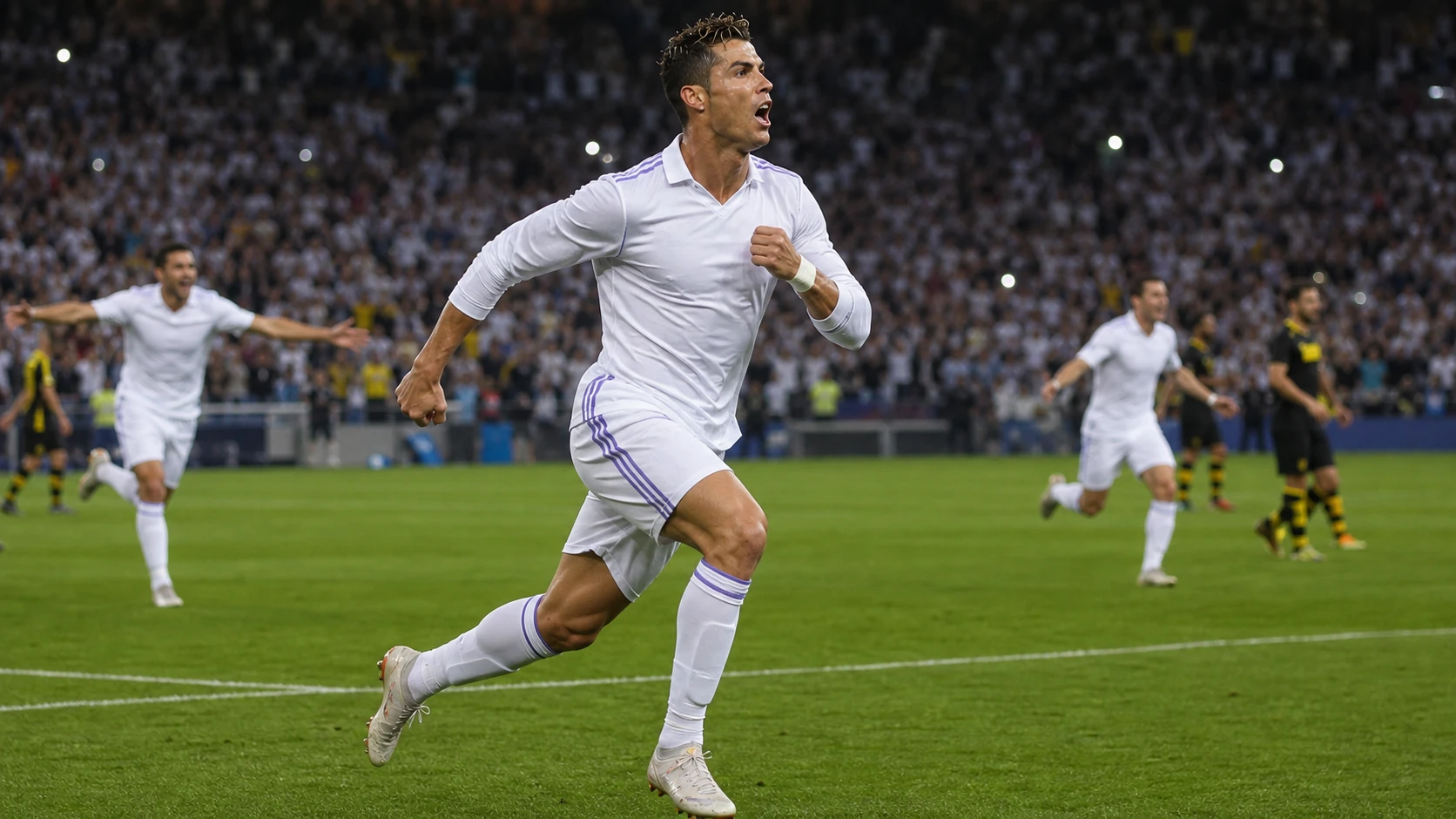
The standard statistical record credits Ronaldo with 450 goals in 438 official appearances for Real Madrid. The club itself lists 451 because it attributes a deflected 2010 free kick against Real Sociedad to Ronaldo, while the official match record credited the goal to Pepe. That disagreement explains why some career totals place Ronaldo one goal higher than others.
Ronaldo’s scoring rate in Madrid exceeded a goal per match. He combined long-range shooting, heading ability, movement behind defenders and powerful counterattacking runs with a large number of penalties. As he grew older, he spent less time operating as a traditional winger and became more focused on finishing moves inside the penalty area.
He won four Champions League titles with Real Madrid and became the competition’s all-time leading scorer. His 17 goals during the 2013-14 Champions League season remain a single-season record. He also won four of his five Ballon d’Or awards while representing Madrid.
Ronaldo left Spain in 2018 as Real Madrid’s leading scorer. His nine seasons there produced almost half of his official career goals and established the statistical base that made a run at 1,000 possible.
Juventus and Continued Success in Italy
Ronaldo joined Juventus in July 2018, moving to Serie A at the age of 33. The transfer tested whether his scoring could continue outside Real Madrid’s system and after the physical peak normally associated with elite forwards.
He scored 101 goals in 134 appearances for Juventus. His three seasons in Turin brought two Serie A titles, one Coppa Italia and two Italian Super Cups. He also became the first player to reach 100 club goals in England, Spain and Italy.
Juventus did not win the Champions League during Ronaldo’s time at the club, despite that competition being one of the main reasons behind his signing. His individual output remained strong, but the team struggled to build the same European momentum that he had experienced in Madrid.
Ronaldo returned to Manchester United in August 2021. He scored 27 goals during his second spell, taking his overall United total to 145 goals in 346 appearances. The return ended in November 2022 after a breakdown in his relationship with the club and manager Erik ten Hag.
Al Nassr and the Road to 1,000
Ronaldo signed for Saudi Arabian club Al Nassr after leaving Manchester United. His arrival in Riyadh brought major international attention to the Saudi Pro League and was followed by a wider movement of established players to Saudi clubs.
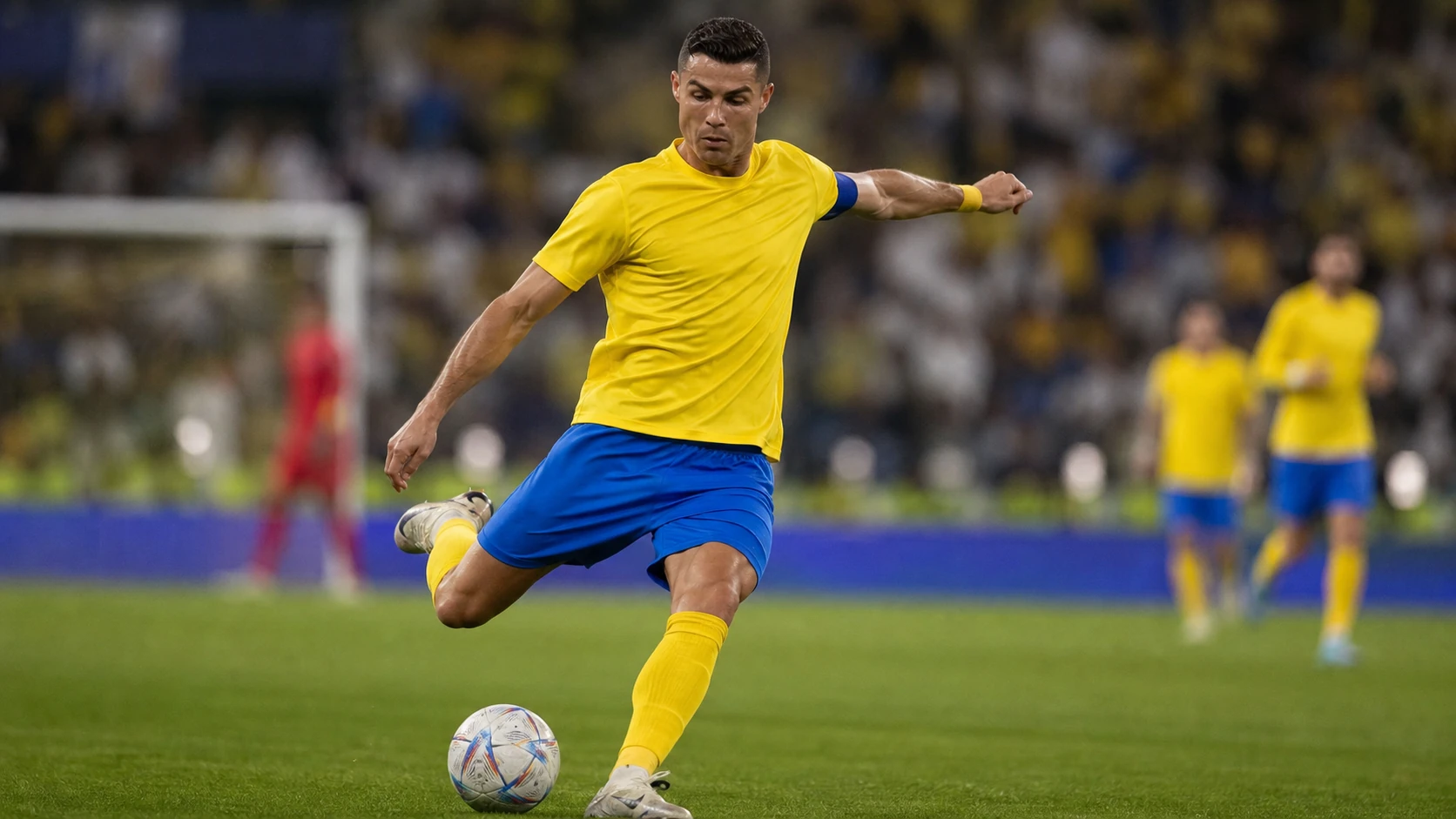
As of August 5, 2026, Ronaldo had scored 129 official goals for Al Nassr. That total excludes preseason and exhibition matches, which don’t form part of the standard official career count. His ability to maintain a high scoring rate after turning 40 has kept the 1,000-goal target within reach.
Ronaldo reached his 900th official senior goal while playing for Portugal against Croatia in September 2024. He moved beyond 950 during 2025 and reached 976 by July 2026. His progress attracted close attention because no male player in the modern documented record has reached 1,000 official senior goals under the same counting method.
Al Nassr extended Ronaldo’s contract through 2027. The agreement gives him time to pursue the milestone, but his age makes fitness, recovery and playing time increasingly important. Twenty-four goals would be achievable across one productive season, though no total can be treated as certain before the goals are scored.
Ronaldo’s Goals for Portugal
Ronaldo made his senior Portugal debut in August 2003. He scored his first international goal against Greece at UEFA Euro 2004 and later became the leading scorer in men’s international football.
As of August 2026, Ronaldo had scored 146 goals in 233 appearances for Portugal. His international career has covered European Championships, World Cups, Nations League tournaments, qualifiers and recognized friendlies. He has also served as Portugal’s captain for much of that period.
His greatest international team achievement came at Euro 2016, when Portugal won its first major senior trophy. Ronaldo left the final against France with an injury but remained active on the touchline as Portugal secured a 1-0 victory. He later helped the country win the inaugural UEFA Nations League in 2019.
Ronaldo scored at six men’s World Cups between 2006 and 2026. His goals at the 2026 tournament lifted his official career total to 976, though Portugal’s elimination ended his opportunity to add further World Cup goals.
How Ronaldo’s 976 Goals Are Counted
The accepted total includes goals from official senior club competitions and recognized senior internationals. League matches, domestic cups, continental tournaments, qualifying games and full internationals count toward the record.
Club friendlies and preseason exhibitions are normally excluded. Successful kicks in penalty shootouts are also excluded because the shootout decides the winner after the match rather than changing the official match score.
The Real Madrid disagreement remains the main reason some sources display 977 instead of 976. Real Madrid credits Ronaldo with 451 goals, while most statistical records use 450. Both figures refer to the same body of matches; the difference comes from the disputed attribution of one deflected free kick.
Historical comparisons also require care. Pelé and Romário were publicly associated with totals of 1,000 or more, but their figures included different combinations of friendlies, tours, youth matches or exhibitions. Ronaldo’s pursuit concerns documented official senior goals under the counting system generally applied to modern players.
Playing Style and Public Reputation
Ronaldo began his career as a creative wide player and became one of football’s most efficient finishers. His physical development, jumping ability, pace and shooting power allowed him to score in many ways. He has been especially effective in the air and from the penalty spot, while his movement has remained central to his success after losing some of his early acceleration.
His reputation also rests on discipline and longevity. Ronaldo has continued training and competing at an age when most elite forwards have retired. That commitment has helped him remain productive across more than 20 senior seasons.
Public opinion about Ronaldo can be sharply divided, especially in comparisons with Messi. Supporters point to his records across different leagues, his Champions League performances and his international total. Critics have questioned his team impact during later stages of his career or focused on the number of penalties within his scoring record.
The larger record remains clear: few players have combined elite production, long-term fitness and success across so many competitions. His career has changed expectations about how long a forward can remain a major scoring figure.
Partner, Children and Private Life
Ronaldo has been in a long-term relationship with Spanish-Argentine model and public figure Georgina Rodríguez. The couple began appearing publicly together in 2016. Although they are often described informally as husband and wife, a legally confirmed marriage has not been publicly established.
Ronaldo is the father of five living children: Cristiano Ronaldo Jr., twins Eva and Mateo, Alana Martina and Bella Esmeralda. In April 2022, Ronaldo and Rodríguez announced that Bella’s twin brother had died during childbirth. They discussed the loss publicly while asking for privacy.
Ronaldo’s family appears regularly in selected social media posts and in Rodríguez’s public projects. Details about the children’s daily lives, schooling and long-term plans remain private.
Net Worth and Income Sources
Cristiano Ronaldo’s exact net worth is not publicly confirmed. Published estimates often place it in the hundreds of millions of dollars, but private investments, taxes, contract structures and personal expenses aren’t fully available for independent verification.
His income has come from football salaries, performance bonuses, sponsorship agreements and commercial ventures. Ronaldo has held major endorsement relationships with companies including Nike and has developed businesses under the CR7 name, including clothing, fragrances, fitness projects and hospitality partnerships.
His Al Nassr contract has been widely described as one of the largest agreements in sports. Reported figures may combine football salary, commercial rights and promotional work, so they should not be treated as a simple annual wage without qualification.
Recent Work and Current Status
Ronaldo remained active for Al Nassr and Portugal through the middle of 2026. His contract with the Saudi club runs into 2027, and he had not publicly announced a full retirement from football as of August 5, 2026.
The main question surrounding his career is no longer whether he belongs among football’s greatest scorers. It is whether he can add the final 24 official goals required to reach 1,000.
His recent scoring record suggests the target is possible. But the final stage will depend on health, selection and whether he continues playing regularly for both club and country.
Frequently Asked Questions
How many total goals does Cristiano Ronaldo have?
Cristiano Ronaldo has 976 official senior goals for club and country as of August 5, 2026. The total consists of 830 club goals and 146 goals for Portugal.
How many goals does Ronaldo need to reach 1,000?
Ronaldo needs 24 more official goals. The timing will depend on his fitness, match schedule and scoring rate during the 2026-27 season.
Which club did Ronaldo score the most goals for?
Ronaldo scored the most goals for Real Madrid. Most statistical records credit him with 450 goals, while Real Madrid lists 451 because of a disputed goal attribution from 2010.
How many goals has Ronaldo scored for Portugal?
Ronaldo has scored 146 goals for Portugal. That total makes him the leading scorer in the history of senior men’s international football.
How old is Cristiano Ronaldo?
Cristiano Ronaldo was born on February 5, 1985. He is 41 years old as of August 2026.
Is Cristiano Ronaldo married?
Ronaldo is in a long-term relationship with Georgina Rodríguez. A legally confirmed marriage has not been publicly established.
What is Cristiano Ronaldo’s net worth?
His exact net worth is not publicly confirmed. Estimates place his wealth in the hundreds of millions of dollars, based on football earnings, endorsements and business ventures, but those figures can’t be independently verified with precision.
Conclusion
Cristiano Ronaldo’s 976 official goals represent more than a scoring record. They trace a career that began in Madeira, developed in Manchester, peaked statistically in Madrid and continued through Italy, Saudi Arabia and more than two decades with Portugal.
His pursuit of 1,000 gives the final stage of his career a clear public target. Yet his place in football history doesn’t depend on reaching that round number. His Champions League record, international total and success across several leagues already place him among the most productive players the sport has known.
The remaining goals will determine whether he completes one last milestone. The career behind them has already shown how talent, ambition and unusual durability can stretch football’s normal limits.
