

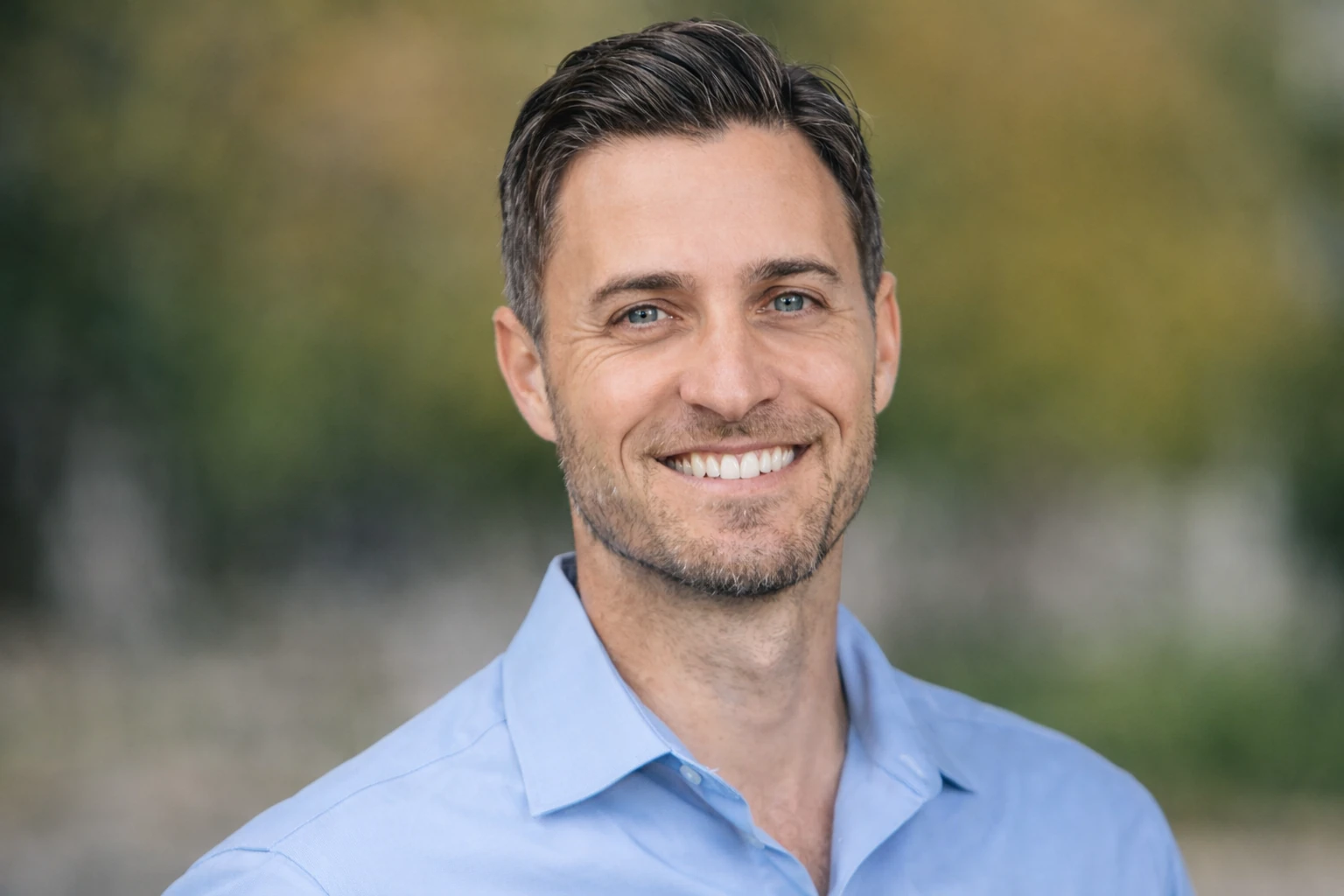
The story of Mark Herrema doesn’t start with a splashy product launch or a headline-grabbing exit. It begins quietly, with a question that most people wouldn’t dare build a career around: what if pollution itself could become the raw material for everyday products? That idea sounds almost too clean, too convenient, but Herrema has spent more than twenty years trying to prove it’s not just possible, but practical.
By all accounts, he’s not the kind of founder who courts attention. There are no viral speeches or oversized personality branding campaigns attached to his name. Instead, his reputation has grown through persistence, patents, and a willingness to stay with a difficult idea long after others might have moved on. That kind of patience doesn’t always make headlines, but it does build something more durable.
Early Life and Family Background
Details about Mark Herrema’s early life remain largely private, which is unusual in an era where even minor public figures often have their childhoods dissected online. What is known is that he grew up in the United States and later attended Princeton University, where he graduated in 2004. That timeline matters because it places him at the intersection of early 2000s environmental awareness and emerging biotech curiosity, a moment when climate concerns were becoming harder to ignore.
Anyone who knew him during those years would likely tell you he wasn’t chasing fame or quick wins. The truth is, his path doesn’t resemble the typical Silicon Valley playbook of building fast and selling faster. Instead, he gravitated toward long-cycle problems, the kind that require patience, technical depth, and a tolerance for uncertainty. Those tendencies would later define his career more than any single achievement.
Education at Princeton also exposed him to a network of thinkers and researchers who were beginning to treat climate change not just as an environmental issue but as a systems problem. That shift in thinking shows up clearly in Herrema’s later work. He didn’t just want to reduce harm; he wanted to redesign how materials are made in the first place.
Founding Newlight Technologies
In 2003, while still in his early twenties, Mark Herrema co-founded Newlight Technologies with Kenton Kimmel. Starting a company at that stage of life is common enough in tech, but the kind of company they chose to build was anything but typical. Their focus wasn’t software or consumer apps. It was industrial biology, specifically using microorganisms to convert greenhouse gases into usable materials.
Here’s where it gets interesting. The idea behind Newlight wasn’t entirely new in scientific circles, but turning it into a business was another matter entirely. Herrema and his co-founder weren’t just trying to prove a concept in a lab. They were trying to build a system that could compete with entrenched global plastics manufacturing, an industry known for tight margins and massive scale.
The early years were, by most accounts, slow and uncertain. The company spent nearly a decade refining its process, building pilot systems, and working through technical hurdles that don’t make for easy storytelling. From 2007 to around 2017, Newlight operated pilot plants, gradually improving its ability to convert methane and carbon dioxide into a polymer. That timeline alone tells you something about Herrema’s mindset. He wasn’t chasing quick validation. He was building something meant to last.
The Birth of AirCarbon
The breakthrough product from Newlight Technologies is AirCarbon, a material created by feeding greenhouse gases to naturally occurring microorganisms. These microorganisms convert the gases into a polymer known as polyhydroxyalkanoate, which can then be shaped into products that resemble conventional plastic.
What surprised many observers was not just the science, but the ambition behind it. Herrema wasn’t positioning AirCarbon as a niche eco-friendly alternative. He was aiming for direct competition with traditional plastics across industries like packaging, fashion, and consumer goods. That meant the material had to meet strict standards for durability, cost, and usability.
By 2013, Newlight had begun scaling its production, and within a couple of years, companies like Dell, IKEA, and The Body Shop were experimenting with the material in real products. Those early partnerships were critical. They signaled that AirCarbon wasn’t just a laboratory curiosity. It was something manufacturers were willing to test in the real world.
Recognition and Industry Validation
Recognition came gradually, then all at once. In 2016, the U.S. Environmental Protection Agency awarded Newlight the Presidential Green Chemistry Challenge Award. The EPA described AirCarbon as a net carbon-negative plastic made from methane-based greenhouse gas, and it emphasized that the material could match or outperform traditional plastics.
That kind of endorsement matters more than it might seem. Regulatory agencies tend to be cautious with praise, especially when it comes to environmental claims. For Herrema, it marked a turning point. The company was no longer just a hopeful startup. It had earned institutional credibility.
Years later, in 2023, TIME included Mark Herrema in its TIME100 Climate list. That recognition placed him alongside some of the most influential figures working on climate solutions. It also reflected a broader shift in how his work was being viewed. He was no longer just a founder with an interesting idea. He was part of a larger conversation about how industries might change.
Building a Business, Not Just a Technology
But here’s the thing. Plenty of companies have compelling technologies that never become viable businesses. Herrema seemed to understand early on that success would depend on more than scientific validation. It would require integration into supply chains, competitive pricing, and reliable production at scale.
Newlight’s strategy reflected that reality. Instead of focusing only on the material itself, the company invested heavily in building manufacturing systems. In 2019, it introduced Eagle 3, described as its first fully integrated commercial-scale production system. That move signaled a shift from experimentation to execution.
At the same time, Herrema worked to secure long-term access to greenhouse gas sources. In 2022, Newlight entered a 15-year agreement with CNX Resources to capture methane emissions for use in AirCarbon production. That kind of partnership shows a deeper level of thinking. It’s not just about making a product. It’s about controlling the inputs and ensuring consistency over time.
Financial Growth and Investment
Money often tells a clearer story than press releases, and in Newlight’s case, the numbers started to catch up with the narrative. In August 2023, the company announced a $125 million equity round led by GenZero, with participation from Oxy Low Carbon Ventures and Charter Next Generation.
That level of investment doesn’t happen on optimism alone. Investors look for signs that a company can scale, compete, and generate returns. For Herrema, the funding represented both validation and pressure. It meant the company had reached a point where expectations were no longer theoretical.
What’s surprising is how little public information exists about his personal wealth. Unlike many founders, Herrema hasn’t leaned into public discussions about net worth or financial status. Estimates vary widely, and without public filings, it’s difficult to pin down a precise figure. That absence, in a way, reinforces his image as a builder rather than a personality-driven entrepreneur.
Personal Life and Relationships
Mark Herrema has kept his personal life largely out of the spotlight, a choice that feels increasingly rare among high-profile founders. There are no widely reported details about his marital status or family, and he doesn’t appear to use his personal life as part of his public narrative.
According to people familiar with his work, that privacy isn’t accidental. It reflects a broader focus on the company and its mission rather than personal branding. In an era where founders often become celebrities in their own right, Herrema has taken a different path.
That doesn’t mean he’s detached or distant. Those who have worked with him describe a steady, focused presence, someone more interested in solving problems than in drawing attention. That kind of temperament can be an advantage in industries where progress is measured in years, not headlines.
What He’s Doing Now
As of 2025 and into 2026, Mark Herrema remains at the helm of Newlight Technologies, guiding its efforts to expand production and adoption of AirCarbon. The company’s inclusion in Amazon’s Devices Climate Tech Accelerator in 2025 points to growing interest from major corporations looking to reduce their environmental footprint.
The focus now is on scaling, which is both the most promising and most difficult phase for any industrial technology. Herrema and his team are working to increase production capacity, secure additional partnerships, and bring costs in line with traditional materials.
What’s clear is that the company is no longer operating on the margins. It’s part of a broader push to rethink how materials are sourced and manufactured. Whether it ultimately reshapes the plastics industry remains to be seen, but it has already changed the conversation.
Lesser-Known Aspects of His Life
Not many people know this, but Herrema is listed as an inventor on multiple patents related to Newlight’s technology. That detail often gets overshadowed by his role as CEO, but it speaks to his hands-on involvement in the company’s technical development.
Another detail that stands out is the sheer length of time he has spent on a single idea. Starting a company in 2003 and still leading it more than two decades later is uncommon, especially in industries where failure rates are high. That kind of persistence isn’t glamorous, but it’s often what separates lasting companies from short-lived experiments.
There’s also the way he has avoided the typical startup hype cycle. While many founders pivot frequently or chase trends, Herrema has remained focused on a single core concept: turning greenhouse gas into valuable material. That consistency has given Newlight a sense of identity that many startups struggle to maintain.
Frequently Asked Questions
Who is Mark Herrema?
Mark Herrema is an American entrepreneur and the co-founder and CEO of Newlight Technologies. He is best known for developing AirCarbon, a material created from greenhouse gases. His work focuses on reducing plastic pollution and addressing climate change through manufacturing innovation.
What is Mark Herrema’s main achievement?
His most recognized achievement is leading the development and commercialization of AirCarbon. The material has been adopted by major companies and earned recognition from organizations like the U.S. Environmental Protection Agency and TIME magazine. It represents a new approach to materials production using captured carbon.
Is Mark Herrema a scientist?
While he is not widely described as a traditional academic scientist, Herrema is listed as an inventor on multiple patents related to Newlight’s technology. His role blends technical development with business leadership. That combination has been central to the company’s progress.
What is Mark Herrema’s net worth?
There is no publicly confirmed figure for his net worth. Estimates vary because Newlight is a private company and financial details are not fully disclosed. What is known is that the company has raised significant funding, including a $125 million round in 2023.
What company did Mark Herrema found?
He co-founded Newlight Technologies in 2003 with Kenton Kimmel. The company focuses on converting greenhouse gases into a material called AirCarbon. It aims to replace traditional plastics with more sustainable alternatives.
Conclusion
Mark Herrema’s biography doesn’t follow the script people expect from modern entrepreneurs. There are no dramatic exits or rapid pivots, no carefully curated persona designed to dominate headlines. Instead, his story is built on patience, technical curiosity, and a willingness to stay committed to a difficult idea for decades.
That kind of consistency is rare, especially in industries where pressure to deliver quick results can push founders toward easier paths. Herrema chose a different route, one that required long-term thinking and a tolerance for uncertainty. It hasn’t always been easy, but it has positioned him at the center of a conversation that keeps growing.
What’s surprising is how relevant his work feels now compared to when he started. Concerns about plastic waste and climate change have only intensified, and solutions that once seemed distant are now being tested in real markets. Herrema’s company sits right in that space, trying to bridge the gap between possibility and practicality.
The next chapter of his story will likely be the most telling. Scaling a company like Newlight requires not just belief, but execution at a level that few startups achieve. If Herrema succeeds, he won’t just have built a business. He will have helped redefine how materials are made, and that’s a legacy that extends far beyond any single biography.
