

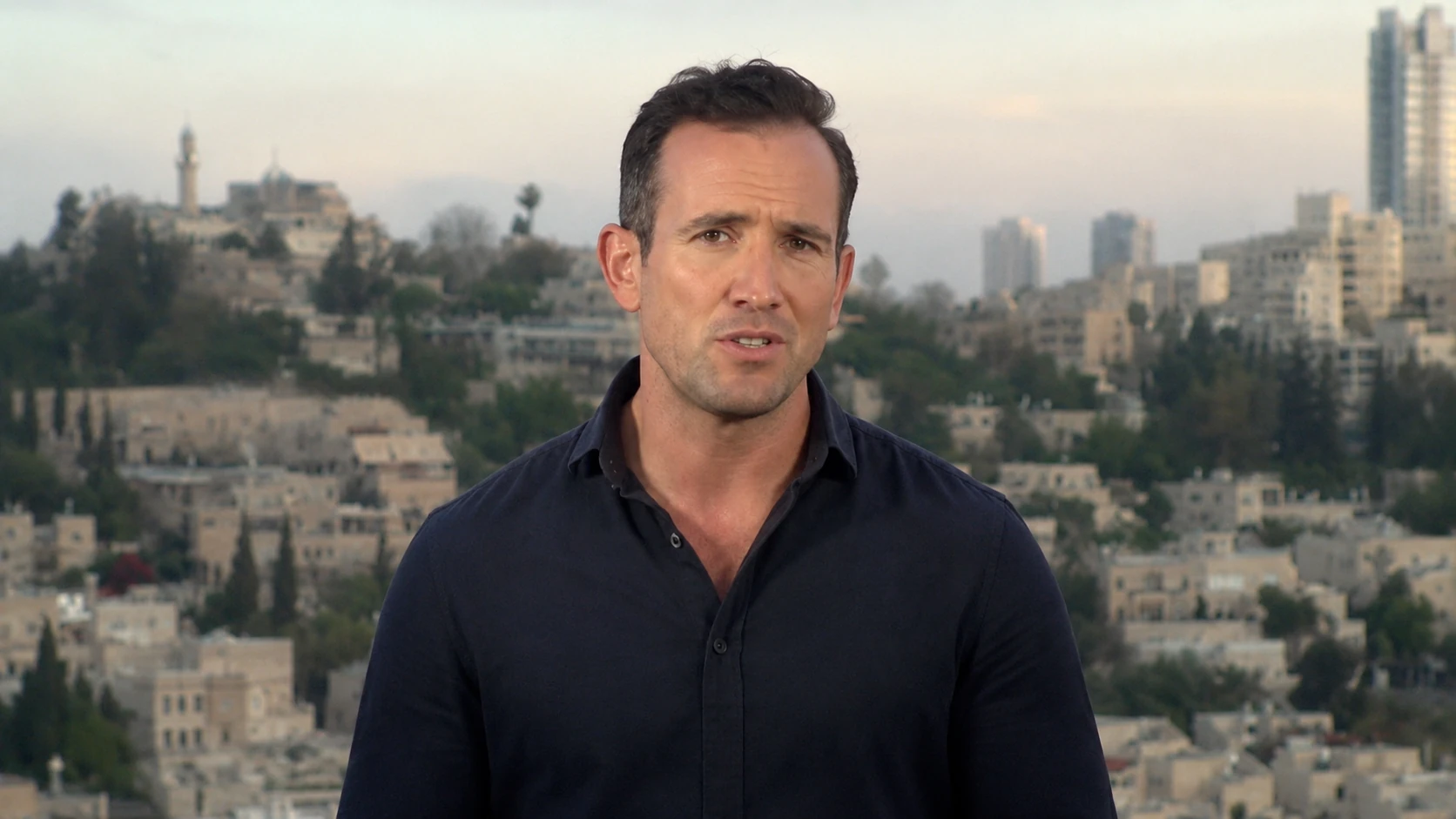
Hugo Bachega became familiar to many viewers in a moment that no reporter would choose for himself. On a live BBC broadcast from Kyiv in October 2022, he was explaining Russia’s missile attacks on Ukraine when the sound of explosions cut through the report and forced him to take cover. The clip traveled quickly because it showed the danger of war reporting in real time, but it also revealed something quieter about Bachega’s work: his calm, careful style under pressure.
That moment did not create his career. It simply brought wider attention to a journalist who had already spent years moving through major international newsrooms and difficult assignments. Bachega is a Brazilian-born British journalist whose public profile is tied most closely to the BBC, where he has reported from Ukraine, Lebanon, Israel and the wider Middle East.
For readers searching his name, the main questions are usually direct. Who is Hugo Bachega? Where is he from? Is he married? What is known about his family, salary and career? The honest answer is that his professional record is far clearer than his private life, and any serious biography has to respect that line.
Who Is Hugo Bachega?
Hugo Bachega is a BBC journalist and foreign correspondent known for covering conflict, politics and humanitarian crises. His recent public identity is strongly connected to his role as a BBC Middle East correspondent, with reporting from Beirut and coverage of Lebanon, Israel, Hezbollah, Gaza and regional tensions. Before that, he was widely seen in BBC coverage of Russia’s war in Ukraine.
His work is the kind of journalism that often becomes visible only during crisis. Viewers may not know the reporter’s biography at first, but they remember the voice explaining what is happening from a city under attack or a border region on edge. Bachega’s role is to translate fast-moving events into plain, accurate reporting for a global audience.
He is not a celebrity journalist in the usual sense. Public information about his personal life is limited, and he does not appear to have built his profile around lifestyle coverage or public self-promotion. His reputation rests on the places he has reported from and the steadiness he brings to stories where the facts can shift by the hour.
Early Life and Background
The strongest public description of Hugo Bachega’s background identifies him as a Brazilian-born British journalist. That wording matters because it reflects both where his story began and the international career he later built. It also helps explain why his professional path crosses cultures, languages and news markets.
Details about his childhood, parents and family upbringing are not widely documented in reliable public sources. There is no confirmed public record that clearly establishes his exact hometown, school history or family members. Because of that, any profile that claims to know intimate details about his early family life should be read with caution.
What can be said with confidence is that Brazil shaped the beginning of his journalism career. He worked in Brazil before becoming widely known through the BBC, and early professional credits place him in serious political and economic reporting. That foundation gave him experience in the kind of fact-driven news work that later became essential to his foreign reporting.
Education and First Ambitions
Bachega has not made his education a major part of his public profile. Some public mentions describe him as having spent time in the Middle East as a student, which suggests an early interest in international affairs, language, culture or politics. Still, the specific institutions he attended and degrees he earned are not clearly confirmed in widely available public records.
That absence is not unusual for working correspondents. Many journalists become publicly known through their reporting rather than through a polished biography of their early ambitions. In Bachega’s case, the public record shows the result of that development more clearly than the private steps that led to it.
His later career suggests a reporter drawn to international stories rather than a narrow national beat. Moving from Brazil-based reporting to assignments across Cairo, London, Washington, Kyiv and Beirut requires more than technical skill. It requires curiosity, stamina, editorial judgment and the ability to understand how local events connect to global power.
Early Career at Reuters
Before becoming widely recognized on BBC screens, Hugo Bachega worked with Reuters, one of the world’s most respected international news agencies. Reuters reporting is demanding because it prizes speed, precision and restraint. Reporters must file quickly while keeping language clean, evidence clear and claims properly attributed.
Public Reuters records show Bachega’s name attached to Brazil-related reporting by 2009. One early example involved coverage connected to Dilma Rousseff, who later became president of Brazil. That kind of work placed him near major political developments at a time when Brazil was drawing strong international attention.
By 2011, Bachega was also credited on Reuters coverage of Brazil’s cement market and competition concerns. That may sound far removed from later war reporting, but it reveals a useful training ground. Economic and regulatory stories require a journalist to understand institutions, claims, evidence and consequences, all without overstating what is known.
Moving Into International Correspondence
Bachega’s move from Reuters into BBC foreign reporting marked a shift from bylined agency work to a more visible broadcast role. At the BBC, correspondents are often asked to do several jobs at once. They write digital stories, appear on live television, contribute to radio coverage and explain context for audiences who may be coming to the story with little background.
His career has been associated with several major news centers, including Cairo, London, Washington DC, Kyiv and Beirut. Each city represents a different kind of reporting challenge. Cairo connects a journalist to the politics of North Africa and the Arab world, Washington to American power, Kyiv to war in Europe and Beirut to one of the Middle East’s most sensitive political crossroads.
That range is one reason Bachega’s work carries authority. He is not covering events from a single desk or narrow subject area. His reporting has required him to understand governments, armed groups, civilians, aid workers, diplomacy and the language of conflict.
The Kyiv Broadcast That Introduced Him to Many Viewers
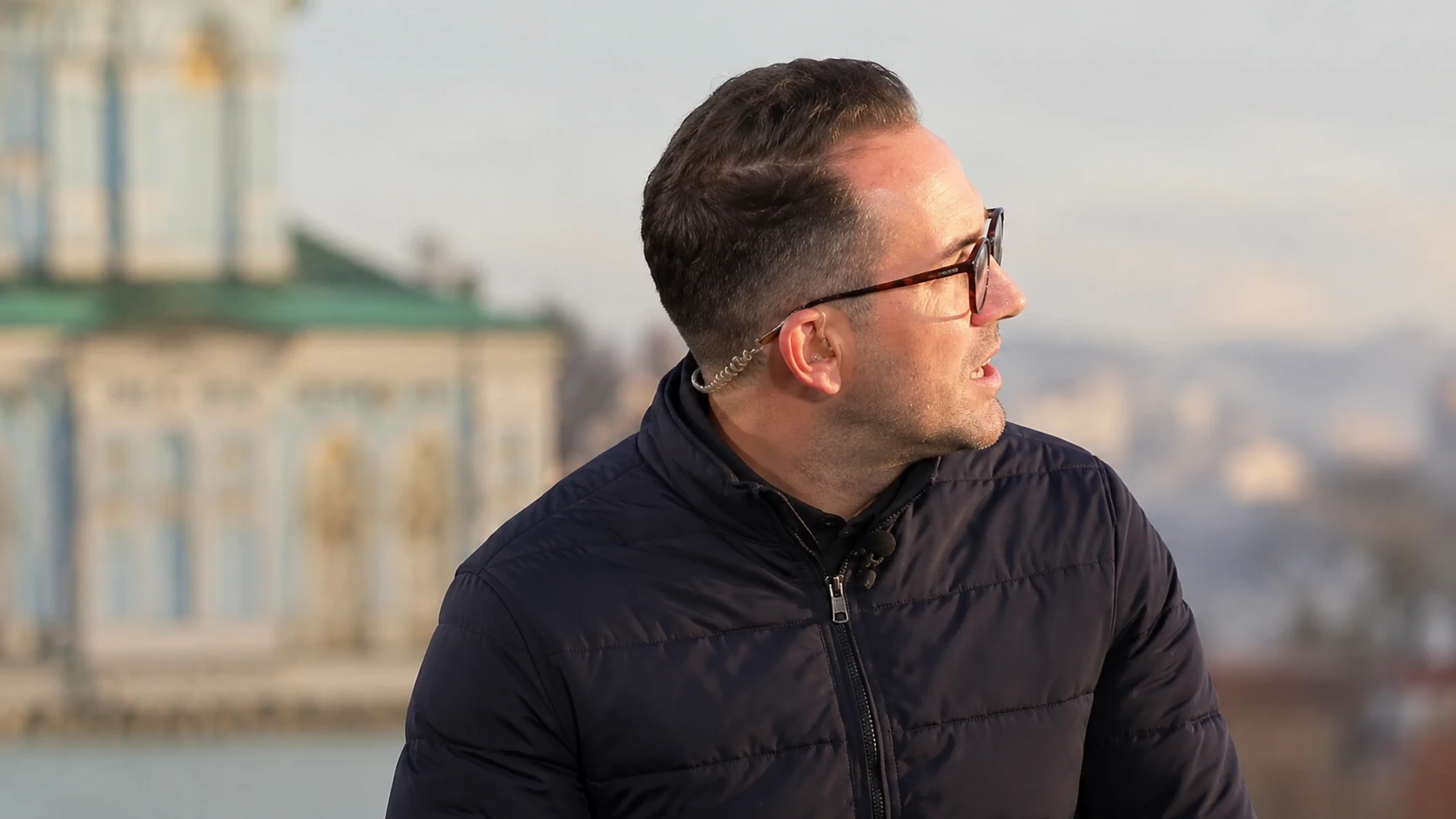
On October 10, 2022, Bachega was reporting live for the BBC from Kyiv as Russian strikes hit Ukraine’s capital and other cities. During the broadcast, explosions could be heard in the background. He paused, ducked and moved away from the live position as the program cut back to the studio.
The moment spread widely because it captured the danger of reporting from a city under attack. It was not staged, polished or dramatic in the usual television sense. It was simply a journalist doing his job until the conditions around him made continuing unsafe.
For many viewers, that clip became their first clear memory of Bachega. But the deeper point was not personal fame. It showed the pressure on reporters in Ukraine, where even a live briefing from a city location could be interrupted by the immediate threat of missiles.
Reporting the War in Ukraine
Bachega’s Ukraine reporting came during one of the most closely watched conflicts of the modern era. Russia’s full-scale invasion in February 2022 forced international news organizations to maintain sustained coverage across front lines, cities, diplomatic centers and refugee routes. Correspondents had to explain military developments while also keeping civilian life at the center of the story.
The challenge was not only physical danger. Information in wartime is often incomplete, disputed or used as part of political messaging. A responsible correspondent has to separate confirmed facts from official claims and early reports, especially during attacks when casualty numbers and damage assessments can change.
Bachega’s on-air manner fit that environment. He tended to describe what was known, what officials were saying and what could not yet be confirmed. That style can seem understated, but understatement is often a mark of discipline in conflict reporting.
BBC Middle East Correspondent
After Ukraine, Bachega became closely associated with BBC coverage of the Middle East. His reporting from Beirut and the wider region has focused on Lebanon, Israel, Hezbollah, Gaza and the wider effects of regional conflict. These stories are difficult because they mix military developments with history, religion, politics, displacement and grief.
Beirut is a particularly demanding base for a foreign correspondent. Lebanon is not just a backdrop for regional conflict; it has its own fragile politics, economic crisis and social pressures. Any reporter based there has to understand the country as more than a place where outside powers compete.
Bachega’s Middle East coverage has often dealt with the human consequences of war and escalation. Reports from Lebanon, for example, have involved Israeli strikes, emergency workers, ceasefire uncertainty and families trying to return home. Those are stories where the human cost cannot be separated from the strategic calculations behind the violence.
Reporting Lebanon, Israel and Hezbollah
Covering Lebanon and Israel requires careful language. Israeli officials often describe strikes through the frame of security and threats from Hezbollah. Lebanese officials and local communities often focus on sovereignty, civilian casualties and the destruction caused by military action.
A correspondent in that environment must present competing claims without flattening the facts. If one side says a target was military and another points to civilian harm, the story must make clear who is making each claim and what evidence is available. This is not only an editorial concern; in the Middle East, wording can shape how audiences understand responsibility and scale.
Bachega’s work in this area has shown the importance of reporting from the ground. A ceasefire can sound clean from a distance, but residents returning to damaged villages may face fear, ruined homes and uncertainty about whether fighting will resume. That is where field reporting matters most, because it shows what policy language means in daily life.
Public Image and Professional Style
Hugo Bachega’s public image is built around calm reporting rather than personality-driven media attention. He is recognizable to BBC viewers, but he does not appear to seek celebrity status. His presence is tied to the story he is covering, not to a public performance of himself.
This restraint has become part of his professional identity. In live reports, he usually avoids inflated language and keeps the focus on facts, context and people affected by events. That style is especially useful for audiences trying to understand conflicts that can feel distant and confusing.
There is also a quiet trust in this kind of reporting. Viewers often return to correspondents who sound measured during frightening events. Bachega’s authority comes less from dramatic presentation than from the sense that he is weighing his words carefully.
Family, Marriage and Private Life
Public information about Hugo Bachega’s family is limited. There is no strong public record that confirms the names of his parents, siblings or close relatives. This makes it difficult to write about his family background without crossing into guesswork.
The same is true of his marital status. Searches for “Hugo Bachega wife” or “Hugo Bachega married” often lead to pages that repeat uncertainty rather than verified facts. No reliable public source clearly confirms that he has a wife, partner or children.
That privacy should be treated with respect. Bachega is a public figure through his journalism, not through public disclosures about his household. A serious biography can acknowledge the curiosity while making clear that his private life has not been placed into the public record.
Age and Personal Details
Hugo Bachega’s exact age is not publicly confirmed in a reliable, official biography. Some websites estimate that he may be in his thirties or early forties, but those estimates are not backed by a verified birth date. Without a confirmed date of birth, the most accurate answer is that his age remains publicly unverified.
His career timeline offers a broad sense of his professional stage. Since his name appears in Reuters reporting by 2009, he has been active in serious journalism for well over a decade. That places him among experienced international correspondents, even if the exact number of years in his personal life is not publicly known.
Other personal details, including height, religion and daily life, are also not clearly established in reliable public sources. Readers should be cautious with websites that present such details as facts without evidence. In Bachega’s case, the verified record is strongest where it concerns his journalism.
Salary, Income and Net Worth
There is no credible public record of Hugo Bachega’s net worth. Many biography sites publish estimated figures for journalists, but those numbers are often unsourced and should not be treated as reliable. In Bachega’s case, no trustworthy public financial disclosure confirms his assets, salary or personal wealth.
His income is most likely tied to his work as a journalist and correspondent. BBC foreign correspondents are professional employees or contracted journalists, but exact pay varies by role, seniority, location and internal arrangements. Unless salary information is officially disclosed, any specific figure would be speculation.
The safest way to describe his financial standing is to focus on career status rather than invented money claims. Bachega holds a high-profile position with a major international broadcaster, which indicates professional success. It does not reveal his personal fortune, savings, property or total income.
Career Standing and Influence
Bachega’s standing comes from the difficulty and visibility of his assignments. Reporting from Ukraine during Russian attacks and from the Middle East during regional conflict places him in some of the most consequential news stories of recent years. That experience gives him a public role beyond ordinary newsroom reporting.
His influence is not the kind measured by awards alone. It is measured by the way audiences understand events through his reporting. For viewers trying to make sense of a missile strike, a ceasefire or a border escalation, the correspondent becomes a bridge between distant events and public understanding.
That role carries weight because foreign news can easily become abstract. Numbers, maps and official statements can obscure the people living through the story. Bachega’s reporting has often worked against that distance by bringing viewers closer to the lived effects of conflict.
Where Hugo Bachega Is Now
Hugo Bachega is currently known as a BBC correspondent with a strong focus on the Middle East. His recent public work has been connected to Beirut, Lebanon and wider regional developments involving Israel, Hezbollah and Gaza. That role keeps him close to stories that remain central to global politics.
His current status reflects the path of a journalist who moved from national and agency reporting into high-stakes foreign correspondence. He is now one of the BBC voices audiences may see during major Middle East developments. That visibility is likely to continue as the region remains one of the most closely watched areas in world news.
What is clear is that Bachega’s career is still active. He is not a retired figure being remembered from past work. He remains part of the daily machinery of international reporting, filing from places where the news is urgent and the consequences are real.
Frequently Asked Questions
Who is Hugo Bachega?
Hugo Bachega is a Brazilian-born British journalist and BBC correspondent. He is best known for reporting from conflict zones, including Ukraine and the Middle East.
His public profile grew after a live BBC report from Kyiv in October 2022 was interrupted by explosions during Russian missile attacks. Since then, many viewers have also recognized him through BBC coverage from Beirut and the wider region.
What is Hugo Bachega’s nationality?
Hugo Bachega is publicly described as Brazilian-born and British. That means his background is connected to Brazil, while his professional identity is also tied to British journalism and the BBC.
His early journalism work was connected to Brazil, including reporting for Reuters. His later career became international, with assignments and postings across major global news centers.
Is Hugo Bachega married?
Hugo Bachega’s marital status is not publicly confirmed by reliable sources. There is no verified public information naming a wife, partner or children.
Because of that, claims about his marriage or family life should be treated carefully. His public record is centered on his journalism rather than private relationships.
How old is Hugo Bachega?
Hugo Bachega’s exact age is not publicly verified. Some websites estimate an age range, but no reliable source has confirmed his date of birth.
What can be said is that he has been active in professional journalism since at least the late 2000s. His experience places him firmly among seasoned international correspondents.
What happened to Hugo Bachega in Kyiv?
In October 2022, Hugo Bachega was reporting live for the BBC from Kyiv when explosions were heard nearby during Russian missile attacks. He stopped the report and moved away for safety as the broadcast returned to the studio.
The clip became widely shared because it showed the danger faced by journalists covering the war in Ukraine. Bachega and the BBC team were later reported to be safe.
What is Hugo Bachega’s net worth?
Hugo Bachega’s net worth has not been reliably confirmed. Any exact figure online should be treated as an estimate unless it comes from a credible financial disclosure.
His known income source is his journalism career, especially his work with the BBC. Beyond that, there is no verified public information about his personal assets or wealth.
Where is Hugo Bachega based?
Hugo Bachega has been publicly associated with BBC Middle East reporting and has worked from Beirut. His career has also included postings or reporting links to Cairo, London, Washington DC and Kyiv.
Foreign correspondents often move depending on the story, so one location may not describe his work permanently. His current public profile is most closely tied to BBC coverage of the Middle East.
Conclusion
Hugo Bachega’s biography is, above all, the story of a working foreign correspondent. He is not known because of a public family dynasty, a celebrity lifestyle or a carefully managed personal brand. He is known because he has reported from places where history is unfolding under dangerous conditions.
The most honest profile of him must leave some private spaces private. His exact age, family life, marriage status and personal finances are not clearly confirmed in the public record. What is confirmed is the professional path: Brazil, Reuters, the BBC, Ukraine, Beirut and the wider Middle East.
That record is enough to explain why readers search for him. Bachega represents the kind of journalist whose work becomes visible when the world is watching a crisis and needs someone calm enough to explain it. His value lies in that discipline, especially at a time when fast news often rewards noise over care.
As long as war, displacement and regional tension remain central to international news, correspondents like Hugo Bachega will matter. They help audiences understand not only what happened, but what it felt like on the ground and why it may shape what comes next.
