

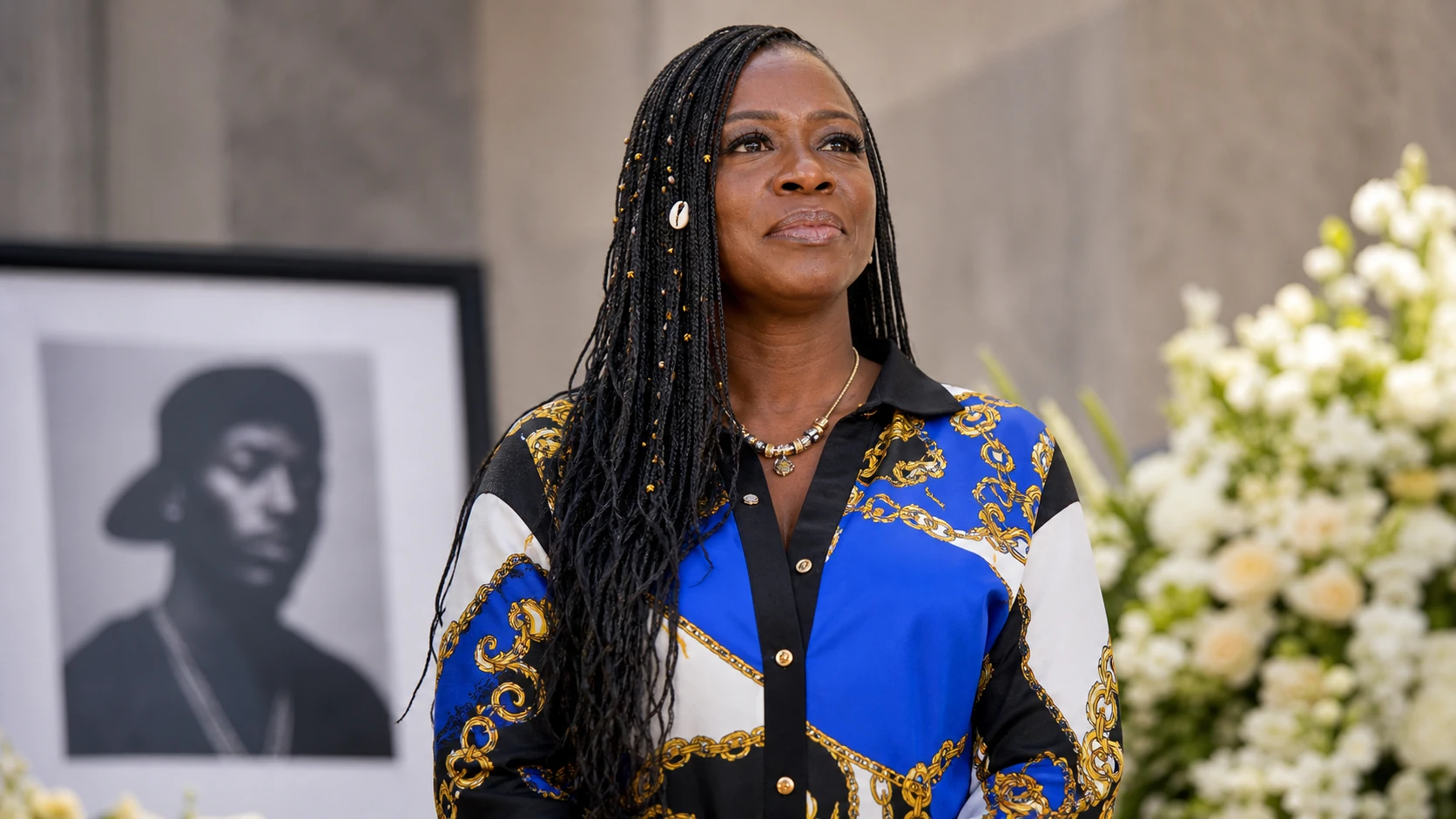
Sekyiwa “Set” Shakur is an American nonprofit leader best known as the younger maternal half-sister of rapper Tupac Shakur and the President of the Tupac Amaru Shakur Foundation. While much of the public attention surrounding her comes from her connection to one of hip-hop’s most influential artists, Sekyiwa has built her own public role through youth advocacy, community work and efforts to preserve the values associated with her family’s foundation.
Born in 1975, Sekyiwa is the daughter of Afeni Shakur, the political activist and mother of Tupac, and Mutulu Shakur. Because Tupac’s father was Billy Garland, Sekyiwa and Tupac share the same mother but have different fathers, making her his maternal half-sister.
Her work today centers on the Tupac Amaru Shakur Foundation, an organization founded by Afeni Shakur in 1997 to support young people through arts and creative opportunities. As foundation president, Sekyiwa has helped continue the organization’s focus on youth development, trauma awareness and community-based programs while also serving as a public representative of the Shakur family.
Growing up in the Shakur family
Sekyiwa Shakur’s early life was shaped by the experiences of a family connected to activism, social issues and artistic expression. Family reporting places her birth in 1975, during the period when Afeni Shakur was married to Mutulu Shakur.
Her childhood included time in New York, Baltimore and California. In 1984, the family moved to Baltimore’s Greenmount Avenue neighborhood, where Sekyiwa later recalled living during her childhood years. The area became an important part of the Shakur family story, with Sekyiwa describing memories of that period and the influence her brother’s ambitions had on her understanding of community support and opportunity.
Although Tupac became internationally known as a musician and actor, Sekyiwa’s own path developed around youth programs and community service rather than entertainment. Her public work has focused largely on helping young people and supporting initiatives connected to healing and empowerment.
Youth advocacy before foundation leadership
Before becoming one of the public faces of the Tupac Amaru Shakur Foundation, Sekyiwa was involved in youth-focused programs.
A speaker biography for Finance NOLA states that she attended Clark Atlanta University and later worked with youth initiatives, including the Teens On The Rise program. A 2006 AllHipHop interview with a participant in that program also identified Sekyiwa as someone involved with Teens On The Rise, an after-school initiative at Washington High School in Atlanta.
The available records support her involvement in youth advocacy, but they do not confirm that she graduated from Clark Atlanta University. The strongest verified description is that she attended the institution and developed experience working with young people through community programs.
Her early advocacy work established a pattern that continued into her later foundation leadership: using education, creativity and community engagement as tools for helping young people navigate difficult circumstances.
Leading the Tupac Amaru Shakur Foundation
The Tupac Amaru Shakur Foundation was founded by Afeni Shakur in 1997, originally as the Shakur Family Foundation. Its early mission focused on creating opportunities for young people from underserved communities through arts and creative programs.
Sekyiwa later became involved in the organization’s leadership and is currently listed as its President. Under her leadership, the foundation describes its work as including youth programs, creative arts, mental-health awareness, trauma healing, support for families affected by incarceration, anti-trafficking efforts and conflict-resolution initiatives.
The foundation’s mission reflects both its original artistic focus and a broader emphasis on community support. Sekyiwa has connected the organization’s work to the experiences of people facing trauma and social challenges, while maintaining the foundation’s connection to Tupac’s legacy of expression and activism.
Representing Tupac Shakur’s legacy
Following Tupac Shakur’s death in 1996, Sekyiwa became one of the family members most visible in preserving his public legacy.
In June 2023, she accepted Tupac’s posthumous star on the Hollywood Walk of Fame on behalf of the family. The ceremony recognized Tupac’s influence across music, film and popular culture decades after his death.
Later that year, Sekyiwa participated in the dedication of Tupac Shakur Way in Oakland, California. The street naming ceremony honored the rapper’s connection to the city and his lasting cultural impact.
Her role at these events has been that of a family representative, but it has also reflected her broader position as a leader of the foundation created in her family’s name.
The Afeni Shakur trust dispute and estate questions
Sekyiwa’s name has also appeared in public discussions about Tupac’s estate because of a 2022 legal filing involving the administration of Afeni Shakur’s trust.
In January 2022, Sekyiwa and the Tupac Amaru Shakur Foundation filed a petition in Los Angeles Superior Court against Tom Whalley, who was involved in administering aspects of the Shakur estate structure. The filing requested court action related to trustee duties and financial accounting.
The dispute has sometimes been simplified online into claims that Sekyiwa “owns” or “controls” Tupac’s estate. The available court documents do not support that description. The filing describes a more complex trust arrangement involving beneficiaries, the foundation and trustees. Allegations made in the petition also should not be treated as proven findings, and Whalley’s representatives denied wrongdoing.
The most accurate description is that Sekyiwa has been involved in legal efforts connected to the administration of her family’s trust interests, not that she personally owns all of Tupac’s assets or music catalog.
Sekyiwa Shakur’s current public role in 2026
Sekyiwa remains active as President of the Tupac Amaru Shakur Foundation and continues to appear at events connected to her family’s community work and Tupac’s legacy.
In May 2026, she participated in a Baltimore commemoration connected to the former Shakur family neighborhood and later threw out the ceremonial first pitch at an Orioles game during a Tupac-related tribute event.
Public interest in the Shakur family has also increased again because of developments in the criminal case involving Duane “Keffe D” Davis, who is charged in connection with Tupac’s 1996 killing. While the case has renewed attention on Tupac’s life and death, Sekyiwa’s own documented public role remains focused on foundation leadership and community work.
Final thoughts
Sekyiwa Shakur’s public identity extends beyond being Tupac Shakur’s sister. Her connection to one of music’s most influential figures has made her a recognizable member of the Shakur family, but her own documented career has centered on youth advocacy, nonprofit leadership and preserving a foundation built around creativity and community support.
As President of the Tupac Amaru Shakur Foundation, Sekyiwa continues to occupy a unique position: both a guardian of her brother’s public legacy and a community-focused leader with a separate body of work.
