


Spook Spann’s exact net worth is not reliably established by public records or authoritative financial reporting as of August, 2026. Although one biography site has published a $1 million to $2 million estimate, it does not provide the financial disclosures, current asset values, debts, business valuations, or ownership records needed to support that figure.
What is well documented is how William A. “Spook” Spann built a commercial career around professional hunting, television, sponsorships, and hunting land. A federal court record provides unusually useful financial context: Spook Nation, the television operation Spann produced and hosted, received “substantial income” from hunting-industry sponsors. His later work has continued along similar lines through outdoor media and land-management services.
Key takeaways
- Spook Spann’s exact net worth is not publicly verified as of August 23, 2026.
- Federal court records show that Spook Nation generated substantial sponsorship income.
- Spann was historically involved in hunting-property investment, including a documented connection with Big Buck Properties.
- His federal case resulted in a documented $10,000 fine and $10,000 in restitution in 2013.
- In 2026, he remains publicly active through The 11th Commandment, an outdoor-media and land-management operation.
The evidence behind Spook Spann’s finances
The strongest evidence about Spann’s earning power does not come from a net-worth website. It comes from a 2013 federal court order.
The court identified Spann as a Tennessee-based professional big-game hunter who had been self-employed in that field since approximately 2007 or 2008. It also recorded that he began producing and hosting Spook Nation around 2009.
The show’s economics matter because Spann purchased the airtime himself while receiving sponsorship money from companies in the hunting industry. In reviewing his finances, the court described that sponsorship revenue as “substantial income” and found that it considerably exceeded hunting-related losses Spann had claimed.
That establishes a genuine commercial income stream, but it does not establish personal net worth. The record does not disclose an annual sponsorship total, Spann’s profit after expenses, or how much of the operation’s proceeds ultimately remained as personal wealth.
From trophy hunting to a media business
Spann’s television business developed from the public profile he built as a trophy whitetail hunter.
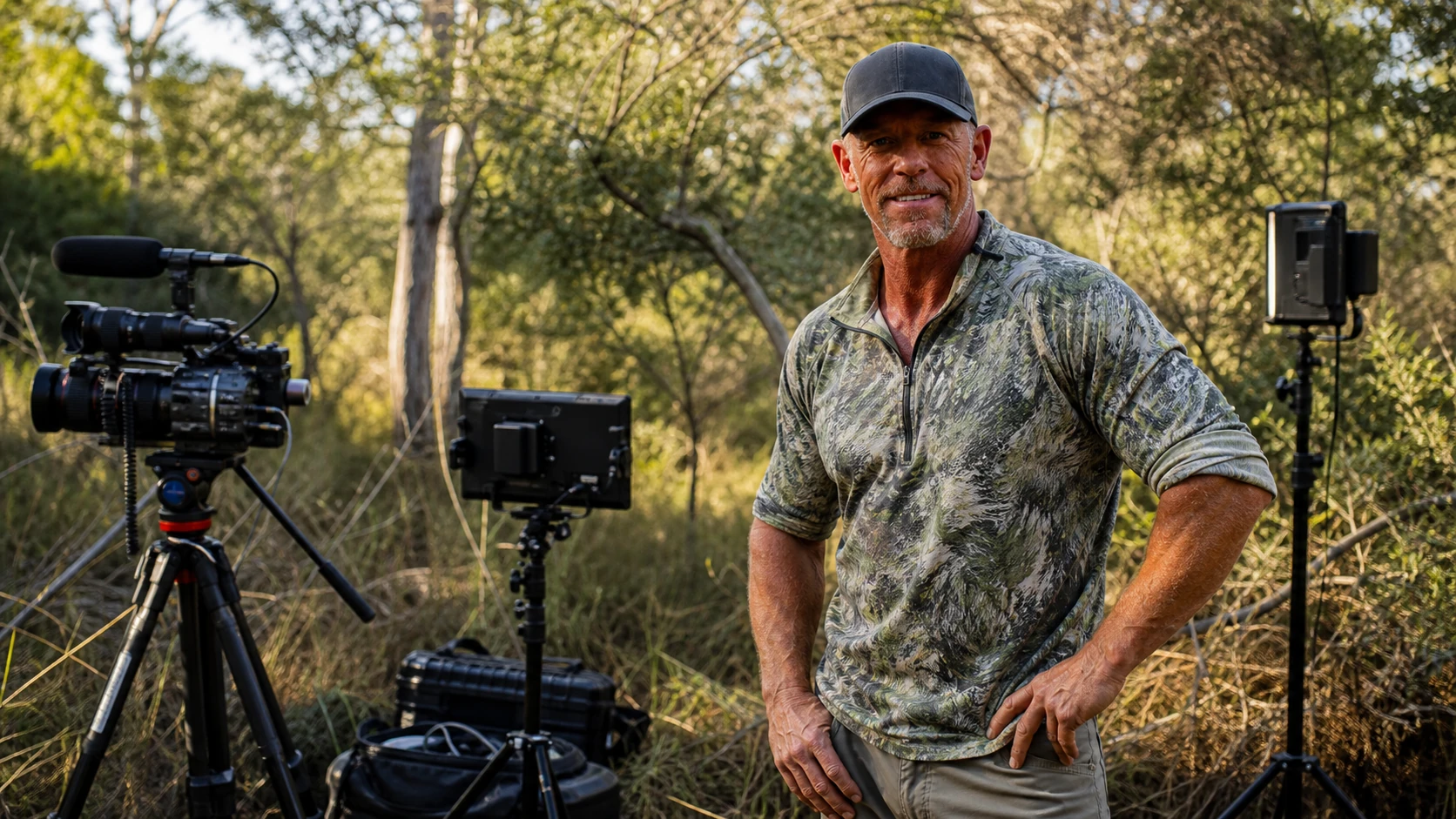
A 2010 North American Whitetail profile reported that he began thinking in 2006 about buying Kansas property where he could hunt, film, and conduct habitat work. He purchased a 160-acre tract in early 2007.
That property became connected to one of the best-known hunts of his career. On November 14, 2007, Spann took a large non-typical whitetail in Stafford County, Kansas. North American Whitetail reported a final net score of 224 1/8 and said footage appeared through Realtree Outdoors and Monster Bucks 16, Volume 2.
The exposure helped establish Spann as a recognizable figure in outdoor media. By around 2009, Spook Nation had turned that visibility into a television platform supported by hunting-industry sponsors.
Rather than simply earning money from hunting itself, Spann had developed a model in which hunting generated footage, television created an audience, and that audience attracted sponsors.
Hunting land became part of the business story
Property also formed part of Spann’s documented commercial activity.
The same North American Whitetail profile described him in 2010 as a partner in Big Buck Properties, a company involved in buying hunting tracts. His earlier purchase of Kansas land similarly tied property ownership to hunting and media production rather than treating land solely as a recreational asset.
A separate historical Land.com listing provides another example. It described a 768-acre property in Trigg County, Kentucky, as owned by Spann and advertised it for $1,301,760, or $1,695 per acre.
The figure is useful evidence of the scale of property with which he was associated, but it cannot responsibly be counted as $1.3 million of personal wealth. An asking price does not reveal the acquisition cost, mortgage balance, ownership structure, eventual sale price, taxes, or proceeds retained by the owner.
That distinction is important when assessing Spook Spann’s net worth. Real estate may contribute to someone’s wealth, but a property listing alone does not reveal their equity.
The documented financial cost of his federal case
Spann’s legal history also produced specific financial consequences that are publicly documented.
He pleaded guilty on November 27, 2012 to a misdemeanor Lacey Act offense involving the interstate transportation of wildlife unlawfully taken in Kansas. According to the U.S. Justice Department’s sentencing record, Spann was sentenced on February 28, 2013 to three years of supervised release and ordered to pay a $10,000 fine plus $10,000 in restitution. He was also temporarily restricted from hunting in the United States.
Later in 2013, authorities said he violated conditions of his probation. A subsequent order required 30 days in Bureau of Prisons custody, served during nights and weekends, and extended his hunting restrictions.
Those figures document $20,000 in fine and restitution obligations, but they still reveal very little about his overall financial position. There is no sound basis for subtracting those costs from an assumed net-worth figure because no reliable starting figure exists.
Spann later became involved in separate Tennessee criminal proceedings and related civil litigation. Those matters should not be collapsed into a claim that he was universally “exonerated” or that every charge in his legal history disappeared. His 2012 federal guilty plea and 2013 sentence remain documented, while later proceedings had their own distinct outcomes.
The current chapter: The 11th Commandment
Spann remains publicly active in the outdoor industry in 2026.
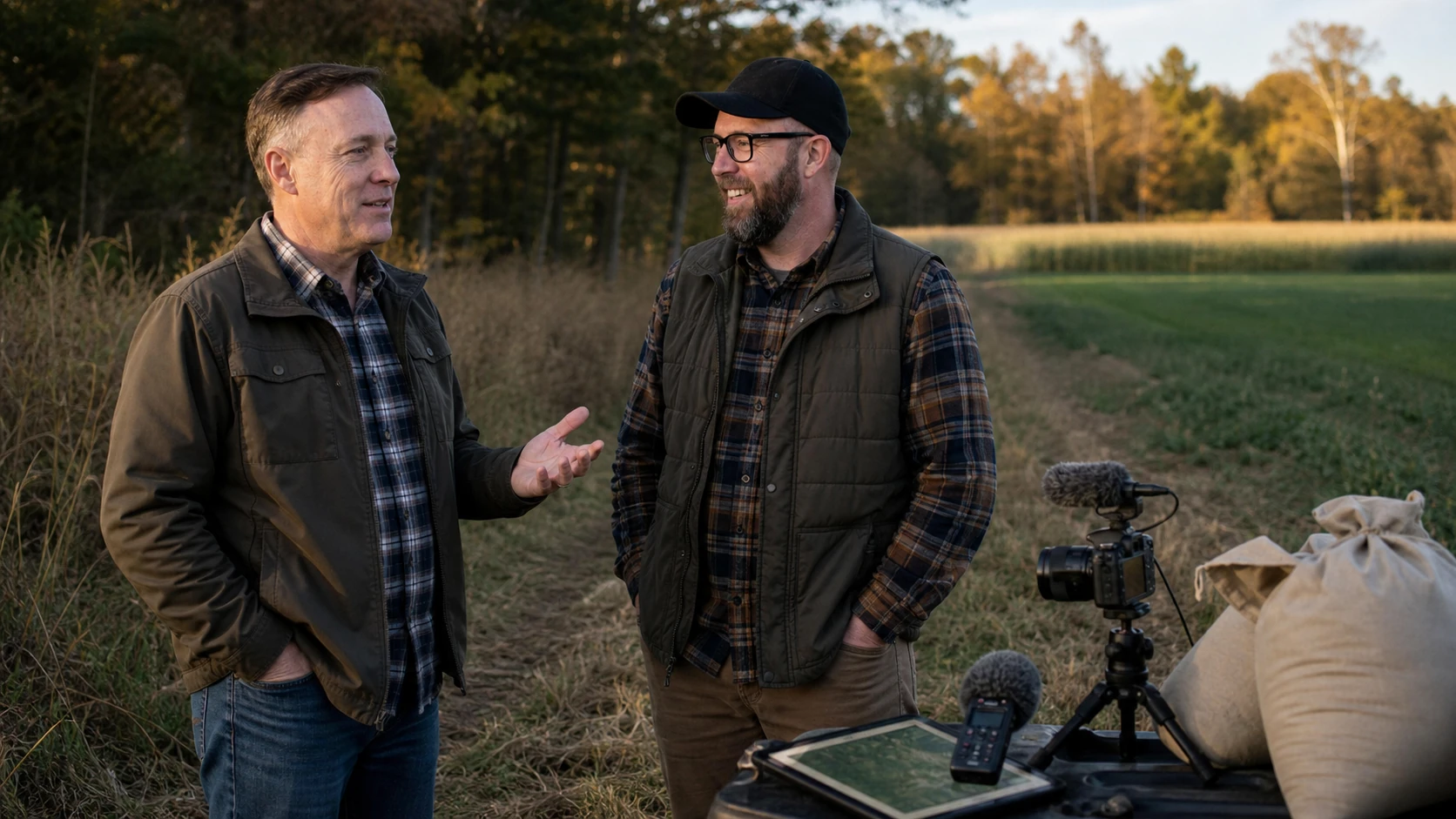
His current work is associated with The 11th Commandment, where he and Brian Stephens are identified as hosts. The operation combines hunting media and podcasting with product features, brand integrations, content production, and land-management services.
That business model has clear continuity with Spann’s earlier career. Spook Nation combined outdoor content with sponsorships; his current work likewise places hunting knowledge, media production, commercial partnerships, and land management within the same broader operation.
Spann also continued appearing in hunting and land-focused media in 2026. A March 18 appearance on The Legacy Through Land Podcast centered on buying land, habitat management, and hunting strategy, showing that the connection between property and hunting remains part of his public work.
None of these current activities comes with a published salary, sponsorship total, company valuation, or disclosed ownership percentage. They demonstrate that Spann remains commercially active, not how much he is personally worth.
Why the online estimates do not hold up
The $1 million to $2 million estimate circulating on one biography site may appear plausible when set beside Spann’s television, sponsorship, and property history, but plausibility is not financial verification.
A legitimate net-worth calculation would require much more: present asset values, current real-estate equity, business ownership percentages, investment holdings, cash, debts, tax liabilities, and other obligations. Those figures are not publicly established in the material available for Spann.
Some search results create even greater confusion by attaching much larger figures to completely different identities. Pages claiming $8 million to $12 million or $10 million to $20 million describe supposed versions of “Spook Spann” as a finance creator, musician, or other unrelated entity. They do not provide competing estimates for William A. Spann, the hunter.
A similar problem affects a claim that “Spook Spann” filed for bankruptcy in 2015. The page behind that claim describes an e-commerce business rather than William Spann, and no corresponding authoritative bankruptcy record for the hunter was established.
The useful conclusion is therefore narrower than many net-worth pages suggest. Spann has documented commercial activity, meaningful historical sponsorship income, hunting-property involvement, and ongoing outdoor-industry work. What he does not have is a publicly established personal balance sheet from which a reliable fortune can be calculated.
Conclusion
Spook Spann built his public career by connecting trophy hunting with television, sponsorships, property, and later outdoor-media and land-management work. Federal records confirm that Spook Nation generated substantial sponsor income, while historical reporting documents his involvement with hunting land and Big Buck Properties.
Those facts show how Spann made money, but they do not establish how much wealth he retains today. As of August 23, 2026, Spook Spann’s net worth remains unverified, and the responsible assessment is to leave it there rather than turn revenue, property asking prices, or unsupported web estimates into a personal-fortune figure.
