

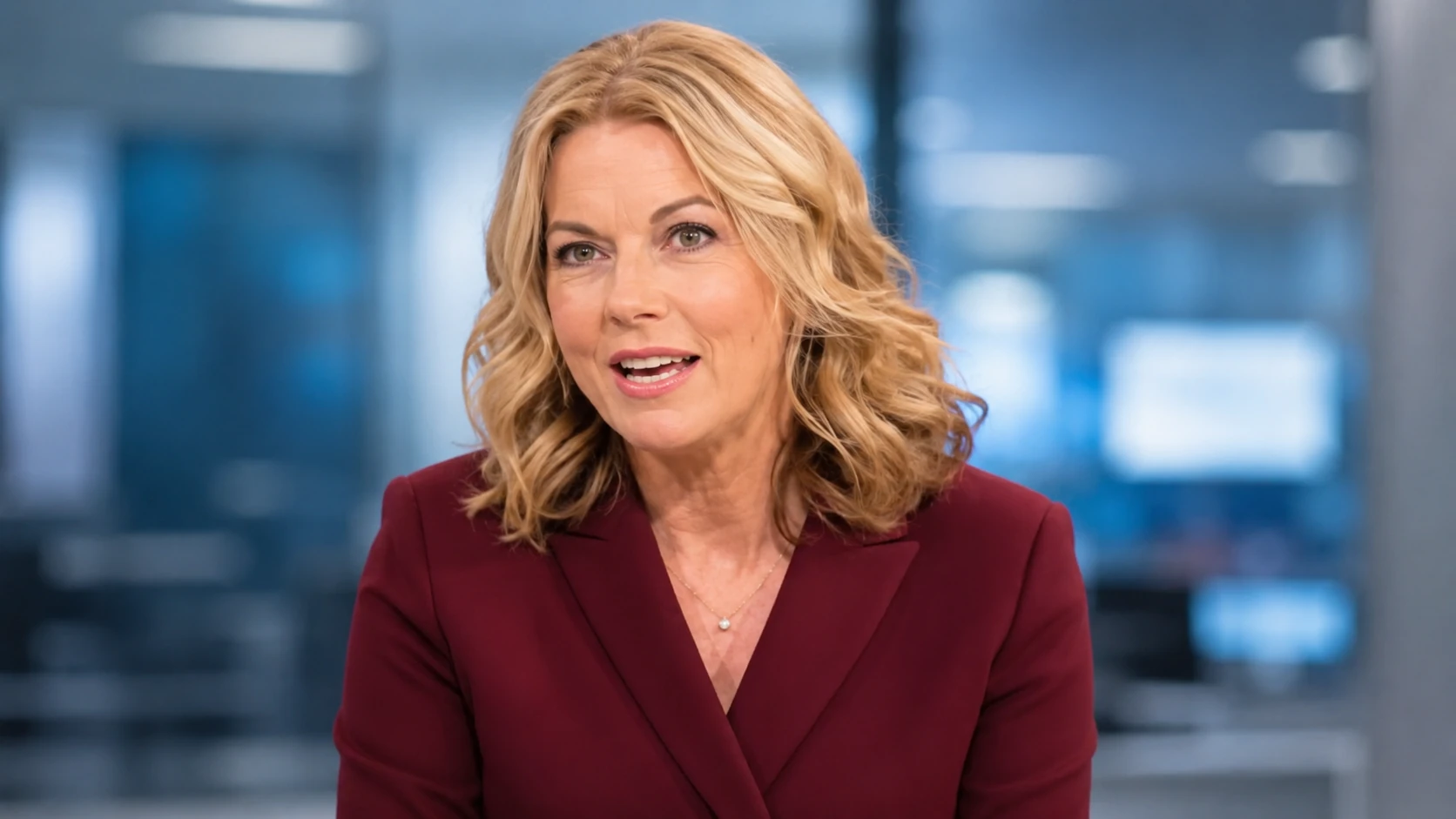
Mary Nightingale has spent much of her career doing the kind of television work that depends on composure. For millions of viewers, she is the calm face at the centre of a fast-moving news day, the person who appears after a political shock, a royal announcement, a national tragedy, or a difficult interview and makes the story feel understandable. That long familiarity is why searches for “Mary Nightingale illness” have gained attention. People notice when a trusted presenter sounds different, appears less often, or becomes the subject of online speculation, and they want to know whether something serious has happened.
The most important answer comes first: there is no confirmed public evidence that Mary Nightingale has a serious illness. Neither Nightingale nor ITV has made a formal announcement about a major health condition, and reliable reporting has not established one. That does not mean every viewer concern is cynical or intrusive. It means the difference between public fact and private speculation matters, especially for a journalist whose reputation has been built on accuracy.
Mary Nightingale’s story is larger than a search trend about her health. She is one of British television news’s most recognisable figures, a broadcaster who moved from business and factual programming into national news and remained there through decades of changing media habits. Her career has been steady rather than showy, and that steadiness is part of her appeal. To understand why illness rumours about her travel so quickly, it helps to understand the public trust she has earned.
Who Is Mary Nightingale?
Mary Nightingale is an English journalist and television presenter best known as the long-serving presenter of the ITV Evening News. She was born on May 26, 1963, in Scarborough, North Yorkshire, and later became one of the most familiar women in British broadcast journalism. Her career has included news, current affairs, business coverage, factual programmes, and major national broadcasts. For viewers who have watched ITV across several eras, she represents continuity in a medium that rarely stays still.
Her professional identity rests on restraint, clarity, and authority rather than celebrity theatrics. Nightingale has never been the kind of broadcaster whose public life overshadows her work. She became known by doing the job well, night after night, in a role where trust is earned through repetition and precision. That kind of public standing often creates a quieter form of fame, one that makes audiences feel they know the person even when the person keeps much of her private life private.
The phrase “Mary Nightingale illness” reflects that bond between presenter and audience. Viewers do not usually search such a phrase unless they have noticed something or read a rumour. In her case, the available public record does not support claims of a confirmed serious illness. The responsible story is not a dramatic medical revelation, but a careful account of what is known, what is not known, and who Nightingale is beyond the rumour.
Early Life and Family Background
Mary Nightingale was born in Scarborough, a seaside town on the North Yorkshire coast. Public profiles identify her birthplace clearly, though she has not made her childhood a major part of her public persona. That relative privacy is consistent with the way she has handled much of her life outside broadcasting. She is widely known for her work, but she has not built her career around confessional publicity.
She was educated at St Margaret’s School, an independent school in Exeter, before studying English at Bedford College, University of London. That academic background fits the career she later built, because strong language skills, curiosity, and quick comprehension are central to broadcast journalism. Newsreaders are sometimes mistaken for people who simply read scripts, but the best ones understand tone, context, and the weight of words under pressure. Nightingale’s later career suggests a professional shaped by discipline as much as screen presence.
Her early years did not point to a single overnight path into fame. Like many broadcasters of her generation, she built experience across different formats before becoming a fixed presence in national news. That slower rise matters because it gave her a broader base than a narrow studio career would have done. By the time she became a household name, she had already worked through the demands of live factual television.
Education and Early Career Ambitions
Nightingale’s education in English gave her a foundation in communication, but her first professional steps were not limited to traditional news bulletins. She began in television through business journalism and factual programming, areas that require both accuracy and confidence with specialised information. Early career work in television can be unforgiving, because presenters must learn how to handle timing, production demands, and unexpected changes. Nightingale developed those skills before becoming one of ITV’s leading news figures.
Her early roles included work with TV Tokyo and BBC World, where she gained experience in international and business-focused broadcasting. She also worked on programmes connected with finance and consumer affairs, building familiarity with subjects that can easily become dense if handled poorly. Presenters who can translate complex information into clear language often become valuable across formats. Nightingale’s later news career benefited from that ability to make difficult material accessible without oversimplifying it.
The path from business coverage to national news was not unusual, but it required credibility. A broadcaster must be able to move between markets, politics, human stories, and breaking events without sounding out of place. Nightingale’s career shows that she had that range. It also helps explain why viewers came to see her as more than a studio figure reading prepared lines.
Career Breakthrough and Rise at ITV
Mary Nightingale joined ITV at a time when British television news still held a central place in public life. The evening bulletin was a shared national habit, watched by families, commuters returning home, and people trying to make sense of the day. Presenting that programme required a particular mix of warmth and authority. Nightingale had to be composed enough for major news, but human enough for stories of grief, survival, and public concern.
She became closely associated with the ITV Evening News, one of the network’s flagship programmes. Her role placed her alongside some of the biggest stories in the country, from elections and royal events to disasters, scandals, and international crises. Television news presentation is often invisible when done well, because the audience focuses on the story rather than the presenter’s technique. Nightingale’s strength has been exactly that kind of controlled presence.
Her breakthrough was not built on one viral moment or one sensational interview. Instead, it came through professional durability. Over time, she became the person viewers expected to see in a serious news slot, and expectation is powerful in television. Once an audience associates a presenter with reliability, that presenter becomes part of the programme’s identity.
Major Work and Broadcasting Style
Nightingale’s broadcasting style is measured, direct, and careful. She does not rely on theatrical delivery or exaggerated emotion, which has helped her remain credible across very different types of stories. On a typical evening bulletin, a presenter may move from government policy to court reporting, then to war, health, sport, and a human-interest piece. That range demands emotional judgment as well as technical skill.
Her work has included major interviews and special reports, including coverage connected to national grief and public accountability. In 2024, she interviewed Denise Fergus, the mother of murdered toddler James Bulger, for ITV News. That kind of interview requires sensitivity because the subject matter is deeply painful and heavily reported. A presenter must ask direct questions without making the exchange feel exploitative, and Nightingale’s career has often depended on that balance.
She has also covered royal and ceremonial events, areas where British broadcasters are expected to combine detail with restraint. These broadcasts can last for hours and involve live commentary, historical context, and rapidly changing logistics. The presenter must hold the audience’s attention without overwhelming the event itself. Nightingale’s reputation has grown from that kind of understated professionalism.
Awards and Industry Standing
Mary Nightingale has been recognised by the Television and Radio Industries Club Awards, where she has won Newscaster of the Year more than once. Awards are not the whole measure of a journalist, but they do signal respect from within the broadcasting world and from audiences who follow television closely. In news, longevity itself is also a form of recognition. Few presenters remain prominent unless editors, producers, and viewers continue to trust them.
Her standing is also reflected in the kinds of assignments she receives. Major bulletins and sensitive interviews are not handed to presenters simply because they are well known. They go to broadcasters who can stay calm, hold the tone, and avoid becoming the story. Nightingale’s ability to do that has helped her remain relevant through changes in ITV News and the wider media industry.
British television has changed sharply during her career. The rise of rolling news, online clips, social media, podcasts, and short-form video has altered how audiences receive information. Through that shift, Nightingale has remained associated with a more traditional idea of trusted evening news. That continuity has become one of her defining professional qualities.
Mary Nightingale Illness Rumours: What Is Publicly Known
The public record does not confirm that Mary Nightingale has a serious illness. Searches for “Mary Nightingale illness” appear to be driven by viewer curiosity, online speculation, and occasional comments about her voice or appearances on air. A change in a broadcaster’s voice can prompt concern, especially when viewers are used to hearing that person sound polished and consistent. But a voice change is not medical proof.
There are many ordinary reasons a presenter might sound hoarse or appear tired. A cold, throat irritation, allergies, reflux, vocal strain, or a demanding work schedule can affect a person’s voice. News presenters are professional voice users, and even minor problems can be more noticeable because their work depends on vocal consistency. None of these possibilities should be turned into a claim about Nightingale’s health without confirmation.
The truth is, public figures often become the subject of health rumours because they are visible. If someone misses a broadcast, the absence can be read as meaningful even when it may be routine. Presenters take holidays, rotate shifts, work on recorded pieces, or step away from specific programmes for scheduling reasons. Without an official statement, it is unfair to treat those gaps as evidence of illness.
Why the Rumours Spread
Health rumours spread quickly because they answer an emotional need before they answer a factual one. Viewers may feel worried, while websites may see an opportunity to attract traffic. A phrase like “Mary Nightingale illness” can produce articles that repeat the same uncertainty while pretending to offer answers. The result can look like evidence because so many pages discuss it, even when none adds verified information.
This pattern is common with well-known broadcasters, actors, athletes, and public officials. Someone appears different on screen, a viewer comments, another site notices the search interest, and soon the rumour becomes its own subject. The person at the centre may have said nothing at all. Silence then gets misread as mystery, when it may simply be privacy.
Nightingale’s case also shows how public trust can be exploited. In 2024, she spoke out after a deepfake video used her image and supposed voice in a misleading promotion. That incident was not about illness, but it showed how easily a familiar newsreader’s identity can be manipulated online. If a fake video can trade on her credibility, weak health rumours can do something similar.
Public Image and Privacy
Mary Nightingale’s public image is built on professionalism rather than oversharing. She has given viewers decades of public service through journalism, but she has not invited the public into every part of her personal life. That distinction matters. Being on television does not cancel a person’s right to medical privacy.
Audiences often feel close to news presenters because they appear in intimate settings, at home, during ordinary evenings. The presenter speaks directly to the camera, and the viewer may see that face more often than they see some distant relatives. But the relationship is still one-sided. The audience knows the professional presence, not the full private person.
Respecting that boundary does not mean ignoring legitimate news. If a public figure chooses to disclose a diagnosis, or if a health issue affects a public role in a confirmed way, it can be reported carefully. In Nightingale’s case, no such confirmed disclosure exists. The ethical approach is to say that clearly and avoid dressing speculation as biography.
Marriage, Children, and Family Life
Mary Nightingale is married to Paul Fenwick, a television producer and former Human Resources director. The couple have two children, and Nightingale has kept family life largely away from the centre of her public profile. That choice has helped her maintain a clear line between her work as a journalist and her responsibilities as a private person. In a media culture that often rewards exposure, her restraint is part of her character.
Public information about her family is limited, and that is not a gap that needs to be filled with guesses. Some broadcasters choose to discuss their marriages, parenting, and homes often; Nightingale has not made that the core of her image. The facts that are publicly known are enough for a respectful profile. She is a working journalist with a family, not a celebrity whose domestic life is part of a brand.
Her ability to sustain a long career while raising a family also reflects the practical demands faced by many women in television. News schedules can be unpredictable, and major stories do not respect ordinary routines. The polished calm viewers see on air usually sits on top of long hours, preparation, and pressure. Nightingale’s career has required consistency in a profession that is rarely gentle.
Money, Salary, and Net Worth Estimates
Mary Nightingale’s exact salary and net worth have not been publicly confirmed in a reliable official filing. Some celebrity finance websites publish estimates, but those figures should be treated with caution because they often rely on assumptions rather than documented earnings. A senior ITV news presenter is likely to have earned a strong income over a long career, but a precise figure cannot be responsibly stated without verified records. Any claim that gives an exact net worth should be read sceptically unless it explains its evidence.
Her income sources are most likely rooted in television presenting, journalism, and related media work. Unlike entertainment celebrities who may have brand deals, product lines, or public business ventures, Nightingale’s profile is tied mainly to broadcasting. That makes her financial picture less publicly visible. The absence of a clear estimate is not unusual for British journalists who are not required to disclose personal wealth.
What can be said with confidence is that Nightingale’s professional value lies in long-term trust. In broadcasting, an experienced presenter who can handle major national news is a major asset. Her career has lasted because she offers something networks prize: credibility that audiences recognise instantly. That kind of value is harder to reduce to a net worth figure.
Setbacks, Pressure, and the Cost of Visibility
A long career in national television brings scrutiny as well as recognition. Viewers comment on appearance, voice, age, tone, clothing, and perceived mood with a freedom they may not apply to people in ordinary workplaces. Women in broadcasting have often faced especially close inspection, with attention paid to matters that have little to do with journalistic skill. Nightingale has worked through that environment while keeping the focus on the news.
The pressure became more visible in the age of social media. A presenter’s smallest on-air moment can be clipped, replayed, misunderstood, or turned into a claim. That environment helps explain why illness rumours can gain traction. What once might have been a passing comment between viewers can now become searchable content.
Still, Nightingale’s career has not been defined by scandal. She has maintained a reputation for composure and reliability across years of public visibility. That is not accidental. It reflects professional discipline, strong editorial backing, and a clear understanding of the role she occupies.
What Mary Nightingale Is Doing Now
Mary Nightingale remains publicly associated with ITV News and the ITV Evening News. Her name continues to carry weight because she has become part of the network’s identity. Viewers searching for her current status are often trying to confirm whether she is still working, whether she has left television, or whether illness has affected her career. The public information available does not support a claim that a serious illness has ended or derailed her work.
Her recent public profile also includes her response to digital deception and deepfake misuse. That issue placed her in a new kind of news story, one where the journalist herself became the victim of false media. It was a reminder that trusted broadcasters are vulnerable to the same online systems they often report on. For Nightingale, whose work depends on authenticity, the misuse of her likeness was especially pointed.
The broader picture is of a broadcaster still linked to the serious news tradition that made her name. She is not chasing constant publicity, and she does not appear to treat personal exposure as part of the job. That may make some readers want more detail, but it also explains why she has remained credible. She has let the work speak louder than the chatter around it.
Frequently Asked Questions
Is Mary Nightingale ill?
There is no confirmed public evidence that Mary Nightingale has a serious illness. Neither she nor ITV has announced a major health condition, and reliable reporting has not established one. Searches about “Mary Nightingale illness” appear to be driven mostly by viewer concern and online speculation rather than confirmed medical information.
Why are people searching for Mary Nightingale illness?
People search the phrase because Nightingale is a familiar public figure and viewers notice changes in presenters they have watched for years. Some searches may have been prompted by comments about her voice, occasional absences, or recycled online rumours. None of those things proves illness, and they should not be treated as a diagnosis.
Has Mary Nightingale spoken publicly about her health?
Mary Nightingale has not made a public statement confirming a serious illness. She has kept much of her private life separate from her professional profile, which is her right. In the absence of a direct statement or reliable reporting, claims about her health should be handled with caution.
Who is Mary Nightingale married to?
Mary Nightingale is married to Paul Fenwick. Public profiles identify him as a television producer and former Human Resources director. The couple have two children, though Nightingale has kept family details largely private.
What is Mary Nightingale best known for?
Mary Nightingale is best known as a presenter of the ITV Evening News. She has also worked across factual, business, and current affairs broadcasting. Her reputation rests on calm authority, long service, and the ability to handle serious stories with clarity.
What is Mary Nightingale’s net worth?
Mary Nightingale’s exact net worth has not been confirmed by a reliable public source. Online estimates exist, but they should be treated as unverified unless they provide clear evidence. Her main income has likely come from her long career in television journalism and presenting.
Is Mary Nightingale still on ITV?
Mary Nightingale remains publicly associated with ITV News and the ITV Evening News. There is no confirmed public information showing that illness has ended her role. Viewers should rely on ITV updates or trusted reporting for any future change in her professional status.
Conclusion
Mary Nightingale’s career has been built on a quality that is easy to underestimate until it disappears: steadiness. She has been present through years of national change, doing a job that asks for calm under pressure and seriousness without coldness. That is why even a vague rumour about her health can draw attention. Viewers feel they know her because she has been part of the rhythm of public life.
The responsible answer to the search for “Mary Nightingale illness” is not dramatic. There is no confirmed serious illness in the public record, and no reliable basis for turning viewer observations into medical claims. Her health, unless she chooses to discuss it, remains a private matter. Respecting that privacy is not a lack of curiosity; it is a basic standard of fairness.
What remains public is the work. Nightingale’s place in British broadcasting comes from years of clear, careful journalism in a medium that has changed around her. She has held her role without needing constant self-promotion, and that restraint has become part of her authority. In a noisy media culture, that may be the most revealing fact about her.
Her story should be understood as the story of a journalist first, not a rumour first. The search trend may bring people to her name, but it should not define her. Mary Nightingale matters because she has spent decades helping viewers understand the news, and that record deserves more weight than speculation ever should.
