

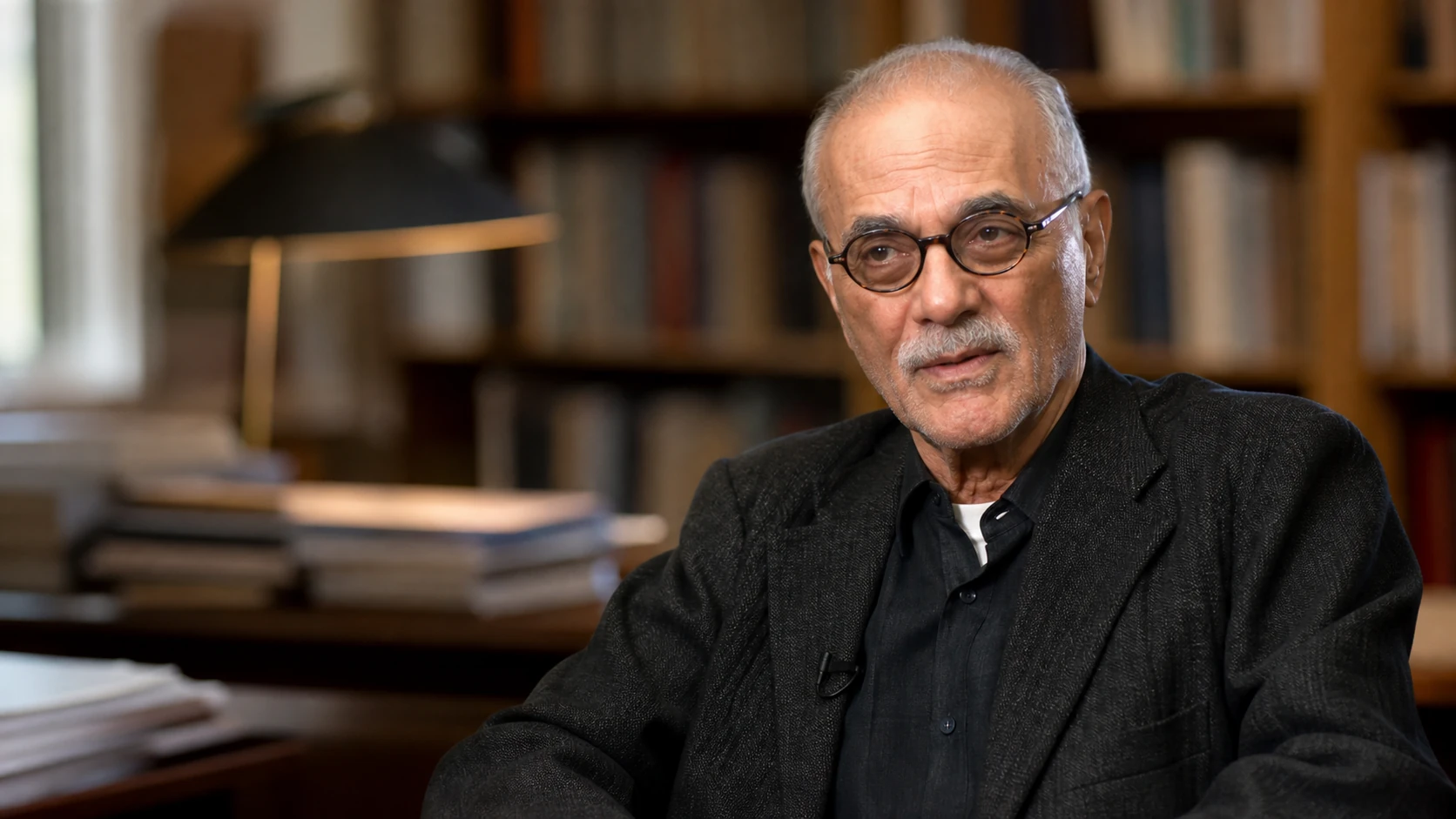
Mahmood Mamdani’s exact net worth is not publicly verified. As of August 20, 2026, no authoritative financial disclosure or credible independent investigation provides enough information about his assets, liabilities, investments, property holdings, pensions, or book royalties to calculate his personal wealth responsibly. Figures such as $1 million to $5 million or a precise $5 million that appear on some net-worth websites are estimates built largely from assumptions rather than documented financial records.
What can be established is Mamdani’s long and distinguished academic career. He is a scholar of colonialism, citizenship, political violence, and African politics, and Columbia University lists him as Herbert Lehman Professor of Government and Professor of Anthropology. His professional income has potentially included university compensation, books, academic work, and documented awards, but those income sources should not be confused with net worth.
Interest in Mamdani has also expanded beyond academic circles. His 2025 book Slow Poison: Idi Amin, Yoweri Museveni, and the Making of the Ugandan State returned him to contemporary debates about Uganda, while wider public attention has followed the political rise of his son, New York City mayor Zohran Mamdani. Mahmood Mamdani remains a significant public intellectual in his own right, with a career extending across universities and research institutions in Africa and the United States.
Key takeaways
- Mahmood Mamdani’s exact net worth has not been credibly established by public financial records.
- A 2025 Forbes analysis estimated that someone in his Columbia position might earn about $200,000 to $300,000 a year, but it did not report Mamdani’s actual salary or calculate his personal net worth.
- His identifiable professional income sources include a lengthy university career and numerous scholarly books, although his royalties, advances, investments, and other private finances are not publicly disclosed.
- Mamdani has held major academic roles at Columbia University, Makerere University, the University of Cape Town, and other institutions.
- His recent public relevance comes from both his 2025 book Slow Poison and renewed interest in his work during the political rise of his son, Zohran Mamdani.
Mahmood Mamdani profile summary
| Fact | Verified detail |
|---|---|
| Full name | Mahmood Mamdani |
| Born | April 23, 1946 |
| Profession | Scholar, author, professor |
| Current academic title | Herbert Lehman Professor of Government and Professor of Anthropology, Columbia University |
| Education | University of Pittsburgh; Fletcher School of Law and Diplomacy; Harvard University |
| Former MISR role | Professor and executive director, 2010–2022 |
| Former KIU role | Chancellor, 2020–2023 |
| Major work | Citizen and Subject |
| Recent book | Slow Poison (2025) |
| Major recognition | Herskovits Prize; International Fellow of the British Academy |
| Spouse | Filmmaker Mira Nair |
| Son | Zohran Mamdani |
| Net worth | No credible exact figure publicly verified |
Why Mahmood Mamdani’s net worth cannot be reliably calculated
Net worth is not the same thing as salary or lifetime earnings. A meaningful calculation requires evidence of what a person owns, what those assets are worth, and what debts or other liabilities must be deducted from them.
For Mamdani, those pieces are largely unavailable.
There is no comprehensive public balance sheet showing his cash holdings, investment portfolio, retirement savings, individually owned real estate, debts, or other financial obligations. His publishers have not publicly disclosed enough information about book advances or royalties to attach a reliable value to his publishing career. Nor is there a verified public salary record that can be converted into present-day wealth.
That makes the confident multimillion-dollar figures found on some net-worth websites misleadingly precise. A long academic career can indicate substantial earnings over time, but earnings do not reveal how much money a person currently owns. Taxes, housing costs, investments, family finances, debt, charitable giving, retirement arrangements, and many other factors affect net worth.
The same problem applies to property. Reporting about the Mamdani family has mentioned university housing and property associated with Mamdani’s wife, filmmaker Mira Nair. Neither is enough to establish Mahmood Mamdani’s personal real-estate wealth. University-owned housing should not be counted as an asset belonging to its occupant, and a spouse’s property cannot automatically be assigned to the other spouse without evidence of ownership.
The most defensible answer, therefore, is not a guessed range: Mahmood Mamdani’s personal net worth is not publicly known.
What is known about his income and financial background
His Columbia University career
Mamdani has spent a substantial portion of his later academic career at Columbia University. According to his Columbia faculty profile, he holds the titles of Herbert Lehman Professor of Government and Professor of Anthropology. The page also records his extensive work on citizenship, colonial governance, political violence, and African political history.
In 2025, Forbes examined the Mamdani family’s financial context while reporting on Zohran Mamdani’s finances. It suggested that a professor in Mahmood Mamdani’s position at Columbia might earn approximately $200,000 to $300,000 annually, using broader American Association of University Professors data.
That figure needs an important qualification: Forbes was not publishing Mamdani’s payroll record. The range was a modeled estimate based on institutional compensation data. It therefore provides useful context about possible academic earnings but should not be described as his verified salary.
Even an accurate annual salary would not answer the net-worth question. Salary is income for a period of time; net worth reflects accumulated assets minus liabilities at a particular point.
Books and intellectual work
Mamdani has also written extensively. His books include Citizen and Subject, Good Muslim, Bad Muslim, When Victims Become Killers, Saviors and Survivors, Neither Settler nor Native, and Slow Poison.
Those publications may generate royalties and other rights income, but no reliable public evidence establishes how much Mamdani has earned from them. Book sales, publication longevity, international editions, or academic influence cannot be translated into a royalty figure without contractual or publisher data.
His newest verified major book is Slow Poison: Idi Amin, Yoweri Museveni, and the Making of the Ugandan State, published by Harvard University Press in 2025. The book revisits Uganda’s modern political history and the development of state power under successive regimes.
A documented Columbia award
One of the few precise financial figures connected directly to Mamdani’s academic career comes from a historical Columbia award.
In 2011, Mamdani received a Lenfest Distinguished Columbia Faculty Award. Columbia’s announcement stated that recipients would receive $25,000 per year for three consecutive years, implying $75,000 in scheduled stipend payments under the award terms.
That is verifiable compensation, but it does not establish current wealth. An award received more than a decade ago cannot reasonably be treated as an asset still held today.
Why online $1 million to $5 million estimates are unreliable
Some websites place Mamdani’s net worth between $1 million and $5 million, while another has published a precise $5 million figure. Those numbers should not be repeated as established fact.
The problem is methodological. Such estimates often work backward from career length, assumed salaries, hypothetical savings rates, supposed property ownership, estimated pensions, or guessed intellectual-property values. None of those assumptions provides a substitute for actual financial records.
One especially specific estimate has assigned separate values to an alleged Kampala residence, investments, cash, and intellectual property. Yet the research supporting this profile found no accompanying public asset filings demonstrating that those values belong to Mamdani or that the assets were valued in the manner claimed.
A second site acknowledges that no official figure exists but still offers a broad million-dollar range based on his academic positions and publications. That approach confuses professional success with personal wealth.
For a public figure whose finances are not comprehensively disclosed, an exact number can create an illusion of knowledge. The responsible treatment is to explain what is documented and what remains private.
Early life and education
Mahmood Mamdani was born on April 23, 1946. He was born in India and raised in Uganda, experiences that would later intersect with his scholarly interest in citizenship, colonial categories, political belonging, and the state.
His formal education took him to the United States. According to Columbia’s faculty bulletin, he earned a B.A. from the University of Pittsburgh in 1967.
He then studied at the Fletcher School of Law and Diplomacy, receiving an M.A. in 1968 and an M.A.L.D. in 1969. He completed a Ph.D. in Government at Harvard University in 1974.
His education coincided with a turbulent period in Uganda. In 1972, during Idi Amin’s expulsion of Asians from the country, Mamdani was himself expelled after returning to Uganda while completing his doctoral work. Decades later, the episode remained relevant to his scholarship on citizenship, colonial classification, exile, and political power.
In a 2025 Guardian interview, Mamdani revisited the experience while discussing Uganda, his intellectual development, and the political questions that continued to shape his work.
Academic career and institutional leadership
Mamdani’s career has moved between East Africa, southern Africa, and the United States.
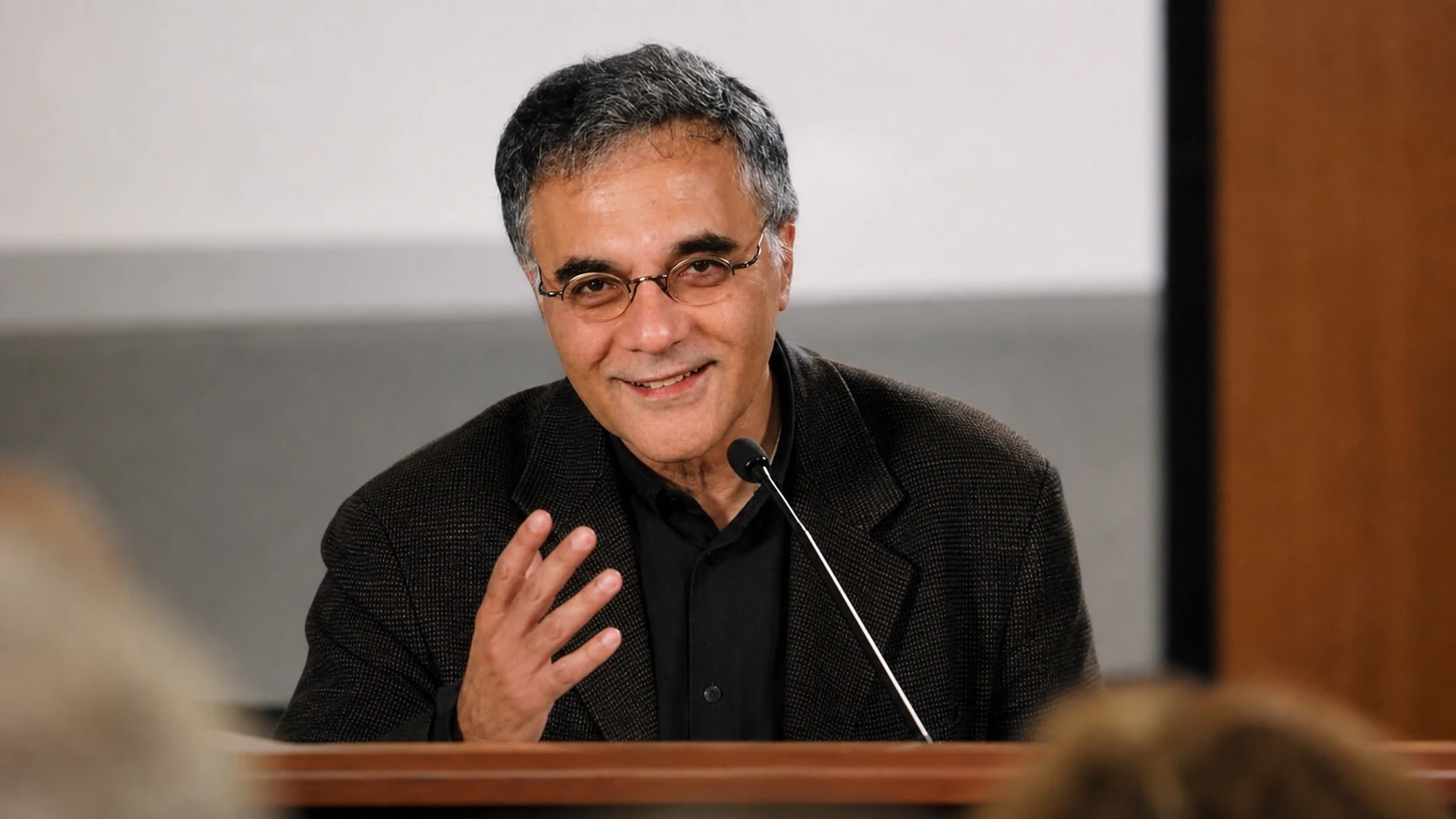
Columbia’s chronology places him at the University of Dar es Salaam from 1973 to 1979. He subsequently taught at Makerere University from 1980 to 1993 and became founding director of the Centre for Basic Research in Kampala, an institution focused on social and political research.
From 1996 to 1999, he was at the University of Cape Town. His time in South Africa came during the country’s transition out of apartheid and amid intense academic debates about race, citizenship, colonialism, and the structure of postcolonial states.
Mamdani joined Columbia University in 1999 as Herbert Lehman Professor of Government. His work there developed alongside continued engagement with African academic institutions rather than replacing it.
From 2010 through 2022, he served as professor and executive director of the Makerere Institute of Social Research, or MISR, in Uganda. That period became an important part of his broader effort to strengthen advanced social-science research and doctoral training based in Africa.
Mamdani also served as president of the Council for the Development of Social Science Research in Africa, known as CODESRIA, from 1998 to 2002.
He later became chancellor of Kampala International University. The university’s own records show that he was appointed in 2020 and was succeeded in 2023. A 2023 KIU statement by incoming chancellor Yunus Mgaya explicitly referred to Mamdani as the outgoing chancellor.
That distinction matters because some biographies still describe older institutional positions as though they remain current.
Major books and intellectual influence
Mamdani is best known for scholarship that examines how colonial institutions shaped categories of citizenship and political identity long after formal colonial rule ended.
One of his most influential books, Citizen and Subject, argued that colonial governments in Africa created divided systems of rule, producing different forms of political membership and authority. The book received the African Studies Association’s Herskovits Prize in 1997.
He later addressed genocide and political violence in When Victims Become Killers, a study of Rwanda that placed the 1994 genocide within a longer history of political identity and state formation.
Good Muslim, Bad Muslim examined the political narratives surrounding Islam, violence, and the United States after September 11, while Saviors and Survivors addressed the Darfur conflict and the international politics surrounding humanitarian intervention.
In 2020, Mamdani published Neither Settler nor Native, extending his analysis of colonial political identities beyond a single national setting. The book was shortlisted for the British Academy Book Prize the following year.
His scholarship has attracted debate as well as recognition. Mamdani’s arguments often challenge explanations of conflict that treat ethnic or racial identity as fixed, emphasizing instead the role of institutions, colonial governance, law, and political history in creating and hardening those categories.
In 2017, he was elected an International Fellow of the British Academy, reflecting the international reach of his work in the humanities and social sciences.
Personal and family life
Mamdani is married to filmmaker Mira Nair, whose work includes internationally known films such as Salaam Bombay!, Monsoon Wedding, and The Namesake. Their son, Zohran Mamdani, built a political career in New York and became mayor of New York City.
Those family connections have brought Mahmood Mamdani to the attention of readers who may previously have known him mainly within academic or African political-intellectual circles.
They should not, however, be used as shortcuts for assessing his finances. Mira Nair’s career and property history do not establish Mahmood Mamdani’s individual wealth, just as Zohran Mamdani’s public financial disclosures do not establish the finances of his parents.
Public reporting has discussed a Chelsea condominium formerly owned by Nair and the family’s apparent use of Columbia-owned housing. Neither fact provides a reliable basis for calculating Mahmood Mamdani’s personal net worth.
Recent work and current status
Mamdani returned to Uganda’s modern political history in Slow Poison, published in 2025.

The book examines Idi Amin, Yoweri Museveni, and the development of the Ugandan state, connecting political violence and authoritarian rule to longer institutional histories rather than treating each government as an isolated episode.
Its publication coincided with renewed public attention around Mamdani. His November 2025 Guardian interview appeared shortly after his son’s election as New York City mayor, bringing his own life story and political scholarship to a much broader audience.
As of August 20, 2026, Columbia continues to identify Mamdani as Herbert Lehman Professor of Government and Professor of Anthropology. His faculty page currently lists his office-hours status as “On leave.” That notation should not be interpreted as retirement; Columbia continues to list his professorial titles.
His current public profile therefore combines several identities: senior Columbia scholar, longtime participant in African higher education, author of influential works on citizenship and political violence, and a public intellectual whose ideas have gained renewed attention through both his recent writing and his family’s visibility.
Conclusion
Mahmood Mamdani has built a documented career spanning more than five decades of scholarship, university teaching, institutional leadership, and publishing. His work on colonial rule, citizenship, political identity, genocide, and the African state has earned major academic recognition and sustained international debate.
His finances are far less transparent than his professional record. No credible public source establishes an exact Mahmood Mamdani net worth, and the available evidence does not support the multimillion-dollar figures circulated by estimate websites. His Columbia career, books, and academic awards show substantial professional activity, but salary estimates and historical payments cannot be converted into personal wealth without reliable information about assets and liabilities.
For readers searching for a number, that uncertainty is the central fact: Mahmood Mamdani’s exact net worth remains publicly unverified.
