


Rita Williams-Ewing became widely known through her marriage to basketball star Patrick Ewing, but her public life extends well beyond that relationship. She trained in nursing and law, wrote fiction informed by the culture surrounding professional sports, helped establish a major Black-owned bookstore in Harlem, and later entered the wellness business as a franchise operator.
Her biography is less fully documented than those of many public figures. Rita has kept much of her childhood, family background, finances, and present personal life out of the public record. Even so, publisher profiles, contemporary newspaper coverage, business reporting, and interviews provide a clear picture of an educated and adaptable entrepreneur who built several distinct careers.
Early Life and Family Background
Rita Williams-Ewing was born in the United States, although her exact date of birth and birthplace have not been publicly confirmed by a dependable primary source. A business profile published in 2005 described her as 39 years old at the time, suggesting that she was born around 1965 or 1966. That would place her at about 60 years old in 2026, but the figure remains an estimate rather than a verified age.
Little reliable information is available about her parents, siblings, or childhood home. Rita did not build her public identity around family interviews or personal disclosures, and later profiles focused mainly on her education, marriage, books, and businesses. Claims about her early upbringing that appear on unsourced biography websites should therefore be treated cautiously.
What is clear is that education became a major foundation of her adult life. She pursued training in two demanding fields and later drew on both when moving between publishing, retail, and health-related business ownership.
Education and Professional Training
Rita earned a nursing degree from Howard University. Her health-care education later influenced her decision to enter the wellness industry, where knowledge of patient care, professional responsibility, and regulated services could be applied to business management.
She also studied law at Georgetown University. Profiles of Rita have described her as holding a law degree, although detailed information about her legal practice, bar admission, or employment as an attorney is not widely available. It is safest to say that she received legal training rather than assume that she spent a long period working in a traditional law firm.
The combination of nursing and law was unusual and gave her a broad professional base. Health care taught her about service and personal well-being, while legal study offered an understanding of contracts, responsibility, and business risk. Those interests later appeared in the choices she made as an entrepreneur.
Meeting Patrick Ewing
Rita met Patrick Ewing while they were young college students involved in summer political internships in Washington, D.C. Accounts of their early relationship say Patrick was working as an intern for Senator Bob Dole, while Rita was associated with Senator Bill Bradley’s office.
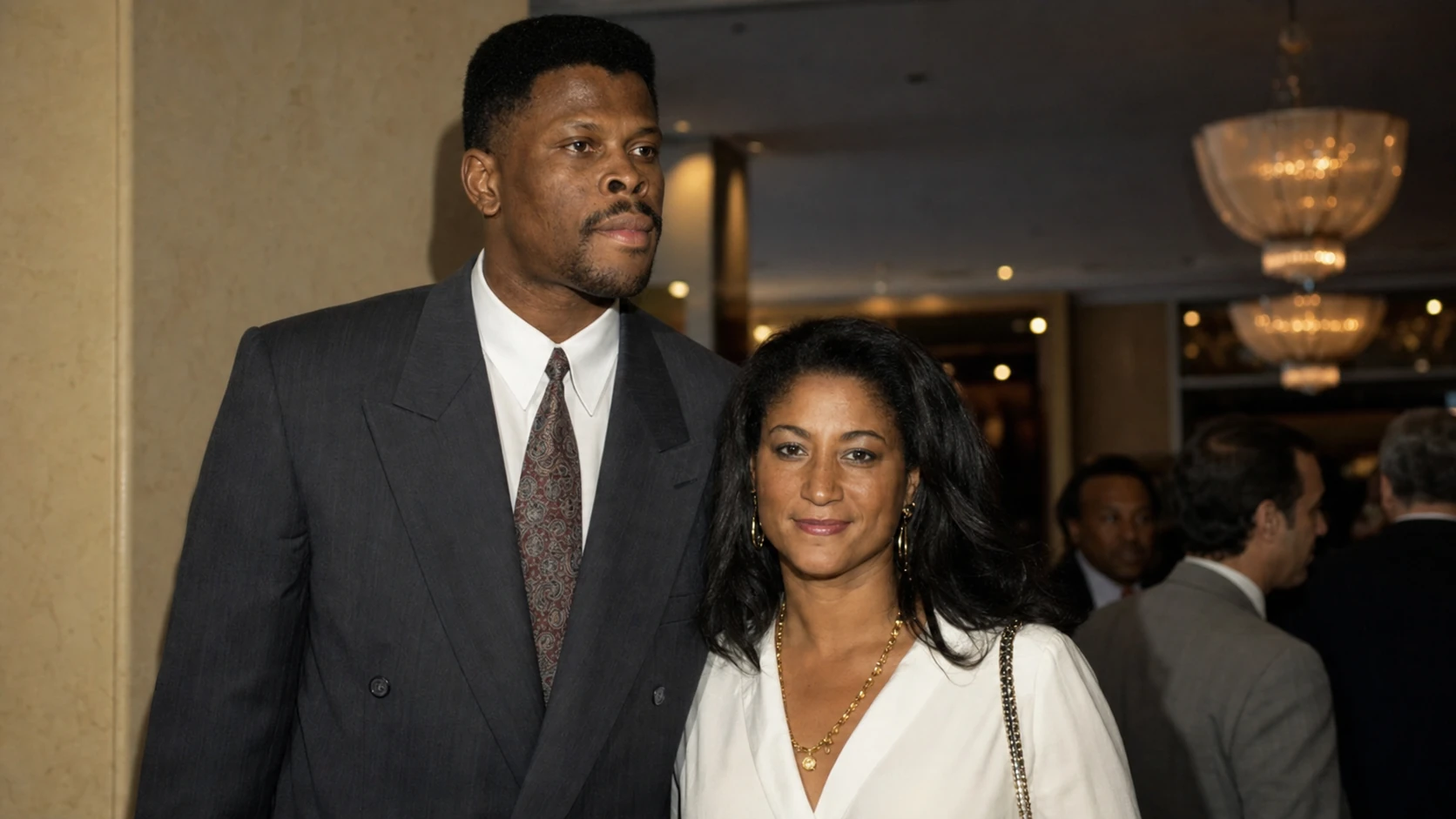
Patrick was already becoming one of the most important basketball players of his generation. He starred at Georgetown University, led the team to an NCAA championship in 1984, and entered the NBA as the first overall pick in the 1985 draft. The New York Knicks selected him after winning the league’s first draft lottery.
Rita and Patrick married in 1990. By then, he was the face of the Knicks and one of the most visible professional athletes in New York. Their marriage placed Rita inside a world of constant travel, public scrutiny, major wealth, and the social pressures surrounding elite sports.
Marriage, Separation, and Children
Rita and Patrick Ewing were publicly reported to have separated by 1998. Contemporary coverage described them as estranged during the promotional period for her first novel, while Rita said at the time that they were still legally married. Later profiles consistently refer to her as Patrick Ewing’s former wife.
The exact date on which their divorce became final is not clearly established in the most reliable public sources. Some websites present 1998 as the formal divorce year, but contemporary reporting more securely confirms that they were separated during that period. Without an accessible court record or direct statement, the distinction should remain clear.
Rita and Patrick are publicly identified as the parents of two daughters, Randi and Corey Ewing. Rita’s publisher biography has also described her as a mother of three, but it does not publicly identify all three children or explain the family relationship. Because of that conflict, it would be inaccurate to name an additional child without stronger documentation.
Patrick Ewing Jr. is sometimes incorrectly listed as Rita’s son. Contemporary reporting from the 1980s identified his mother as Sharon Stanford, and he was born years before Rita and Patrick married. Rita’s own relationship with Patrick Jr. has not been publicly detailed, so it should not be assumed beyond the known family connection.
Writing Homecourt Advantage
Rita entered publishing in 1998 with Homecourt Advantage, a novel co-written with attorney and author Crystal McCrary Anthony. Both women had close knowledge of professional basketball culture, and that experience gave the book immediate public interest.
The novel examined the private lives, relationships, ambition, money, and emotional pressures surrounding NBA players and their partners. Because of the authors’ personal connections to professional basketball, readers and journalists searched for parallels between the fictional characters and real people.
Rita and McCrary Anthony maintained that the book was fiction rather than a direct account of specific marriages or athletes. The distinction mattered because publicity sometimes presented the novel as an exposé. While the authors drew from environments they knew well, they did not publicly identify the characters as literal portraits of particular individuals.
The book gave Rita a public voice separate from Patrick Ewing’s basketball career. Instead of appearing only as an athlete’s wife, she became an author commenting through fiction on a culture that often reduced women to supporting figures in male careers.
Patrick’s Pals and Children’s Publishing
Rita’s publisher biography also credits her as the creator of the “Patrick’s Pals” children’s book series. Public catalog information about the project is limited, and individual publication details are not as readily documented as those of her adult novels.
The series shows that her interest in writing was broader than stories about celebrity relationships. Children’s publishing required a different tone, audience, and purpose. It also connected with her role as a mother and with the public recognition surrounding the Ewing family name.
Because records about the series remain incomplete, it is better to acknowledge the project without claiming a full list of titles or publication dates that cannot be independently verified.
Brickhouse and Her Solo Fiction
Rita later published the novel Brickhouse under her own name. A HarperCollins edition was released in 2006, marking her transition from co-author to solo novelist.
The story centers on Nona Simms, a successful Harlem fitness entrepreneur whose business becomes threatened by political corruption and personal conflict. The novel brings together themes of ownership, friendship, romance, civic power, and the pressures faced by a Black woman protecting an enterprise she built.
Several parts of the setting reflected areas Rita knew firsthand. She had lived around professional basketball, worked in Harlem bookselling, studied health care, and understood the pressures attached to running a business in New York. That familiarity gave the novel a credible setting, although it should not be treated as a disguised autobiography.
Brickhouse also showed a shift in emphasis from marriage to ownership. Its main character is defined by work, community involvement, and the struggle to control her future. Those concerns closely matched the public direction of Rita’s own career during the same period.
Co-Founding Hue-Man Bookstore
One of Rita Williams-Ewing’s most lasting public achievements was her role in Hue-Man Bookstore and Café in Harlem. The store opened in 2002 and became an important venue for Black writers, readers, publishers, and public figures.
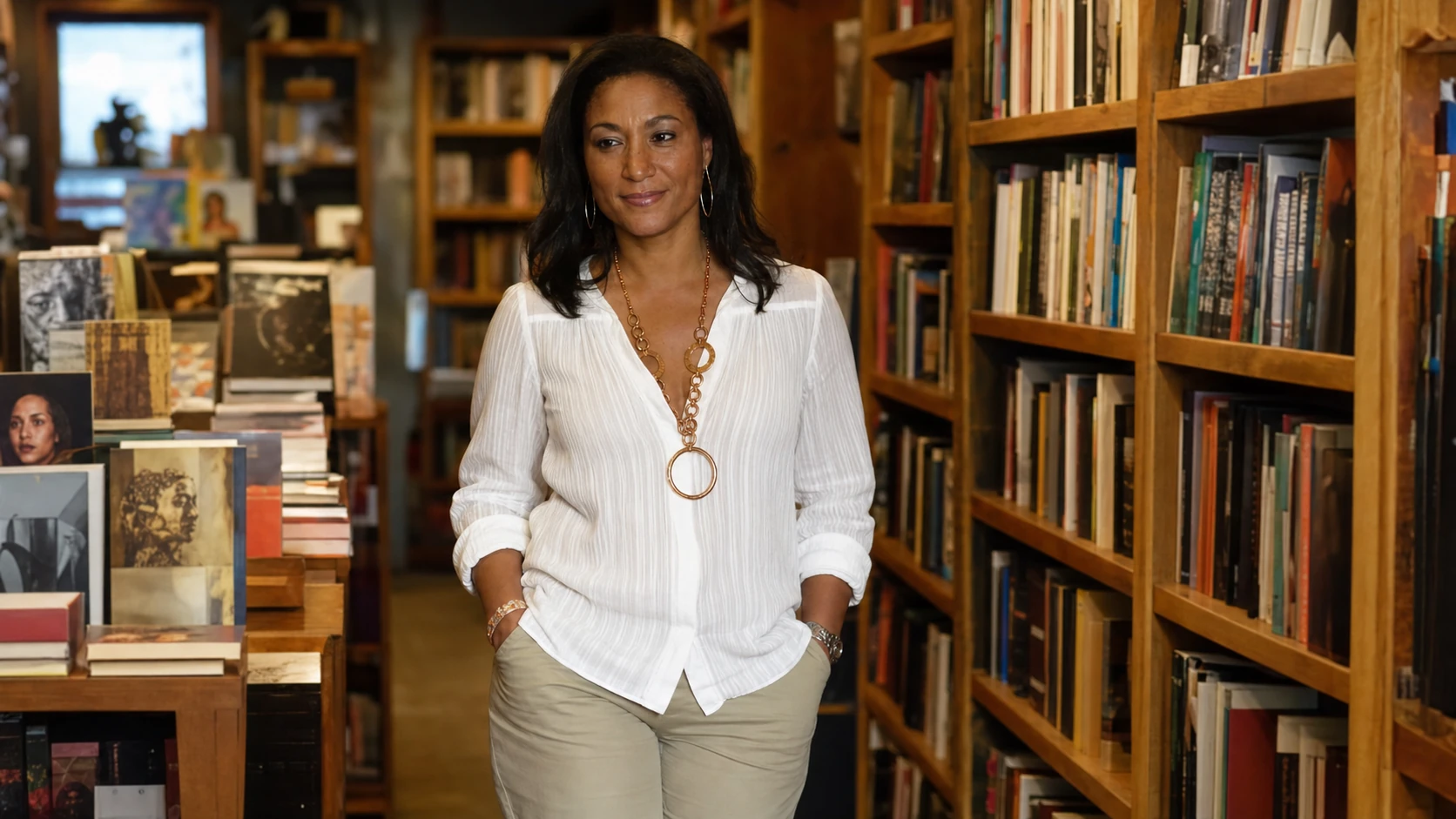
Rita founded the business with Clara Villarosa and Celeste Johnson. Later, Marva Allen became a partner and took a major role in daily operations. The store occupied about 4,000 square feet and carried a large selection of books by and about African Americans, as well as works connected to the Caribbean and African diaspora.
Hue-Man was designed as more than a retail shop. It hosted author discussions, book signings, cultural events, and community gatherings. Maya Angelou participated in its opening celebration, and the store later welcomed major figures from literature, politics, film, and music.
Former President Bill Clinton held a large signing there for his memoir My Life. Events of that scale brought national attention, but the store’s deeper value came from offering Black authors a dedicated physical space in one of the most important centers of African American culture.
Business reporting from the mid-2000s said Hue-Man generated about $1.2 million in annual revenue and employed more than a dozen people. Those figures show that it was a serious retail operation rather than a symbolic celebrity investment. They also reveal the financial demands involved in maintaining a large independent bookstore in Manhattan.
The End of Hue-Man’s Harlem Storefront
Hue-Man’s physical Harlem location closed in 2012 after roughly ten years. The end of its lease, changes in consumer buying habits, rising operating pressures, and the wider struggles of independent bookselling all affected the decision.
The closing was not presented simply as the disappearance of the company. Its leadership discussed continuing through online sales, publishing services, events, and other forms of literary work. Still, the loss of the storefront marked the end of an important cultural gathering place.
For Rita, the closure became another career turning point. Rather than remain tied only to publishing, she returned to interests rooted in her nursing education and began exploring the wellness industry.
Entering the Wellness Business
Rita became the owner and operator of a Massage Envy location in Midtown West, Manhattan. The clinic opened in 2014 at West 42nd Street and was described by the company as its first New York City location.
Her move into wellness drew directly from her earlier education. Rita said her nursing background made health-related services a natural area of interest, while her legal training helped her understand liability, contracts, and the risks of operating a business involving licensed practitioners.
Running a franchise differed from owning an independent bookstore. A franchise provides an established brand, operating model, and service structure, but it also requires compliance with corporate standards, staffing rules, licensing requirements, and ongoing fees. Rita’s role placed her at the intersection of customer service, health, employment, and business management.
Public announcements did not reveal how much she invested, how much of the clinic she owned, or what income she earned. Franchise cost estimates from other locations cannot be used to calculate her personal finances because rent, borrowing, ownership arrangements, and operating expenses vary widely.
Public Image and Social Issues
Rita has generally maintained a lower public profile than many people connected to major sports figures. She appeared in interviews when promoting her books, discussing relationships in professional sports, or speaking about her business ventures, but she did not build a career around reality television or constant celebrity exposure.
Her public comments have sometimes addressed race, policing, and inequality. In interviews connected with her business career, she supported open discussion of systemic racism and the history behind unequal treatment. These views aligned with her earlier investment in a Black-owned bookstore centered on African American literature and public conversation.
Her reputation is therefore tied to several identities at once: former NBA spouse, novelist, bookseller, trained nurse, law graduate, and business owner. The tendency to reduce her to her marriage overlooks the work that occupied much of her adult life.
Net Worth and Income Sources
Rita Williams-Ewing’s net worth is not publicly confirmed. Various celebrity websites publish estimates, but they generally do not provide audited accounts, property records, investment details, debt information, or direct financial disclosures.
Her known income sources have included book publishing, bookstore ownership, and participation in a wellness franchise. She may also have earned money from other investments or professional work, but those details remain private.
Hue-Man’s reported annual revenue should not be confused with Rita’s personal income. Business revenue must cover inventory, wages, rent, taxes, events, debt, and other expenses before any profit reaches owners. The same caution applies to franchise sales figures.
Her divorce settlement with Patrick Ewing has also not been publicly detailed in a reliable source. Any claim that assigns her a specific fortune based on the marriage is speculation unless supported by court documents or her own disclosure.
Recent Work and Current Status
Rita’s latest clearly documented public business association remains connected to the Massage Envy location in Midtown Manhattan. Business directories and chamber listings have continued to associate her name with the clinic, although such listings do not prove the exact ownership structure at every point in time.
No widely reported new book, remarriage, major media role, or political appointment has been confirmed for 2024, 2025, or 2026. That does not mean Rita has stopped working. It means her recent activities have not been covered extensively by national media or announced through major public channels.
Her current residence, relationship status, and day-to-day family life are not publicly confirmed. She appears to prefer privacy outside her professional work, and there is no need to treat that privacy as unusual or mysterious.
Frequently Asked Questions
Who is Rita Williams-Ewing?
Rita Williams-Ewing is an American author and entrepreneur. She is known for co-writing Homecourt Advantage, publishing the novel Brickhouse, co-founding Hue-Man Bookstore in Harlem, and operating a Massage Envy clinic in Manhattan. She was also formerly married to NBA legend Patrick Ewing.
How old is Rita Williams-Ewing?
Her exact birth date has not been publicly confirmed. A 2005 business profile listed her as 39, suggesting that she was born around 1965 or 1966. That would make her about 60 years old in 2026, although the age remains approximate.
Where did Rita Williams-Ewing study?
Rita earned a nursing degree from Howard University and received legal training at Georgetown University. Public profiles describe her as holding degrees in nursing and law, though details about any long-term legal practice are limited.
When did Rita Williams-Ewing marry Patrick Ewing?
Rita and Patrick Ewing married in 1990. They were publicly described as separated by 1998, and later sources identify her as his former wife. The exact date their divorce became final is not clearly confirmed in widely available records.
Does Rita Williams-Ewing have children?
Rita and Patrick Ewing are publicly identified as the parents of daughters Randi and Corey Ewing. Her publisher biography describes her as a mother of three, but it does not publicly identify the third child. Patrick Ewing Jr. is not her biological son.
What books did Rita Williams-Ewing write?
She co-wrote Homecourt Advantage with Crystal McCrary Anthony and later published the solo novel Brickhouse. Her publisher also credits her as the creator of the “Patrick’s Pals” children’s book series.
What is Rita Williams-Ewing’s net worth?
Her net worth is not publicly verified. She has earned income through publishing, bookstore ownership, and the wellness industry, but no dependable financial disclosure establishes her assets, debts, or total wealth.
Conclusion
Rita Williams-Ewing first became a public figure through her marriage to one of the NBA’s most recognizable players. Yet the work she built afterward offers a fuller picture of her life than the label of a famous athlete’s former wife.
Her path has included nursing, legal education, fiction writing, children’s publishing, independent bookselling, and wellness entrepreneurship. Few public careers move across so many fields, and her choices show a consistent interest in ownership, health, education, and Black cultural life.
Some parts of her biography remain private, including her exact age, present family life, and finances. Respecting those limits makes the verified story stronger rather than weaker.
Rita’s public place rests on her ability to create an identity beyond basketball fame. Her books, her role at Hue-Man, and her later business work show a woman who kept building after public attention shifted away from her marriage.
