

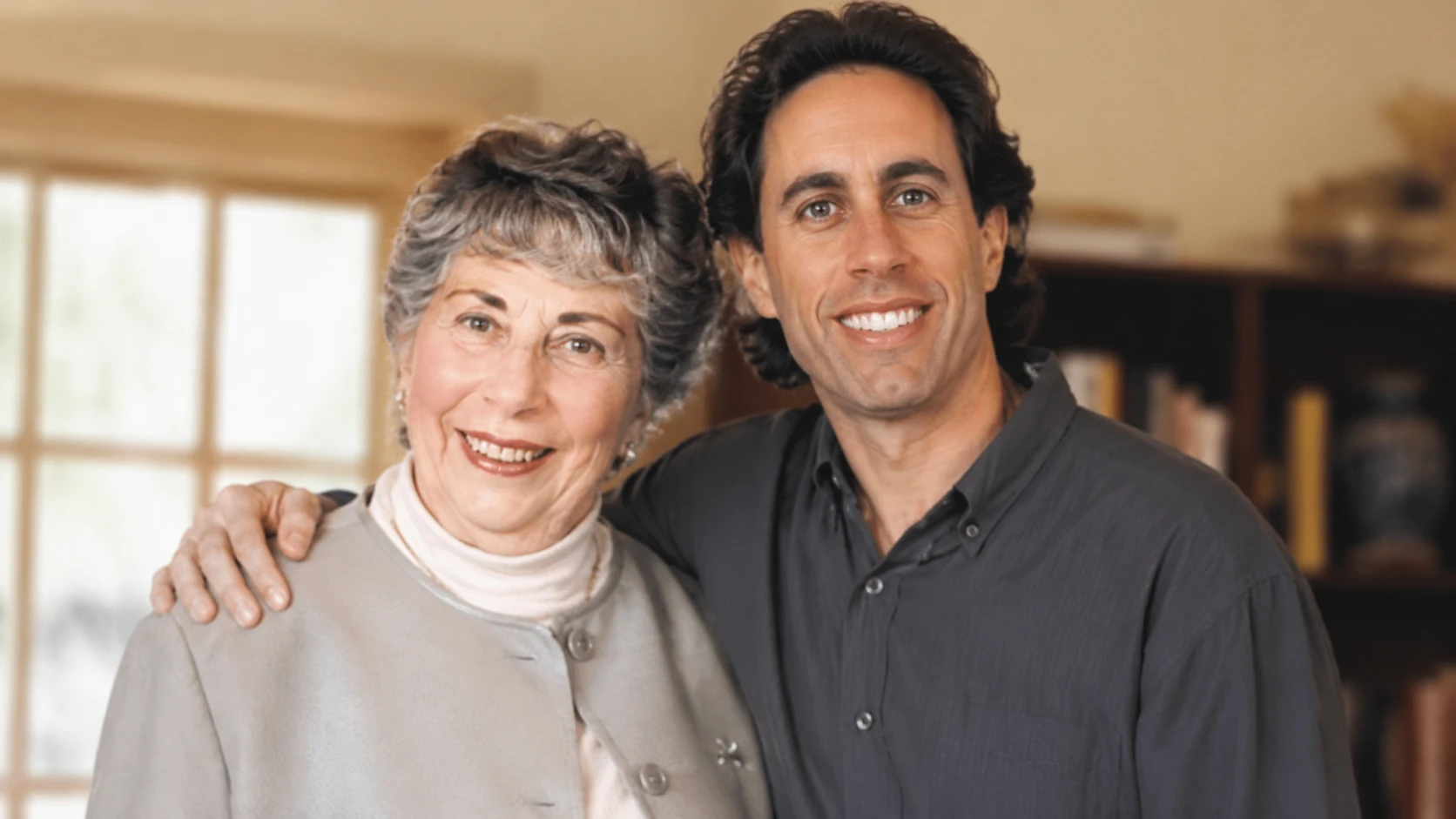
Betty Seinfeld lived most of her life far from cameras, red carpets, and the machinery of celebrity. Yet her name still draws curiosity because she was the mother of Jerry Seinfeld, one of the most successful comedians in American history, and because her own story carries the quiet force of immigration, family loss, Jewish identity, and old-fashioned resilience. She was not a performer, not a public figure, and not the sitcom mother millions came to know on television. She was a real woman with a life before fame, a family shaped by hardship, and a presence that remained important to those who knew her long after Jerry’s career became part of popular culture.
The search for “Betty Seinfeld” usually begins with a simple question: who was Jerry Seinfeld’s mother? The answer is more interesting than a line in a celebrity family tree. Betty was born into a Syrian Jewish family, spent part of her early life in the shadow of loss, married Kalman Seinfeld, raised two children on Long Island, and lived long enough to see her son become a defining comic voice. Her life was private, but it was not empty of meaning. In many ways, it helps explain the discipline, independence, and dry-eyed view of human behavior that became part of Jerry Seinfeld’s comedy.
Early Life and Syrian Jewish Roots
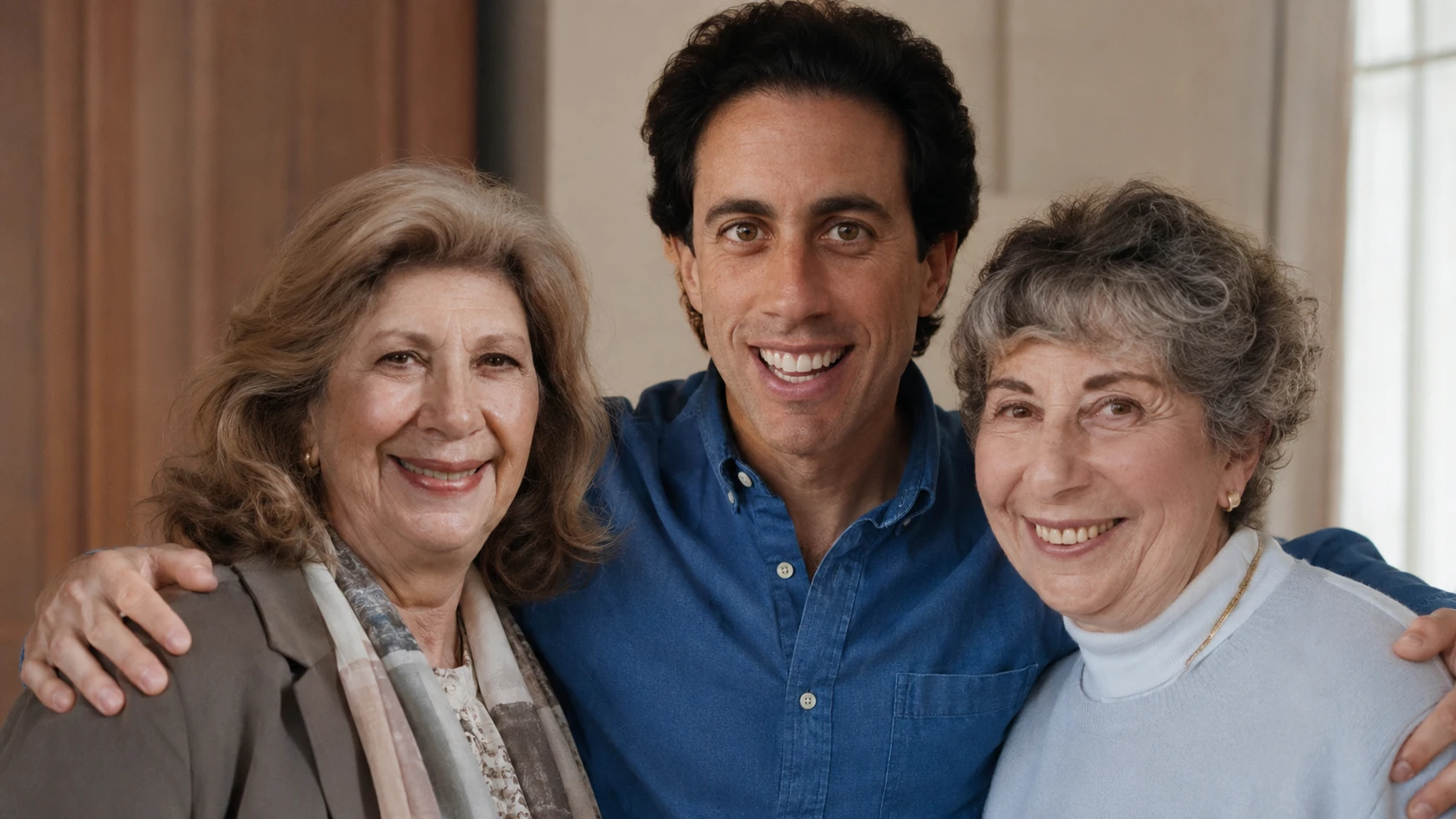
Betty Seinfeld was born into a Syrian Jewish family, with her family background commonly connected to Aleppo, one of the historic centers of Jewish life in the Middle East. Public records and family-history references have given her maiden name in slightly different spellings, including Hosni, Husney, and Hesney. Those variations are not unusual for families whose names moved across languages, immigration documents, and American record systems. The safest account is that Betty came from a Sephardic or Mizrahi Jewish background, rooted in the Syrian Jewish community that built strong networks in New York during the early twentieth century.
Her birth year is also recorded with some variation, which is common in older immigrant family records. Some public references give her birth date as December 12, 1915, while others suggest a year closer to 1917. The difference may seem small, but it matters for accuracy because it affects her reported age at death. What is clear is that Betty was born during a period of war, migration, and major change for families from the Middle East and Eastern Mediterranean.
Aleppo’s Jewish community had deep traditions in commerce, religious learning, food, music, and family life. Many Syrian Jews who came to the United States settled in New York, where they maintained close communal ties while adapting to American life. Betty’s family story appears to sit inside that larger movement. She was not famous for this heritage, but it gave her life a cultural setting that is often missing from quick references to her as simply “Jerry Seinfeld’s mother.”
That background also helps explain why Betty’s identity cannot be reduced to one clean label. Depending on the source, her family may appear under Syrian, Turkish, Sephardic, or Jewish descriptors. This does not necessarily mean the accounts contradict one another. Borders, official nationality labels, and community identities often shifted across time, especially for families connected to the former Ottoman world.
Childhood, Loss, and the Orphanage Story
One of the most revealing public details about Betty’s life is that Jerry Seinfeld has described both of his parents as orphans. He has spoken about this not as a dramatic confession, but as a matter-of-fact explanation for the kind of household he grew up in. His parents, by his telling, had learned early not to expect life to handle them gently. That experience seems to have shaped the way they raised their own children.
Family-history accounts suggest that Betty’s early years were marked by loss after her mother died when Betty was still young. Some accounts connect that loss to the 1918 influenza pandemic, which took millions of lives around the world and devastated many families. After that tragedy, Betty and other surviving children in the family are believed to have spent time in the Brooklyn Hebrew Orphan Asylum. The details vary by record, but the broad outline fits Jerry’s own later description of his mother as someone who had been orphaned.
The word “orphanage” can sound stark to modern readers, and in many cases it was. At the same time, Jewish orphan asylums in New York were also community institutions that housed children whose families had been broken by death, poverty, illness, or immigration disruption. Children did not always lose both parents in the strict legal sense; some entered care because surviving relatives could not support them. Betty’s story appears to belong to that older world of family networks, communal care, and difficult choices made under pressure.
There is no evidence that Betty built a public identity around that childhood. She did not become known as a speaker, author, or activist telling an orphanage survival story. Yet the fact matters because it helps explain the tone of the Seinfeld family home. Jerry has often suggested that his parents were not hovering, anxious, or overly involved. They had survived enough to give their children room, perhaps more room than many modern parents would imagine.
Marriage to Kalman Seinfeld
Betty married Kalman Seinfeld, often described as the son of Jewish immigrants with Central or Eastern European roots. Kalman worked as a sign maker, a practical trade that placed the family firmly outside glamour and show business. He was not a studio executive, agent, comedian, or entertainment insider. The family Jerry was born into was middle-class, work-oriented, and grounded in ordinary routines.
Kalman and Betty had two children: Carolyn and Jerome Allen Seinfeld, known to the world as Jerry. Jerry was born in Brooklyn on April 29, 1954, and the family later settled in Massapequa, Long Island. That move placed the Seinfelds in the expanding suburban world of postwar New York, where families sought space, stability, and a quieter life outside the city. Betty’s life as a wife and mother unfolded mostly there, in the rhythms of school, home, neighborhood, and family obligation.
Kalman has often been remembered as the more openly comic parent. Jerry has said that his father had a sharp sense of humor and a habit of finding jokes in small moments. Betty’s public image is quieter, but that does not mean she was passive or unimportant. In many families, especially of her generation, the mother’s role was less documented but deeply felt in the order, mood, and values of the home.
Kalman died in 1985, before Seinfeld became the huge television success that changed Jerry’s life. That meant Betty lived through her son’s rise as a widow. She saw the transformation from stand-up hopeful to national celebrity without her husband beside her. That detail gives her later life a bittersweet edge, because the family’s biggest public triumph came after one parent was already gone.
Raising Jerry Seinfeld on Long Island
Jerry Seinfeld’s childhood in Massapequa has often been described as stable, suburban, and unremarkable in the best comic sense. He was not raised in a show-business home, and he did not grow up surrounded by famous people. His parents were practical, not theatrical. That ordinariness became one of the raw materials of his comedy.
Betty’s parenting style, as reflected in Jerry’s later comments, seems to have been hands-off by modern standards. Jerry has jokingly described his parents’ approach as a kind of “complete neglect,” but he has also made clear that he saw value in it. He has said their lack of overmanagement helped him become independent. The joke lands because it contains affection as well as truth.
This independence helped shape Jerry’s early ambition. He became fascinated by comedy, television, and timing, eventually studying communications and theater before building a stand-up career in New York clubs. Betty and Kalman do not appear to have mapped out that path for him. Instead, the household seems to have given him enough freedom to become himself, which is often what creative children need most.
Betty also raised Carolyn Seinfeld, Jerry’s older sister, who later became connected to Jerry’s business affairs. Carolyn has kept a much lower public profile than her brother, which fits the family’s general pattern of privacy. The Seinfeld family became famous because of Jerry, not because the whole family sought attention. Betty’s life remained largely outside interviews and publicity even after her son became a household name.
Betty Seinfeld and Jerry’s Comedy
Betty Seinfeld was not a comedy writer, but her life sits behind Jerry’s comic sensibility in quiet ways. Jerry’s act is built on observation, restraint, precision, and a refusal to overstate emotion. He studies behavior from a distance, often turning tiny social discomforts into clean, memorable routines. That kind of discipline does not come only from family background, but family background helps form the person who does the observing.
Jerry has spoken often about his father’s humor, but Betty’s influence may have been more atmospheric. A mother who had known early instability, then built a steady home, may have helped create the emotional conditions in which discipline mattered. Jerry’s comedy has rarely depended on confession or trauma. It depends instead on control, distance, and the ability to make ordinary life seem strange.
The famous idea behind Seinfeld as a “show about nothing” also makes more sense against this family backdrop. The show was not about nothing in a literal sense. It was about the tiny rules, irritations, selfishness, bargains, and absurd patterns of daily life. Those are the kinds of things a sharp observer notices when he has spent years watching people without needing to explain himself.
Betty’s own story does not need to be stretched into a neat origin myth. It would be too simple to say that her orphaned childhood caused Jerry’s humor or that her Syrian Jewish background directly shaped every joke. Real life rarely works that cleanly. What can be said is that Jerry came from a home marked by independence, Jewish identity, modest expectations, and a strong tolerance for ordinary life, and Betty was central to that home.
The Difference Between Betty Seinfeld and Helen Seinfeld
One of the most common points of confusion is the difference between Betty Seinfeld and Helen Seinfeld. Betty was Jerry Seinfeld’s real mother. Helen Seinfeld was the fictional mother on the television series Seinfeld, played by actress Liz Sheridan. The two should not be treated as the same person.
Helen Seinfeld became familiar to viewers as Jerry’s loving, slightly anxious, proudly parental TV mother. She appeared with Morty Seinfeld, Jerry’s fictional father, played by Barney Martin after Phil Bruns appeared in the role early in the series. Helen and Morty were comic characters, written to serve the rhythm and world of the show. They were not documentary portraits of Betty and Kalman Seinfeld.
That said, sitcom parents often draw from emotional truth even when they are not literal copies. The fictional Helen’s pride in Jerry, her concern for his well-being, and her place in a Jewish family comedy tradition may have felt familiar to viewers for a reason. But there is no responsible way to claim that Helen was simply Betty renamed. The show created its own family universe, and Betty remained a private person outside it.
There are occasional fan claims that Betty appeared briefly in connection with the show, sometimes tied to uncredited or background appearances. Such claims are difficult to verify and should not be treated as established fact without strong documentation. What is established is that Liz Sheridan played Jerry’s television mother and that Betty Seinfeld was the real mother whose life remained mostly off-screen.
A Private Woman During a Public Phenomenon
The success of Seinfeld placed Jerry at the center of American entertainment in the 1990s. The series became a cultural event, known for its sharp writing, unsentimental characters, and comic treatment of everyday social behavior. Jerry became wealthy, famous, and closely watched. Betty, by contrast, stayed largely in the background.
That contrast is part of what makes her interesting. Many relatives of famous people become minor public figures by proximity, giving interviews, appearing on television, or building brands around the family name. Betty does not appear to have done that. She was known through Jerry’s comments, family references, and the memories of people close to the Seinfeld circle.
Her privacy also limits what can be responsibly said about her opinions, personal habits, religious practice, friendships, and inner life. A serious profile should not pretend otherwise. There is no public record showing that she pursued a professional entertainment career, published memoirs, gave major interviews, or became active in celebrity culture. Her importance comes from family, history, and influence rather than public achievement.
This makes her story more modest, but not less meaningful. Behind many public figures are parents whose lives were shaped by migration, work, marriage, grief, and domestic responsibility. Betty Seinfeld belongs in that category. She was not famous by profession, yet her life helped form someone whose work reached millions.
Later Years in Florida
Betty Seinfeld spent her later years in Florida, with public memorial references placing her death in Palm Beach Gardens. Like many older New Yorkers, she appears to have moved into the warmer retirement geography of South Florida. That region has long had large Jewish communities, including many families with New York roots. It would have offered a familiar social and cultural setting for someone from Betty’s generation.
Her later years are most often mentioned in connection with her long life and lively spirit. Producer George Shapiro, who had deep ties to Jerry Seinfeld’s career, once recalled Betty as an energetic woman in old age. He described her in connection with a documentary about vibrant people in their 90s, saying that she helped inspire the idea. The image of Betty dancing in her late 90s has become one of the few vivid public glimpses of her as a person apart from her son.
That detail matters because it breaks the flatness of many celebrity-parent biographies. Betty was not only a name in Jerry’s family background. She was an older woman with vitality, companionship, and humor around her. Even in a brief public memory, she comes across as someone who kept moving.
She died on April 18, 2014, according to public memorial records. Depending on which birth year is accepted, she was either in her mid-to-late 90s or 98 years old. There is no widely established public cause of death, and the family appears to have treated her final years with privacy. That privacy should be respected rather than filled with speculation.
Family, Grandchildren, and Name Legacy
Betty’s family legacy continued through Jerry Seinfeld’s children with his wife, Jessica Seinfeld. Jerry and Jessica have three children: Sascha, Julian, and Shepherd. Their daughter’s full name is widely reported as Sascha Betty Seinfeld, which appears to preserve Betty’s name in the next generation. Their son Julian Kal also appears to carry a family echo through Kalman’s name.
Family names are a quiet form of memory. They often say what families do not announce publicly, linking grandchildren to people they may have known only briefly or through stories. Sascha Betty’s name suggests that Betty remained important inside the family, not just as Jerry’s mother but as a person worth remembering. That kind of tribute often speaks more clearly than publicity.
Betty’s connection to her grandchildren also places her in a long family arc. Her own childhood was marked by loss and displacement, while her later life included children, grandchildren, and a son whose work became part of American comedy history. The distance between those points is remarkable. It stretches from immigrant records and orphan care to television fame and global recognition.
This does not mean Betty’s life should be measured only by Jerry’s achievements. That would be unfair and too narrow. Her own life had its own endurance, its own losses, and its own private joys. But because Jerry’s fame is why most readers find her name, her family legacy is the clearest public path into understanding who she was.
Public Image and What Is Not Known
Betty Seinfeld’s public image is built from fragments. She is remembered as Jerry Seinfeld’s mother, Kalman Seinfeld’s wife, a Syrian Jewish woman, an orphaned child, a Long Island homemaker, and a lively older woman. Those fragments create a real outline, but they do not amount to a full memoir. Much of her daily life remains private.
There is no verified public net worth for Betty Seinfeld, and any site assigning her a specific fortune should be treated with caution. She was connected to enormous wealth through Jerry, whose entertainment career brought major financial success, but that does not make her personal finances public. It is more accurate to say that she lived as the mother of a very wealthy public figure in later life, not that she had an independently documented celebrity fortune. Claims about her assets, homes, or estate should not be repeated unless supported by credible records.
There are also no known awards, public offices, major professional credits, or public controversies tied to Betty herself. That absence should not be seen as a gap to fill with exaggeration. Many lives, especially women’s lives from her generation, were built around family and community rather than official recognition. A public profile can honor that without pretending she had a public career she did not have.
The truth is, Betty Seinfeld’s story is partly a study in limits. Readers want to know more because her son is famous, but responsible writing must stop where the facts stop. What remains is still enough: a woman born into a complex immigrant family history, shaped by early loss, who built a home and lived to see her son become one of comedy’s major figures.
Why Betty Seinfeld Still Matters to Readers
Betty Seinfeld matters because people are curious about where famous people come from. Jerry Seinfeld’s comedy can feel almost self-created because his stage persona is so controlled and self-contained. But no artist comes from nowhere. Betty’s life helps place him inside a family history that includes Syrian Jewish roots, orphanhood, suburban New York, and a household where independence was valued.
She also matters because her story complicates the simple image of the American celebrity parent. She was not a stage mother. She did not appear to push Jerry into fame or ride his success into public life. Her influence was quieter, expressed through family culture rather than career management. In a celebrity economy that often turns relatives into content, her privacy feels almost striking.
For readers interested in Jewish American history, Betty’s background also opens a less commonly discussed branch of that story. Many Americans associate Jerry Seinfeld mainly with New York Jewish humor, but his family was not only Eastern European through his father. His mother connected him to Syrian Jewish heritage, a fact that adds depth to the way his identity is often discussed. That heritage does not define every part of his comedy, but it belongs in any serious account of his family.
Most of all, Betty remains interesting because she represents the hidden architecture behind a public life. Jerry became famous for noticing small things, but Betty’s life reminds us that small things are often where family history lives. A name passed to a granddaughter, a childhood shaped by orphan care, a marriage to a working sign maker, a move to Long Island, a late-life dance in Florida: these are not loud facts, but they are human ones.
Frequently Asked Questions
Who was Betty Seinfeld?
Betty Seinfeld was the mother of comedian Jerry Seinfeld and his sister Carolyn Seinfeld. She was married to Kalman Seinfeld, a sign maker, and helped raise her family in New York, including Massapequa on Long Island. Her own background is commonly described as Syrian Jewish, with family roots connected to Aleppo.
She was not a celebrity in her own right, and she lived a mostly private life. Public interest in her comes mainly from her relationship to Jerry Seinfeld and from the family history that shaped his early life. The most responsible account of her life focuses on confirmed family facts rather than speculation.
Was Betty Seinfeld Jerry Seinfeld’s real mother?
Yes, Betty Seinfeld was Jerry Seinfeld’s real mother. Jerry was born Jerome Allen Seinfeld in Brooklyn on April 29, 1954, to Betty and Kalman Seinfeld. He grew up with his older sister Carolyn in a Jewish family on Long Island.
Some confusion comes from the sitcom Seinfeld, where Jerry’s mother was a fictional character named Helen Seinfeld. Helen was played by actress Liz Sheridan and was not Betty herself. The character may have drawn from familiar family comedy patterns, but she should not be treated as a direct portrait of Betty.
What was Betty Seinfeld’s maiden name?
Betty Seinfeld’s maiden name is commonly given as Hosni, though some records and family-history references use spellings such as Husney or Hesney. These spelling differences likely reflect transliteration, immigration records, and changes in how family names were written in English. The variations should be handled carefully rather than treated as separate people.
Her family background is usually tied to Syrian Jewish roots, especially Aleppo. Because older records can be inconsistent, exact spellings and dates may differ from one source to another. The broad family connection, however, is widely repeated in biographical references about Jerry Seinfeld.
Was Betty Seinfeld an actress on Seinfeld?
Betty Seinfeld was not the actress who played Jerry’s mother on Seinfeld. The sitcom role of Helen Seinfeld was played by Liz Sheridan, who became familiar to viewers as Jerry’s affectionate and sometimes worried television mother. Betty remained a private figure and did not have a known acting career.
There are occasional fan claims about possible uncredited appearances or brief references, but those claims are not part of the standard public record. The safest answer is that Betty was Jerry’s real mother, while Helen Seinfeld was a fictional character played by a professional actress. Mixing them up is one of the most common mistakes in online searches about Betty.
When did Betty Seinfeld die?
Betty Seinfeld died on April 18, 2014, according to public memorial references. Her place of death is commonly listed as Palm Beach Gardens, Florida. Because records differ on her exact birth year, her reported age at death varies in public references.
Some records give her birth date as December 12, 1915, which would make her 98 when she died. Other references suggest a 1917 birth year, which would make her younger. Without a single universally accepted public record, it is best to state the death date clearly and acknowledge that her exact age is reported differently.
Did Betty Seinfeld influence Jerry Seinfeld’s comedy?
Betty Seinfeld influenced Jerry Seinfeld mainly through family background and upbringing, not through a public creative role. Jerry has described both of his parents as orphans and has said their hands-off parenting helped him become independent. That kind of independence fits the discipline and self-direction required in stand-up comedy.
His father, Kalman, is often remembered as the more openly funny parent, and Jerry has spoken warmly about his father’s humor. Betty’s influence appears to have been quieter, tied to family culture, resilience, and the emotional climate of the home. She helped shape the world Jerry came from, even if she did not shape his jokes directly.
Did Betty Seinfeld have a net worth?
There is no credible, verified public net worth for Betty Seinfeld. Many online net-worth claims about relatives of celebrities are unsupported and should be treated carefully. Betty did not have a known public entertainment career or business profile that would allow a reliable estimate.
It is true that her son Jerry Seinfeld became extremely wealthy through comedy, television, touring, syndication, and other ventures. That does not make Betty’s personal finances a matter of verified public record. A careful profile should avoid assigning her a specific dollar figure without strong documentation.
Conclusion
Betty Seinfeld’s life does not read like a celebrity script, and that is part of its value. She was born into a family history shaped by migration and Jewish identity, endured early loss, married Kalman Seinfeld, and built a home where independence seems to have mattered more than performance. Her son became famous for noticing life’s smallest absurdities, but the family behind him was shaped by much larger forces.
Her story also reminds readers to be careful with fame by association. Betty was not Helen Seinfeld, not a sitcom character, and not a public entertainer. She was a private woman whose name became searchable because one of her children became a cultural figure. The facts that survive should be treated with respect, not inflated into myth.
What remains is a portrait of endurance rather than celebrity. Betty Seinfeld lived long enough to see her family name become known around the world, yet she appears to have kept her own life mostly outside that glare. For readers trying to understand Jerry Seinfeld’s roots, she is not a footnote. She is part of the family history that made the public story possible.
