

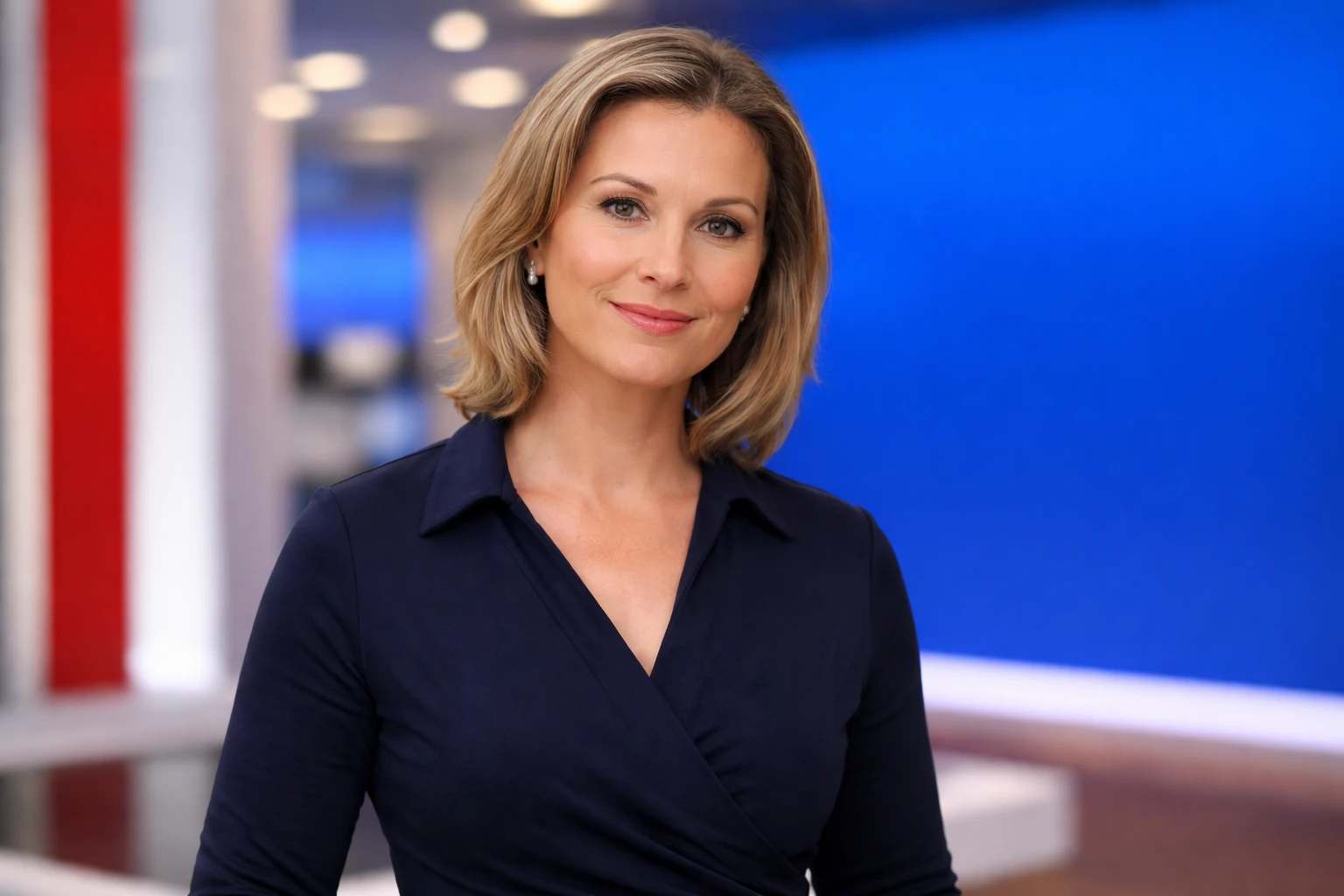
Kimberley Leonard built her reputation not through noise, but through consistency. For years, she was a familiar face on Sky News, delivering global headlines with calm precision, often in the middle of fast-moving, high-pressure situations. Viewers across the UK and beyond came to trust her presence, even if many didn’t know the full story behind her journey.
That story begins far from London’s studios, in Kenya, where Leonard first found her voice in media. Her path to international broadcasting wasn’t a straight line, and that’s part of what makes it compelling. It moved through different countries, different news cultures, and different expectations of what a journalist should be.
But here’s the thing: Leonard’s career isn’t just about where she worked. It’s about how she adapted, how she stayed steady in shifting environments, and how she quietly built a global career without relying on spectacle. Her departure from Sky News in 2023 only sharpened public interest, prompting a new wave of curiosity about who she is and what comes next.
Early Life and Family
Kimberley Leonard was born and raised in Kenya, a country with a vibrant media landscape and a strong tradition of radio journalism. While detailed information about her family background remains largely private, her early exposure to Kenyan media appears to have shaped her interest in storytelling and communication.
Growing up in Kenya meant being part of a society where radio still plays a central role in daily life. News, music, and conversation blend into a constant stream of public dialogue. It’s not hard to see how that environment might have sparked a young person’s curiosity about media.
Not many people know this, but Leonard has spoken in past interviews about her early ambitions and how they were tied to storytelling rather than fame. She wasn’t chasing television at first. She was drawn to communication itself — how ideas move, how stories travel, and how voices carry across distances.
Education and First Ambitions
Leonard’s academic path took her beyond Kenya, marking the first of several international transitions that would define her career. She studied at the University of Cape Town, one of Africa’s leading institutions, before later attending the University of Westminster in London.
This combination of African and European education gave her a broader perspective early on. It meant exposure to different journalistic traditions, different political contexts, and different expectations of what a reporter should deliver. That kind of foundation often shapes how a journalist approaches their work for years to come.
During this period, Leonard began to refine her professional direction. Journalism became less of an abstract interest and more of a practical path. She wasn’t just studying media theory — she was preparing for the realities of reporting, presenting, and working in competitive news environments.
Starting Out in Kenyan Media
Leonard’s early career began in Nairobi, where she worked in radio — a space that demands clarity, confidence, and quick thinking. She was associated with Capital FM, one of Kenya’s most prominent radio stations, known for its mix of entertainment and current affairs programming.
Radio is often an unforgiving training ground. There’s no visual safety net, no chance to rely on graphics or footage. It’s just the voice, the timing, and the ability to keep listeners engaged. For Leonard, this experience helped build the discipline that would later define her television work.
What’s striking is how many broadcasters trace their roots back to radio. It teaches pace and control in a way few other formats can. Leonard carried those skills forward, even as her career began to expand beyond Kenya.
Moving Into International Broadcasting
Leonard’s transition from local radio to international broadcasting didn’t happen overnight. It involved moving into larger media markets and adapting to new audiences. She worked in Dubai and later in Doha, including roles connected to major international news networks such as Al Jazeera.
Here’s where it gets interesting. Working in global news hubs like Dubai and Doha means covering stories that span continents. The audience isn’t local anymore — it’s international, diverse, and often politically engaged. That shift requires a different level of awareness and sensitivity.
Leonard’s ability to navigate these environments suggested something more than technical skill. It showed adaptability. She wasn’t tied to one format or one region. Instead, she built a career that could move across borders while maintaining a consistent on-air presence.
Joining Sky News
Leonard’s move to Sky News marked a major step in her career. The UK-based broadcaster is known for its fast-paced coverage and round-the-clock news cycle, placing presenters under constant scrutiny. For Leonard, this was an opportunity to step into one of the most visible newsrooms in Europe.
At Sky News, she became a regular presenter, covering breaking news, political developments, and international stories. Her delivery style was measured and composed, even during chaotic news cycles. That consistency helped build trust with viewers who rely on presenters to guide them through complex events.
The truth is, being a news presenter at this level isn’t just about reading a script. It involves live decision-making, real-time interpretation, and the ability to stay calm under pressure. Leonard’s years on air showed a clear command of those demands.
Life in the Studio and Beyond
During her time at Sky News, Leonard wasn’t limited to traditional broadcasts. She also contributed to podcast content and in-depth discussions, expanding her role beyond the standard anchor format. This shift reflects how modern journalism works — presenters are expected to move between platforms.
The numbers tell a different story when you look at this closely. Television audiences are only part of the picture. Podcasts, digital segments, and online clips now play a major role in how news reaches people. Leonard’s involvement in these areas shows she was part of that evolution.
Her work often placed her at the center of major news moments. Whether covering political developments or international crises, she became a steady presence during periods when clarity mattered most.
Why Her Departure from Sky News Drew Attention
In August 2023, Kimberley Leonard presented her final show on Sky News after several years with the network. The departure was confirmed publicly and quickly became a point of discussion among viewers who had followed her work.
That said, the reasons behind her exit were not framed as dramatic or controversial. Instead, it appeared to be a professional transition, something not uncommon in broadcast careers. Still, for audiences, the absence of a familiar face can feel significant.
There’s a catch, though. When public figures leave visible roles without immediately stepping into another high-profile position, speculation tends to fill the gap. Searches for Leonard increased, with people asking where she had gone and what she was doing next.
What She Has Done Since Sky News
Following her departure, Leonard’s public work has included involvement with media projects outside traditional newsroom settings. One visible example is her association with the podcast “Invested in Better,” a series connected to global development and economic themes.
This move suggests a shift toward more curated, long-form storytelling rather than the constant pace of rolling news. It’s a different rhythm — one that allows for deeper exploration of topics rather than immediate reporting.
So what does this actually mean? It may reflect a broader change in how journalists shape their careers. Many are stepping away from daily news cycles to explore formats that offer more control and creative space.
A Career Built Across Borders
Leonard’s career stands out for its geographic range. From Kenya to South Africa, from the Middle East to the United Kingdom, she has worked in multiple media environments, each with its own demands.
This kind of path isn’t common, and it requires a particular kind of resilience. Adapting to different newsroom cultures, audience expectations, and editorial priorities takes more than technical skill. It takes awareness and flexibility.
Not everyone agrees on how to frame this aspect of her career. Some see it as a reflection of global opportunity, while others point to the challenges of maintaining identity across different markets. Leonard’s work sits somewhere in between — shaped by both movement and consistency.
Public Image and Personal Privacy
Despite her visibility, Leonard has maintained a relatively private personal life. Details about her family, relationships, and day-to-day life are not widely documented in credible sources.
That restraint is increasingly rare in an era where public figures often share extensively online. Leonard’s approach suggests a clear boundary between her professional role and her private life.
The truth is, this separation may be part of what keeps the focus on her work. Without the noise of personal publicity, her career stands on its own terms.
Net Worth and Financial Standing
Reliable information about Kimberley Leonard’s net worth is not publicly available. While some online sources attempt to estimate earnings, these figures often lack credible backing and should be treated cautiously.
Journalism salaries, especially in international broadcasting, can vary widely depending on role, seniority, and location. Without verified disclosures, any specific number would be speculative.
What can be said is that Leonard’s career spans several high-profile organizations, which suggests a stable and established professional standing within the industry.
Recent Public Presence
Since stepping away from Sky News, Leonard’s public appearances have been more selective. Rather than maintaining constant visibility, she appears to be choosing projects that align with broader themes and longer-form storytelling.
This shift reflects a wider trend among experienced journalists who seek more control over their work. The daily news cycle can be relentless, and stepping away can open up new possibilities.
What’s surprising is how quickly public curiosity adapts. Once a presenter leaves a major network, the focus shifts almost immediately from “what are they reporting” to “what are they doing now.”
Frequently Asked Questions
Frequently Asked Questions
Who is Kimberley Leonard?
Kimberley Leonard is a Kenyan-born journalist and broadcaster known for her work as a presenter on Sky News. She built her career across multiple international media markets, including Kenya, the Middle East, and the United Kingdom. Her on-air presence became familiar to audiences through her coverage of global news events. Since leaving Sky News in 2023, she has been involved in other media projects.
Is Kimberley Leonard still on Sky News?
No, Kimberley Leonard is no longer with Sky News. She presented her final show in August 2023 after several years with the network. Her departure marked the end of a significant chapter in her broadcasting career. Since then, she has moved on to other professional opportunities outside the channel.
Where is Kimberley Leonard from?
Kimberley Leonard is from Kenya. She began her early career in Nairobi, working in radio before moving into international broadcasting. Her background in Kenyan media played a key role in shaping her communication style. She later expanded her career across different countries and regions.
What is Kimberley Leonard doing now?
After leaving Sky News, Kimberley Leonard has been involved in media work outside traditional broadcast news. One known example is her connection to podcast content focused on global development topics. Her recent work suggests a shift toward longer-form storytelling. However, she has kept a relatively low public profile compared to her time in television news.
Did Kimberley Leonard work for Al Jazeera?
Yes, Kimberley Leonard has worked in international media environments that include roles connected to major broadcasters such as Al Jazeera. Her time in Doha and Dubai reflects her experience in global news coverage. These roles helped prepare her for later work at Sky News. They also contributed to her understanding of international audiences.
Conclusion
Kimberley Leonard’s career doesn’t follow a single narrative. It moves across continents, formats, and expectations, shaped by each place she worked and each role she took on. From Nairobi radio studios to international newsrooms, her path reflects both ambition and adaptability.
Her years at Sky News placed her in front of a global audience, but they were only one part of a broader journey. What stands out is not just the visibility of that role, but the groundwork that came before it. The early years in Kenya, the education abroad, the experience in different regions — all of it built toward that moment.
That said, her departure from Sky News didn’t mark an end. It marked a shift. Moving into new formats and projects suggests a different pace and perhaps a different set of priorities. The absence of constant visibility doesn’t mean a step back; it may signal a change in direction.
Looking ahead, Leonard’s career will likely continue to evolve in ways that don’t always follow the usual broadcast path. Her story isn’t finished, and that’s part of what keeps people searching for her. Not just to understand where she’s been, but to see where she might go next.
