

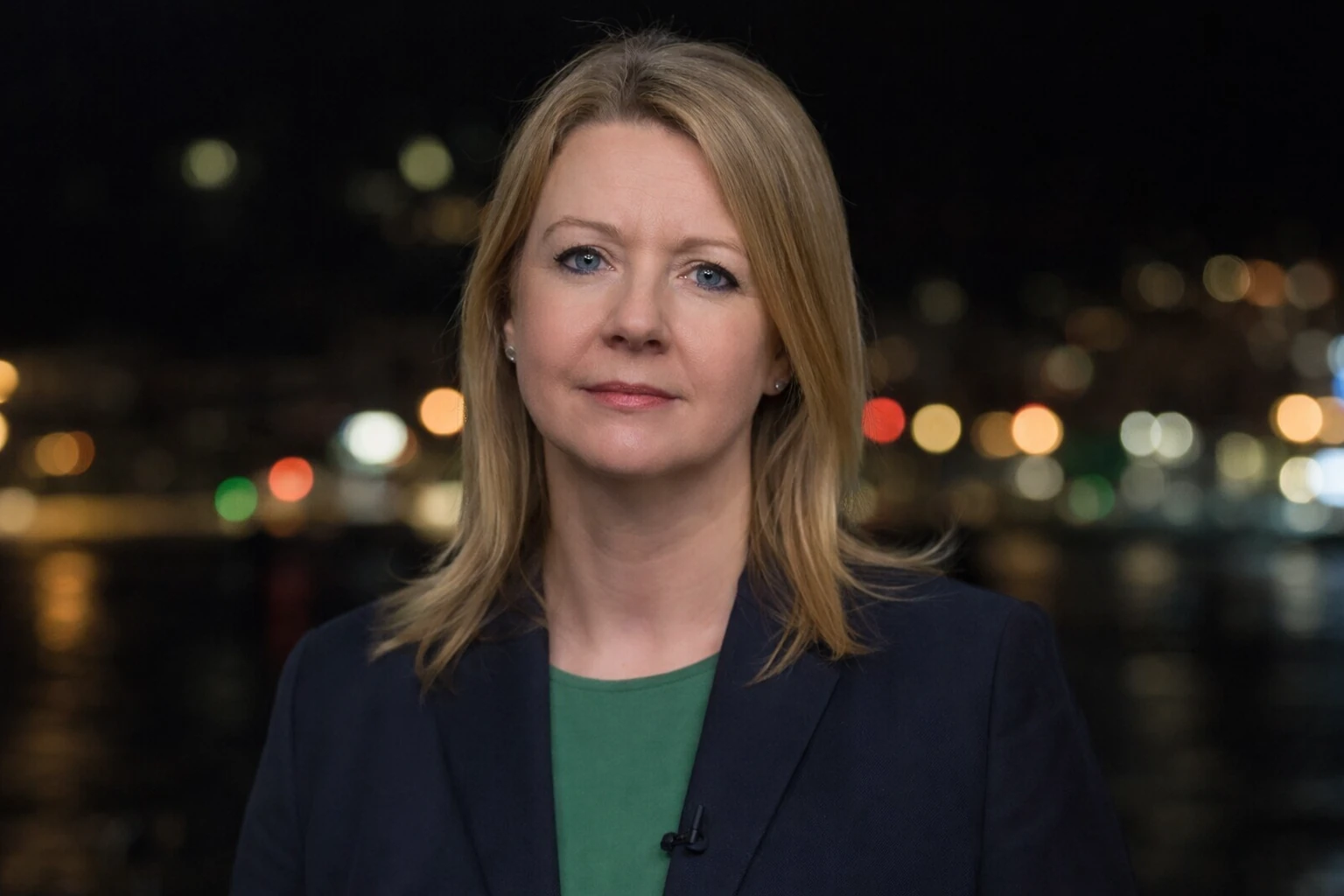
The first time many viewers notice Emma Murphy, she’s not introducing herself. She’s already mid-story, standing somewhere tense, explaining what just happened and what it might mean next. There’s no theatrical pause, no attempt to center herself in the frame. She’s there to make sense of something bigger, and that restraint is part of what makes her memorable.
Over time, her presence has become familiar to ITV audiences. Murphy is the kind of journalist you begin to trust not because she demands attention, but because she earns it. Her reporting carries the quiet authority of someone who has spent years working through the layers of a story, rather than rushing to the surface for quick conclusions.
Early Life and Family
Emma Murphy has kept much of her early life out of the public spotlight, which is increasingly rare in modern media. There are no widely confirmed records detailing her exact birthplace or childhood address, and that absence feels deliberate rather than accidental. By all accounts, she belongs to a generation of journalists who built their careers before personal branding became part of the job.
What can be pieced together suggests a traditional British upbringing shaped by education and curiosity about the wider world. Anyone who has followed her reporting would tell you that she writes and speaks with the clarity of someone trained to observe closely and question carefully. That usually starts early, often in classrooms where debate and analysis are encouraged rather than memorization.
There’s also a strong sense that Murphy’s path into journalism wasn’t accidental. Her ability to navigate complex political environments hints at a background where current affairs mattered. Whether that influence came from family conversations, school experiences, or early exposure to news media, it clearly left a mark.
Unlike many public figures, Murphy has never turned her family story into part of her public identity. That choice says something about her priorities. She has always kept the focus on her work rather than her personal narrative, and that boundary has remained consistent throughout her career.
Career and Rise to Prominence
Emma Murphy’s career didn’t begin on a global stage. Like many respected journalists, she built her reputation step by step, moving through roles that demanded patience, adaptability, and resilience. Early in her career, she worked in regional reporting, covering domestic stories that required speed and accuracy under pressure.
One of the clearer early markers comes from her association with ITV’s coverage of major UK events, including crime reporting. Her work during the Raoul Moat case, later reflected in a 2020 documentary, positioned her as a reporter capable of handling high-stakes, emotionally charged stories. That kind of assignment is often where journalists prove whether they can balance sensitivity with clarity.
From there, Murphy’s career expanded into broader national and international reporting. She eventually took on the role of Europe Correspondent for ITV News, covering political shifts across the continent at a time when Europe itself was changing rapidly. Those years coincided with major developments such as Brexit, migration debates, and shifting alliances, all of which demanded nuanced, on-the-ground reporting.
Her move to Washington as ITV’s US Correspondent marked another turning point. In January 2021, she arrived in the United States during a deeply turbulent period, just weeks after the Capitol attack. Writing about her arrival, Murphy reflected on having visited Washington for over 15 years before moving there permanently, which gave her a layered understanding of the country she was now covering.
That experience showed in her reporting. She didn’t approach the US as a distant observer but as someone familiar with its rhythms and contradictions. Her coverage during the early Biden presidency captured both the political transition and the deeper questions about America’s identity at that moment.
By 2024, Murphy had stepped into the role of International Editor at ITV News. This wasn’t a move away from reporting but an expansion of it. She continued to travel extensively, covering global conflicts and diplomatic developments while also shaping how ITV presented those stories to its audience.
Reporting from the World’s Most Difficult Stories
Emma Murphy’s work as International Editor has placed her at the center of some of the most challenging stories in modern journalism. From the Middle East to Eastern Europe, her reporting often focuses on places where facts are contested and the stakes are high.
In July 2024, she reported from the Middle East alongside UK Foreign Secretary David Lammy, covering discussions around Gaza, ceasefires, and humanitarian aid. Her reporting from that trip stood out because it didn’t simply echo official statements. She questioned policy decisions, highlighted contradictions, and brought attention to the human impact behind political negotiations.
By early 2026, Murphy’s reporting continued to focus heavily on international conflict. ITV coverage featuring her work included stories on Iran, Lebanon, and ongoing tensions involving Israel and Western governments. These are not easy assignments. They require not only journalistic skill but also the ability to operate in environments where information is incomplete and often contested.
What makes Murphy’s reporting distinctive is her tone. She avoids sensationalism, even when covering dramatic events. Instead, she prioritizes clarity, helping viewers understand not just what happened but why it matters. That approach has made her a trusted voice in a media environment that often feels crowded and chaotic.
Personal Life and Relationships
Emma Murphy has chosen to keep her personal life largely private, and there is limited verified information about her relationships, marital status, or family. While some online sources attempt to fill in these gaps, many of those claims lack reliable sourcing and should be treated cautiously.
This privacy appears intentional. Murphy’s public identity is closely tied to her professional work, and she has consistently avoided blending her personal life with her reporting career. That separation allows her to maintain a level of independence that can be difficult to achieve in the public eye.
According to colleagues and industry observers, Murphy is known within journalism circles for her professionalism and focus. Those who have worked alongside her often describe her as dedicated and composed, particularly in high-pressure situations. These qualities likely extend beyond her on-screen presence into her everyday life.
There’s also a broader cultural context to consider. Many journalists of Murphy’s generation were trained to keep their personal lives out of their work, not as a form of secrecy but as a way of preserving credibility. In that sense, her approach reflects a tradition that still holds value.
Financial Standing and Industry Recognition
Emma Murphy’s exact net worth has not been publicly disclosed, and there are no verified figures available from reliable sources. Estimates vary widely, but they should be approached with caution, as they often rely on assumptions rather than confirmed data.
What can be confirmed is her professional standing within the industry. Murphy has received multiple awards and nominations over the course of her career, reflecting recognition from both her peers and industry bodies. One of the most notable recent acknowledgments came in 2026, when she was nominated for Network Television Journalist of the Year at the Royal Television Society Awards.
That nomination placed her alongside some of the most respected journalists in the UK, including Sky News correspondents Alex Crawford and Yousra Elbagir. While she did not win the award, the nomination itself highlighted her reputation as a leading figure in broadcast journalism.
Her role as International Editor also suggests a level of financial stability consistent with senior positions in major news organizations. These roles typically come with competitive salaries, though exact figures are rarely made public.
What Emma Murphy Is Doing Now
As of 2026, Emma Murphy continues to serve as International Editor for ITV News, a role that keeps her actively engaged in global reporting. Unlike some editors who transition into primarily desk-based work, Murphy remains in the field, covering major international stories firsthand.
Recent ITV coverage shows her reporting on geopolitical tensions, conflicts in the Middle East, and broader international developments. Her work often involves traveling to regions experiencing instability, where she gathers information directly rather than relying solely on secondary sources.
This ongoing presence in the field reinforces her credibility. It also reflects a commitment to journalism that prioritizes firsthand reporting over commentary. In an era where many news figures operate primarily from studios, Murphy’s approach stands out.
Looking ahead, there’s little indication that she plans to step back from frontline reporting. If anything, her career suggests a continued focus on the stories that demand the most attention and the most care.
Lesser-Known Facts About Emma Murphy
Not many people know this, but Emma Murphy’s familiarity with Washington began long before she moved there as a correspondent. Her own writing reveals that she had been visiting the city for around 15 years, which gave her a deeper understanding of its political culture than many newcomers.
Another interesting detail is her transition from regional reporting to international coverage. That path is less glamorous than jumping straight into foreign correspondence, but it often produces stronger journalists. Murphy’s early work in domestic news helped build the skills that later defined her international reporting.
There’s also the matter of her on-screen presence. Unlike some broadcasters who rely on dramatic delivery, Murphy’s style is understated. That choice isn’t accidental. It reflects a belief that the story itself should take center stage, not the person telling it.
Finally, Murphy’s career highlights the importance of persistence in journalism. She didn’t rise to prominence overnight. Instead, she built her reputation over years of consistent, reliable reporting across different beats and regions.
Frequently Asked Questions
Who is Emma Murphy?
Emma Murphy is a British journalist and broadcaster who serves as International Editor for ITV News. She has previously worked as Washington Correspondent and Europe Correspondent, covering major global events. Her work focuses on international politics, conflict, and diplomacy.
What is Emma Murphy known for?
She is best known for her international reporting, particularly on complex and high-stakes global issues. Her coverage often involves frontline reporting from conflict zones and political hotspots. Viewers recognize her for her calm and clear reporting style.
Has Emma Murphy won any awards?
Emma Murphy has received multiple awards and industry recognition throughout her career. In 2026, she was nominated for Network Television Journalist of the Year at the Royal Television Society Awards. These honors reflect her standing within the journalism community.
Is Emma Murphy married?
There is no publicly confirmed information about Emma Murphy’s marital status. She has chosen to keep her personal life private, and reliable sources focus primarily on her professional work. Any claims about her relationships should be treated carefully unless verified.
Where does Emma Murphy work now?
As of 2026, Emma Murphy works as International Editor for ITV News. She continues to report from around the world, covering major international stories. Her role combines editorial leadership with active field reporting.
Conclusion
Emma Murphy’s career tells a story that feels increasingly rare in modern media. It is a story built on experience, patience, and a steady commitment to getting things right. She didn’t become a trusted journalist overnight, and she didn’t rely on personal visibility to build her reputation.
What stands out most is her consistency. Whether reporting from Washington, Europe, or the Middle East, Murphy brings the same clarity and focus to her work. She avoids unnecessary drama, choosing instead to let the facts speak for themselves.
There’s also something quietly reassuring about her presence in international news. At a time when information moves faster than ever, Murphy represents a slower, more deliberate approach to journalism. She takes the time to understand a story before explaining it, and that care shows in her reporting.
Looking ahead, her role is likely to remain as important as ever. The world isn’t becoming simpler, and the need for journalists who can explain it clearly isn’t going away. Emma Murphy has spent years building that skill, and she continues to use it where it matters most.
