

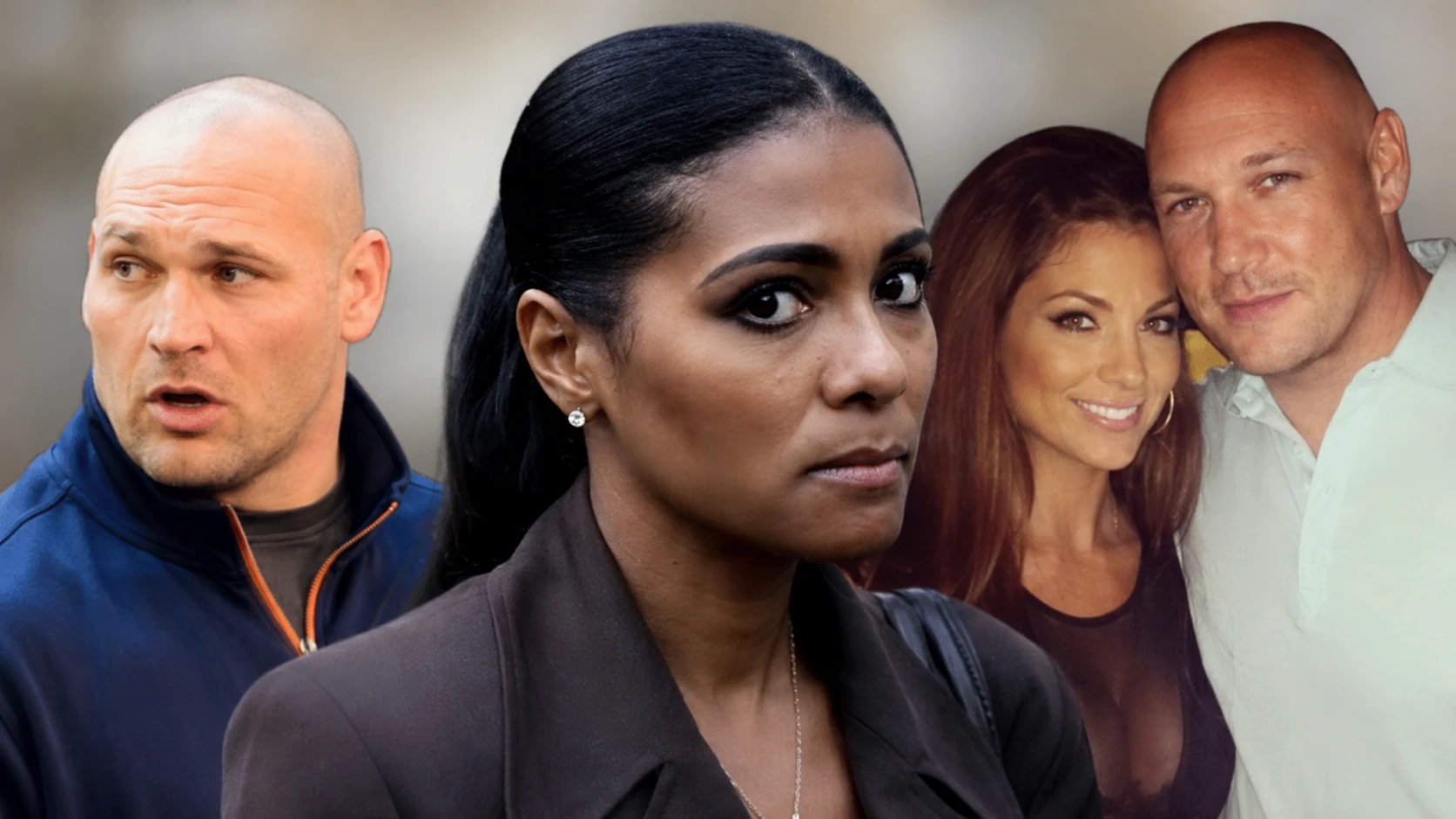
For years, Tyna Robertson’s name surfaced mostly in court documents, tabloid headlines, and sports gossip columns tied to NFL legend Brian Urlacher. Yet behind those headlines is a far more complicated story about motherhood, public scrutiny, painful legal battles, and the difficult reality of becoming publicly known without ever truly seeking celebrity.
Unlike actors, musicians, or television personalities who build careers in front of audiences, Robertson became recognizable through association and controversy. Her relationship with former Chicago Bears linebacker Brian Urlacher, her role as the mother of football prospect Kennedy Urlacher, and a series of highly publicized legal disputes placed her under an uncomfortable spotlight that has followed her for years.
The public record surrounding Tyna Robertson is often fragmented, emotional, and heavily influenced by litigation. Some accounts focus almost entirely on scandal, while others attempt to reduce her to a supporting character in the lives of more famous men. The truth is more layered than either version suggests. Robertson’s life story is one of visibility without fame, notoriety without celebrity privilege, and ongoing public curiosity fueled by family connections that remain relevant today.
Early Life and Family Background
Very little verified information about Tyna Robertson’s early life has been made publicly available. Unlike celebrities who publish memoirs or sit for lengthy interviews, Robertson has largely remained outside the traditional media system. Public records and older news reporting provide only scattered details about her upbringing, education, and family background.
Several reports from the early 2000s described Robertson as a real estate agent living in the United States during the legal conflict involving entertainer Michael Flatley. Beyond that, reliable information becomes scarce. Her exact birth date has not been consistently confirmed through trustworthy public sources, and details about her parents, childhood environment, and schooling remain largely private.
That absence of information has led many online biographies to fill the gaps with assumptions or invented claims. Some websites have attached unsupported career histories, estimated wealth figures, and personal details that cannot be verified through credible reporting. A careful profile has to acknowledge those limits honestly rather than pretend certainty where none exists.
Still, the limited public record suggests that Robertson was living a relatively ordinary life before legal disputes and high-profile relationships pulled her name into national media coverage. That contrast would later shape how the public perceived her. She was not someone trained to manage press attention, public criticism, or celebrity-adjacent controversy.
Relationship With Brian Urlacher
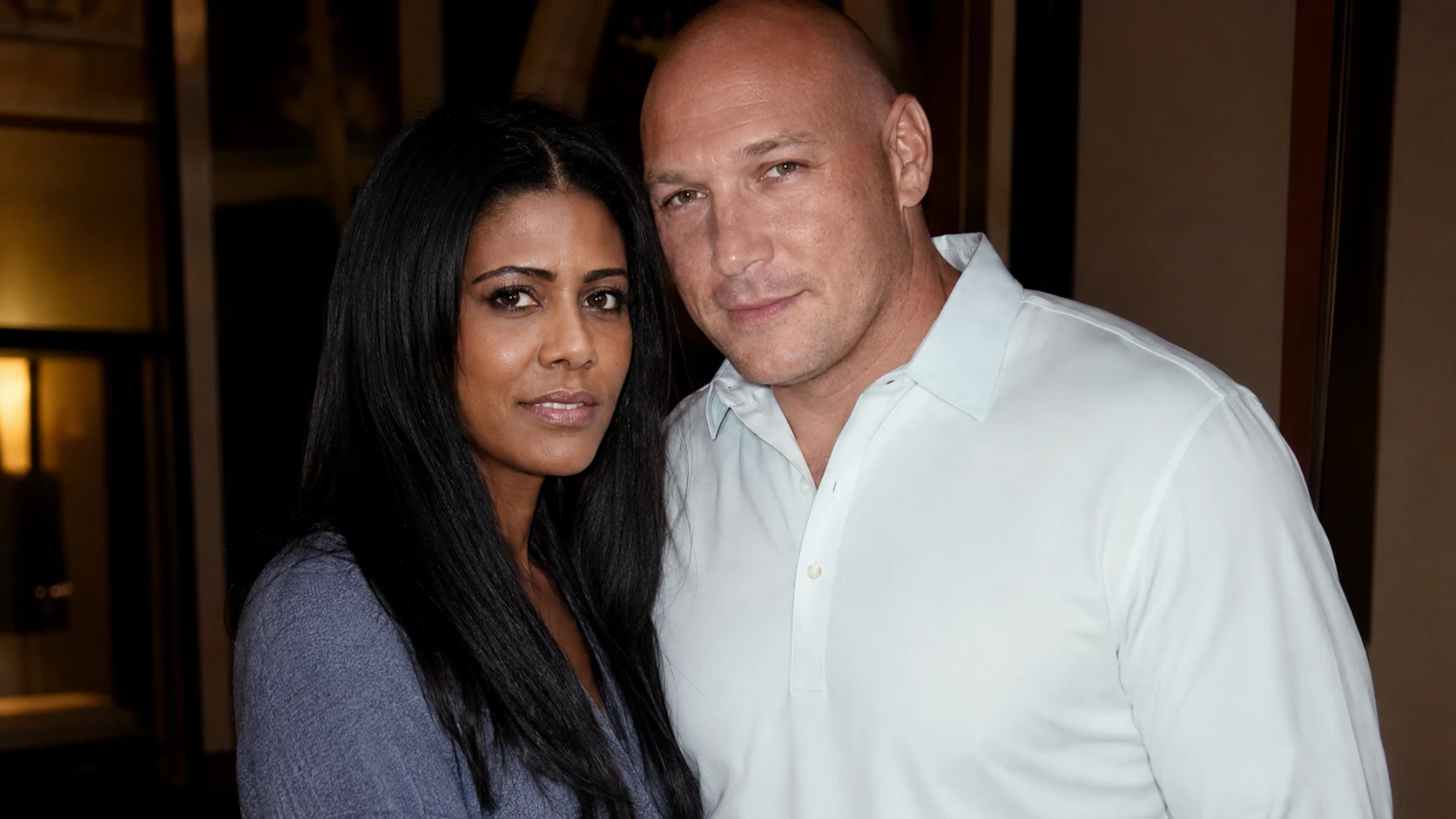
Tyna Robertson’s name became widely recognized through her relationship with Brian Urlacher, one of the most famous defensive players in NFL history. Urlacher spent his entire professional career with the Chicago Bears and became one of the defining defensive stars of the 2000s. His fame guaranteed that almost any personal dispute connected to him would attract media attention.
Robertson and Urlacher were never married, but their relationship resulted in the birth of their son, Kennedy Urlacher, on May 20, 2005. Public reports later confirmed that Urlacher sought to establish paternity and pursue custody arrangements shortly after Kennedy’s birth. Their relationship eventually became the subject of legal disagreements concerning parenting responsibilities and visitation.
Court disputes between the two occasionally became public through Chicago-area reporting. In 2007, news coverage stated that a judge ordered both parents to attend parenting classes during a disagreement involving visitation and custody exchanges concerning their young son. Reports at the time described the relationship between Robertson and Urlacher as tense and heavily litigated.
But here’s the thing. Public custody disputes involving famous athletes often become distorted by the athlete’s celebrity status. Headlines tend to flatten complicated family dynamics into simple narratives about winners and losers. Robertson’s side of the story was rarely explored in detail, while Urlacher’s fame naturally shaped media framing.
Even so, one fact remained consistent through years of public attention: both parents remained deeply connected to Kennedy’s life. That shared connection continues to shape interest in Robertson today.
Motherhood and Raising Kennedy Urlacher
The strongest and clearest part of Tyna Robertson’s public identity is her role as Kennedy Urlacher’s mother. As Kennedy developed into a nationally recognized football prospect, public curiosity about both of his parents grew substantially.
Kennedy Urlacher first gained major recruiting attention while attending Chandler High School in Arizona, where he emerged as a standout defensive back. Recruiting analysts and sports reporters frequently referenced his family background because of his father’s Hall of Fame NFL career. Yet Kennedy’s athletic success gradually became his own story rather than simply an extension of Brian Urlacher’s legacy.
Official athletic profiles from Notre Dame and later USC identified Kennedy as the son of Brian Urlacher and Tyna Karageorge, reflecting Robertson’s later married surname. Those profiles confirmed details that had long circulated publicly while also renewing interest in Robertson herself.
For Robertson, the experience likely carried unusual emotional complexity. Her son’s growing visibility reopened public attention toward periods of her life that had already been heavily scrutinized. Parents connected to rising athletes often face renewed media interest, but in Robertson’s case, that attention arrived alongside old controversies that had never fully disappeared from search engines or public memory.
What’s surprising is how little Robertson has publicly said during Kennedy’s rise in football. Unlike some sports parents who embrace visibility, she has remained mostly absent from interviews, documentaries, and public-facing media appearances. That silence has preserved her privacy to some extent, though it has also allowed speculation to flourish online.
The Michael Flatley Lawsuit
One of the most widely known chapters in Robertson’s public history began in 2003, when she accused Irish-American dancer and entertainer Michael Flatley of sexual assault. Flatley, internationally famous for Riverdance and Lord of the Dance, denied the allegations and maintained that their encounter was consensual.
Robertson filed a civil lawsuit seeking substantial damages, and the dispute quickly became international news because of Flatley’s celebrity profile. The case carried enormous reputational stakes for both sides, and media coverage at the time was intense. Flatley’s legal team aggressively challenged the accusations, while Robertson faced growing public scrutiny.
The situation escalated dramatically after Flatley filed a countersuit accusing Robertson and attorney D. Dean Mauro of extortion and defamation. Court proceedings became increasingly hostile, with both sides presenting sharply different versions of events. The legal conflict lasted several years and drew major media attention in both the United States and abroad.
In 2006, the California Supreme Court ruled that Flatley’s lawsuit against Robertson and Mauro could proceed. The court’s opinion became widely discussed because it addressed the legal limits of settlement negotiations and allegations of extortion connected to litigation threats. The ruling represented a major legal victory for Flatley.
The following year, a Los Angeles judge reportedly ordered Robertson to pay Flatley more than $11 million in damages related to defamation and emotional distress claims. The judgment severely damaged Robertson’s public reputation and became one of the defining elements of how her name was discussed online afterward.
That said, cases involving sexual assault allegations and defamation are often emotionally polarizing and legally complicated. Responsible reporting requires distinguishing between allegations, court findings, and public perception. The public record clearly shows that Flatley prevailed legally. It does not automatically answer every moral or personal question surrounding the dispute.
Marriage to Ryan Karageorge
Years after the Flatley litigation, Robertson married Ryan Karageorge. Compared with earlier periods of her life, this chapter appeared considerably more private. Public information about their relationship remained limited until tragedy unexpectedly brought their family into the national spotlight.
Ryan Adam Karageorge lived in Willow Springs, Illinois, and was originally from Indiana. Public obituary records describe him as a husband, son, brother, and family man with close ties to relatives and longtime friends. Unlike the public figures tied to Robertson’s earlier controversies, Karageorge lived largely outside celebrity culture.
For a period, Robertson appeared to have retreated somewhat from the level of media attention that had defined earlier years. Public reporting involving her became less frequent, and she maintained a relatively low profile while raising Kennedy.
That relative quiet changed suddenly in December 2016, when Karageorge died from a gunshot wound at the family home. The death immediately triggered media attention because of Robertson’s connection to Brian Urlacher and because custody issues involving Kennedy resurfaced soon afterward.
The tragedy became one of the most painful and publicly scrutinized moments of Robertson’s life.
The 2017 Custody Dispute
Shortly after Ryan Karageorge’s death, Brian Urlacher filed an emergency motion seeking temporary custody of Kennedy Urlacher. Court filings and Chicago media reports stated that Urlacher argued the situation created concerns regarding his son’s emotional well-being and home environment.
In January 2017, a Cook County judge granted Urlacher temporary custody. News coverage surrounding the filing included details drawn from court documents, many of which painted Robertson in an extremely negative light. Because those filings were connected to an active custody dispute, the allegations received substantial public attention even before all claims could be fully examined in court.
The media response was intense. Sports blogs, entertainment websites, and tabloid outlets amplified dramatic details from court records, often without much context. Robertson became the focus of renewed scrutiny, and her past legal history was frequently combined with newer allegations to create an image of constant controversy.
The truth is, custody battles involving public figures are often messy and emotionally charged. Allegations made in emergency filings are not always equivalent to final judicial findings, yet the public frequently consumes them that way. Robertson’s reputation suffered heavily during this period, particularly online, where nuanced legal distinctions rarely survive headline culture.
At the same time, Urlacher’s legal victory in obtaining temporary custody shaped public understanding of the dispute. For many readers, the outcome itself reinforced assumptions about Robertson, regardless of the broader emotional and legal context surrounding the case.
The Defamation Lawsuit Against Brian Urlacher
In 2018, Robertson filed a lawsuit reportedly seeking $125 million in damages against Brian Urlacher, several attorneys, media organizations, and journalists. The lawsuit alleged that she had been unfairly portrayed in the aftermath of her husband’s death and the custody proceedings involving Kennedy.
Robertson argued that media reporting and statements connected to the custody battle damaged her reputation by presenting her as unstable, dangerous, or unfit as a parent. The lawsuit reflected the enormous personal and reputational stakes involved in highly public family court disputes, especially when celebrity and media attention intersect.
The case attracted substantial coverage because of the enormous dollar figure attached to the complaint and because Urlacher remained one of Chicago’s most recognizable sports figures. Yet the legal outcome ultimately favored the defendants. Federal court proceedings later dismissed several claims, while portions of the case were dropped for procedural reasons connected to service and jurisdiction.
Court sanctions issued later in the litigation further weakened Robertson’s legal position. By that stage, her public image had become deeply associated with prolonged legal conflict and controversy.
Still, there was another side to the story that many readers recognized. Robertson’s lawsuit reflected frustration with how modern media ecosystems can magnify personal disputes into permanent online identities. Once a private citizen becomes connected to celebrity litigation, the internet rarely allows that person to return fully to anonymity.
Public Image and Media Perception
Tyna Robertson occupies an unusual place in public culture because she became famous without building a public-facing career. Her visibility emerged almost entirely through conflict, relationships, and litigation. That distinction shaped how audiences interpreted her over time.
Many online discussions about Robertson rely heavily on older tabloid-style reporting that focused on sensational details rather than careful chronology or context. As a result, her public identity often feels frozen in moments of legal controversy rather than understood as part of a broader human story.
There is also a gendered aspect to the coverage surrounding Robertson. Women involved in public disputes with wealthy or famous men are often judged through harsher emotional framing, especially when custody battles or sexual allegations are involved. Some coverage portrayed her as manipulative or unstable long before courts resolved every issue connected to the various disputes.
That does not erase the fact that Robertson lost major legal battles, including the Flatley case. Those outcomes remain important parts of the record. But public perception is rarely formed by legal documents alone. Media tone, celebrity influence, internet commentary, and repeated headlines all shape how audiences remember people.
Not many people know this, but the internet often preserves accusations more permanently than outcomes. A person connected to years of litigation can become defined entirely by searchable controversy even when large parts of their actual daily life remain unknown to the public.
Estimated Net Worth and Financial Questions
Reliable information about Tyna Robertson’s current financial situation is limited. Numerous celebrity-net-worth websites publish speculative estimates, but most provide no sourcing or verifiable financial disclosures. Because Robertson has not publicly disclosed assets, business holdings, or long-term professional income, any firm net worth figure would be unreliable.
Earlier reporting identified her as working in real estate during portions of the 2000s. Beyond that, there is little confirmed public information about her income sources or business activities. Legal battles involving major damages claims and extended litigation almost certainly carried substantial financial consequences, though exact figures remain unclear.
Some online sources attempt to portray Robertson either as extremely wealthy or financially ruined. Neither version can be confidently verified through trustworthy reporting. The more honest answer is that her financial status remains largely private.
For readers searching specifically about wealth, the lack of reliable evidence matters. Public curiosity does not create factual certainty.
Kennedy Urlacher’s Football Career and Renewed Interest
As Kennedy Urlacher’s football career has progressed, interest in Tyna Robertson has quietly returned. Kennedy first attracted major recruiting attention as a standout high school player before committing to Notre Dame. He later transferred to USC, where he continued developing as a defensive back.
Sports commentators naturally reference his father’s NFL legacy, but Kennedy’s story has increasingly become his own. Coaches and recruiting analysts have praised his instincts, football IQ, and competitive style. His rise has also reopened broader public curiosity about his family background.
For Robertson, that renewed attention likely creates a strange duality. On one hand, her son’s success is a source of pride. On the other, public interest in Kennedy often revives older media narratives tied to family litigation and controversy.
Yet Kennedy’s growth into adulthood subtly changes the context. The story is no longer centered entirely on disputes between parents. Instead, it now includes a young athlete building an identity independent from the conflicts that once dominated headlines surrounding his family.
Where Tyna Robertson Is Now
As of 2026, Tyna Robertson appears to maintain a largely private life away from major public-facing media activity. She has not built a celebrity brand, launched a major public platform, or regularly participated in interviews discussing her past controversies.
Most recent public interest connected to her name stems from Kennedy Urlacher’s football career and renewed searches tied to old legal stories. Beyond that, reliable reporting about her current daily life remains limited.
That relative absence from public view may be intentional. After years of scrutiny, litigation, and media attention, privacy itself can become a form of protection. Many individuals who experience high-profile public disputes eventually retreat from visibility altogether.
The public still searches her name because unresolved curiosity remains powerful. People want clear heroes and villains, especially in stories involving fame, custody, lawsuits, and tragedy. But real lives rarely fit those simple categories.
Frequently Asked Questions
Who is Tyna Robertson?
Tyna Robertson is best known publicly as the mother of Kennedy Urlacher, the son of former Chicago Bears linebacker Brian Urlacher. She also became widely known through legal disputes involving Michael Flatley and later custody litigation connected to Urlacher.
Was Tyna Robertson married to Brian Urlacher?
No, Tyna Robertson and Brian Urlacher were never married. They were in a relationship and share one son together, Kennedy Urlacher, who was born in 2005.
What happened between Tyna Robertson and Michael Flatley?
Robertson accused entertainer Michael Flatley of sexual assault in a civil lawsuit filed in 2003. Flatley denied the allegations and later countersued for defamation and extortion-related claims. Court rulings eventually favored Flatley, and Robertson was ordered to pay damages.
Who is Ryan Karageorge?
Ryan Karageorge was Tyna Robertson’s husband. He died in December 2016 at the family’s Illinois home. His death became connected to later custody proceedings involving Kennedy Urlacher.
Does Tyna Robertson have children?
Yes. Tyna Robertson is the mother of Kennedy Urlacher, who has become a nationally known football player and college athlete.
What is Tyna Robertson doing now?
Public information about Robertson’s current life remains limited. She appears to maintain a private lifestyle away from major media visibility, with most recent attention connected to Kennedy Urlacher’s football career.
Conclusion
Tyna Robertson’s story does not fit neatly into celebrity culture, sports history, or courtroom drama alone. Her public identity formed through fragments of all three, often during painful and highly emotional moments that became amplified by media attention.
For many readers, she remains associated with controversy because controversy is what received the most coverage. But reducing her entire life to lawsuits and headlines misses something important. Behind every public filing, media report, and online debate was a real family navigating conflict, grief, parenthood, and intense scrutiny.
Her connection to Brian Urlacher and Kennedy Urlacher ensures that public interest in her name will probably continue for years. Yet the available record also shows someone who repeatedly tried to step away from visibility, even as public attention kept returning.
The lasting lesson of Tyna Robertson’s story may be less about fame than about the cost of unwanted notoriety. Once a private person becomes part of a public narrative involving celebrity, courts, and tragedy, the internet rarely lets that story fully disappear.
