

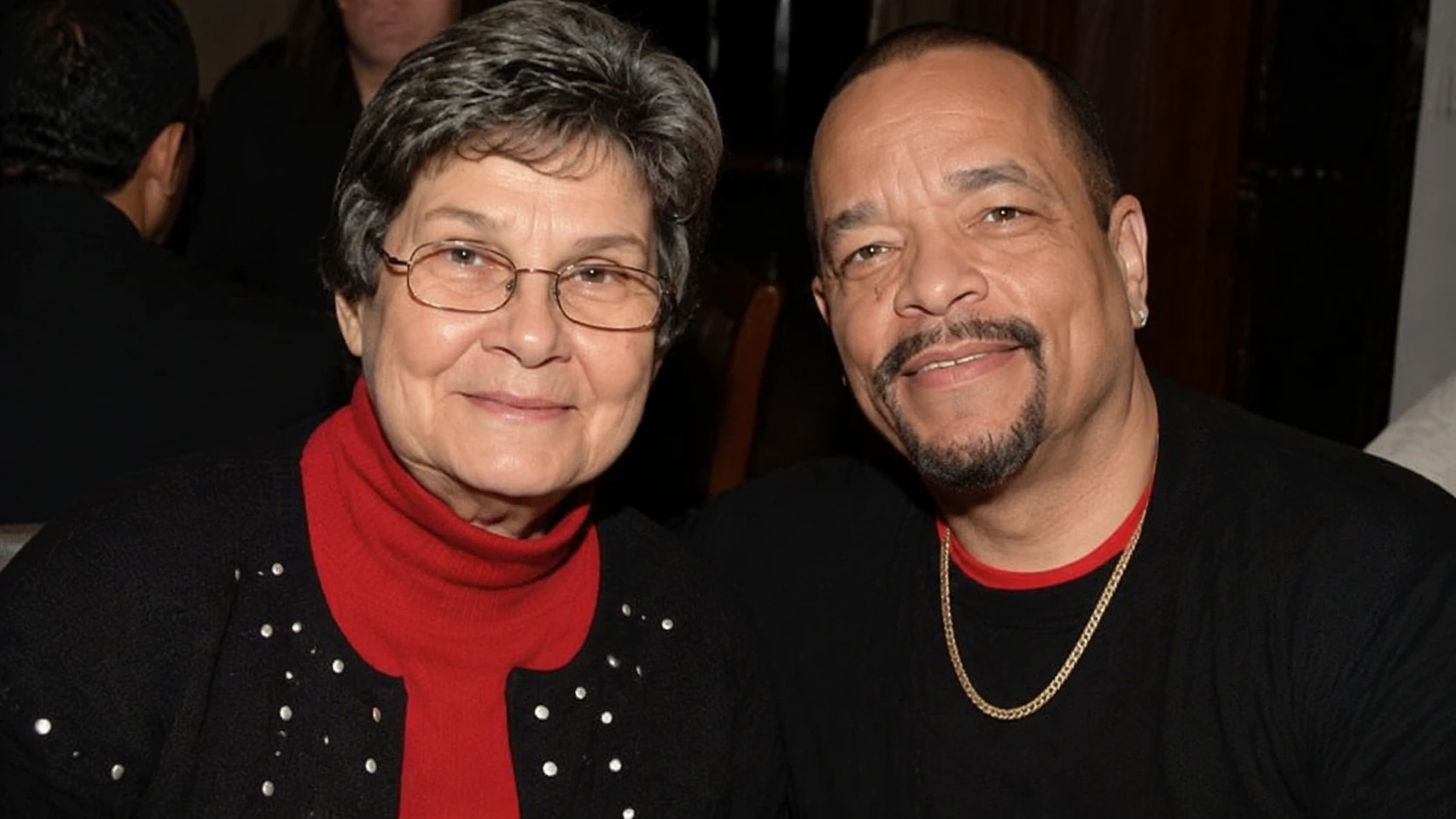
Alice Marrow was never famous in her own right, but her name echoes in one of the most influential careers in American music and television. Long before Tracy Lauren Marrow became Ice‑T, the rapper and actor known around the world, his life began in his mother’s arms. She guided his earliest steps, shaped his first lessons about race and self‑worth, and left a mark that persisted even after she died when he was in elementary school. Unlike her son, Alice lived her life largely out of the public eye, but her impact on his upbringing is part of the definitive story of how one of hip‑hop’s most enduring figures was shaped.
The details of Alice Marrow’s life are sparse in the historical record. What is firmly documented from Ice‑T’s own accounts and reputable biographies is the outline of her family story: she was married to Solomon Marrow, they raised a son together in New Jersey, and she died of a heart attack during Ice‑T’s childhood. The rest of her biography must be assembled from family memories, public statements by her son, and the larger context of mid‑20th‑century African American family life in the United States.
Early Life and Family
Alice Marrow was part of a generation of African American families whose lives were shaped by migration, work, family stability, and the quest for opportunity. Her son, Tracy, was born on February 16, 1958, in Newark, New Jersey, to Alice and her husband, Solomon Marrow. Both parents were African American, with Ice‑T later describing his mother as fair‑skinned and his father as dark‑skinned in his memoir.
Biographical sources about Ice‑T place his parents’ move from Newark to Summit, New Jersey, during his early childhood. Summit was a predominantly white, middle‑class community, and it was there that young Tracy first became aware of how race shaped other children’s behavior toward him. That moment, and the words his mother spoke in response, became a touchstone in his earliest understanding of identity: when he told Alice that his white friends treated darker‑skinned children differently, she replied, “Honey, people are stupid,” advice he carried with him into adulthood.
The origins of Alice’s own family—her parents, exact birthplace, schooling, and early years—are not part of widely published records, and no official birth or census data is readily accessible to confirm many personal details often circulated online. Some online essays and celebrity profile sites assign dates to her birth and death and describe a Creole heritage with roots in Louisiana, but these typically are unsourced or rely on oral family tradition rather than primary records. This biography focuses on verifiable information from public records and Ice‑T’s own recollections.
Marriage, Motherhood, and Domestic Life
Alice married Solomon Marrow, a conveyor belt mechanic who worked for years at the Rapistan Conveyor Company. Their marriage and domestic life were grounded in the values of hard work and stability, a situation mirrored in many working‑class African American households of the time. Together, they raised Tracy in a home that offered love, care, and structure, even if it lacked extravagance.
Ice‑T’s remembrance of his mother, shared in interviews and biographical entries, paints her as supportive and intelligent. In his memoir, he noted that she cared deeply for him, even if she was not openly affectionate in ways that a child might later wish. The memories of a parent from early childhood tend to be fragments—images, voices, and lessons—but Ice‑T’s few clear recollections reflect a woman who tried to equip her son with resilience and perspective amid circumstances that could be confusing for a young boy.
The family’s focus on education and social behavior was evident in how they navigated community interactions in Summit. There, the Marrows encountered issues of race and privilege that would leave an early imprint on Ice‑T and influence how he understood himself and others.
The Heart Attack and Early Loss

The key turning point in Alice’s life—and in the trajectory of her son’s—came when she died of a heart attack while Ice‑T was in the third grade. This event, described consistently in reputable biographies, left a young Tracy without his mother at an age when most children still relied heavily on parental presence and guidance.
Following her death, Solomon continued raising his son until his own sudden heart attack four years later, when Ice‑T was around 13. The pair’s deaths in quick succession left their only child an orphan in his early teens, forcing a move that would change the course of his life. In the wake of these losses, Ice‑T briefly lived with one aunt before being sent to Los Angeles to live with another aunt and her husband in the View Park‑Windsor Hills area, a shift that moved him from the Northeast to the West Coast as a young teenager. +1
Ice‑T’s account of these transitions is matter‑of‑fact—he writes about them without melodrama, focusing instead on the practical implications of his new life. In Los Angeles, he encountered environments and social dynamics that would later fuel his musical and artistic voice.
Defining Lessons and Early Identity
Though her time with her son was short, Alice’s influence endured. The “Honey, people are stupid” line became a refrain for Ice‑T’s understanding of how to navigate ignorance and hostility. While some celebrity biography sites embellish her personality traits or credits her with detailed parenting philosophies, the strongest source remains Ice‑T’s description of her character: a mother attentive to life’s realities and determined to teach her son how to respond with clarity rather than bitterness.
Ice‑T has said in interviews that he does not have many vivid memories of Alice’s voice or face, two decades after her passing. But the moments he recalls are sharp enough to convey a presence that mattered, even if the full picture of her life is incomplete.
Migration, Race, and Social Context
Understanding Alice’s life also involves a larger look at the historical backdrop against which her family’s story unfolded. African Americans moved in large numbers throughout the twentieth century from Southern states to cities in the North, Midwest, and later the West in pursuit of better opportunities and less oppressive living conditions. While the exact circumstances of Alice’s early years are not documented in published records, the fact that her family was connected with Louisiana Creole heritage fits into a broader pattern of Southern roots and cultural complexity. Marrow’s upbringing in Summit, New Jersey, reflected how race and class intersected in American suburbs during the 1960s.
Creole identity, especially as it relates to Louisiana, has a history of blending French, Spanish, African, and Indigenous cultures, a background that may have informed how Alice perceived herself and how her son later recounted her identity. Ice‑T’s description of his mother’s fair skin and cultural background suggests an awareness of colorism and mixed ancestry within his family, an awareness he interpreted with the blunt practicality of his mother’s counsel.
A Mother in the Shadows
Alice never had the chance to witness her son’s rise from a teenager navigating a tough Los Angeles neighborhood to a pioneering rapper, metal musician, and television actor. When Ice‑T released his first album, Rhyme Pays, in 1987, she had been gone for more than two decades. When he later gained acclaim as the heavy metal band Body Count’s founder and as a long‑running cast member of Law & Order: Special Victims Unit, she remained in memory only.
Yet even though she never lived to see any part of her son’s public success, Alice’s early influence—her advice about human behavior, her presence in his formative years, and her absence afterward that forced him into new environments—played a role in the psychological shape of his career. In the stories Ice‑T tells about his youth, Alice appears less as a mythic figure and more as a real mother whose love and limitations left an imprint.
Legacy and Family Memory
Alice’s legacy lives primarily through her son’s reflections. Ice‑T has spoken about her in interviews and in his memoir, grounding her memory in lived experience rather than celebrity mythology. Her death when he was so young made her a figure of loss but also a source of early resilience for him.
Family accounts do not provide extensive detail on her own personal ambitions, career outside the home, or activities beyond motherhood and homemaking. Instead, her life within public record is understood through the lens of her impact on Ice‑T’s early years, the family’s values, and the context in which he grew up.
Her name appears in biographies and fan pages alike, reminding readers that every big life story often starts with quieter, private ones. Alice Marrow did not choose the public life, yet her story matters because it influenced someone who did.
Frequently Asked Questions
Who was Alice Marrow?
Alice Marrow was the mother of rapper and actor Ice‑T, born Tracy Lauren Marrow. She was married to Solomon Marrow, and they raised Ice‑T in New Jersey before her death when he was in elementary school.
When did Alice Marrow die?
Alice Marrow died of a heart attack when Ice‑T was in the third grade, cutting short her time as his caregiver and shaping his early experience of loss.
What influence did Alice have on Ice‑T?
Though she died early in his life, Alice taught Ice‑T an early lesson about human behavior and resilience, encapsulated in her response to his first encounter with racism: “Honey, people are stupid.” That advice stayed with him into adult life.
Where did Alice Marrow’s family come from?
Ice‑T described his mother as fair‑skinned with a family background in Louisiana, suggesting Creole roots. While precise records are limited, his descriptions and family oral history point to a cultural heritage from the American South.
Did Alice Marrow see Ice‑T’s success?
No; Alice died long before Ice‑T achieved fame as a rapper and actor. Her legacy survives through his memories and the influence of his early life shaped by her presence.
Conclusion
Alice Marrow’s life cannot be written in the same detail as those of public figures she never became, but the impact she had on her son’s life is unmistakable in the words he chose to tell his story. She was a mother who lived in a period of social change, raised a child in a mixed‑race New Jersey suburb, and offered him early lessons in human behavior that stayed with him. She died too soon to watch his triumphs, yet her presence lingered in his resilience, his views on identity, and his drive to carve a path in music and entertainment.
The essence of Alice’s story is not measured by public accolades or career achievements, because there were none to her name. Instead, her legacy exists in the texture of Ice‑T’s life: the early loss he navigated, the values he absorbed, and the way memories of a mother can echo through decades. Her life reminds us that even those who never stand in the spotlight can shape the stories of those who do.
