

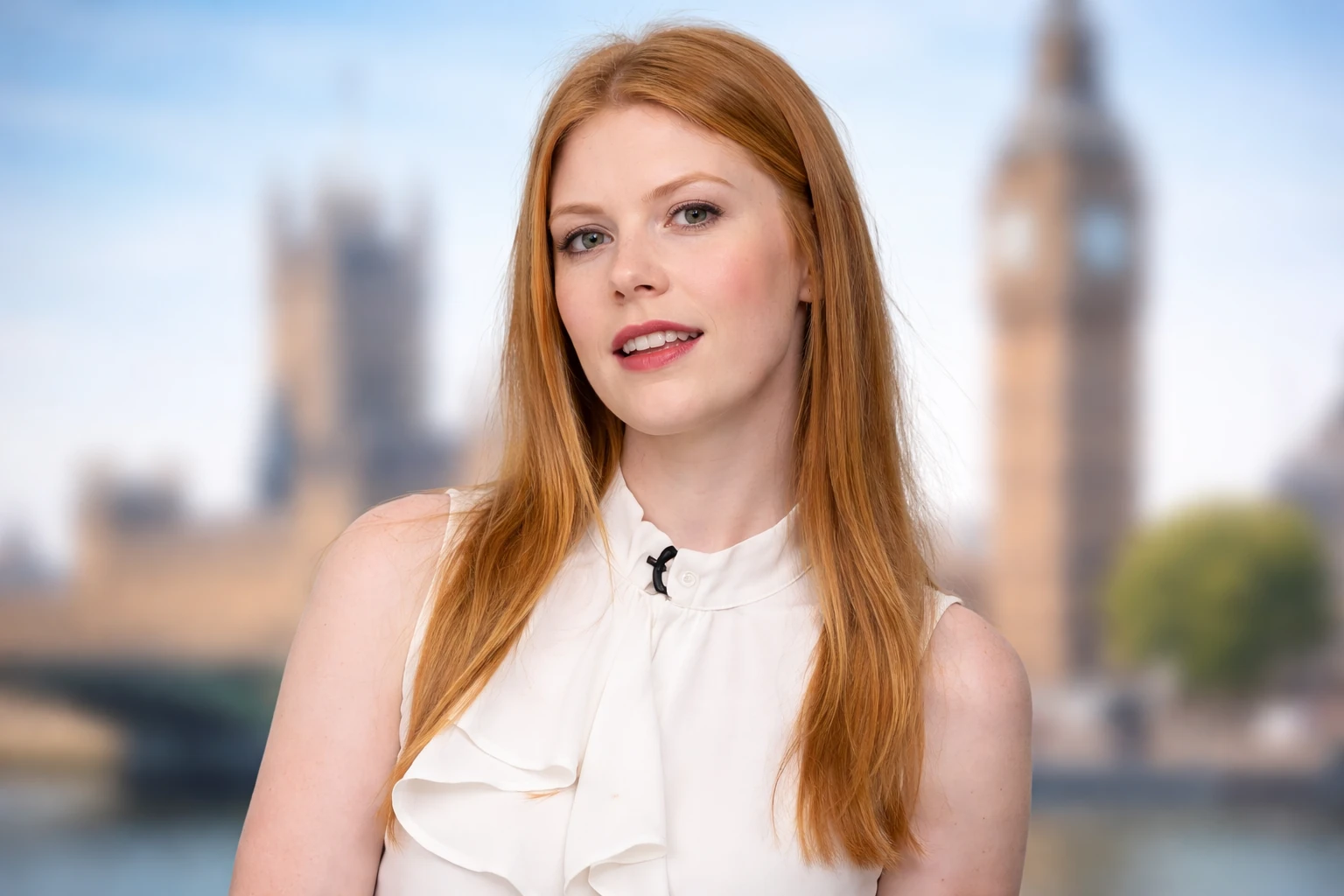
Ailbhe Rea is not a celebrity in the conventional sense, but in British political journalism, her name carries weight. Readers encounter it at moments when Westminster feels especially tense—during leadership contests, cabinet reshuffles, or constitutional flashpoints—and come to associate it with clear, well-sourced reporting. That recognition has grown steadily over the past decade, as Rea has built a reputation as a careful observer of British politics with a particular sensitivity to its human undercurrents.
Searches for “Ailbhe Rea Wikipedia” often reflect a simple desire: to understand who she is beyond the byline. Unlike television pundits or high-profile editors, Rea has remained primarily a reporter, which means her public profile is shaped more by her work than by personal exposure. What emerges from that work, however, is a journalist with a strong sense of narrative, a deep interest in political identity, and a willingness to follow stories into uncomfortable territory.
Early Life and Family Background
Ailbhe Rea was born into a family already closely connected to politics and public discourse. She is the daughter of Pat Rabbitte, a prominent Irish politician who served as a minister in several Irish governments and led the Labour Party in the early 2000s. Growing up in that environment meant politics was not an abstract subject but part of everyday conversation, shaped by lived experience rather than distant theory.
Her upbringing in Ireland placed her at the intersection of two political cultures. On one side was Irish domestic politics, with its own history, language, and institutions. On the other was the broader relationship between Ireland and the United Kingdom, a dynamic that would later become central to her reporting, particularly during the Brexit era.
That background didn’t predetermine her career, but it gave her a familiarity with political life that many journalists have to learn over time. She understood early how decisions made in parliament ripple outward into communities, and how personal stories often sit behind policy debates. Those instincts would later define her reporting style.
Education and Early Interests
Rea pursued higher education at University College Dublin before continuing her studies at Oxford, where she focused on subjects that supported a career in writing and analysis. Her academic path reflected a clear interest in politics, history, and public communication, though she did not immediately position herself as a political journalist.
Like many reporters who later specialize in politics, she began by building general writing skills. Early work included features and cultural reporting, which helped her develop a voice that could carry both narrative detail and analytical clarity. That balance—storytelling grounded in fact—became a hallmark of her later work.
Her time in academia also exposed her to different schools of political thought. Studying in both Ireland and the UK gave her a comparative perspective, allowing her to see British politics not as a self-contained system but as part of a wider network of influences and tensions.
Entry into Journalism
Ailbhe Rea’s early career included roles at respected publications, where she began to establish herself as a reporter with a sharp eye for detail. She worked at outlets such as The New Statesman, where she contributed both reported pieces and analysis, gradually moving closer to the political beat.
Her transition into political journalism was not marked by a single breakthrough moment but by a series of well-executed stories. Editors and readers began to notice her ability to explain complex political situations without flattening them into clichés. She had a particular skill for capturing tone—the mood inside Westminster, the anxieties of politicians, and the subtle shifts that signal larger changes.
That said, her rise came during a period when British politics itself was undergoing dramatic transformation. The Brexit referendum in 2016 reshaped the political landscape, creating both challenges and opportunities for journalists. For Rea, it became a defining context.
Reporting Through Brexit and Political Upheaval
The years following the Brexit vote were some of the most volatile in recent British political history. Governments rose and fell, party loyalties fractured, and public trust in institutions was tested. For a political reporter, it was a moment that demanded both speed and depth.
Rea’s reporting during this period stood out for its attention to the personal dimensions of political conflict. Rather than focusing solely on policy outcomes, she often explored how politicians themselves were navigating uncertainty. Her work captured the emotional strain behind the headlines, whether it was the pressure on backbench MPs or the internal divisions within major parties.
Here’s where her background proved especially useful. Having grown up in a political household, she approached politicians not just as public figures but as individuals operating within systems of loyalty, ambition, and constraint. That perspective allowed her to write stories that felt grounded rather than abstract.
At the same time, she maintained a commitment to factual accuracy and careful sourcing. In a media environment increasingly shaped by opinion and rapid reaction, her reporting offered readers something steadier: a clear account of what was happening and why it mattered.
The New Statesman Years
Rea’s tenure at The New Statesman helped solidify her reputation. The publication has long been known for its mix of political reporting and intellectual commentary, and she contributed to both strands. Her articles often combined on-the-ground reporting with broader analysis, placing individual events within a larger political context.
She developed a particular interest in identity and culture within politics. That included exploring how class, region, and personal background influence political behavior. In an era when traditional party lines were shifting, those questions became increasingly important.
Her writing during this period also showed a willingness to engage with uncomfortable topics. She addressed issues such as nationalism, gender dynamics in politics, and the changing nature of political communication. Rather than offering easy answers, she often presented these topics in a way that invited readers to think more carefully.
Move to Bloomberg and Broader Recognition
A significant step in Rea’s career came with her move to Bloomberg, where she took on a role as a political reporter. Bloomberg’s global reach and focus on business and policy meant her work would be read by an international audience, including policymakers, investors, and analysts.
At Bloomberg, her reporting continued to focus on UK politics but within a wider economic and global context. She covered developments such as leadership contests, fiscal policy debates, and the ongoing impact of Brexit on trade and governance.
The shift also highlighted her ability to adapt her style to different audiences. While her earlier work often leaned toward narrative and analysis, Bloomberg required a more direct, news-driven approach. She managed that transition without losing the clarity that had defined her earlier writing.
Recognition followed in the form of increased visibility and influence. While she has not sought the spotlight in the way some commentators do, her reporting has become part of the daily reading for those who follow British politics closely.
Writing Style and Editorial Voice
One of the defining features of Ailbhe Rea’s work is her attention to detail. She does not rely on sweeping generalizations or dramatic framing. Instead, she builds her stories through specific observations, carefully chosen quotes, and a clear sense of context.
Her writing often reflects a curiosity about people as much as policies. She is interested in how politicians think, how they present themselves, and how they respond under pressure. That focus gives her work a human dimension that can sometimes be missing in political coverage.
At the same time, she avoids becoming overly personal or speculative. There is a discipline in her reporting that keeps the focus on verifiable information. That balance—between empathy and restraint—is one of the reasons her work resonates with readers.
Personal Life and Public Image
Despite her growing professional profile, Ailbhe Rea has kept her personal life relatively private. This is consistent with many journalists who prefer to let their work speak for itself rather than becoming subjects of public scrutiny.
What is publicly known tends to relate to her family background and education, both of which have informed her career. Beyond that, details about her personal relationships or private life are limited, and there is no credible reporting that suggests otherwise.
Her public image, then, is largely shaped by her writing. She is seen as thoughtful, measured, and serious about her craft. That reputation has helped her maintain credibility in a field where trust is often in short supply.
Influence and Industry Standing
While Ailbhe Rea may not be a household name, her influence within political journalism is clear. Colleagues and readers alike recognize her as a reliable source of information during moments of uncertainty.
Her work contributes to a broader ecosystem of political reporting that informs public understanding. In a time when misinformation can spread quickly, journalists who prioritize accuracy and context play an essential role.
That said, influence in journalism is not always visible. It often shows up in how stories are framed, how debates are shaped, and how readers interpret events. Rea’s contributions fit into that quieter but significant form of impact.
Where Ailbhe Rea Is Now
As of recent years, Ailbhe Rea continues to work as a political reporter, covering developments in UK politics with a focus on clarity and context. Her role at Bloomberg places her at the center of ongoing political and economic discussions, ensuring that her reporting remains relevant to both domestic and international audiences.
The political landscape she covers remains unpredictable. Leadership changes, policy debates, and shifting alliances continue to define the field. For a journalist like Rea, that means the work is far from static.
Her trajectory suggests a continued commitment to reporting rather than commentary. While some journalists move into opinion roles or broadcasting, she has remained focused on the core task of gathering and explaining information.
Frequently Asked Questions
Who is Ailbhe Rea?
Ailbhe Rea is a political journalist known for her reporting on UK politics. She has worked for publications such as The New Statesman and Bloomberg, where she covers political developments, leadership changes, and policy debates.
Is Ailbhe Rea related to Pat Rabbitte?
Yes, Ailbhe Rea is the daughter of Pat Rabbitte, a well-known Irish politician who served as a government minister and led the Irish Labour Party. This background has influenced her understanding of politics.
Where does Ailbhe Rea work now?
She works as a political reporter for Bloomberg, focusing on UK politics and its broader economic implications. Her reporting reaches an international audience.
What is Ailbhe Rea known for?
She is known for clear, well-sourced political reporting that often highlights the human side of political events. Her work is valued for its accuracy and thoughtful analysis.
Does Ailbhe Rea have a Wikipedia page?
As of now, there is no widely established or consistently detailed Wikipedia page dedicated to Ailbhe Rea. This is common for journalists who are respected within their field but not widely known to the general public.
What is her nationality?
Ailbhe Rea is Irish, though much of her professional work focuses on British politics. Her background gives her a cross-cultural perspective on political issues.
Conclusion
Ailbhe Rea’s career reflects a quiet kind of authority. She has not built her reputation through spectacle or personal branding but through consistent, careful reporting. In a media environment that often rewards speed over depth, that approach stands out.
Her background, shaped by Irish politics and academic study, gave her tools that she has used with precision. But the defining feature of her work is not where she came from—it is how she reports. She listens, observes, and writes with clarity.
Looking ahead, her role in political journalism is likely to remain steady and influential. The issues she covers are not going away, and the need for reliable reporting remains constant. For readers trying to understand what is happening behind the headlines, her work offers a dependable guide.
In that sense, the search for “Ailbhe Rea Wikipedia” leads to something more meaningful than a static page. It leads to a body of work that continues to grow, shaped by the events it documents and the journalist who tells their story.
