


Kristi Noem’s height is one of those small public details that draws steady curiosity because she has become such a visible figure in American conservative politics. She is commonly reported to stand around 5 feet 7 inches to 5 feet 7½ inches tall, or roughly 170 to 171 centimeters. That figure is widely repeated in public biography listings, though major official government profiles do not appear to confirm it directly. The more interesting story is how a farm girl from rural South Dakota became a congresswoman, governor, cabinet secretary, and one of the Republican Party’s most recognizable women.
Early Life in South Dakota
Kristi Lynn Arnold was born on November 30, 1971, in Watertown, South Dakota, and grew up in a family shaped by farming, work, and rural community life. Her parents, Ron and Corinne Arnold, raised their children in Hamlin County, where agriculture was not a backdrop but the center of daily life. Noem has often described that upbringing as formative, especially the discipline and independence that came with life on a family farm. Those roots later became a central part of her public identity.
Her life changed sharply in 1994, when her father died in a farming accident. Noem was in her early twenties, newly married, and facing adult responsibilities earlier than expected. She has said the family had to confront estate taxes and financial pressure after his death, an experience she later tied to her views on taxation and small business. Whether voters agreed with her politics or not, the story became one of the defining explanations she offered for why she entered public life.
Education and Early Ambitions
Noem graduated from Hamlin High School in South Dakota and later attended Northern State University, though her education was interrupted by family responsibilities. After her father’s death, she returned home to help manage the family farm and ranch operations. Years later, while already serving in Congress, she completed her degree through South Dakota State University. That detail became part of the image she cultivated: someone who did not follow a polished political path, but built one through family obligation and persistence.
Before national politics, Noem worked in farming, ranching, and small business. She and her family operated businesses that included a hunting lodge and restaurant interests, giving her a local profile beyond politics. Her early career was not built in Washington, law school, or a policy institute. It was rooted in the practical world of land, livestock, customers, bills, and state-level civic life.
Marriage, Children, and Family Life
Kristi Noem married Bryon Noem in 1992, and the couple has three children: Kassidy, Kennedy, and Booker. Her family has often appeared in her political story, especially during campaigns in South Dakota, where personal biography can carry real weight with voters. Bryon has maintained a lower public profile than his wife, though he became South Dakota’s first gentleman when she was elected governor. Their marriage and family have remained part of Noem’s public brand, but she has generally kept many private details outside day-to-day political coverage.
Noem’s role as a mother has also shaped how she presents herself publicly. She has often spoken about balancing public service with family, faith, and work in a rural state. That does not mean her family life has been free from scrutiny, because high office brings attention to almost every part of a public figure’s life. Still, the confirmed facts are straightforward: she has been married to Bryon for decades, and their children are central to her personal story.
Entry Into Politics
Noem began her political career in the South Dakota House of Representatives, where she served from 2007 to 2011. Her rise came during a period when Republicans were gaining energy from anti-tax, anti-Washington sentiment, especially after the financial crisis and during the early Tea Party years. She positioned herself as a conservative grounded in rural experience rather than political theory. That message connected in a state where voters often favor candidates who can speak directly about agriculture, land, and small-town life.
In 2010, Noem ran for South Dakota’s at-large seat in the U.S. House of Representatives. She defeated Democratic incumbent Stephanie Herseth Sandlin, a major political victory that made Noem a national Republican name. The win sent her to Washington at a time when the GOP was reshaping itself around sharper opposition to President Barack Obama’s agenda. For Noem, it was the breakthrough that moved her from state politics to the national stage.
Years in Congress
Noem served in the U.S. House from 2011 to 2019, representing all of South Dakota. In Congress, she focused on issues tied to agriculture, taxes, federal spending, and rural communities. Her work on estate tax repeal became especially personal because of the story she told about her father’s death and the financial strain her family faced afterward. That issue helped her connect biography to policy in a way that voters could easily understand.
She also built relationships inside the Republican Party and became one of the more visible women in the House GOP. Her political style was direct, disciplined, and tightly tied to conservative messaging. She did not become famous through long speeches alone; she became known through a mix of biography, party loyalty, media appearances, and a clear sense of audience. By the end of her House tenure, she was positioned for a return to South Dakota with higher ambitions.
Governor of South Dakota
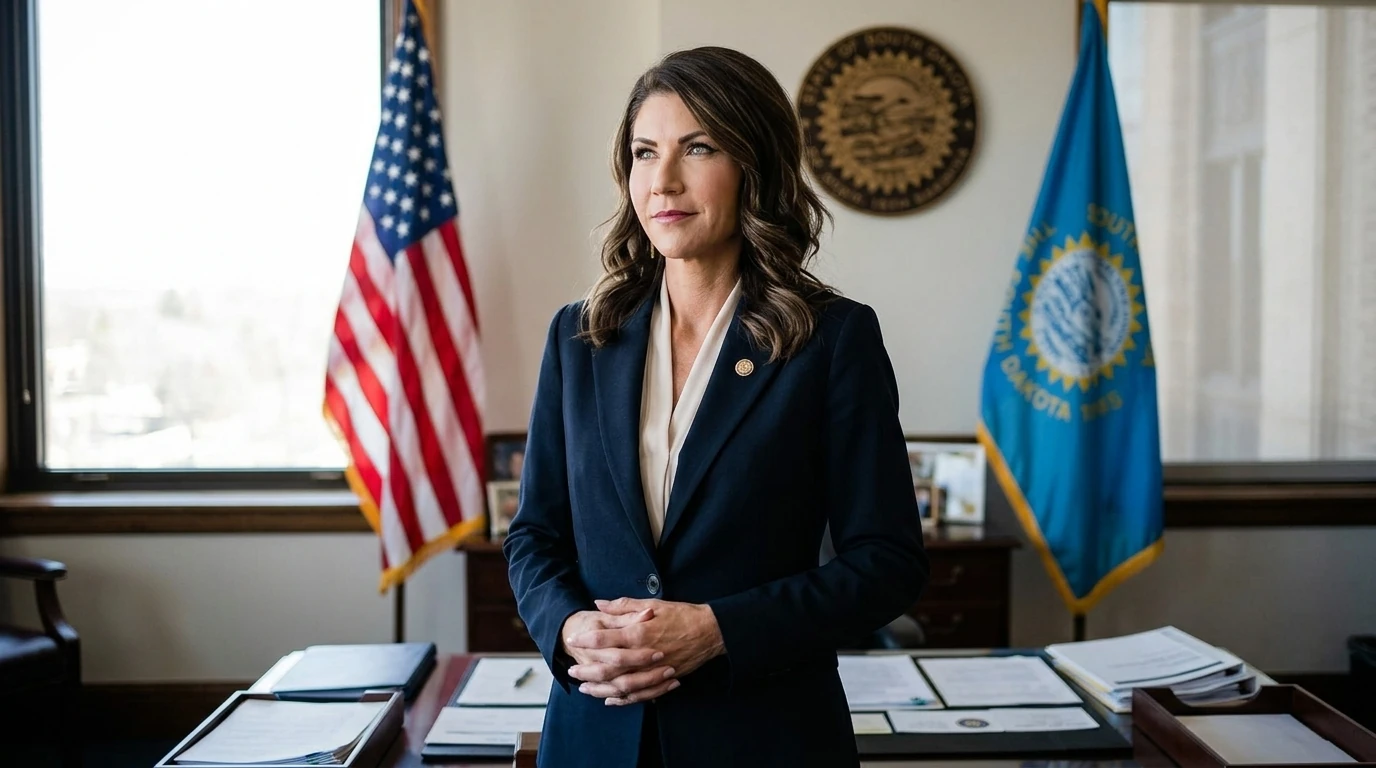
In 2018, Noem ran for governor of South Dakota and won, becoming the first woman elected to the office in the state’s history. She took office in January 2019, a milestone that added a historic chapter to her career. Her governorship began with traditional Republican priorities, including taxes, regulation, workforce issues, and rural development. But her national profile grew most sharply during the COVID-19 pandemic.
Governor of South Dakota
Noem resisted many statewide restrictions that other governors used, including broad stay-at-home orders. Supporters praised her as a defender of personal freedom and limited government. Critics argued that her approach put public health at risk and turned a crisis into a political brand. The debate made her one of the most talked-about Republican governors in the country.
National Profile and Public Image
Noem’s public image is built around a rare mix of ranch-state authenticity and highly managed political presentation. She has appeared in campaign materials with horses, guns, open land, and family imagery, all reinforcing the idea that she comes from a working rural background. Her height, appearance, and style draw search interest partly because she is photographed so often in visually controlled settings. But here’s the thing: those details are secondary to the political persona she has spent years building.
She has also become a polarizing figure. Admirers see toughness, independence, and a refusal to bend to elite opinion. Critics see ambition, ideological rigidity, and a taste for national attention. Both reactions are part of why searches about her personal details, including Kristi Noem’s height, remain common. People are not only looking for a measurement; they are trying to place a public figure whose image is unusually central to her politics.
Kristi Noem Height and Physical Profile
Kristi Noem is most often listed at about 5 feet 7 inches to 5 feet 7½ inches tall. That puts her several inches above the average height for an adult woman in the United States. The figure should be treated with care, because height listings for politicians often come from public biography databases rather than official records. A careful description is that she is commonly reported to be around 5-foot-7, not that the number is formally confirmed.
The interest in her height also reflects how politics works on television and social media. Public figures are judged not only by what they say, but by how they look on a debate stage, at a podium, beside law enforcement officials, or in a cabinet room. Camera angles, footwear, posture, and staging can all affect how tall someone appears. That is why reported height is more useful than guessing from photographs.
Controversies and Turning Points
Noem’s career has included several controversies, some tied to policy and others tied to personal judgment. Her handling of the pandemic brought national praise from conservatives and sharp criticism from public-health observers. She also faced questions during her governorship over use of state resources, political ambition, and decisions involving state agencies. Like many modern political figures, her strongest supporters and harshest critics often interpreted the same events in completely different ways.
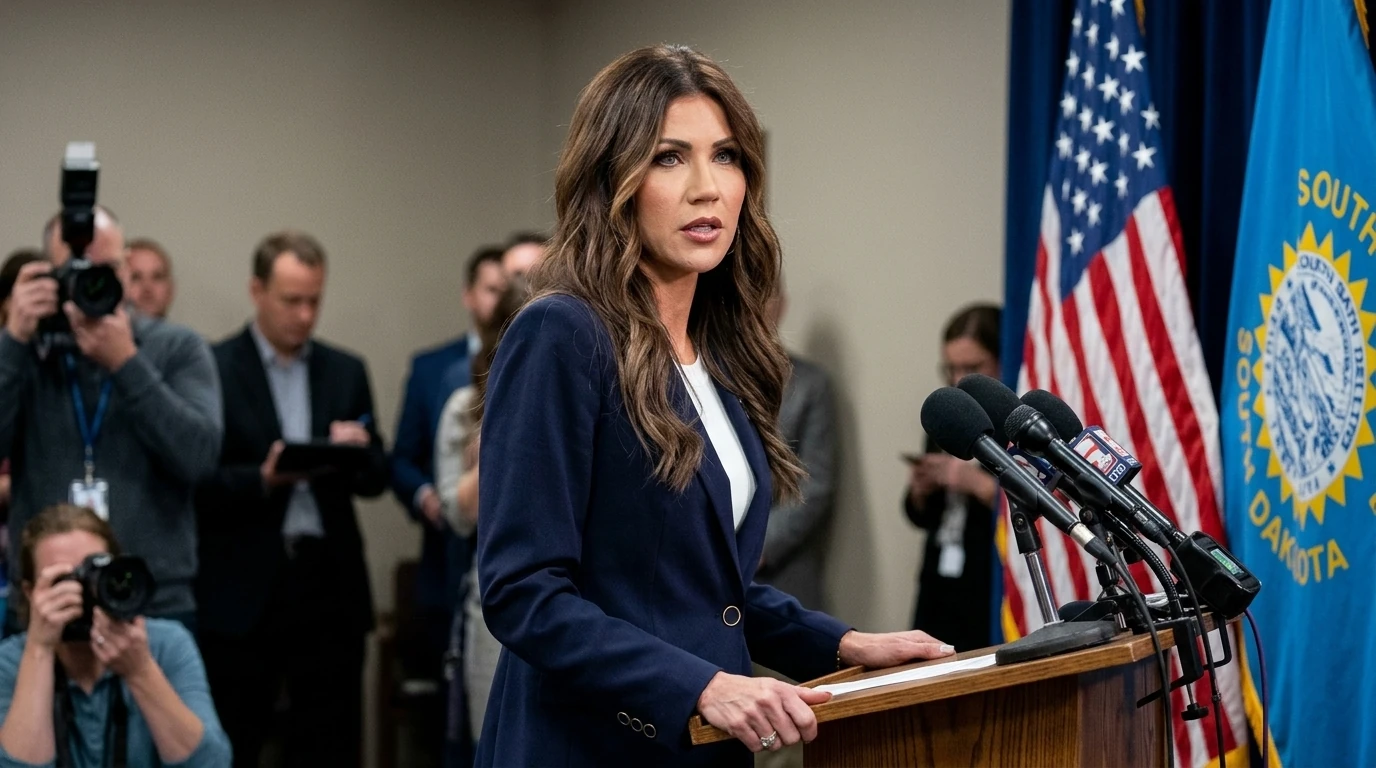
One of the most damaging episodes came from her own memoir, where she described killing a young dog she said was untrainable and dangerous. The passage drew backlash from across the political spectrum and became a rare controversy that was not confined to normal partisan lines. Noem defended the story as an example of making hard choices on a farm, but many readers reacted with anger and disbelief. The episode complicated the rural authenticity that had long been one of her political strengths.
Money, Business Interests, and Net Worth
Kristi Noem’s income has come from public office, family farming and ranching interests, business ventures, book sales, and related public activity. Exact net worth figures for politicians can be difficult to pin down because disclosure forms often use broad value ranges rather than precise amounts. Public estimates vary, and many online numbers should be treated cautiously unless tied to financial disclosures or reputable reporting. The safest statement is that Noem has built wealth through a mix of public salary, family business activity, and her national political profile.
Her financial story is also connected to the image she presents. She is not usually framed as a politician who came from inherited urban wealth or a corporate career. Instead, her biography emphasizes land, work, family responsibility, and small business. That framing has helped her with conservative audiences who value rural identity and distrust Washington insiders. Still, like any high-level public official, her finances and outside interests remain fair subjects for scrutiny.
Current Status and Why She Still Matters
Noem’s move from governor to federal leadership marked the next stage of her political career. After years as one of the Republican Party’s best-known governors, she entered a national security role with far greater visibility and pressure. That placed her inside debates over immigration, border security, disaster response, and federal law enforcement. It also meant that her public image had to stretch beyond South Dakota politics.
Her importance now comes from more than biography. She represents a style of Republican politics that blends rural identity, media fluency, strong executive messaging, and close alignment with the party’s national base. She also remains one of the most prominent Republican women in the country. Whether viewed as a future national contender, a conservative culture-war figure, or a case study in political branding, she continues to draw attention.
Frequently Asked Questions
How tall is Kristi Noem?
Kristi Noem is commonly reported to be about 5 feet 7 inches to 5 feet 7½ inches tall. In metric measurements, that is roughly 170 to 171 centimeters. The figure appears often in public biography listings, but it is not clearly confirmed in major official government biographies. For accuracy, it is best described as a widely reported estimate.
Is Kristi Noem’s height officially confirmed?
Her height does not appear to be a major detail in official public profiles connected to her government service. That is common for politicians, whose official biographies usually focus on offices held, education, family, and career milestones. Because of that, exact height claims should be treated as unofficial unless tied to a primary record. The most careful phrasing is that she is commonly listed at around 5-foot-7.
Who is Kristi Noem married to?
Kristi Noem is married to Bryon Noem. They married in 1992 and have three children together: Kassidy, Kennedy, and Booker. Bryon became South Dakota’s first gentleman when Noem became governor in 2019. He has generally kept a lower profile than his wife while still appearing as part of her broader family story.
What is Kristi Noem best known for?
Kristi Noem is best known as a Republican politician from South Dakota who served in the U.S. House, became the state’s first female governor, and later moved into federal executive leadership. Her national profile grew during the COVID-19 pandemic because she resisted many statewide restrictions used elsewhere. She is also known for her strong rural branding and conservative media presence. Those factors made her one of the most recognizable Republican women in national politics.
Where is Kristi Noem from?
Kristi Noem is from South Dakota and grew up in a farming family in the eastern part of the state. Her early life in Hamlin County shaped much of the personal story she later brought into politics. She has often tied her views on taxes, land, and government to her family’s experience after her father died in a farming accident. That rural background remains central to how she presents herself publicly.
What is Kristi Noem’s net worth?
Kristi Noem’s exact net worth is not simple to state because public financial disclosures often give ranges rather than exact dollar amounts. Online estimates vary, and many are not reliable enough to repeat as fact. Her income sources have included public salaries, family business interests, farming and ranching operations, and book-related revenue. Any specific net worth figure should be treated as an estimate unless tied to verified financial records.
Conclusion
Kristi Noem’s height may be the search term that brings many readers to her biography, but it is only a small part of the story. She is commonly reported to be around 5 feet 7 inches tall, a detail that fits her public image but does not define it. What defines her more clearly is the path from rural South Dakota to Congress, the governor’s office, and national power.
Her career has been built on discipline, image, ideology, and a sharp understanding of what conservative voters want to hear. She has turned personal hardship, rural identity, and executive confidence into a durable political brand. That brand has brought admiration, criticism, and intense scrutiny in equal measure.
Noem remains a figure whose public life is still being written. Her biography contains achievement, ambition, controversy, and reinvention, all set against the changing shape of the Republican Party. For readers asking about Kristi Noem’s height, the answer is simple enough; for readers asking who she is, the fuller answer is far more revealing.
