


Akon became one of the most recognizable voices in 2000s pop and R&B, but the story of where he comes from is often told incorrectly. He was born in St. Louis, Missouri, on April 16, 1973, to Senegalese parents, spent part of his childhood in Senegal, and later grew up in New Jersey. As of July 2026, he is 53 years old.
The clearest answer to “where is Akon from?” is that he is a Senegalese-American artist born in the United States and raised between Senegal and New Jersey. His birthplace, family heritage, childhood, and later career each point to a different place, which is why short online biographies sometimes appear to contradict one another.
Professionally known as Akon, he is a singer, songwriter, producer, record executive, and businessman whose career crossed R&B, hip-hop, pop, dance music, and international markets. His background helped shape both his sound and his public identity, from his early chart hits to his later work connected to Africa.
Early Life and Family
Akon was born in St. Louis, Missouri. His full name is commonly reported as Aliaune Damala Badara Akon Thiam, although some legal and news records use the shorter form Aliaune Thiam.
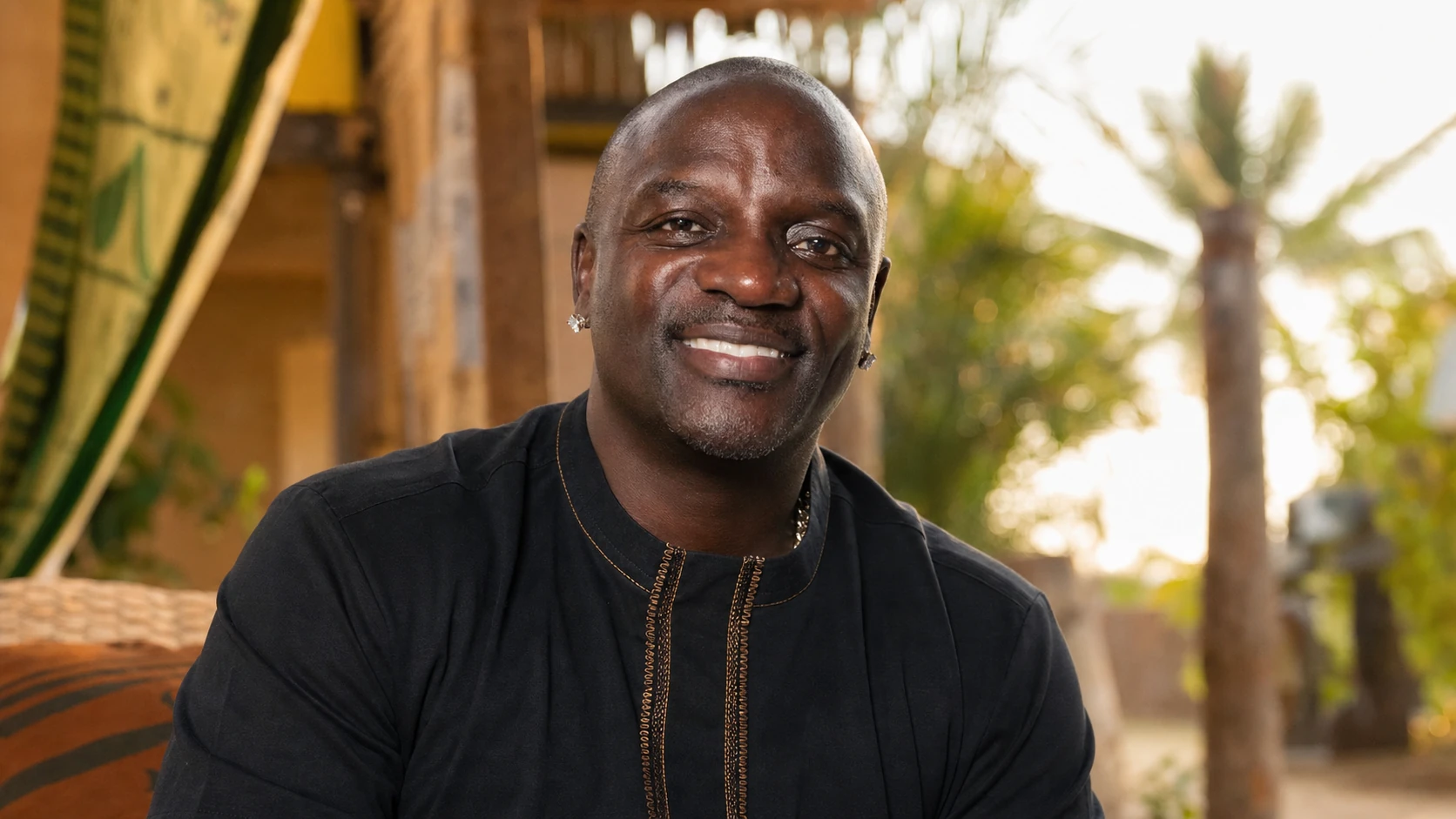
His parents were from Senegal, a West African country with a strong musical and storytelling tradition. His father, Mor Thiam, is a Senegalese percussionist and cultural musician who worked across African music and jazz. Akon’s mother, Kine Gueye Thiam, has been identified in public biographies as a dancer.
Music was part of Akon’s home life long before he entered a recording studio. Through his father, he was exposed to percussion, performance, and instruments associated with Senegalese music. That early experience gave him a foundation that later blended with American R&B, hip-hop, reggae, and pop.
Akon spent a substantial part of his early childhood in Senegal. Published accounts differ on the exact timing of his moves, but many state that he lived there until roughly the age of seven and continued traveling between Senegal and the United States afterward. The safest description is that he was raised across both countries rather than in only one.
Was Akon Born in Senegal?
Akon was not born in Senegal. His recorded birthplace is St. Louis, Missouri, United States.
The confusion may come partly from the fact that Senegal also has a city called Saint-Louis. When a biography lists only “St. Louis” without including Missouri or the United States, readers can easily assume it refers to the Senegalese city.
His strong identification with Senegal has also contributed to the misunderstanding. Akon has often described the country as home, spoken about his Senegalese upbringing, and pursued projects there. Those connections are real, but they refer to his heritage and childhood rather than his birthplace.
Calling him Senegalese-American is more accurate than describing him only as American or only as Senegalese. He was American-born, but Senegal was not simply an ancestral country that he knew from a distance. It was part of his childhood and remained central to his adult life.
Growing Up in New Jersey
After his early years in Senegal, Akon spent much of his youth in northern New Jersey. Public biographies connect him with Union City, Jersey City, and Newark, though accounts do not always agree on the exact sequence of family moves.
New Jersey became an important setting for his adolescence and early ambitions. He was adjusting to American life while carrying memories, language, and musical influences from Senegal. That experience of moving between cultures later became part of what distinguished him from many performers in the American R&B market.
Akon has said that he learned to play several instruments, including percussion. His voice, however, became his most recognizable tool. Its high, slightly strained tone could sound vulnerable on a ballad and urgent on a rap collaboration, giving him a style that listeners could identify within seconds.
Some accounts of his early life have focused heavily on legal trouble and time in custody. Akon used confinement as a theme in his first major single, “Locked Up,” but later reporting questioned parts of the more dramatic criminal history presented in early publicity. The confirmed point is that the image of imprisonment became central to his introduction as an artist, even though some details surrounding that image remain disputed.
Career Breakthrough
Akon’s career changed in 2004 with the release of “Locked Up.” The song introduced him as a melodic singer who could move naturally within hip-hop without sounding like a conventional rapper. Its stark subject matter and distinctive vocal hook helped it gain attention in the United States and abroad.
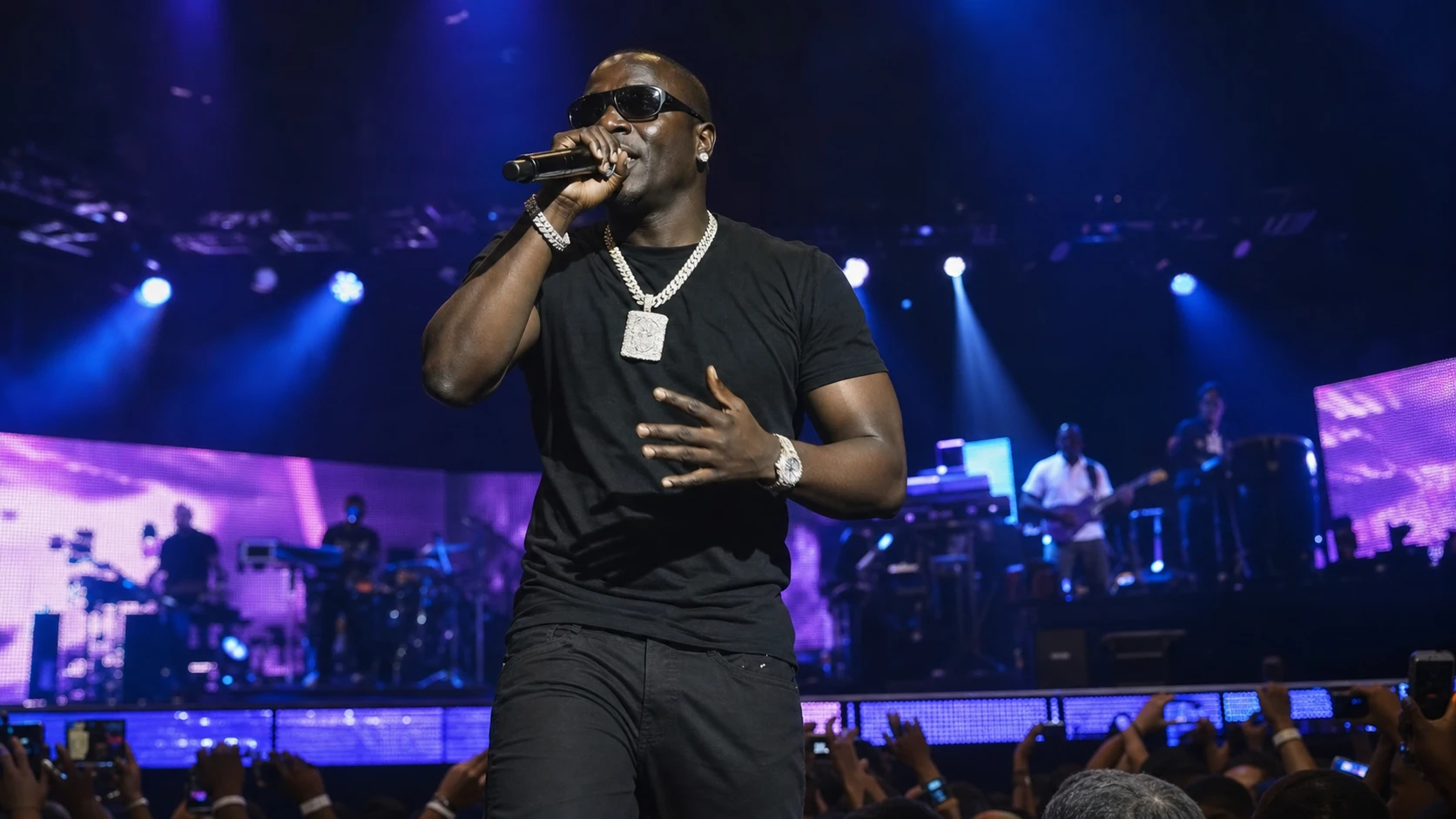
His debut album, Trouble, followed in 2004. The record included “Lonely,” which became one of his first major international hits. Built around a sample of Bobby Vinton’s “Mr. Lonely,” the song paired emotional lyrics with an unusual, instantly recognizable vocal arrangement.
“Lonely” showed that Akon’s appeal extended beyond American R&B radio. It performed strongly in several countries and helped establish him as a global pop figure. His music could reach hip-hop audiences, mainstream pop listeners, and markets where English-language R&B did not always dominate.
His second album, Konvicted, released in 2006, moved him into a higher commercial tier. It produced hits including “Smack That,” featuring Eminem, “I Wanna Love You,” featuring Snoop Dogg, and “Don’t Matter.” The album confirmed that his first success was not a one-song moment.
Major Work and Public Recognition
Akon became a major collaborator during the second half of the 2000s. His voice appeared on songs by artists across hip-hop, pop, and R&B, while his production and songwriting work expanded his influence behind the scenes.
He worked with performers including Gwen Stefani, Michael Jackson, T-Pain, Snoop Dogg, Eminem, and many others. His collaborations often placed him in the chorus, where his melodic style could make a rap track more accessible to radio audiences.
Akon also founded record labels associated with the Konvict brand. Through his work as an executive, he helped support the careers of other artists. Lady Gaga was connected to his label structure early in her rise, and Akon later spoke publicly about recognizing her commercial potential.
His third studio album, Freedom, arrived in 2008 and leaned further into polished pop and dance production. Songs such as “Right Now (Na Na Na)” and “Beautiful” reflected the direction of mainstream radio at the time while preserving his vocal identity.
Akon’s success was not based only on album sales. He became one of the era’s most frequent featured artists, and his catalog spread across radio formats, clubs, film soundtracks, and international charts. His ability to move between genres gave him a career larger than any single record.
Senegal, African Development, and Business Ventures
As his music career matured, Akon placed more attention on Africa. In 2014, he helped launch Akon Lighting Africa, an initiative associated with solar energy projects in African communities.

The project was promoted as an effort to improve access to electricity through solar streetlights and small-scale power systems. It also strengthened Akon’s public image as an artist who wanted to invest in Africa rather than refer to his heritage only in interviews.
His most ambitious proposal was Akon City, a planned development in Senegal. The project was announced as a large futuristic city near Mbodiène, with housing, hotels, health facilities, commercial space, renewable energy, and a digital economy linked to the Akoin cryptocurrency.
The plans attracted worldwide attention, but the promised city did not develop on the announced schedule. By 2024, reporting showed little construction beyond limited early work, and Senegalese authorities raised concerns about delays. In 2025, officials said the original version of Akon City would not proceed as first presented, though smaller development discussions were reported.
The outcome became a reminder that celebrity-backed proposals should be judged by completed work rather than announcements. Akon’s personal connection to Senegal is well established, but that connection does not settle questions about financing, planning, or delivery.
Marriage, Children, and Private Life
Akon has kept much of his family life private, despite discussing polygamy and relationships in interviews. Reports have made different claims about whether he has one wife or several wives, and the exact legal status of those relationships has not been consistently confirmed through reliable public documentation.
He is widely reported to have several children, but the precise number has also varied across interviews and entertainment profiles. Akon has at times referred publicly to having six children, while other reports have claimed a larger number. Because the information is inconsistent, a definitive total should not be presented as settled fact.
His family has occasionally appeared in entertainment coverage, but Akon has generally kept his children outside the center of his public career. That approach has limited the amount of verified information available about their lives, education, and relationships with him.
The same caution applies to claims about his current romantic status. Unless Akon or a reliable legal record confirms a marriage, separation, or divorce, those details remain private or uncertain.
Net Worth and Income Sources
Akon’s net worth is not publicly confirmed. Celebrity finance websites have published estimates, often placing his wealth in the tens of millions of dollars, but those figures are not audited financial statements and should not be treated as exact.
His known income sources include music sales, streaming royalties, touring, songwriting, production, featured appearances, and record-label interests. His catalog contains songs that have remained popular long after their original release, which can continue generating publishing and recording income.
He has also been involved in property, energy, technology, cryptocurrency, and development ventures. The value and profitability of those interests are difficult to verify from public information. Announced project values, including the multibillion-dollar figure attached to Akon City, do not represent his personal wealth.
A responsible assessment is that Akon earned substantial money during a long international music career and built business interests outside entertainment. His exact net worth remains unknown.
Public Image and Controversies
Akon’s public image has shifted several times. Early in his career, he was marketed as a street-oriented singer whose music came from hardship and confinement. Later, he became known as a pop hitmaker, label executive, African development advocate, and business promoter.
Some incidents during his peak years drew criticism, including controversial stage performances and behavior at concerts. Those moments affected sponsorships and media coverage, but they did not end his recording career.
Questions about the accuracy of his early criminal biography also changed how journalists viewed parts of his origin story. The dispute did not erase the themes in his music, but it showed how artist marketing can turn limited facts into a larger legend.
His business projects created a different kind of scrutiny. Akon Lighting Africa received positive attention for its goals, while Akon City faced doubts over delays, financing, and feasibility. Together, these projects made his public reputation more complex than that of a former chart star living on nostalgia.
Recent Work and Current Status
Akon has remained active in music through releases, performances, collaborations, and touring. His biggest commercial period came in the 2000s and early 2010s, but his songs continue to circulate through streaming, social media, clubs, and throwback playlists.
His influence can also be heard in the growth of globally minded pop and African crossover music. Akon worked across African, American, European, Indian, and Latin markets before such collaborations became a standard strategy for major artists.
By 2026, his public career combines live performance, catalog recognition, business interests, and continuing ties to Senegal. Not every project has met its original promises, but he remains a familiar international figure whose work connects American pop culture with the African diaspora.
He has not disappeared from public life, though he is no longer releasing chart hits at the pace of his commercial peak. His current position is closer to that of a veteran artist and entrepreneur whose earlier music still defines a major period in global pop.
Frequently Asked Questions
Where is Akon from?
Akon was born in St. Louis, Missouri, and raised partly in Senegal and New Jersey. His parents are Senegalese, so he is commonly described as Senegalese-American.
Was Akon born in Africa?
No. Akon was born in the United States on April 16, 1973. He spent part of his childhood in Senegal, which explains his close personal and cultural connection to Africa.
How old is Akon?
Akon was born on April 16, 1973. He is 53 years old as of July 2026.
What is Akon’s real name?
His full name is commonly reported as Aliaune Damala Badara Akon Thiam. Some legal and news reports refer to him more simply as Aliaune Thiam.
Is Akon Senegalese or American?
He is best described as Senegalese-American. He is American by birth and Senegalese through his parents, upbringing, culture, and long relationship with Senegal.
Is Akon married, and how many children does he have?
Akon has discussed marriage, polygamy, and fatherhood publicly, but reliable reports conflict about the number and legal status of his marriages. He has several children, though the exact number is not publicly confirmed with consistency.
What is Akon’s net worth?
Akon’s net worth is not publicly verified. Online estimates often place it in the tens of millions of dollars, but those figures are speculative and may not reflect his debts, private investments, business ownership, or current assets.
Conclusion
Akon’s life makes more sense when his origins are described in full. He was born in Missouri, shaped by childhood years in Senegal, and came of age in New Jersey before becoming an international music star.
His career proved that an artist could move between American hip-hop, mainstream pop, African identity, and international business without fitting neatly into one category. That flexibility helped him create a catalog that reached audiences far beyond the United States.
His later ventures have produced both ambition and disappointment, especially where public promises moved faster than visible results. Still, his place in popular music is secure through songs that helped define the sound of the 2000s.
The most accurate answer remains clear: Akon is from the United States by birth, from Senegal by family and culture, and from both countries in the story he has told through his music and public life.
