

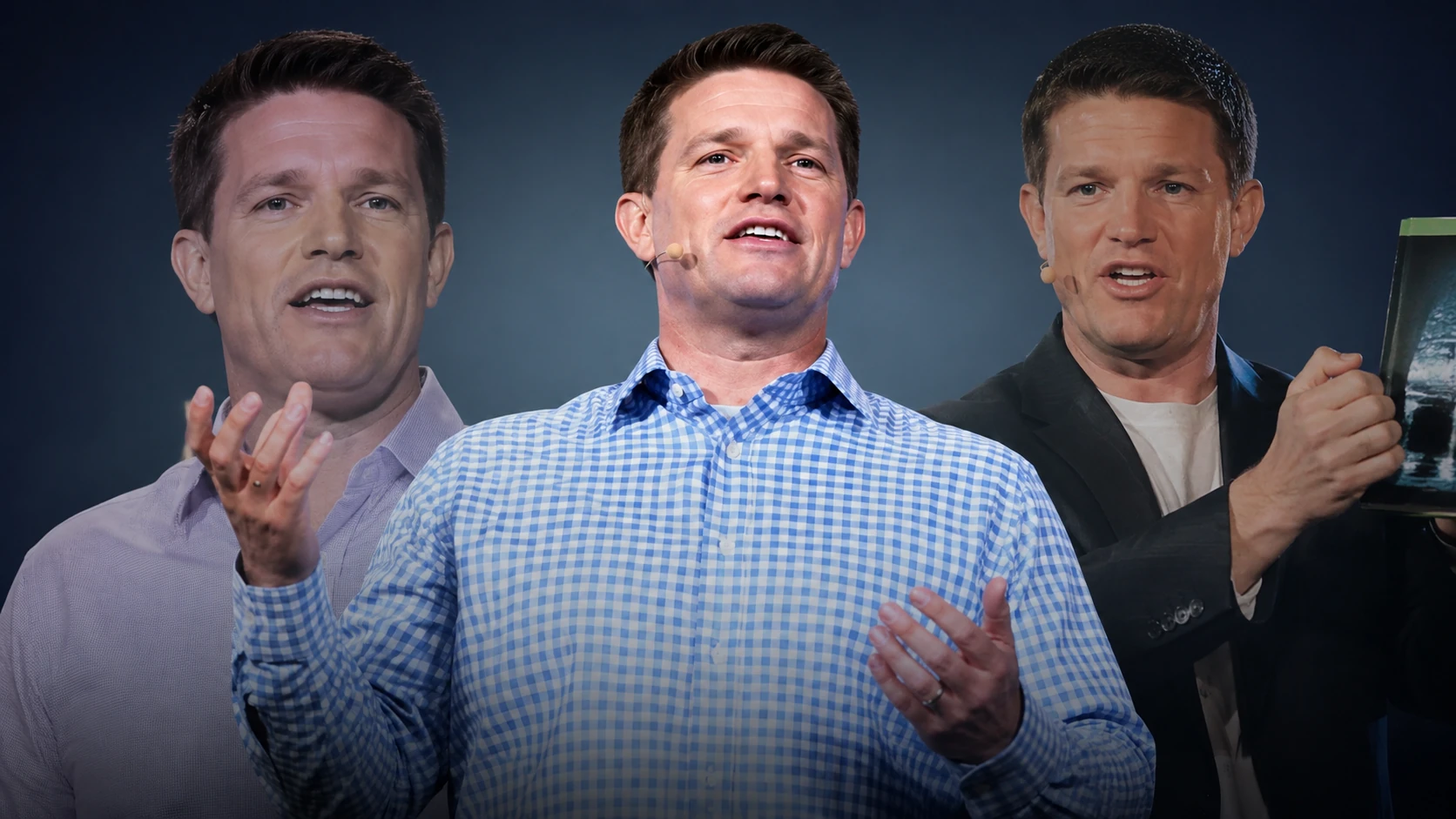
Russell Brunson built his public reputation by making one business idea sound simple: if a company can guide a customer from attention to purchase with the right message, it can grow faster online. That idea became ClickFunnels, the software company he co-founded in 2014 with Todd Dickerson, and it turned Brunson from a direct-response marketing student into one of the best-known names in digital entrepreneurship. His story is not just about software or sales pages. It is about how a young marketer from Idaho turned persuasion, teaching, and recurring subscription revenue into a private business empire.
Russell Brunson net worth is commonly estimated in the tens of millions, with many public estimates placing it somewhere around $40 million to $100 million. The exact figure is not publicly verified because ClickFunnels is privately held, and Brunson has not released a personal financial statement. What is clear is that most of his wealth is connected to ClickFunnels, his books, live events, training programs, speaking work, and the business community he built around sales funnels. For readers trying to understand his fortune, the better question is not only “how much is he worth?” but “how did he create that value?”
Early Life and Family Background
Russell Brunson was born on March 8, 1980, and he is closely associated with Idaho, where much of his business life has been based. His public biography often returns to a childhood detail that explains a great deal about his later career: he became fascinated with advertising early. While other children ignored commercials and junk mail, Brunson studied them. He has described collecting marketing pieces and watching how companies tried to persuade people to buy.

That interest was not yet a business, but it was a sign of what would later define him. Brunson was drawn less to fame than to the mechanics of attention, desire, and response. He wanted to understand why one message moved people while another disappeared without effect. Years later, those questions became the foundation of his books, webinars, stage talks, and software company.
His upbringing also included competitive wrestling, a part of his life he has often connected to his business mindset. Brunson has said he was a state champion wrestler in high school and continued competing at a high level in college. Wrestling gave him a clear lesson in repetition, discipline, and measured improvement. Those ideas later showed up in the way he taught entrepreneurs to test offers, refine pages, and keep working through failed campaigns.
Education and First Ambitions
Brunson attended Boise State University, where he continued wrestling and studied business-related ideas with growing seriousness. College gave him a place to compete, but the classroom was not the only place where he learned. Much of his early education came from studying old direct-response marketers, sales letters, infomercials, and the psychology behind buying decisions. He was especially interested in marketing that could be measured because the results were visible.
That attraction to measurable selling separated him from people who saw marketing only as branding or design. Brunson cared about whether a message produced action. Did someone click, opt in, buy, upgrade, or return? That practical question became central to his later career.
During his early adult years, he began selling products online and experimenting with internet marketing. Some of those first ventures were modest, but they gave him hands-on knowledge that a traditional business plan could not provide. He learned how to write copy, create offers, build landing pages, buy traffic, and follow up with customers. The early projects helped him understand the problem that ClickFunnels would later solve.
The First Online Businesses
Before ClickFunnels became his signature company, Brunson built several smaller online ventures. He sold information products, marketing materials, and niche offers while learning how internet customers behaved. These were the years when online selling was less polished and more experimental. Entrepreneurs often had to connect many tools manually to create even a basic sales process.
That technical friction became one of Brunson’s biggest frustrations. A business owner might need one tool for a landing page, another for payment processing, another for email follow-up, another for membership content, and another for tracking. For experienced marketers, that setup was irritating but manageable. For beginners, it could stop the business before the first real sale.
Brunson began teaching people how to structure offers and build sales funnels before the software existed in its later form. He had already learned that the funnel itself was not just a technical diagram. It was a way of thinking about the customer journey from first contact to deeper commitment. That teaching made him a recognizable figure in online marketing before ClickFunnels reached a mass audience.
Founding ClickFunnels
ClickFunnels was founded in 2014 by Russell Brunson and Todd Dickerson. Brunson brought the marketing vision, customer understanding, and direct-response strategy. Dickerson brought the technical and product-building skill needed to turn that strategy into usable software. Together, they created a platform that promised to help entrepreneurs build funnels without needing a team of developers.

The timing was right. Small businesses, coaches, course creators, consultants, and online sellers wanted to market online, but many did not have the technical ability to stitch together a full sales system. ClickFunnels gave them templates, page-building tools, checkout features, membership options, and marketing flows in one place. It did not remove the need for a good offer, but it made implementation much easier.
Brunson became the company’s public storyteller. He taught the concept of funnels through webinars, books, events, and videos, making the software feel like part of a larger business method. Customers were not only subscribing to a tool. They were joining a way of selling online that Brunson explained again and again in plain language.
How ClickFunnels Changed His Fortune
ClickFunnels quickly became the central source of Russell Brunson’s wealth. The company grew through monthly subscriptions, annual plans, events, training programs, affiliate marketing, and a strong customer community. Public reporting and company materials over the years have described ClickFunnels as a major nine-figure business. Because it remained private, exact profits and ownership details are not fully visible.
This distinction matters for any discussion of Russell Brunson net worth. Revenue is not the same as personal wealth, and company valuation is not the same as money in a founder’s pocket. ClickFunnels has employees, operating expenses, technology costs, marketing spend, affiliate commissions, taxes, and reinvestment needs. Still, a valuable private software company can create substantial wealth for its founders.
Brunson’s advantage was that ClickFunnels did not rely only on software features. It had a founder-led education engine behind it. Brunson taught customers why funnels mattered, then offered them the platform to build those funnels. That connection between teaching and software made the company more powerful than a standard page builder.
Books and the “Secrets” Brand
Russell Brunson’s books helped turn him into a larger public figure beyond ClickFunnels. His best-known titles include “DotCom Secrets,” “Expert Secrets,” and “Traffic Secrets.” Each book focuses on a different part of online selling, from structuring offers to building a following to attracting the right audience. The books gave Brunson a way to teach his ideas at scale.
The “Secrets” brand also worked as a smart entry point into his business ecosystem. A reader could buy a book at a low price, learn Brunson’s language, and then become interested in ClickFunnels, events, or training. This is one of the clearest examples of Brunson using his own methods. The book itself was not always the final product; it was often the start of a longer customer relationship.
His writing style is direct, energetic, and built around practical frameworks. Critics may find the sales language intense, but supporters value the clarity. Brunson explains marketing in a way that non-technical founders can follow. That ability to simplify complex selling systems has been one of his strongest commercial skills.
Russell Brunson Net Worth and Income Sources
Russell Brunson net worth is best understood as an estimate, not a confirmed public number. Most reasonable public estimates place him in the high eight-figure range, often around $40 million to $100 million. Those figures are based on ClickFunnels’ reported success, Brunson’s role as co-founder, his books, events, coaching programs, and public business activity. Without verified ownership records and personal asset disclosures, no outside estimate can be exact.
His largest source of wealth is likely his stake in ClickFunnels. If the company is valued highly and Brunson retains a meaningful ownership share, that equity would represent a major portion of his net worth. The value may be mostly illiquid, meaning it exists on paper unless shares are sold, profits are distributed, or the company is acquired. That is common for private-company founders.
Other income streams likely include royalties, speaking fees, live events, training programs, software-related compensation, and investments. Brunson’s personal brand also has major commercial value because it gives him direct access to entrepreneurs. When he launches a book, challenge, event, or offer, he already has an audience that understands his message. That audience is one of the hidden assets behind his wealth.
Marriage, Children, and Private Life
Russell Brunson is married to Collette Brunson, and they have children together. He has spoken publicly at times about his family, but he generally keeps the most personal parts of his home life away from the center of his public brand. That balance is common among entrepreneurs who live partly in public but do not want their children turned into content. His business story is highly visible, while his family life is handled with more care.
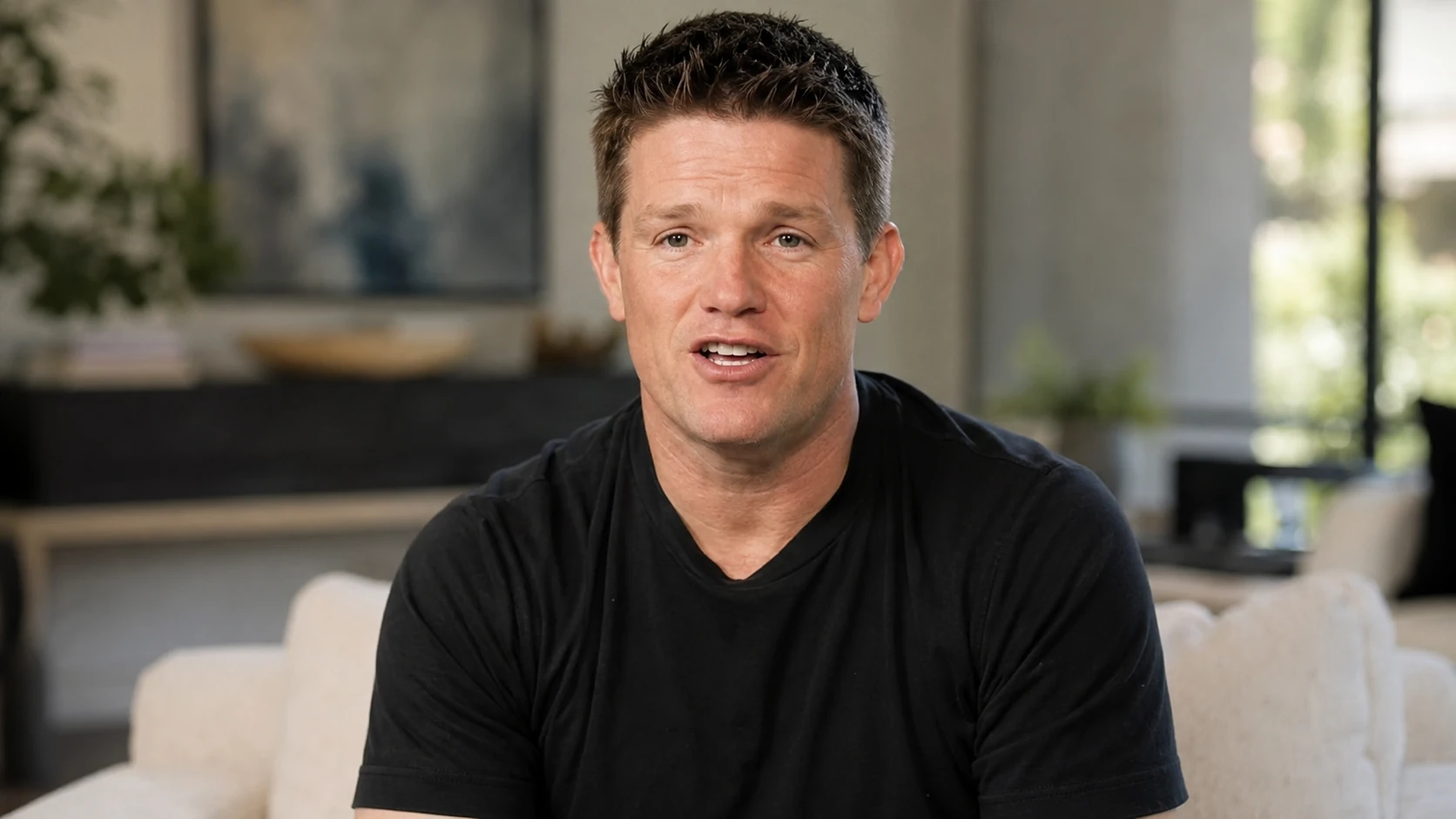
Collette has been part of his public journey in a quieter way, especially as Brunson’s business grew and demanded more travel, events, and visibility. Entrepreneurial success often looks clean from the outside, but it usually puts pressure on family routines. Brunson’s own storytelling has sometimes acknowledged the work required behind the scenes. He presents faith, family, and service as important parts of his life, though his public identity remains centered on marketing and business.
His image is not that of a Hollywood celebrity. Brunson is better understood as a founder-teacher with a loyal business audience. People follow him for frameworks, case studies, and motivation rather than personal gossip. That has helped him keep the focus on his work and keep his family from becoming the main subject.
Public Image and Influence
Russell Brunson is admired by many entrepreneurs because he makes online selling feel learnable. His supporters see him as a practical teacher who turned confusing technology into a repeatable process. They credit his books and software with helping them understand offers, funnels, landing pages, email follow-up, and customer value. In the world of digital marketing, that kind of influence is significant.
His public image also comes with criticism. Some people are skeptical of funnel culture because it can attract exaggerated promises, aggressive sales tactics, and beginners hoping for fast money. Brunson is not responsible for every marketer who uses the language of funnels, but his success helped popularize that world. As with many influential business teachers, the tools can be used well or poorly depending on the person applying them.
The strongest case for Brunson’s credibility is that he built a real company around the ideas he teaches. He did not only sell a theory in a course. He used the method to build software, acquire customers, publish books, run events, and create a large community. That does not make every claim in the funnel world true, but it does make Brunson’s career more substantial than a simple internet personality story.
Setbacks, Pressure, and Business Risk
A business like ClickFunnels faces constant pressure because online marketing tools change quickly. Competitors offer landing pages, email automation, checkout systems, course platforms, and all-in-one business suites. Customers also become more demanding over time. What felt simple and powerful in 2014 has to keep improving to remain useful years later.
Brunson’s challenge has been to keep ClickFunnels relevant while maintaining the community energy that made it famous. Software companies cannot survive on founder charisma alone. They need stable products, good support, reliable infrastructure, and clear value for customers. That is especially true when users depend on the platform for their sales.
There is also reputation risk in the online business space. The industry can blur the line between inspiration and overpromising, especially when success stories are used as marketing proof. Brunson has built a long-running brand by staying visible and consistent, but the broader market remains skeptical of anyone selling business growth advice. That skepticism is part of the environment he operates in.
Awards, Achievements, and Industry Standing
Russell Brunson’s most important achievement is the scale of ClickFunnels. Building a privately held software company with a large customer base is difficult, especially without following the usual venture-backed Silicon Valley script. Brunson and Dickerson built a company known for direct marketing, affiliate energy, and a strong customer culture. That made ClickFunnels stand out in a crowded market.
His books have also strengthened his industry standing. “DotCom Secrets,” “Expert Secrets,” and “Traffic Secrets” became well-known titles among online entrepreneurs. They are frequently discussed in marketing circles because they give readers a shared vocabulary. Terms like funnels, value ladders, hooks, stories, and offers became central to how Brunson’s audience thinks about business.
His live events and public training have added to that influence. Brunson is not only a behind-the-scenes founder. He is a stage presenter, teacher, and community builder. That combination has made him one of the most recognizable figures in direct-response internet marketing.
What Russell Brunson Is Doing Now
Russell Brunson remains closely tied to ClickFunnels and the broader education ecosystem around it. His work continues to center on helping entrepreneurs sell products, services, courses, coaching, and expertise online. He still promotes books, training, challenges, events, and funnel education through his public channels. His current status is best described as founder, author, speaker, and marketing educator.
The market around him has changed. Artificial intelligence, short-form video, creator platforms, and new e-commerce tools have shifted how businesses attract customers. That does not make funnels irrelevant, but it does mean the old playbook must adapt. Brunson’s continued influence depends on whether his frameworks remain useful across new platforms and buying habits.
For many entrepreneurs, his appeal is still the same as it was during ClickFunnels’ rise. He takes a messy business problem and gives it structure. A founder may not know how to turn attention into revenue, and Brunson’s teaching offers a path. That promise remains the heart of his brand.
Frequently Asked Questions
What is Russell Brunson’s net worth?
Russell Brunson’s net worth is commonly estimated in the tens of millions, often around $40 million to $100 million. This is an estimate, not a verified figure, because he has not released full personal financial records and ClickFunnels is privately held.
The largest part of his wealth is likely tied to ClickFunnels. His books, speaking, events, coaching, training, and related business ventures also contribute to his income.
How did Russell Brunson get rich?
Russell Brunson became wealthy mainly through ClickFunnels, the software company he co-founded in 2014 with Todd Dickerson. The platform helps entrepreneurs build sales funnels, landing pages, checkout pages, and online marketing systems.
He also built a strong personal brand through books and business education. Those products helped attract customers into the ClickFunnels ecosystem and expanded his income beyond software alone.
Is Russell Brunson a billionaire?
There is no reliable public evidence that Russell Brunson is a billionaire. Some online claims may confuse company revenue or valuation with personal net worth. Those are not the same thing.
A more careful description is that Brunson appears to be a highly successful private-company founder worth tens of millions. Without verified ownership details and financial disclosures, billionaire claims should be treated as unsupported.
Who is Russell Brunson’s wife?
Russell Brunson is married to Collette Brunson. They have children together, though Brunson generally keeps many details of family life private. He has shared parts of his personal story publicly, but his main public focus remains business and marketing.
That privacy should be respected. Unlike his books, software, and events, his family life is not the main product of his public career.
What is ClickFunnels?
ClickFunnels is a software platform designed to help businesses create online sales funnels. A funnel usually includes pages and steps that guide a potential customer from interest to purchase. It can include landing pages, opt-in forms, sales pages, checkout pages, upsells, and follow-up systems.
The company became popular with entrepreneurs, coaches, course creators, consultants, and small businesses. Its appeal came from making online sales systems easier to build without a full technical team.
What books has Russell Brunson written?
Russell Brunson is best known for “DotCom Secrets,” “Expert Secrets,” and “Traffic Secrets.” These books explain his approach to online selling, offer creation, audience building, and customer acquisition.
The books are also part of his business strategy. They introduce readers to Brunson’s ideas and often lead them toward ClickFunnels, events, or other training products.
Why is Russell Brunson famous?
Russell Brunson is famous in online marketing because he helped make sales funnels mainstream for small businesses and creators. He turned a technical marketing concept into a teachable system supported by books, software, events, and a large community.
His fame is tied to both education and execution. He did not only talk about funnels; he built one of the best-known companies around them.
Conclusion
Russell Brunson’s biography is the story of a marketer who turned a lifelong interest in persuasion into a major business career. From studying advertisements as a child to co-founding ClickFunnels in 2014, his path has been unusually consistent. He stayed close to one core idea: businesses grow when they understand how to guide customers through a clear buying journey.
Russell Brunson net worth attracts attention because the numbers are large, but the more revealing story is the system behind the money. His fortune came from combining software, teaching, books, events, community, and direct-response marketing into one business engine. That made him more than a software founder and more than a business author.
His place in online business is secure, even among people who question parts of funnel culture. Brunson helped shape how a generation of entrepreneurs thinks about offers, traffic, conversion, and customer value. Whether ClickFunnels keeps growing in the same way or adapts into something broader, his influence on digital marketing is already clear.
