

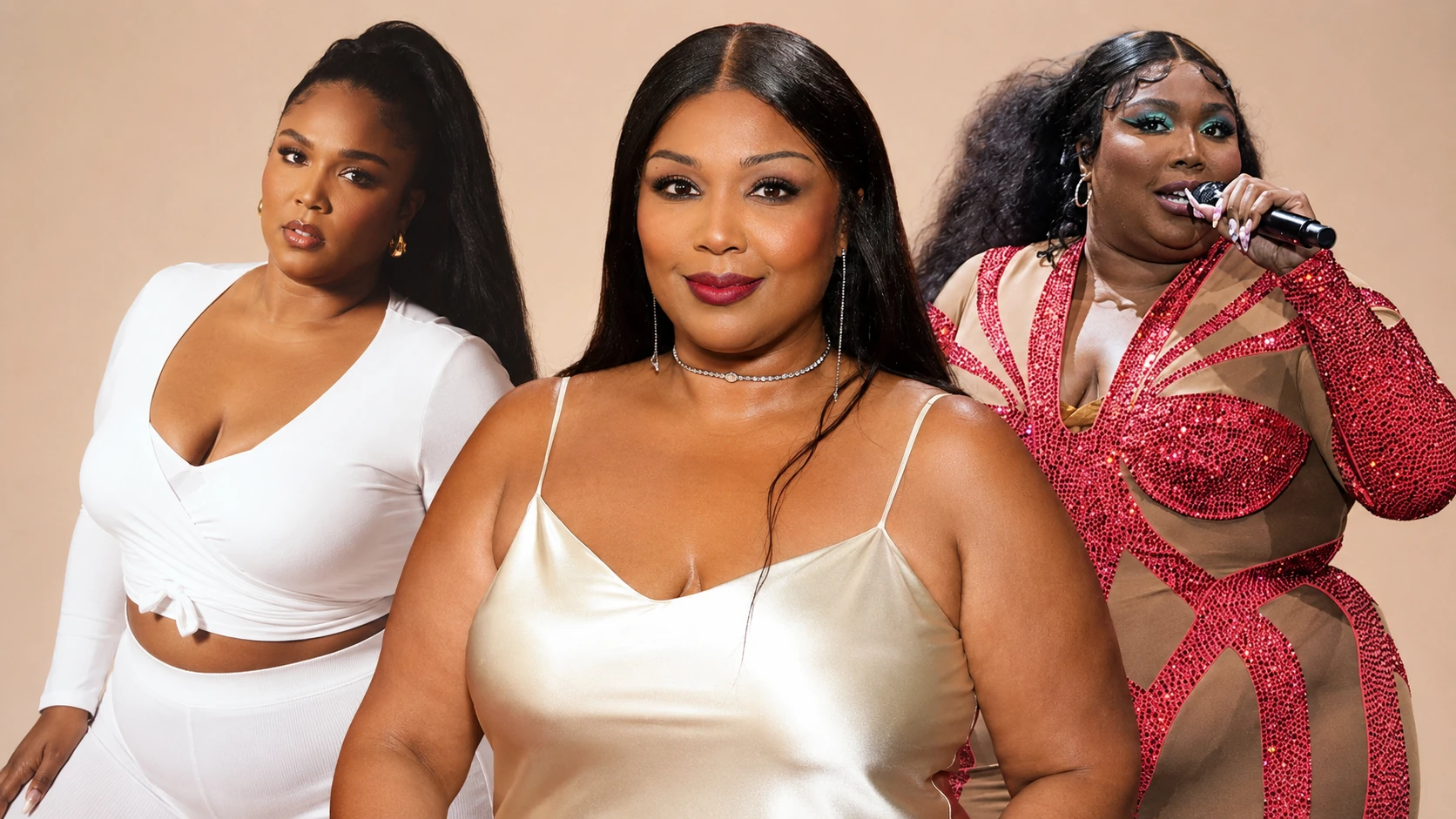
Lizzo became one of the most recognizable pop stars of her generation by making confidence sound joyful, funny, emotional, and defiant all at once. Readers searching for “lizzo weight and height” usually want a quick answer, but the honest version needs care. Lizzo’s height is widely reported at about 5 feet 10 inches, while her exact current weight is not publicly confirmed. What is clear is that her body, career, and public image have all been discussed closely because she has spent years challenging narrow ideas about beauty, fame, and who gets to be seen as a pop star.
Her real name is Melissa Viviane Jefferson. She was born on April 27, 1988, in Detroit, Michigan, and is an American singer, rapper, songwriter, flutist, actress, and television personality. She later grew up in Houston, Texas, where music became central to her life. Over time, she turned that background into a career that crossed hip-hop, pop, soul, R&B, comedy, dance, and live flute performance.
Lizzo’s Height and Weight: What Is Publicly Known
Lizzo’s height is most commonly listed at around 5 feet 10 inches, or about 178 centimeters. Some public listings and fan discussions place her closer to 5 feet 9 inches, so the safest wording is that she is about 5 feet 9 to 5 feet 10 inches tall. The 5-foot-10 figure is the one most widely used in entertainment profiles.
Her exact current weight is not publicly confirmed. Online numbers often circulate without reliable sourcing, and many appear to be estimates copied from one celebrity site to another. Because Lizzo’s body has changed in recent years, any fixed weight number can quickly become outdated or misleading.
Lizzo has, however, spoken publicly about a major fitness and body-change journey. In January 2025, she said she had reached what she called her “weight release goal” and shared that she had reduced her BMI and body-fat percentage since early 2024. She did not make her current weight a confirmed public number, and responsible coverage should not invent one.
Early Life and Family
Lizzo was born in Detroit and moved with her family to Houston when she was young. Her upbringing gave her a mix of musical influences, from church and classical training to rap, R&B, and the Southern hip-hop culture around her. Houston became especially important because it was where she developed as a performer and began shaping the bold voice fans now know.
She was drawn to music early and trained on the flute, an instrument that later became one of her most distinctive trademarks. Lizzo’s flute playing is not a novelty added after fame; it is part of her long musical foundation. She has often mixed classical training with pop performance, giving her concerts a style that feels playful but technically serious.
Her family life has had both public and private chapters. Her father’s death during her young adulthood was a difficult turning point, and she has spoken about struggling before finding firmer ground in music. Many details about her relatives and private family relationships are not publicly confirmed, and she has not made every part of her personal life part of her public brand.
Education and First Ambitions
Lizzo attended the University of Houston, where she studied classical flute performance. Her time there reflected an early ambition to take music seriously as a craft, not just as entertainment. That training later helped set her apart from many pop performers because she could bring live musicianship into high-energy mainstream shows.
Before fame, Lizzo experienced instability and financial hardship. She spent time trying to find her artistic place, performing in groups and experimenting with different sounds. Those years shaped her work ethic and sharpened the mix of humor, honesty, and resilience that became central to her music.
Her stage name grew from her birth name, Melissa, and the Houston rap culture around her. She used it while moving through local and independent music spaces before reaching a national audience. By the time mainstream listeners discovered her, Lizzo had already spent years learning how to hold a stage.
Career Breakthrough
Lizzo released her debut album, “Lizzobangers,” in 2013. The project introduced her as a sharp rapper with big personality, quick comic timing, and a willingness to write about confidence, insecurity, friendship, and survival. It did not make her a household name immediately, but it gave critics and early fans a clear sense of her promise.
Her second album, “Big Grrrl Small World,” arrived in 2015 and continued to build her reputation. The album showed more of the body-positive language and emotional openness that would later become central to her public identity. It also helped position her as an artist who could move between underground credibility and pop accessibility.
Her major commercial rise came after signing with Atlantic Records and releasing music that reached a much wider audience. “Good as Hell” and “Truth Hurts” became two of her defining songs, though both took time to reach their full cultural impact. “Truth Hurts,” first released in 2017, later exploded through streaming, social media, and film placement, becoming a major hit.
Major Work and Public Recognition
Lizzo’s album “Cuz I Love You,” released in 2019, turned her into a mainstream star. It combined big vocals, rap verses, emotional ballads, bright pop hooks, and a public message centered on self-worth. The album’s success gave her awards recognition, festival stages, television appearances, and a new level of fame.
At the Grammy Awards in 2020, Lizzo won three awards, including Best Pop Solo Performance for “Truth Hurts.” She later won Record of the Year for “About Damn Time” at the 2023 Grammy Awards. These wins confirmed that her popularity was not only viral or social media driven; it was recognized by the music industry as well.
Lizzo also expanded into television and film. She appeared in “Hustlers” and hosted or appeared in major entertainment projects, including her reality competition series “Lizzo’s Watch Out for the Big Grrrls.” That show focused on dancers and performers whose bodies were often excluded from mainstream stage opportunities, tying her entertainment work directly to the message that helped define her career.
Body Image, Fitness and Public Discussion
Lizzo’s weight and height became part of her story because she entered pop culture as a highly visible plus-size Black woman in an industry that has long rewarded thinness. Her clothes, performances, videos, and interviews often rejected the idea that confidence had to wait for weight loss. For many fans, she became a symbol of permission: permission to dance, dress boldly, perform, flirt, laugh, and take up space.
That attention also brought intense criticism. Lizzo has faced body shaming, health speculation, and public debate from people who treat celebrity bodies as open property. Her response has often mixed humor with frustration, especially when strangers claim to know her health from photos.
In recent years, Lizzo has spoken about changing her habits, exercising, and making food choices that helped her feel better. She has used the phrase “weight release” rather than simply “weight loss,” which suggests a more personal and less shame-driven view of the process. Her message has shifted toward the idea that a person can accept their body and still make changes for health, comfort, stamina, or personal reasons.
Relationships and Private Life
Lizzo has generally kept her romantic life more private than her music and public personality. She has been linked publicly to comedian and actor Myke Wright, and the relationship has been discussed in interviews and media coverage. Still, she has not turned her relationship history into constant public content.
She is not publicly confirmed to be married, and she does not have publicly confirmed children. Because she is a public figure whose work often includes humor and intimacy, some fans assume more is known about her private life than actually is. The responsible answer is to separate confirmed public information from speculation.
Her friendships, creative teams, dancers, musicians, and collaborators have been an important part of her public image. Lizzo’s performances often present joy as collective rather than solitary. That has made her shows feel less like a solo display and more like a celebration built around community, movement, and sound.
Controversies and Setbacks
Lizzo’s public image changed after former dancers filed a lawsuit in 2023 making serious workplace allegations. Lizzo denied wrongdoing, and parts of the case have been discussed widely in entertainment and legal reporting. Because legal matters can change over time, claims and responses should be described carefully rather than treated as settled beyond the court record.
The controversy affected how some audiences viewed her message of empowerment. For an artist whose brand had been built on confidence, inclusion, and care, accusations involving workplace treatment drew close public attention. Lizzo has spoken about the emotional toll of that period while continuing to work and appear publicly.
A fair biography should not erase the controversy, but it also should not reduce her entire career to it. Lizzo’s record includes major musical achievements, cultural impact, public criticism, and unresolved questions around public reputation. Those parts of the story exist together.
Net Worth and Income Sources
Lizzo’s net worth is not publicly confirmed. Celebrity wealth sites often publish estimates, but those figures should be treated as guesses unless backed by financial filings or direct confirmation. Her income likely comes from music sales, streaming, touring, publishing, brand partnerships, television work, acting roles, merchandise, and business ventures.
Her most valuable career assets are her catalog, touring power, public brand, and cross-media visibility. Grammy wins and hit singles can increase performance fees and licensing value, while television and brand work add income beyond recorded music. Still, exact earnings, contracts, and assets are private.
Because celebrity net worth figures can vary widely, readers should avoid treating any single number as fact. The accurate statement is that Lizzo is a commercially successful recording artist and performer with several income streams, but her exact net worth is not publicly confirmed.
Recent Work and Current Status
Lizzo remained a major public figure through 2024, 2025, and 2026, with attention focused on both her music and her body-change journey. In 2025, her “weight release” update became one of the most discussed moments in her recent public life. She also addressed speculation around medication and emphasized lifestyle, food choices, training, and personal consistency.
Her current status is that of an established pop star navigating a complex phase of fame. She is still known for hits like “Truth Hurts,” “Good as Hell,” and “About Damn Time,” but her public image now includes body-change discussion, legal controversy, and questions about her next artistic era. That makes her story more complicated than a simple success profile.
What has not changed is the reason many people paid attention to her in the first place. Lizzo has a rare mix of vocal power, rap timing, humor, musicianship, and stage command. Her height and weight may draw searches, but her career was built on talent and the ability to make self-belief feel like a shared experience.
Frequently Asked Questions
What is Lizzo’s real name?
Lizzo’s real name is Melissa Viviane Jefferson. She uses Lizzo as her professional stage name, and it has become the name most closely tied to her music, performances, and public identity.
How old is Lizzo?
Lizzo was born on April 27, 1988. That makes her 38 years old in 2026. She was born in Detroit, Michigan, and later grew up in Houston, Texas.
What is Lizzo’s height?
Lizzo is widely reported to be around 5 feet 10 inches tall. Some sources place her closer to 5 feet 9 inches, so a careful estimate is about 5 feet 9 to 5 feet 10 inches.
What is Lizzo’s current weight?
Lizzo’s exact current weight is not publicly confirmed. She has discussed her body-change journey and said she reached a personal “weight release goal,” but she has not made a verified current weight available as a public fact.
Did Lizzo lose weight?
Yes, Lizzo has publicly described a significant body and fitness change. In 2025, she said she had reached her “weight release goal” and shared progress related to BMI and body-fat percentage. She has framed the change as personal rather than as a rejection of body acceptance.
Is Lizzo married?
Lizzo is not publicly confirmed to be married. She has been publicly linked to Myke Wright, but she keeps many details of her private life away from constant public attention.
What is Lizzo’s net worth?
Lizzo’s exact net worth is not publicly confirmed. Online estimates vary and should be treated cautiously. Her income comes from music, touring, streaming, television, acting, brand work, merchandise, and related business activity.
Conclusion
Lizzo’s height is widely reported at about 5 feet 10 inches, while her exact current weight remains not publicly confirmed. That distinction matters because celebrity body facts are often repeated online with more confidence than evidence. A responsible profile should answer the question without pretending private information is public.
Her story is much larger than measurements. Lizzo is a Detroit-born, Houston-raised artist who turned years of training, hardship, humor, and musical ambition into Grammy-winning success. She became famous not only because she could sing and rap, but because she made confidence feel loud, physical, and shared.
Her recent body change has added another chapter to a public life already shaped by celebration and criticism. She has shown that body acceptance and personal change can exist at the same time. That may be the most useful lesson in the whole conversation.
Readers may arrive looking for Lizzo’s weight and height, but they leave with a clearer picture of a performer who has refused to be reduced to either. Her body has been debated, praised, judged, and defended, yet her real public legacy rests in her music, presence, and insistence on defining herself.
