

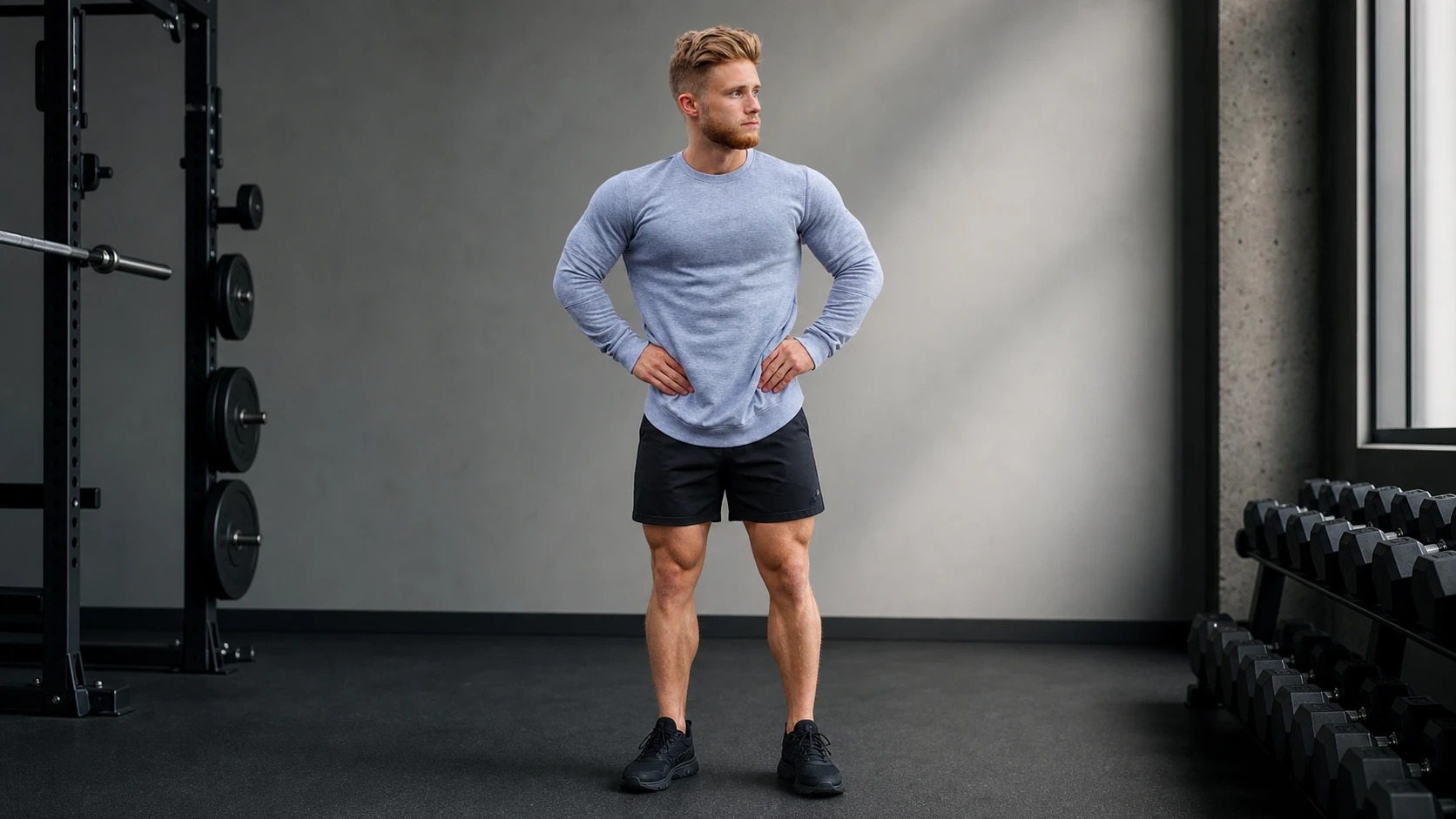
Jeff Nippard says he is 5 feet 5 inches tall, or about 165 cm. He has used that figure publicly more than once, including in a 2017 YouTube video and again in the description of a 2025 video.
A third-party height site, CelebHeights, lists him slightly shorter at 5 feet 4½ inches, or 163.8 cm, and points to a 2025 video in which an on-screen measurement was reportedly around 164.5 cm. That figure was not independently verifiable from the accessible video text, however, and the difference is small enough that it does not materially conflict with Nippard’s own rounded 5-foot-5 description.
The height question is only a small part of why Nippard is widely known. The Canadian fitness educator built his reputation through competitive bodybuilding and powerlifting before becoming one of the most prominent advocates of research-informed strength training online.
Jeff Nippard’s height: the best-supported answer
The clearest primary-source answer is 5 feet 5 inches.
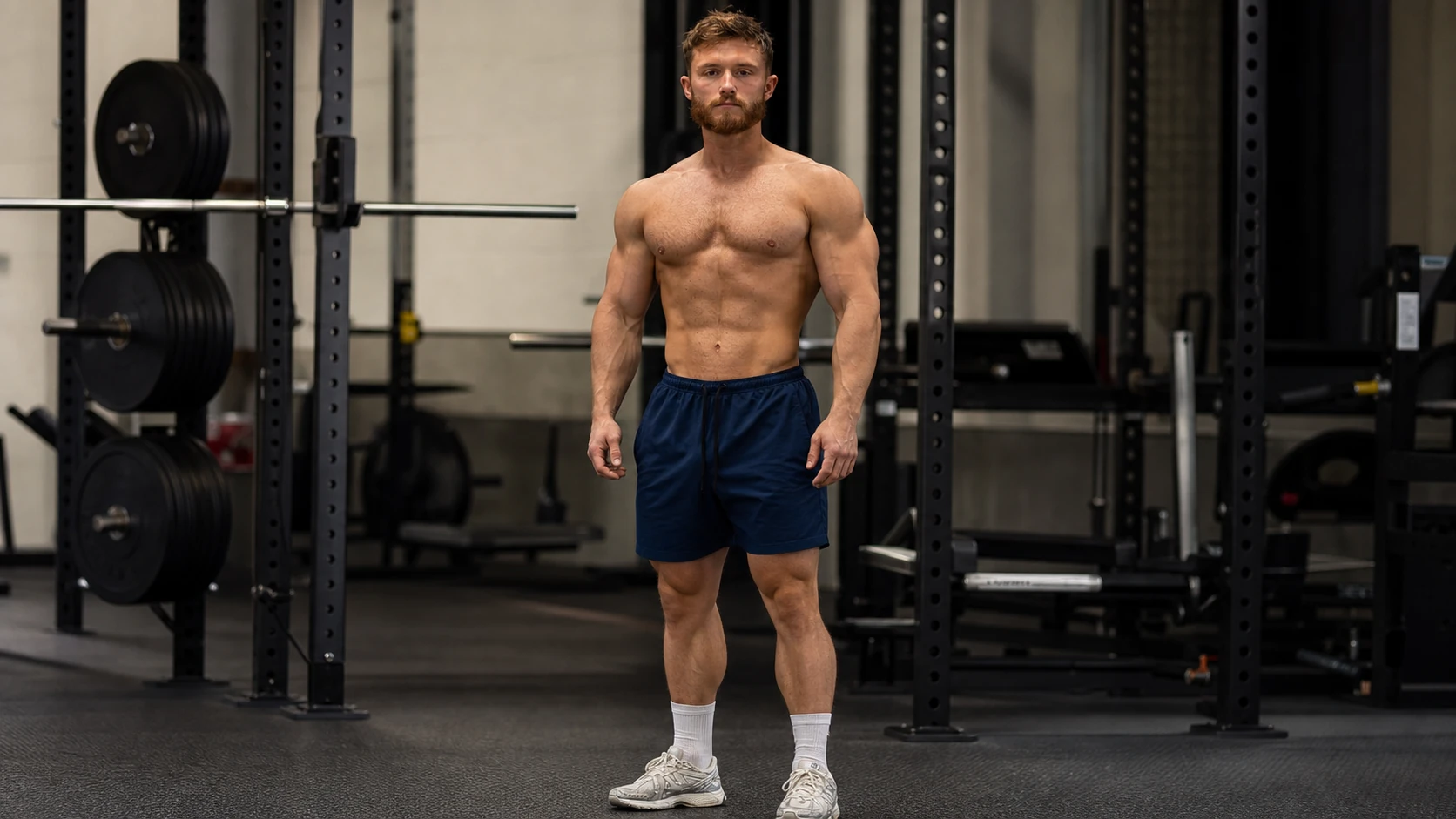
Nippard explicitly described himself as 5’5″ in his 2017 video 5’5 Bodybuilder vs 6’5 Basketball Star. Years later, the description of his May 2025 video How Much Muscle Did I Gain In 365 Days? again listed his height as 5’5″.
That makes 5’5″, or roughly 165 cm, the most appropriate figure to use when describing his height.
CelebHeights gives a more precise estimate of 5’4½”. Its page also discusses a reported 2025 measurement in approximately the 164-165 cm range. Even if that reading is accurate, it would place Nippard only a fraction of an inch below the rounded figure he uses publicly.
There is therefore little basis for treating the two numbers as a meaningful dispute. The careful formulation is that Nippard states that he is 5’5″, while at least one third-party estimate places him about half an inch shorter.
From biochemistry to science-based fitness education
Nippard is a Canadian fitness educator, natural-bodybuilding figure and former competitive powerlifter. His official biography says he holds a Bachelor of Science degree in biochemistry, and a 2025 GQ profile identifies Memorial University of Newfoundland as the institution where he studied.
That scientific background became an important part of his later public work. Rather than presenting training primarily through motivation or personal anecdote, Nippard became known for explaining strength and hypertrophy research in a form intended for ordinary gym-goers.
GQ reported that his interest in research-backed lifting became particularly important around 2014, when he was also beginning to publish fitness content on YouTube. Over time, research interpretation became a defining feature of his public identity.
That distinction matters because Nippard’s reputation is not based only on his physique or social-media reach. His career has combined formal science education, hands-on competitive lifting experience, coaching-oriented content and, more recently, participation in published academic work.
Bodybuilding and powerlifting built his early credentials
Before his YouTube audience reached millions, Nippard had already competed in physique and strength sports.
His official biography says he won the Mr. Junior Canada natural-bodybuilding title in 2012. Although a more complete independent contest archive was not available in the supporting record, the same accomplishment appears in his published author biography.
His powerlifting history is more extensively documented. OpenPowerlifting records competition appearances between 2013 and 2015, including provincial, eastern Canadian and national-level meets.
At the 2014 Canadian Championship, Nippard placed second in the 163-pound class. His recorded lifts included a 501.5-pound squat, 336.2-pound bench press and 518.1-pound deadlift.
OpenPowerlifting also lists raw personal bests of 501.5 pounds in the squat, 352.7 pounds in the bench press and 518.1 pounds in the deadlift.
Nippard’s official biography additionally says that he held a Canadian national bench-press record in 2014. The available OpenPowerlifting profile supports the broader competition history and the relevant lifting performances, although it does not itself label the lift as a national record. The record claim is therefore best attributed to his official biography rather than stated as an independently established database fact.
These years helped establish an important foundation for his later career. His fitness content came from someone who had already competed seriously in both bodybuilding and powerlifting rather than from a purely media-based background.
How his fitness career expanded beyond YouTube
Nippard’s YouTube channel became the central platform for his research-oriented fitness work. By August 2026, his audience had grown to more than eight million subscribers, making him one of the most visible figures in the science-based training space.
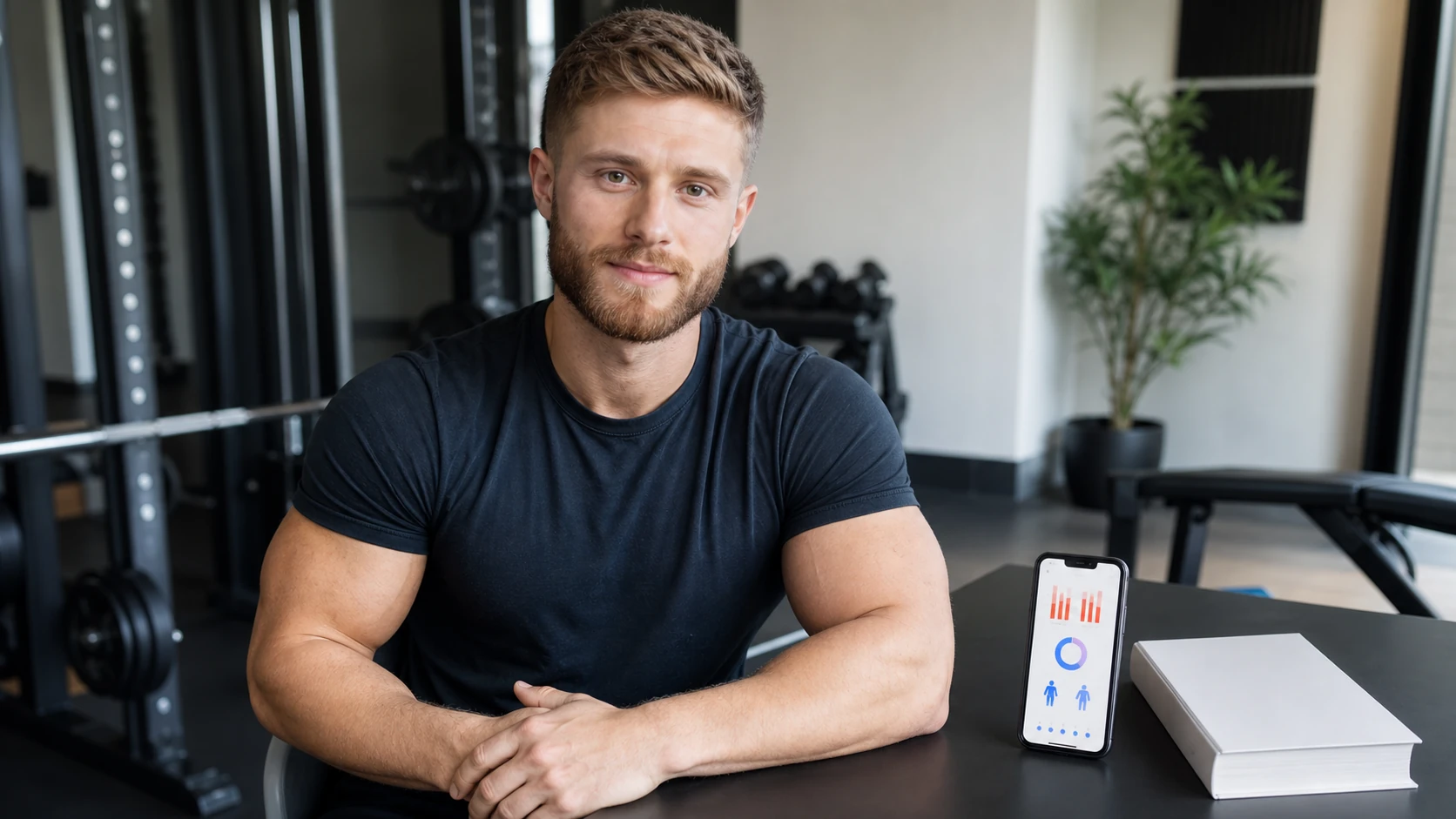
His work also expanded into products and projects outside video.
GQ reported that Nippard launched the paid nutrition-tracking app MacroFactor in 2021. His involvement with the app belongs within the broader evolution of his fitness business, although the available evidence does not support describing him as its sole founder or owner.
In late 2024, he published The Muscle Ladder: Get Jacked Using Science through Victory Belt. Publisher and Google Books records give the publication date as December 31, 2024, and list the book at 432 pages.
The book gave Nippard another format for the approach that had already defined much of his online work: using training research to organize practical guidance on building muscle.
By this stage, his public career had moved well beyond being simply a fitness YouTuber. His work encompassed video education, training programs, nutrition technology and long-form publishing.
The Muscle Lab and a move toward formal research
Nippard’s more recent projects suggest an effort to move closer to the production of research itself rather than only interpreting studies conducted by others.
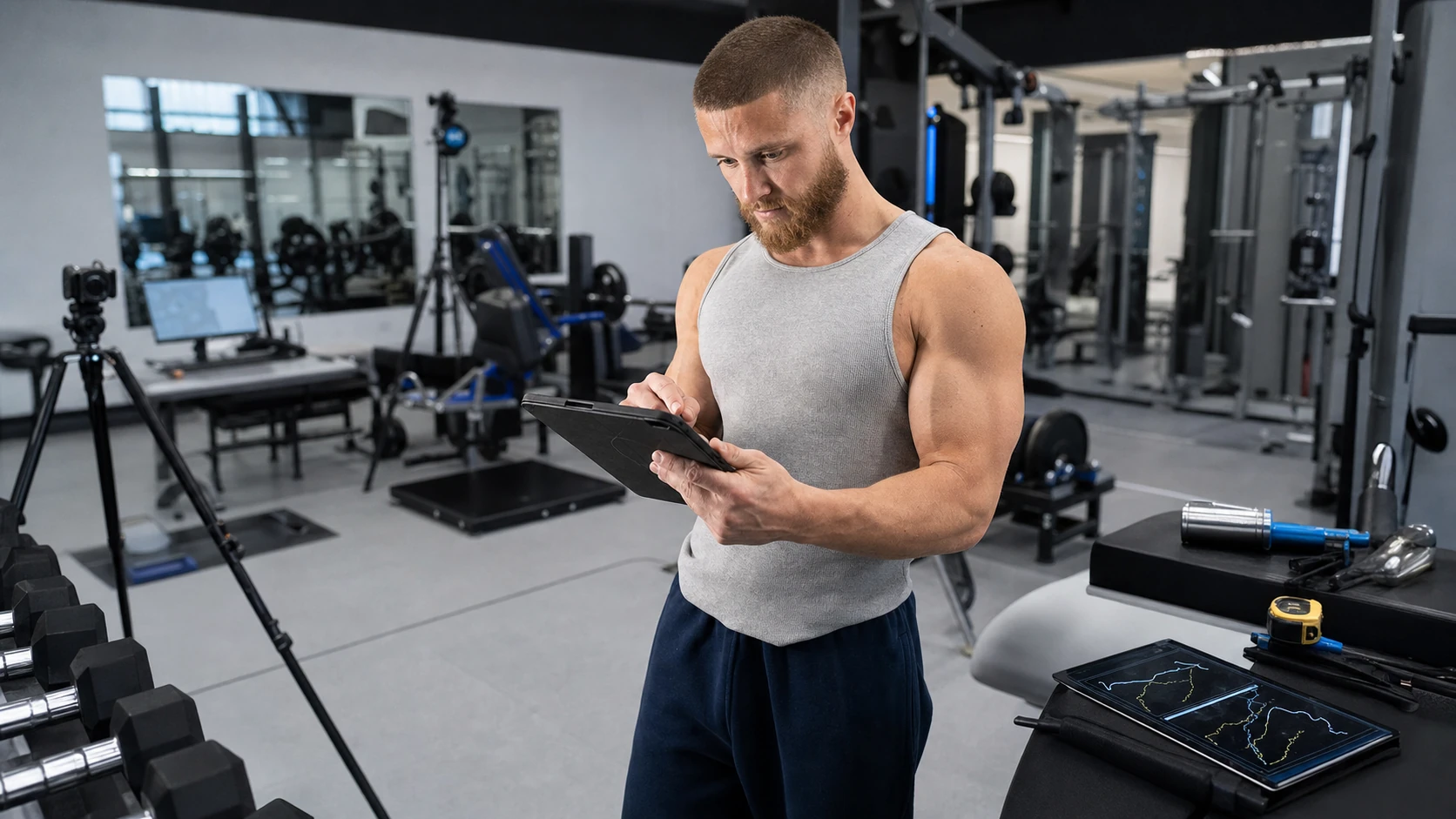
In 2025, GQ reported on his Muscle Lab, a private facility of roughly 4,000 square feet that had been built for filming, experimentation and research-related work. The magazine reported that the facility cost nearly $3 million and was formally launched in September 2025.
The project was notable because it represented a different stage of his career. Much of Nippard’s earlier success came from translating scientific literature into accessible fitness content. The Muscle Lab created infrastructure for testing training questions more directly, with the stated longer-term ambition of producing work suitable for publication.
That direction was reinforced by his appearance in the academic literature. PubMed lists Nippard as a co-author of the review “Load-induced human skeletal muscle hypertrophy: Mechanisms, myths, and misconceptions,” published online in November 2025 in the Journal of Sport and Health Science.
His affiliation in the PubMed record is given as STRCNG Incorporated, operating as Jeff Nippard Fitness.
A single co-authored review does not turn a fitness educator into a career academic researcher, nor does his biochemistry bachelor’s degree make him a physician or exercise scientist. It does, however, add a distinct research credential to a career already built around explaining scientific evidence about strength and muscle growth.
Why Jeff Nippard remains relevant
As of 2026, Nippard remains professionally active. His YouTube channel continues to publish for an audience of more than eight million people, while his recent work has extended into books, software and research-oriented projects.
That progression helps explain his unusually durable position in online fitness. His early public credibility came from bodybuilding and powerlifting; his biochemistry education helped shape an evidence-focused approach; YouTube gave that approach a large audience; and later projects such as The Muscle Ladder, the Muscle Lab and academic co-authorship expanded the scope of his work.
His height is one of the more commonly searched personal details about him, but it has little to do with the substance of his career. The better-supported story is how a competitive lifter with a science background became a major public translator of resistance-training research.
Final thoughts
Jeff Nippard’s own stated height is 5 feet 5 inches, or about 165 cm. A third-party estimate places him slightly below that at 5 feet 4½ inches, but the available evidence points to only a minor difference rather than a significant contradiction.
More consequentially, Nippard has developed from a competitive natural bodybuilder and powerlifter into a prominent science-based fitness educator whose work now spans an audience of millions, a published book, nutrition technology, a private research facility and participation in peer-reviewed scholarship.
