

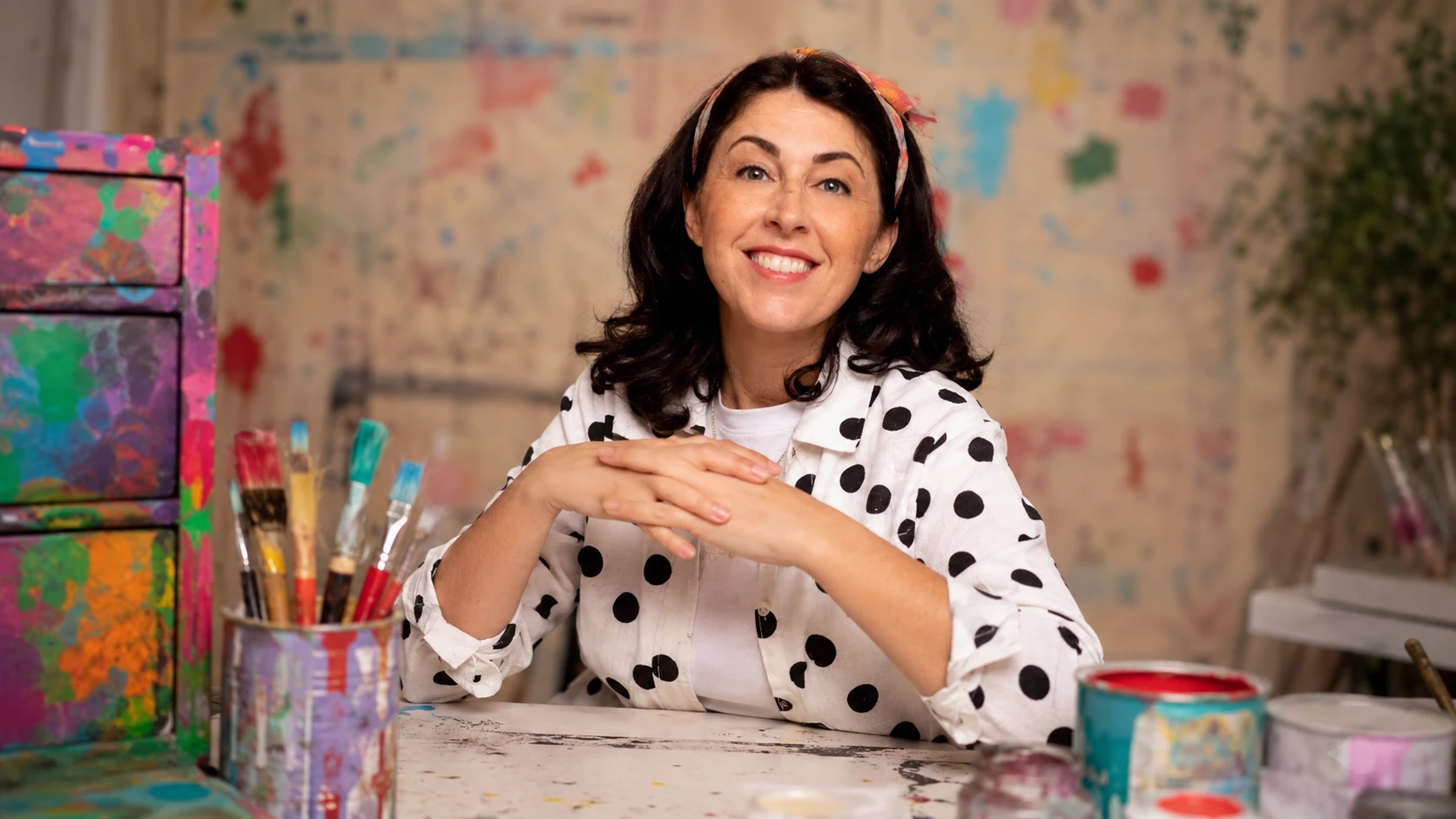
Gemma Longworth has built a career out of seeing value where other people see waste. To television viewers, she is the Liverpool upcycler from Find It, Fix It, Flog It, the maker who can take a tired chair, a battered cabinet, or a forgotten object and give it a second life. But the more revealing part of her story is what sits behind the paintbrush and power tools: a belief that creativity can help people cope, remember, repair, and move forward.
Longworth’s public life brings together several roles that do not always sit neatly in one biography. She is an artist, furniture restorer, TV personality, workshop leader, author, and founder of a creative support project. Her work has touched television, community art, bereavement support, sustainable design, and hands-on craft education. That range is why people searching for Gemma Longworth often want more than a quick TV profile.
Her story is best understood through two ideas: making and mending. She makes furniture, artwork, workshops, books, and television moments. She also works with the emotional meaning of repair, especially through art connected to grief and wellbeing. That combination has made her one of the more distinctive figures to emerge from Britain’s modern upcycling and craft scene.
Early Life and Liverpool Roots
Gemma Longworth is publicly associated with Liverpool, and that connection remains central to her identity. She has been described in professional profiles as a proud Scouser, and her career has often stayed rooted in the creative life of the city. Liverpool’s strong culture of humour, resilience, art, and community fits naturally with the way she presents herself on screen and in workshops.
Publicly available information about her childhood and family background is limited, and she has not built her public profile around private family details. What is known is that creativity became deeply personal for her at a young age. Longworth has spoken about being affected by the death of her younger brother and about how drawing became a way of honouring him and processing loss.
That experience is not a small side note in her biography. It helps explain why her work with art has never been only decorative or commercial. For Longworth, making things has often carried emotional weight, whether that means drawing, textiles, furniture, memory work, or group craft sessions.
Education and Creative Training
Longworth followed an art-and-design route before she became known on television. She studied at City of Liverpool College, then went on to study Drawing and Applied Arts in Bristol. After that, she completed postgraduate work in textiles in Manchester, strengthening the craft and material-based side of her practice.
Her education gave her a broad base rather than one narrow skill. Drawing, textiles, applied arts, furniture, and surface design all appear in her later work. This matters because Longworth’s career cannot be reduced to painting old furniture for TV; she came to upcycling through a wider interest in materials, process, and the emotional use of art.
During her postgraduate years, she also explored art as a therapeutic tool. That direction later shaped her work with children, hospitals, bereavement groups, and community organisations. The same artist who could transform a cabinet could also help someone use colour, texture, or memory objects to express something difficult.
The Personal Loss That Shaped Her Art
One of the most meaningful parts of Longworth’s story is the way grief influenced her creative life. She has said that she began drawing after the death of her younger brother, who had loved to draw. What began as a tribute became something more lasting: a way to process emotion through making.
That early link between loss and creativity carried into her later work. While studying for her master’s degree, Longworth became involved in art connected to bereavement support. She has been associated with work at Alder Hey Children’s Hospital in Liverpool, including creative sessions and projects designed to help children and families express feelings through art.
This background gives her public work a different tone from many TV craft personalities. She is not simply telling people to brighten a room or save an old table from landfill. She is also interested in what happens to a person while they make something, especially when that person is grieving, anxious, recovering, or trying to feel more grounded.
Building a Career in Upcycling
Before becoming familiar to television audiences, Longworth built her reputation through hands-on creative work. She became known as a furniture upcycler and workshop leader, helping people rethink unwanted objects and develop practical craft confidence. Her business work has included art, craft, and upcycling workshops for individuals, groups, events, and organisations.
Her approach to upcycling is practical rather than precious. She has often stressed the importance of preparation, including cleaning, sanding, repairing, priming, and using decent tools. That advice may sound simple, but it is the difference between a fast makeover and a piece that can survive daily use.
Longworth’s style also tends to favour colour and personality. For wider TV audiences, she sometimes has to choose finishes with broad appeal, but her own taste has been described as bolder and more playful. She has spoken about enjoying bright colour, stencilling, gold leaf, and expressive finishes that bring energy to furniture and interiors.
Breakthrough on Find It, Fix It, Flog It
Gemma Longworth became widely known through Find It, Fix It, Flog It, the British restoration and upcycling series associated with Channel 4 and later U&Yesterday. The programme follows Henry Cole and Simon O’Brien as they search through sheds, barns, lock-ups, garages, and outbuildings for forgotten objects. The basic idea is simple: find something neglected, repair or repurpose it, then see whether it can be sold.
Longworth became especially associated with Simon O’Brien’s upcycling projects. On the show, Simon often spots the potential in old or odd items, while Longworth brings the practical skills needed to turn the idea into a finished piece. That role has suited her because it combines imagination, speed, technical ability, and a willingness to work with unpredictable materials.
The show gave Longworth a public platform, but it also showed the kind of work she was already doing. She was not playing at being a maker for television; she had the background and confidence to solve problems in real time. Viewers responded to that because her screen presence felt warm, practical, and unforced.
Her On-Screen Craft Style
Longworth’s television work often depends on making unlikely materials look useful again. On Find It, Fix It, Flog It, the objects can be far stranger than a tired chest of drawers. She may be asked to work with rusty metal, wheels, barrels, old chains, scraps, and pieces that need imagination before they look like furniture or decoration.
That kind of work requires more than taste. It requires judgement about structure, finish, proportion, colour, and saleability. A TV transformation has to look good on camera, but it also has to make sense as an object someone might want to buy or keep.
Her appeal comes partly from the fact that she makes the process feel possible. She does not present upcycling as magic or instant perfection. Instead, her work shows that repair usually begins with cleaning, testing, sanding, fixing, painting, and making decisions as the object changes in front of you.
Upcycling as Sustainability
Longworth’s career also reflects the growing public interest in sustainable interiors. Upcycling has become popular partly because new furniture can be expensive, but also because many people no longer want to throw away solid pieces that still have life in them. Longworth’s work speaks directly to that practical and environmental concern.
One of her better-known projects beyond television involved work at the Sir Thomas Hotel in Liverpool. The hotel, housed in a historic city-centre building, wanted to refresh existing furniture rather than simply discard and replace it. Longworth’s role showed how upcycling can work in a commercial setting as well as in a home workshop.
That project mattered because it made the sustainability argument visible. Reusing good-quality furniture can save money, reduce waste, and preserve a sense of character. It also shows that upcycling is not only about quirky one-off pieces; it can be part of a serious design decision.
The Button Boutique and Workshop Work
Longworth has also been associated with The Button Boutique, a creative business offering craft and upcycling workshops. Through this side of her career, she has taught people how to make, repair, decorate, and experiment with materials. Workshops have been a natural fit for her because she combines technical instruction with encouragement.
Teaching craft requires a different skill from making something alone. A good workshop leader has to make beginners feel safe enough to try, while also giving them enough structure to finish something they’re proud of. Longworth’s public persona works well in that setting because she appears approachable rather than intimidating.
Her workshops also reflect the social side of craft. People often come to creative sessions not only to learn a skill, but to relax, talk, build confidence, or spend time with others. Longworth’s later work with Hidden Gems develops that idea more fully, turning making into a form of creative support.
Hidden Gems and Therapeutic Creativity
Hidden Gems is one of the clearest expressions of Longworth’s deeper mission. The project offers creative support through art, craft, upcycling, wellbeing activities, bereavement work, group workshops, events, and one-to-one sessions. It presents creativity as something accessible, comforting, and useful for people of different ages and backgrounds.
The public company record for Gemma’s Hidden Gems CIC shows it was incorporated as a Community Interest Company in October 2024. That structure matters because a CIC is designed for community benefit rather than only private profit. For Longworth, it fits a career that has increasingly joined creative practice with public-facing support.
Hidden Gems connects several strands of her life: art education, grief work, hospital-linked creativity, sustainability, and craft teaching. Sessions can include painting, collage, memory boxes, journaling, drawing, decoupage, and upcycling. The point is not to turn everyone into a professional artist, but to give people a way to make, express, remember, and feel connected.
Craft Your Cure and Becoming an Author
In 2025, Longworth added author to her public profile with Craft Your Cure: 25 craft and upcycling projects to heal and bring joy. The book presents creative projects as tools for comfort, reflection, and everyday wellbeing. It draws together the themes that had already shaped her work: making, repairing, memory, colour, reuse, and emotional recovery.
The book includes projects across different skill levels and materials. Readers can find ideas linked to paper craft, doodling, clay, knitting, mending, furniture repair, and other accessible forms of making. That range is important because it lowers the barrier for people who may not see themselves as artistic.
The title also captures Longworth’s public message, though it should be read carefully. Craft is not a replacement for medical care, counselling, or professional mental health support. But for many people, creative work can offer routine, focus, expression, and a small sense of control during difficult periods.
Public Image and Industry Standing
Gemma Longworth’s public image is built around warmth, usefulness, and real skill. She does not fit the mould of a celebrity presenter whose craft identity feels secondary. Her credibility comes from the fact that she can actually make things, teach people, and explain why the process matters.
Her industry standing is strongest in the worlds of upcycling, craft television, creative workshops, and arts-based wellbeing. She has appeared on a popular restoration programme, worked with public and community organisations, taken on commercial upcycling projects, and published a practical craft book. That combination gives her a broader profile than many people who are known for only one show.
She also represents a modern kind of craft figure. Longworth is part maker, part educator, part presenter, and part community practitioner. That mix reflects how creative careers often work now, especially for artists who build public lives across media, teaching, events, books, and social purpose.
Marriage, Children and Private Life
There is no reliable public confirmation of Gemma Longworth’s marital status, husband, partner, or children. Her professional profiles focus on her work as an artist, upcycler, presenter, author, and founder rather than on her private family life. Any claim about her relationships should be treated with care unless it comes from a clear public statement or trustworthy record.
This matters because smaller online biography pages often fill gaps with guesses. A person can be visible on television without making every part of their private life public. Longworth appears to have kept the focus on her creative work, community projects, and public-facing career rather than on personal domestic details.
Her family story is publicly relevant mainly through the loss of her younger brother and the way that shaped her connection to art. That part of her life has been shared because it explains her creative mission. Beyond that, the respectful approach is to avoid inventing details that she has not publicly confirmed.
Net Worth and Income Sources
Gemma Longworth’s exact net worth is not publicly verified. Some celebrity-style sites may publish estimates, but there is no strong public evidence confirming her personal wealth, assets, television fees, book royalties, workshop income, or business earnings. A responsible estimate would have to be labelled as speculation, not fact.
Her likely income sources are easier to identify than the amount she earns. They include television appearances, upcycling and design projects, workshops, speaking or event work, book income, and activity connected to Hidden Gems. She has also been involved in commercial creative work, including furniture restoration and interior refresh projects.
The most accurate conclusion is that Longworth has built a varied creative career rather than a conventional single-income public profile. Her work crosses media, teaching, craft, community support, and design. Without verified financial records or direct disclosure, any precise net worth figure would be misleading.
What Gemma Longworth Is Doing Now
Gemma Longworth’s recent public work centres on Hidden Gems, craft workshops, upcycling, public appearances, and her book. Her role now appears to be less about one television identity and more about building a wider creative support platform. That gives her career more long-term shape because it does not depend only on one programme.
She remains connected to the public interest in upcycling and sustainable interiors. As more people look for affordable ways to improve their homes, her practical advice still has value. The same skills that worked on television also translate well to workshops, events, community spaces, and books.
Her work with therapeutic creativity may become the most lasting part of her public identity. Television made her familiar, but Hidden Gems and Craft Your Cure show what she wants that familiarity to do. She is using the visibility of craft TV to encourage people to make things for confidence, memory, healing, and joy.
Frequently Asked Questions
Who is Gemma Longworth?
Gemma Longworth is a British artist, furniture upcycler, television presenter, workshop leader, author, and creative mentor from Liverpool. She is best known for her work on Find It, Fix It, Flog It, where she helps restore and repurpose unwanted items. Beyond television, she runs creative workshops and founded Hidden Gems, a community-focused project built around art, craft, wellbeing, and bereavement support.
What is Gemma Longworth famous for?
Gemma Longworth is most famous for appearing on Find It, Fix It, Flog It. On the show, she helps turn neglected objects into useful and attractive pieces, often working with Simon O’Brien’s upcycling ideas. Her reputation also comes from her wider work in furniture restoration, workshops, therapeutic creativity, and sustainable craft.
Where is Gemma Longworth from?
Gemma Longworth is from Liverpool and is closely associated with the city’s creative scene. She has worked on projects in Liverpool and has often been described as proud of her Scouse roots. Her local identity is part of her public appeal because her work feels connected to community, humour, practicality, and independent making.
What did Gemma Longworth study?
Gemma Longworth studied art and design, including training at City of Liverpool College, Drawing and Applied Arts in Bristol, and postgraduate work in textiles in Manchester. Her education helped shape her mixed practice across drawing, textiles, upcycling, furniture, and therapeutic craft. That background explains why her work moves easily between practical restoration and emotional creative support.
Is Gemma Longworth married?
Gemma Longworth’s marital status has not been reliably confirmed in public sources. She has kept the focus of her public profile on her work, television appearances, workshops, book, and community projects. Because there is no strong public record confirming a husband, partner, or children, those details should not be stated as fact.
What is Gemma Longworth’s net worth?
Gemma Longworth’s exact net worth is not publicly confirmed. Her income likely comes from several creative sources, including television work, workshops, upcycling projects, events, speaking, book sales, and her wider creative practice. Any exact figure found online should be treated as an estimate unless it is backed by clear financial evidence.
What is Gemma Longworth doing now?
Gemma Longworth is now focused on creative support, upcycling, workshops, public appearances, and her work through Hidden Gems. She is also the author of Craft Your Cure, a book that connects craft and upcycling with healing, memory, and joy. Her current public role combines TV craft expertise with a stronger emphasis on wellbeing and community creativity.
Conclusion
Gemma Longworth’s biography is not only about television success. It is about how one creative life can grow from personal loss, formal art training, practical making, and a deep belief in the value of repair. Her public career shows that upcycling can be useful, stylish, sustainable, and emotionally meaningful at the same time.
What makes Longworth stand out is the consistency of her message. Whether she is restoring furniture on screen, leading a workshop, working with memory objects, or writing about craft, she returns to the same idea: making something can change how people feel. That idea is simple, but in her hands it becomes a full career.
Her story also reflects a wider shift in how people think about creativity. Craft is no longer seen only as decoration or hobby; it can be a way to save money, reduce waste, build confidence, and process difficult emotions. Longworth’s place in that shift is grounded, practical, and deeply human.
As she continues her work through Hidden Gems, public events, upcycling projects, and writing, Gemma Longworth remains a figure worth watching. Her best-known role may still be on Find It, Fix It, Flog It, but her larger contribution is helping people see that broken, forgotten, or tired things are not always finished. Sometimes they are simply waiting for someone to look again.
