

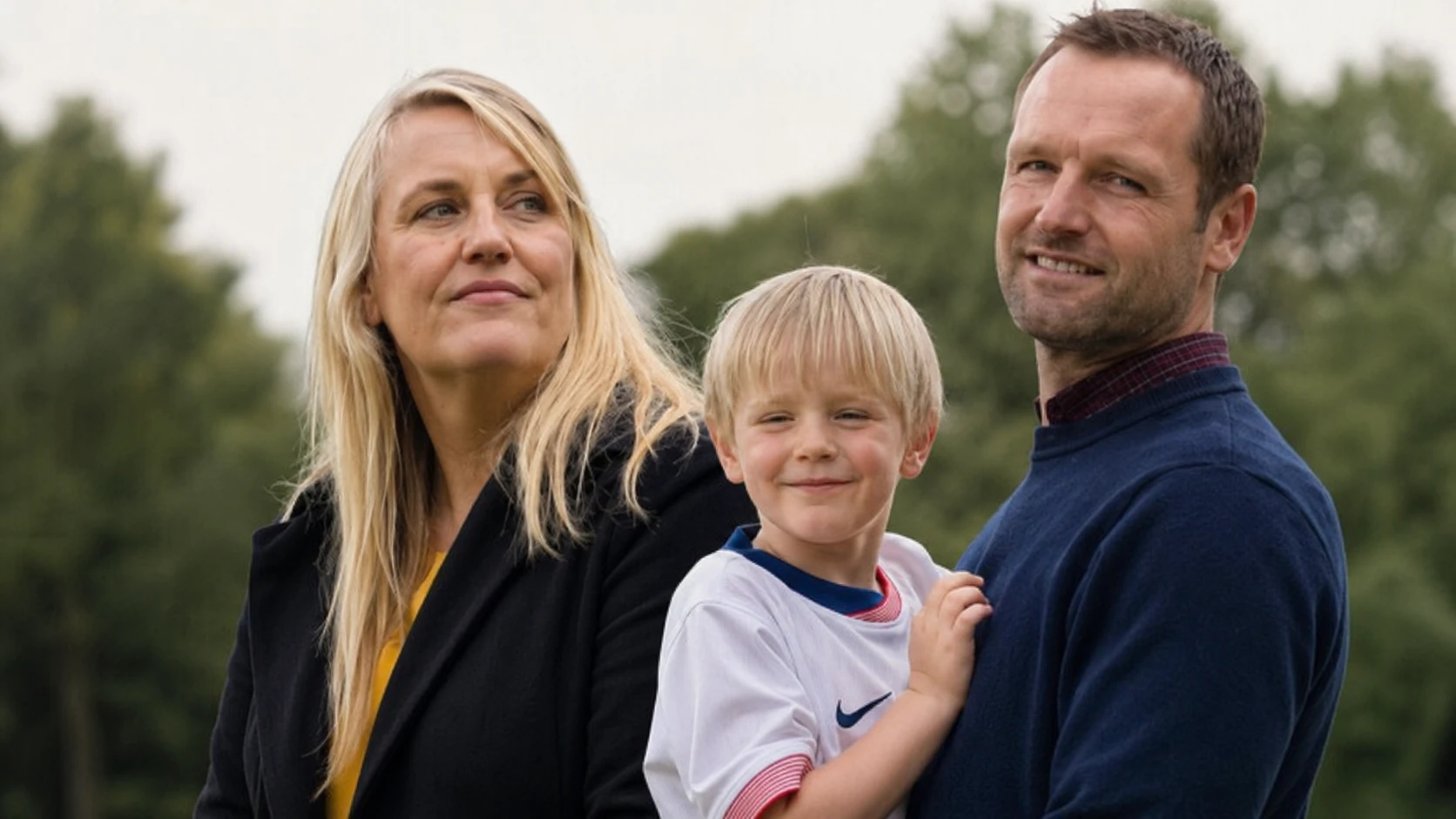
Emma Hayes has spent much of her adult life in dugouts, meeting rooms, training grounds, and press conferences, building teams with the force of someone who sees football not only as a sport but as a calling. She turned Chelsea Women into a dominant side, became one of the most respected managers in world football, and then crossed the Atlantic to take charge of the United States women’s national team. Yet one of the most searched questions about her is not about formations, trophies, or touchline speeches. It is about Emma Hayes’ partner, a part of her life she has kept largely outside public view.
The truthful answer is more careful than many search results suggest. Hayes has not publicly confirmed a spouse, husband, wife, or romantic partner in reliable public records. She is publicly known as the mother of her son, Harry, and she has spoken with unusual honesty about motherhood, grief, health, ambition, and the cost of elite coaching. Her private romantic life, however, remains private, and any responsible biography has to begin by respecting that boundary.
What makes Hayes compelling is not the absence of a named partner but the fullness of the life that is already known. She is a Londoner who found part of her football education in the United States, a coach who built an empire at Chelsea, a mother who made career choices around her child, and a leader whose public voice has often been sharper and more human than the usual managerial script. Her story is about success, but it is also about pressure, loss, work, and the hard discipline of knowing what to share and what to keep for herself.
Who Is Emma Hayes?
Emma Carol Hayes was born on October 18, 1976, in London, England. She grew up in a football culture where the men’s game dominated the public conversation and women’s football still had to fight for space, funding, respect, and visibility. Hayes came of age long before the Women’s Super League became a major product and long before women’s managers were regularly treated as national sporting figures. That background helps explain both her drive and her impatience with small ambitions.
Her playing career was cut short by injury, but the end of one route into football opened another. Hayes studied and coached in the United States, an experience that became central to her professional identity. American women’s soccer gave her access to a system that treated the women’s game with a seriousness that England did not yet consistently offer. That early exposure shaped how she thought about standards, athlete care, recruitment, and the business of building winning environments.
By the time Hayes became Chelsea Women’s manager in 2012, she had already gathered a broad education in the game. She had coached in the college system, worked in club football, and spent time at Arsenal, where she learned from one of the strongest women’s football operations in Europe. Chelsea gave her the chance to create something on her own terms. Over the next 12 years, she would turn that chance into one of the great managerial eras in modern women’s football.
The Truth About Emma Hayes’ Partner
The most accurate answer to the question “Who is Emma Hayes’ partner?” is that she has not publicly confirmed one. There is no reliable public statement from Hayes naming a romantic partner, and major official biographies have focused on her career and her son rather than a spouse or relationship. Some websites have tried to attach names or claims to her private life, but those claims are not backed by the kind of sourcing that should be used in a serious biography. In plain terms, Emma Hayes’ partner is not publicly known.
That does not mean Hayes has invited mystery or speculation. She has simply drawn a line between the parts of her life she discusses and the parts she does not. She has spoken openly about being a mother, about the death of one of her twins during pregnancy, and about how raising her son changed the way she thought about work. She has not, by contrast, made a romantic relationship part of her public identity.
This distinction matters because Hayes is often written about in a way that mixes admiration with curiosity. Readers naturally want to know who supports a figure with such a demanding career, especially someone who has balanced motherhood with elite sport. But support can come from family, friends, colleagues, staff, and private relationships that are not named in public. A careful account does not turn silence into a blank space to fill with rumor.
Motherhood and Her Son Harry

Hayes is the mother of a son named Harry, born in 2018. She had been expecting twins, but Harry’s twin brother, Albie, died before birth, a loss Hayes has spoken about in public with striking clarity. She has described the grief as something that remains with her, not as a dramatic footnote but as a lived experience that changed how she understood love, pain, and perspective. Those comments have made her public story unusually personal for a coach of her stature.
Harry’s arrival came during the middle of Hayes’ Chelsea years, when the club was growing from a strong domestic side into a European heavyweight. She returned to work in a profession that rarely slows down for new parents, especially managers whose schedules are ruled by fixtures, travel, training, recruitment, media, and constant decision-making. Hayes did not hide how hard that balance was. She also did not present motherhood as a softening of ambition, because in her case it seemed to sharpen her sense of what mattered.
Her decision to leave Chelsea was closely tied to her role as a mother. Hayes said she wanted more time with Harry after years of intense commuting and relentless club demands. She had given Chelsea more than a decade of her life, but her son’s childhood was moving quickly, and the job had taken a heavy toll on family time. That honesty made her departure feel less like a standard career move and more like a personal reset.
Early Life in London
Hayes was raised in London in a family environment where football mattered. Her father, Sid, was often mentioned by Hayes as an important presence in her life, and his death deeply affected her during her final Chelsea season. Family has always appeared in her public story less as celebrity detail and more as emotional architecture. It is part of why she speaks about loyalty, standards, and resilience with the force of lived experience.
As a young person, Hayes wanted to play, but injury ended that dream earlier than she would have liked. For many athletes, that kind of loss can create a permanent distance from the game. Hayes moved in the other direction. Coaching became not a consolation prize but a way to remain inside football and eventually shape it more deeply than most players ever get the chance to do.
Her London background also gave her a close view of English football’s old hierarchies. Women and girls who loved the sport often had fewer routes, fewer role models, and fewer institutional supports than boys. Hayes would later become one of the people who changed that reality, not through slogans but by winning. In football, especially in England, success often speaks in a language institutions understand.
The American Education That Shaped Her
Before Hayes became a household name in British football circles, she spent formative years in the United States. She attended college there and worked in American soccer, including in youth, college, and professional settings. That period mattered because the United States had already built a stronger women’s soccer culture than England had at the time. For a young coach, it offered a glimpse of what the women’s game could look like when treated as a serious sporting product.
The American system influenced Hayes’ ideas about athletic development and competitive standards. College soccer demanded organization, recruitment, player management, and a year-round sense of planning. It also exposed her to a culture where female players could be stars in their own right. That experience did not make her less English; it made her more rounded.
When Hayes later returned to the United States as head coach of the USWNT, it was not a first encounter. It was a return to a country that had helped form her coaching mind. That context is easy to miss if her biography is reduced to Chelsea and then America, as if the second chapter came from nowhere. In truth, her career has always had a transatlantic thread.
Building Chelsea Women Into a Power
Hayes took charge of Chelsea Women in 2012, at a time when the club had ambition but not yet the trophy identity it would later carry. The women’s side was still trying to find its place inside a wider football culture that gave most attention, money, and oxygen to the men’s game. Hayes arrived with ideas that went beyond matchday tactics. She wanted better standards, better recruitment, better preparation, and a club that behaved like success was expected.
The early years required patience as much as charisma. Chelsea had to attract talent, professionalize habits, and build belief. Hayes pushed for the details that turn a team into a program: staffing, training quality, analysis, player care, and a winning mentality that could survive pressure. Her gift was not only spotting what a team needed, but persuading people around her that those needs were non-negotiable.
Chelsea became the defining club of Hayes’ career. Under her management, the team won multiple Women’s Super League titles, FA Cups, League Cups, and domestic honors. The club became a standard-setter in England and a recurring contender in Europe. Hayes did not merely coach Chelsea through a successful period; she helped define what success in the modern English women’s game looked like.
A Manager Known for More Than Winning
Hayes’ public image has always rested on more than trophies. She is admired because she can explain football in plain, vivid language, and because she talks about leadership without hiding its emotional weight. In interviews, she can be funny, direct, impatient, generous, wounded, and analytical in the space of a few minutes. That range has made her one of the most compelling voices in the sport.
Her players have often spoken of her standards, and those standards can be demanding. Hayes has built teams around clarity: know your role, accept pressure, prepare properly, and understand that talent without habits will not be enough. She has also shown a strong ability to manage different personalities, from established internationals to younger players learning how to carry expectation. The result has been a career defined by both authority and adaptation.
Hayes’ tactical reputation is equally strong. She has used different shapes and systems across seasons, depending on personnel and opposition. More than any single formation, her teams have often been marked by control, competitive edge, and a capacity to win tight games. She understands football as a game of structure and emotion, and that mix has become part of her signature.
Grief, Health, and Perspective
The public image of Hayes as a relentless winner can hide how much personal strain sat behind some of her greatest seasons. The loss of Albie during pregnancy was one of the deepest wounds she has discussed publicly. She has also spoken about endometriosis and major surgery, experiences that forced her to confront health, pain, and the limits of simply pushing through. These were not side stories; they shaped how she thought about life away from the training pitch.
Her father Sid’s death also came during a demanding period late in her Chelsea tenure. Hayes has described grief and work in a way that many people recognized, because high-pressure jobs rarely pause for private loss. She kept leading, kept managing, and kept facing cameras. But the cost of that kind of endurance became part of the story of why she eventually needed change.
This is where the question of Emma Hayes’ partner can feel too narrow. The more meaningful story is not whether a romantic partner has been named, but how Hayes has built a life around love, loss, work, and responsibility. Her family story is not public in every detail, but what is public shows someone who has carried much more than a trophy count. That makes her success feel less glossy and more human.
Why She Left Chelsea
Hayes announced that she would leave Chelsea at the end of the 2023-24 season, ending one of the most successful managerial runs in the history of women’s club football. The news landed with force because she was not only leaving a job; she was leaving a club she had helped shape in her own image. Chelsea under Hayes had become a machine of domestic success, and her departure marked the end of an era. It was difficult to imagine the club without her voice at the center.
Her explanation was personal as well as professional. She wanted more time with her son, and she had reached a point where the daily burden of club management no longer fit the life she needed. The commute, the schedule, the pressure, and the emotional load had accumulated over many years. Hayes did not frame the decision as a retreat from ambition, but as a choice about how to spend her energy and where to build the next chapter.
That final season had a sense of farewell without softness. Chelsea fought for trophies, dealt with injuries, and carried the emotional tension of knowing Hayes was leaving. She remained fiercely competitive until the end, because stepping away did not mean caring less. If anything, the final months showed how hard it can be to leave something you built, even when leaving is the right decision.
Taking Over the United States Women’s National Team
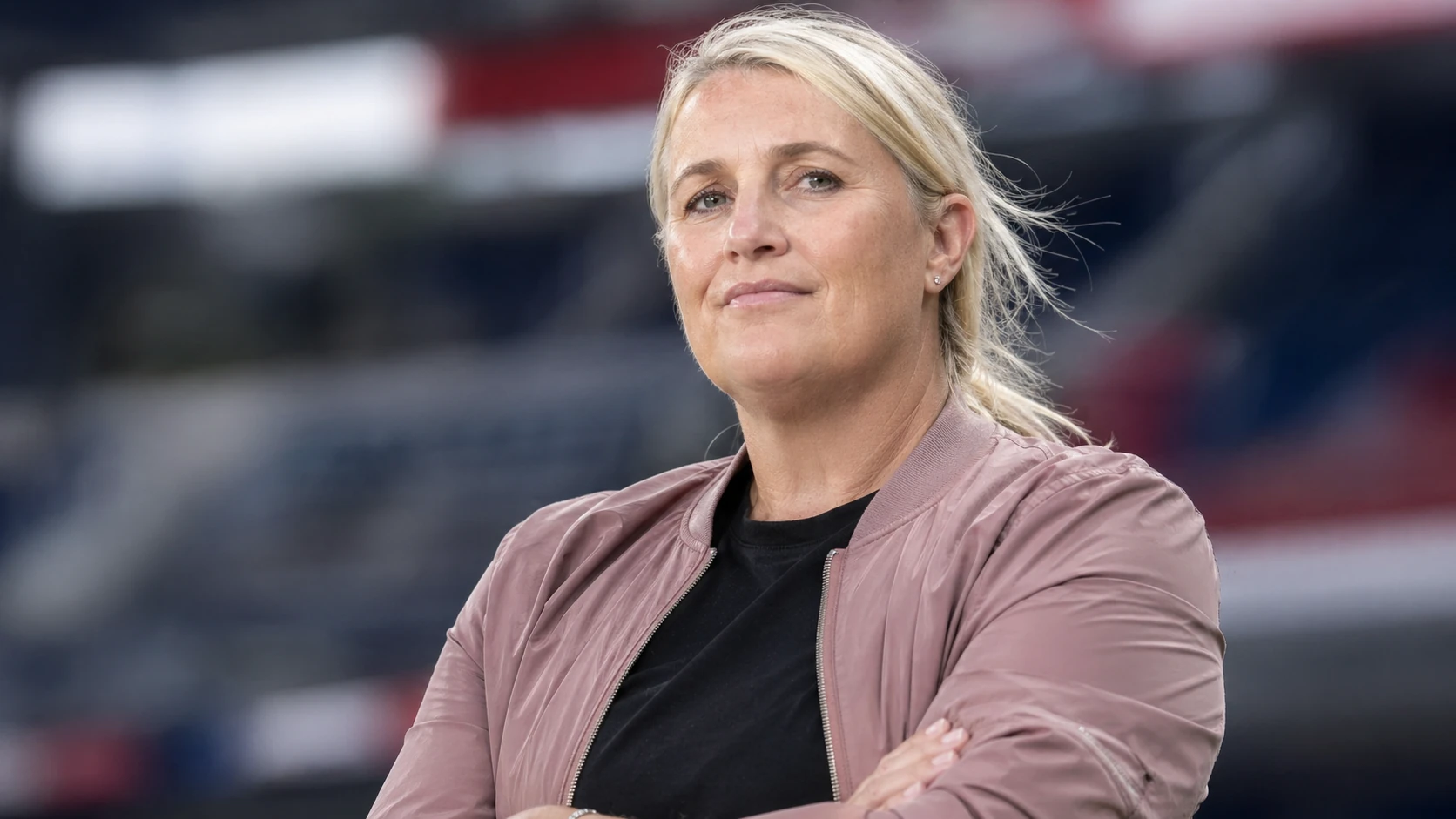
The USWNT job placed Hayes at the center of one of the most demanding roles in world football. The United States is not just another national team in the women’s game; it carries a history of World Cup wins, Olympic medals, cultural prominence, and intense public expectation. After a disappointing 2023 World Cup by American standards, the team needed direction, renewal, and a manager capable of handling pressure. Hayes fit that profile because she had spent years building winners under scrutiny.
Her appointment also made sense because of her American background. She knew the country, the soccer culture, and the strengths and weaknesses of the system. She was not arriving as a tourist with a foreign résumé. She was returning as a coach whose career had been partly shaped by American soccer and who now had the authority to lead its most visible team.
The move changed the rhythm of Hayes’ life. International management carries its own stress, but it does not mirror the constant weekly grind of club football. For a mother who had spoken openly about needing more time with her son, that difference mattered. It offered a way to remain at the top of the sport while reshaping the demands on her family life.
Money, Salary, and Net Worth Estimates
Emma Hayes’ exact net worth is not publicly confirmed, and any figure online should be treated as an estimate. Her income has come mainly from football management, media work, speaking engagements, and related professional opportunities. As one of the highest-profile coaches in women’s football, she has likely earned far more than most managers in the women’s game historically did. Still, responsible reporting should not present a precise net worth as fact without financial records or direct confirmation.
Her USWNT role was widely reported as a major job with a salary reflecting her stature, though exact contractual details are not always fully public. What can be said with confidence is that Hayes moved into one of the most prominent posts in women’s football after becoming one of the most decorated club managers in the sport. Her value is tied not only to wins but also to leadership, recruitment insight, media presence, and institutional credibility. Those qualities matter in modern football, where a coach can shape a federation’s public direction as well as results.
The more important financial story may be the wider one. Hayes’ career has unfolded alongside the growth of women’s football from an underfunded space into a more serious commercial market. She has often been both a beneficiary and a driver of that growth. Her success helped prove that investment in women’s teams could produce elite performance, strong identity, and lasting fan interest.
Public Image and Media Attention
Hayes’ public image is unusually textured for a football manager. She is respected as a winner, but also known as a talker in the best sense: someone who can make an interview feel alive rather than rehearsed. She does not always smooth her edges for public comfort. That directness has sometimes made headlines, but it has also made her feel more real than many figures who speak only in polished phrases.
Her media presence has grown as women’s football has grown. Hayes has worked as a pundit and analyst, where her tactical intelligence and clarity reached audiences beyond Chelsea supporters. She can explain a match without flattening it, and she often treats viewers as smart enough to handle real football detail. That skill has helped make her a trusted voice even for fans who do not follow her teams week by week.
Attention to her private life is part of that broader fame, but it sits uneasily beside her own boundaries. Hayes gives a great deal of herself in public, especially about football and leadership. She has also shared painful personal experiences when she felt they mattered. But she has never made her romantic life a public storyline, and the media should not pretend otherwise.
What Emma Hayes Is Doing Now
Emma Hayes is now best known globally as the head coach of the United States women’s national team. Her task is to guide the program through a new competitive cycle, develop the next generation, and keep the team at the top of international football. The job requires more than picking players and winning matches. It demands cultural management, talent evaluation, tactical planning, and the ability to carry the pressure of a fan base used to success.
Her early work with the USWNT gave her a chance to show that her Chelsea methods could translate to international football. Managing a national team is different from managing a club because time with players is limited and chemistry must be built quickly. Hayes’ strength has always been creating clarity, and that quality is especially useful in short camps and tournament environments. She has to make players understand not only the plan, but the reason behind it.
Away from the touchline, Hayes remains a mother and a public figure who has chosen privacy in key parts of her life. That balance is now central to how people understand her. She is not simply chasing the next trophy; she is shaping a career that allows room for Harry and for a different kind of life after the Chelsea years. That does not make her less driven, but it does make her next chapter feel more sustainable.
Frequently Asked Questions
Who is Emma Hayes’ partner?
Emma Hayes has not publicly confirmed a romantic partner. Reliable public information about her personal life focuses on her son Harry, her family experiences, and her career, rather than a spouse or named partner. Any article that claims to know the identity of Emma Hayes’ partner should be treated carefully unless it provides strong sourcing. The most accurate answer is that her partner is not publicly known.
Is Emma Hayes married?
There is no confirmed public record showing that Emma Hayes is married. She has kept her romantic life private and has not built her public identity around a spouse. That does not prove any specific relationship status, because private life is not the same as public record. It simply means that her marital status should not be stated as fact without confirmation.
Does Emma Hayes have a child?
Yes, Emma Hayes has a son named Harry, who was born in 2018. Hayes has spoken about motherhood and how raising Harry influenced her decision to leave Chelsea after more than a decade. She had been expecting twins, but Harry’s twin brother, Albie, died before birth. Hayes has discussed that loss publicly and has described it as something that remains part of her life.
Why did Emma Hayes leave Chelsea?
Emma Hayes left Chelsea after the 2023-24 season to take charge of the United States women’s national team. Her decision was also shaped by family life, especially her desire to spend more time with her son after years of intense club demands. She had spent 12 years building Chelsea Women into a dominant side, and the job required enormous time and energy. The move allowed her to remain at the top of football while changing the rhythm of her daily life.
What is Emma Hayes’ net worth?
Emma Hayes’ exact net worth is not publicly confirmed. Online estimates vary, and many are not based on verified financial records. Her earnings likely come from football management, media work, speaking, and other professional roles connected to her status in the sport. The safest way to describe her finances is to say she is one of the most prominent and likely best-paid figures in women’s football coaching, without claiming a precise figure.
What teams has Emma Hayes coached?
Emma Hayes is best known for managing Chelsea Women from 2012 to 2024. Before that, she gained experience in the United States and worked in different coaching roles, including college and professional environments. She also worked at Arsenal earlier in her career, which added to her education in elite women’s football. She is now the head coach of the United States women’s national team.
Why is Emma Hayes so respected?
Emma Hayes is respected because she has combined sustained winning with clear leadership and a major influence on the growth of women’s football. At Chelsea, she built a team that became the dominant force in England and a serious European contender. She is also admired for speaking honestly about motherhood, grief, health, and the pressures of coaching. That mix of success and candor has made her one of the defining figures of her generation.
Conclusion
The search for “emma hayes partner” leads to a simple but revealing truth. Emma Hayes has not publicly confirmed a partner, and her romantic life remains private. What she has shared is more than enough to understand the person behind the trophies: a mother, a grieving parent, a daughter, a leader, and a coach who has carried extraordinary pressure with rare honesty.
Her life story resists the easy shape of a celebrity biography. There is no public romance narrative at the center, no carefully packaged domestic image, and no need to invent one. The real story is a football life built across London and the United States, shaped by ambition, loss, work, and a fierce belief in standards. Hayes has made her mark not by inviting the public into every room, but by changing what women’s football could demand of the world.
That privacy is not a gap in the record; it is part of the record. Hayes has chosen what to share, and the public can learn from the parts she has offered without claiming ownership over the parts she has not. As she leads the USWNT and raises her son, her legacy is still being written in results, relationships, and the wider expectations she has helped raise. The most respectful way to follow her story is to stay close to the facts and let the private life remain hers.
