


Charlie Peters became a familiar name to many British viewers not through celebrity interviews or Westminster gossip, but through one of the most painful and contested public-interest stories in modern Britain. As a journalist and presenter with GB News Investigates, he built his profile around long-form reporting on grooming gangs, institutional failure, policing, culture, and public accountability. His work has placed him in the middle of a fierce national argument about victims, race, media silence, and the responsibility of journalists to keep asking hard questions.
For readers searching his name, the first challenge is often basic identification. Charlie Peters is not Charles Peters, the late American editor who founded Washington Monthly, and he is not the American screenwriter whose credits include studio comedies. The Charlie Peters most people now mean is the London-based British journalist whose public image has been shaped by GB News, investigative documentaries, and a persistent focus on stories he believes have been mishandled or avoided by larger institutions.
Early Life and Family
Publicly verified information about Charlie Peters’ early life is limited. Unlike many broadcasters who arrive with long institutional biographies, Peters has kept most details about his childhood, parents, siblings, and private family background outside the public record. That absence matters because online searches often produce confident claims about age, relatives, and personal history that are not supported by reliable public sources.
What is publicly clear is that Peters is based in London and has built his professional identity around British journalism, politics, security, and culture. Several public profiles describe him as a writer, broadcaster, journalist, and security-focused commentator. Those descriptions give a clearer picture of his public interests than of his private upbringing.
There is no verified public date of birth for Peters in the strongest professional sources available. Because of that, any exact age should be treated carefully unless Peters or a reliable primary source confirms it. For a working journalist whose public reputation rests on reporting, not celebrity, that privacy is neither unusual nor especially mysterious.
Education and Early Interests
Peters’ public biographies do not provide a full education timeline, and no reliable source clearly confirms his schools or university background. What can be said with confidence is that his career developed across writing, broadcasting, and commentary before his best-known work with GB News. His published interests suggest early professional attention to security, state failure, political identity, and the way institutions respond when public trust breaks down.
Before becoming closely associated with GB News Investigates, Peters wrote and appeared across a range of media spaces. Professional listings connect him with outlets and platforms including GB News, the Daily Mail, The Telegraph, Arab News, The Spectator, and The Critic. That pattern points to a journalist comfortable working between print, broadcast, opinion-led platforms, and news-driven investigations.
His early ambitions appear to have formed around serious, sometimes uncomfortable subjects rather than conventional lifestyle or entertainment journalism. Peters’ bylines and media appearances show recurring interest in criminal justice, extremism, public order, national identity, and political culture. That combination later became central to the kind of reporting that made his name more widely known.
Building a Career in Journalism
Charlie Peters’ journalism career has not followed the older route of quiet newsroom apprenticeship, local-paper seniority, and gradual movement into national television. He emerged in a media environment where writers can move between freelance essays, broadcast panels, digital video, documentaries, and social media clips. That kind of career can build quickly, but it also exposes a journalist to public scrutiny much earlier than traditional reporting paths once did.
His work before GB News helped define him as a commentator on security and politics. The Spectator has described him as a writer, journalist, and security specialist from London, while The Critic has presented him as a writer and broadcaster focused on politics, security, and culture. Those labels are useful because they show Peters did not arrive at investigative broadcasting as a general presenter looking for a beat.
The GB News platform gave Peters a wider audience and a clearer public role. At the channel, he became associated with GB News Investigates, the unit used for longer investigations, documentaries, and stories the broadcaster frames as underreported. That placement helped separate him from purely opinion-based presenters, even as the channel itself often blends news, commentary, campaigning language, and audience-driven debate.
GB News and the Rise of a Public Profile
GB News has been central to Charlie Peters’ public rise. The channel presents itself as a challenger to older British broadcasters and says it wants to cover voices and stories it believes are overlooked. Peters’ reporting fits that brand because it often concentrates on subjects where supporters argue that institutions, including media institutions, have been slow or reluctant to act.
For Peters, GB News offered both reach and risk. It gave him a national television platform, editorial backing for long-form investigations, and an audience that was receptive to his framing of institutional failure. It also tied his public reputation to a broadcaster that has faced heavy political criticism and regulatory scrutiny, which means some viewers assess his work through their opinion of the channel before considering the reporting itself.
That tension has shaped how Peters is discussed. Supporters often see him as a serious reporter who kept pressure on a story involving abused children and failed public bodies. Critics often question whether GB News’ broader style can separate investigation from political messaging with enough care. The truth is that both reactions explain why Peters has become a visible and debated figure rather than a conventional television correspondent.
The Grooming Gangs Reporting That Defined Him
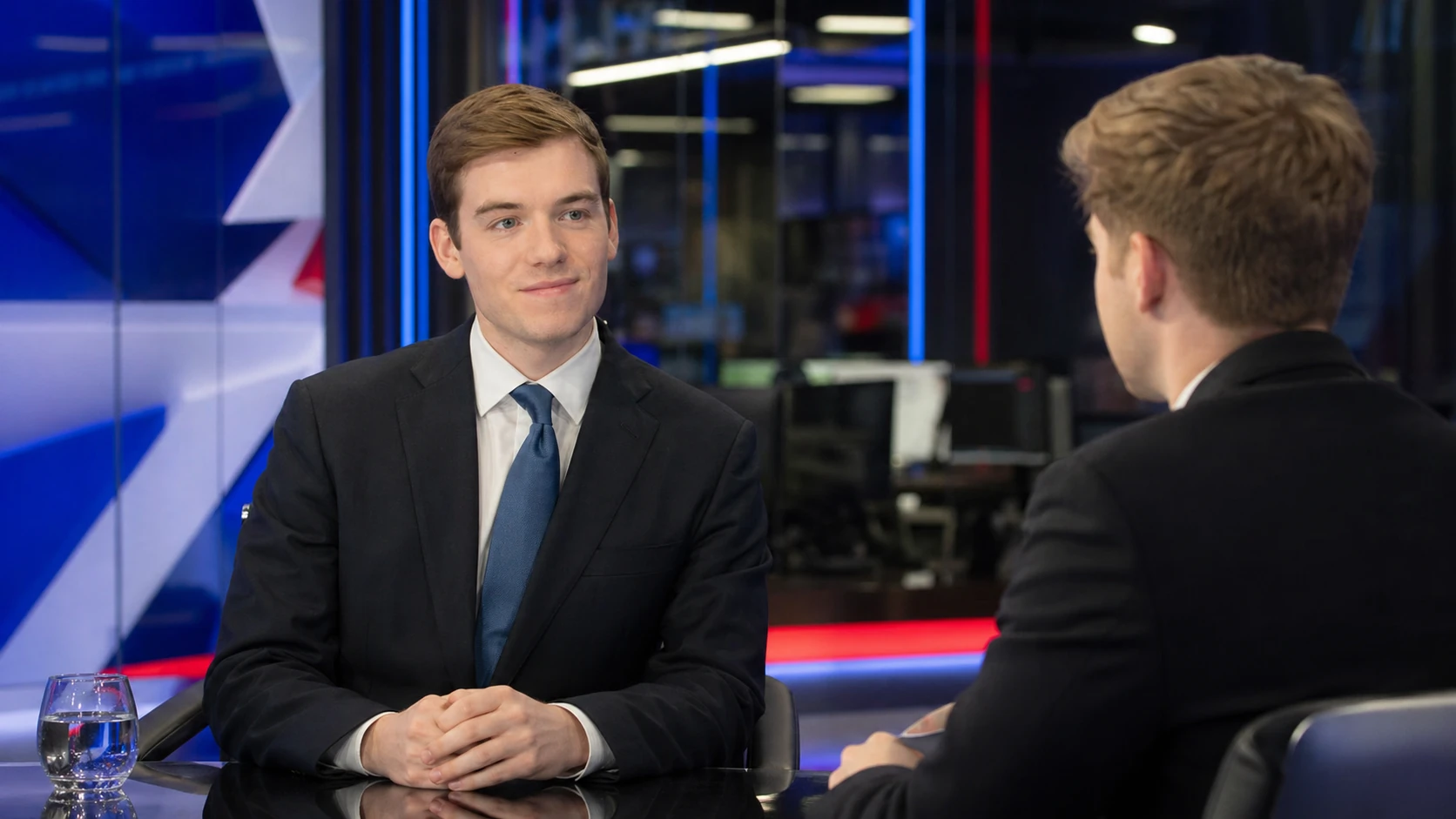
The subject most closely associated with Charlie Peters is Britain’s grooming gangs scandal. His GB News documentary Grooming Gangs: Britain’s Shame brought survivor testimony, whistleblower claims, and institutional criticism to a wider broadcast audience. The programme became the defining work of his public career and the reason many people first searched his name.
The scandal itself long predates Peters’ documentary. Official inquiries, court cases, survivor accounts, local reporting, and parliamentary attention had already exposed severe failures in towns and cities including Rotherham, Rochdale, Telford, Oldham, and others. Peters’ role was not to uncover the entire scandal from nothing, but to keep returning to it at a time when many viewers believed the issue had still not been fully confronted.
His reporting took a firm line on accountability. It focused on victims who said they had been ignored, authorities accused of failing to act, and the question of whether fear of racial or cultural sensitivity had distorted safeguarding decisions. That made the work powerful to many viewers, but also placed it in one of the most sensitive areas of British public debate.
Why the Story Resonated
The grooming gangs story resonates because it involves failures that are almost impossible to excuse. Children were abused, warning signs were missed, and public bodies in several areas were later accused of defensiveness, poor coordination, weak data, or a lack of urgency. For survivors and families, the issue was never abstract; it was about lives damaged while adults with authority looked away or acted too late.
Peters’ reporting gained attention because it spoke to public distrust in institutions. Many viewers felt that official language had become a way of avoiding moral clarity, especially where race, religion, policing, and local politics intersected. His documentaries and interviews offered a sharper, more direct vocabulary for that anger.
But here’s the thing. A story this serious requires both courage and discipline from journalists. It is possible to expose institutional failure while still being careful about evidence, offender profiles, victim profiles, and the limits of available data. Peters’ reputation rests largely on whether audiences believe he has managed that balance.
Awards, Recognition, and Industry Standing
Charlie Peters’ profile grew further when he won the News Presenter category at the 2025 TRIC Awards. The award placed him alongside and ahead of far more established broadcast names in public attention. Because the TRIC Awards are strongly audience-driven, the win also showed that Peters had developed a loyal viewer base beyond routine channel recognition.
He was also shortlisted for Journalist of the Year Broadcast at the 2025 Media Freedom Awards. That recognition placed him in a field with major national and international broadcasters, including journalists from Sky News, Channel 4, and the BBC. For a reporter associated with a relatively young and politically disputed channel, the shortlist signaled that his work had reached beyond GB News’ core audience.
Earlier in his career, Peters was named among finalists for an up-and-coming broadcast journalism award connected with the Pagefield Press Awards. That kind of early recognition matters because it shows that his rise was not only the result of one viral documentary or one political moment. His career had already been noticed by people watching newer broadcast talent.
Public Image and Media Style
Peters’ public image is serious, forceful, and sometimes combative. He tends to present himself less as a neutral studio narrator and more as a reporter pursuing answers on behalf of people who feel ignored. That style has helped him connect with viewers who want journalism to challenge official lines rather than simply report them.
His tone also reflects the media age in which he works. Clips from interviews and documentaries now circulate as arguments in themselves, cut into social media segments that can travel far beyond the original broadcast. Peters’ work is often consumed by people who may never watch a full GB News programme but encounter him through short, pointed clips.
That can intensify both praise and criticism. Supporters see urgency, moral focus, and persistence. Detractors may see campaigning or a lack of distance from the story. Peters’ challenge, like that of many modern broadcast journalists, is that public trust now depends not only on what he reports but on how his work is framed, shared, and interpreted.
Controversy and Criticism
Any biography of Charlie Peters has to address controversy carefully. He is controversial not because of a scandal in his private life, but because of the subjects he reports on and the broadcaster with which he is associated. GB News has been praised by supporters as a corrective to legacy media, while critics have accused it of blurring the line between journalism and political advocacy.
The channel has also faced regulatory scrutiny from Ofcom, including decisions involving due impartiality in certain programmes. Some of those cases became legally complex, and GB News has challenged regulatory findings in court. While those disputes do not all concern Peters personally, they form part of the environment in which his journalism is judged.
Criticism of Peters’ grooming gangs work often centers on framing. Some readers worry that coverage of offender ethnicity can be mishandled or exploited by people with racist motives. Others argue that avoiding such facts, where relevant and evidenced, is itself a form of institutional failure. Peters’ public position is clear: he believes the story demands direct reporting, even when it is uncomfortable.
Personal Life, Marriage, and Children
Charlie Peters has not made his personal life a major part of his public identity. There is no strong public evidence confirming a spouse, partner, children, or detailed family circumstances. Because of that, responsible biography should not fill the gap with guesses or claims from weak online profiles.
This privacy is consistent with his professional role. Peters is a journalist who covers public institutions, crime, politics, and culture, not an entertainer whose personal life is part of the product being sold. Readers may be curious, but curiosity does not turn unverified material into fact.
What can be said is that Peters’ public persona is shaped far more by work than by lifestyle. His appearances, writing, and documentaries give little emphasis to domestic biography. That makes him different from many television figures whose careers are accompanied by public stories about relationships, homes, wealth, and family life.
Net Worth and Income Sources
There is no credible public estimate of Charlie Peters’ net worth. Online figures attached to working journalists are often speculative, recycled, and unsupported by financial records. In Peters’ case, no reliable source confirms his salary, assets, property holdings, investments, or private business income.
His known income sources are likely tied to journalism and broadcasting. That would include work connected with GB News, freelance writing, presenting, speaking or media appearances if paid, and other journalism-related projects. Without contracts, accounts, or direct disclosure, any exact number would be guesswork.
This is an area where restraint is more useful than false precision. Peters is a public journalist with a growing profile, but he is not known as a celebrity entrepreneur or media mogul. The safest conclusion is that his financial life remains private and that published net worth claims should be treated with caution unless supported by strong evidence.
Professional Strengths and Limitations
Peters’ clearest professional strength is persistence on a defined beat. Many journalists touch a difficult subject once and move on when the news cycle shifts. Peters has built much of his public reputation by returning to one issue repeatedly and linking individual testimony to wider questions about institutions.
Another strength is his ability to translate complex official failure into accessible broadcast storytelling. The grooming gangs scandal involves police data, local authority decisions, court records, inquiry findings, survivor testimony, and political dispute. Peters’ work has reached viewers because it turns those layers into a clear moral question: who failed vulnerable children, and why?
The limitation is that strong moral clarity can create its own pressure. A journalist who becomes identified with a cause must work especially hard to show fairness, precision, and independence from audience expectation. Peters’ future reputation will depend not only on the seriousness of the stories he chooses, but on how rigorously he handles evidence as those stories develop.
Where Charlie Peters Is Now

Charlie Peters remains associated with GB News as a reporter and presenter, especially through GB News Investigates. His work continues to sit at the intersection of investigative reporting, public accountability, politics, and culture. The grooming gangs inquiry and related policy debates are likely to keep his core subject area in the national conversation for some time.
His current status is that of a rising but still polarizing broadcast journalist. He has won audience recognition, earned industry shortlisting, and become closely linked with one of Britain’s most charged public-interest stories. At the same time, his association with GB News means his work is often discussed inside broader arguments about media trust, impartiality, and political framing.
The next stage of his career will likely test whether he can expand beyond the story that made him widely known. Many journalists become defined by one investigation, especially if it brings awards and public attention. Peters’ challenge is to use that recognition without becoming trapped by it.
Frequently Asked Questions
Who is Charlie Peters?
Charlie Peters is a British journalist, broadcaster, and presenter best known for his work with GB News Investigates. He is strongly associated with reporting on Britain’s grooming gangs scandal, public institutions, policing, security, and political culture. His public profile grew through documentaries, broadcast reports, and commentary connected to GB News.
What is Charlie Peters famous for?
He is best known for presenting and reporting Grooming Gangs: Britain’s Shame, a GB News documentary about child sexual exploitation and institutional failure. The programme helped make him a recognizable figure among viewers following the grooming gangs debate. His continued reporting on the issue has remained central to his public identity.
Does Charlie Peters work for GB News?
Yes, Charlie Peters is publicly associated with GB News as a reporter and presenter. He works with GB News Investigates, the channel’s investigative strand, and has also appeared in presenting roles. His reporting and commentary are closely linked with the broadcaster’s public-interest and accountability-focused output.
Is Charlie Peters married?
There is no reliable public confirmation of Charlie Peters’ marital status. He has not made a spouse, partner, or children part of his public biography in the strongest available professional sources. Any claim about his marriage or family life should be treated carefully unless confirmed by Peters or a reliable source.
How old is Charlie Peters?
Charlie Peters’ exact age is not clearly confirmed in reliable public professional sources. Some online pages may suggest ages or dates of birth, but those claims are not consistently supported by primary evidence. A careful biography should avoid giving an exact age without verification.
What is Charlie Peters’ net worth?
There is no credible confirmed net worth figure for Charlie Peters. His likely income sources are journalism, broadcasting, writing, and related media work, but his salary and assets have not been publicly verified. Online net worth estimates for journalists should be treated as speculation unless backed by strong reporting.
Is Charlie Peters the same as Charles Peters?
No, Charlie Peters the GB News journalist is not the same person as Charles Peters, the late American editor and founder of Washington Monthly. They are separate public figures from different countries and generations. The shared name causes search confusion, but their careers are unrelated.
Conclusion
Charlie Peters’ biography is still being written in public. He is not a decades-long household name with a neatly settled legacy, but a journalist whose reputation has grown quickly around a painful national story. That makes his career unusually current, and it explains why readers search for him with both curiosity and caution.
What stands out most is his choice of subject matter. Peters has attached his name to stories about abuse, silence, and institutional failure rather than safer routes to media visibility. Whether one admires or questions his style, his work reflects a public appetite for journalism that presses authorities long after official statements have moved on.
The more difficult truth is that visibility brings responsibility. A reporter covering damaged lives and explosive public questions has to keep returning to evidence, not only emotion. For Charlie Peters, the measure of the years ahead will be whether his reporting continues to serve the people at the center of the story: victims, families, and the public that still wants honest answers.
