

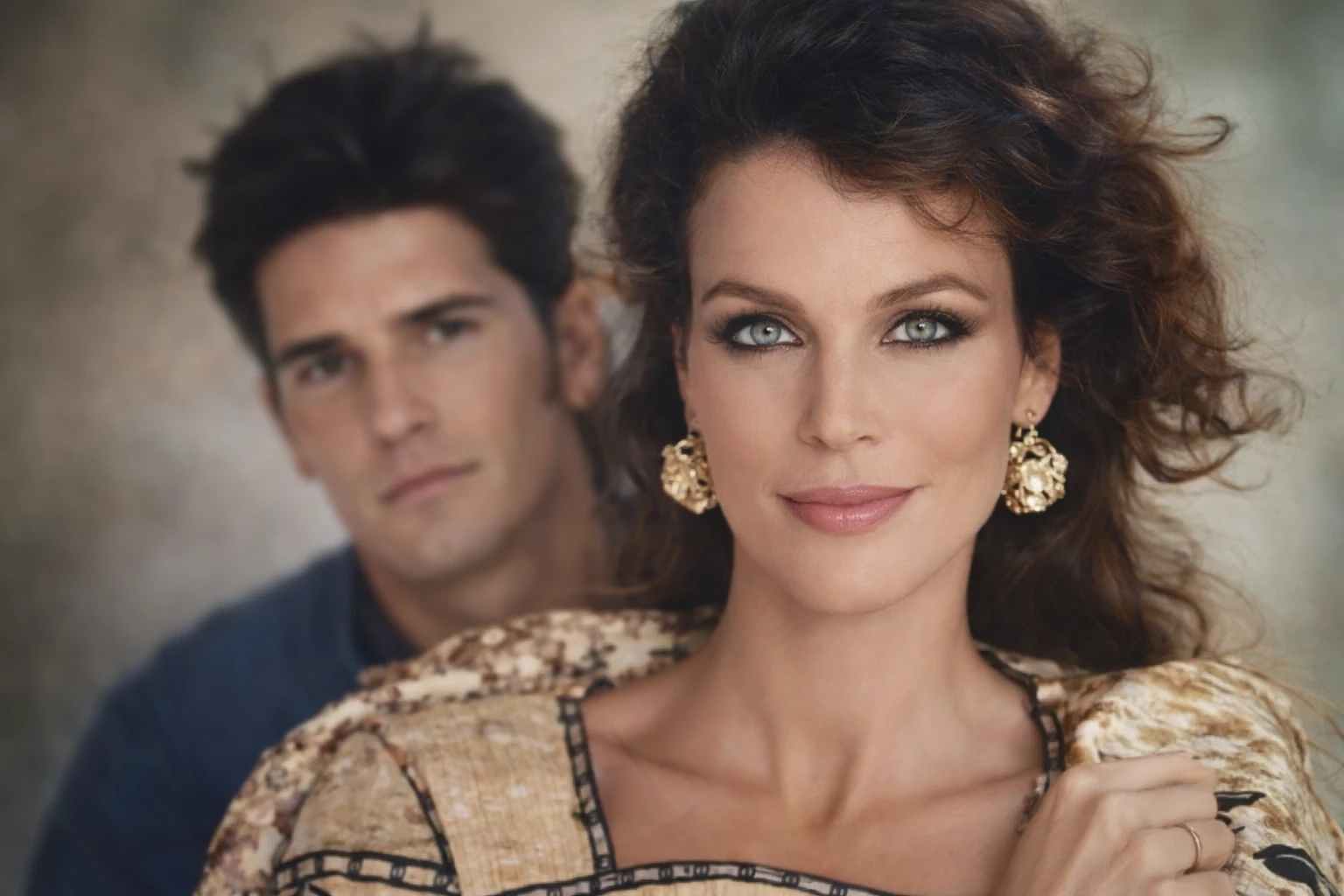
Valerie C. Robinson has spent much of her life in a place that feels almost out of step with modern celebrity: visible enough to be remembered, but private enough to remain largely undefined. For decades, she has been most commonly identified in relation to her husband, former actor Michael Schoeffling, yet that shorthand obscures a fuller story. Before she stepped away from public attention, Robinson built her own career as an actress and model, moving through television and film during the late 1970s and 1980s. The record is not expansive, but it is real—and it offers a clearer picture than the recycled summaries that tend to follow her name online.
Her story is, in many ways, about the choice to retreat rather than chase recognition. That decision, made alongside Schoeffling as his own acting career faded, has shaped how little is definitively known today. Still, enough details exist to trace her path: from early creative ambitions to a working career in entertainment, to a long marriage that has quietly endured outside Hollywood’s glare.
Early Life and Family Background
The earliest chapter of Valerie C. Robinson’s life is also the least documented, and that absence has led to years of conflicting claims. Different online sources assign her to different birthplaces and even different decades, with some placing her birth in New York and others in Pennsylvania or California. None of these accounts are supported by a clear, authoritative public record, and Robinson herself has never publicly clarified the details.
What can be said with more confidence is that she came of age during a period when modeling and acting were often closely linked, especially in New York City. The late 1970s and early 1980s saw a steady crossover between fashion work and television casting, and Robinson appears to have entered that world at a time when both industries were expanding. The environment would have offered access to auditions, agency representation, and industry connections that helped launch many early careers.
Her upbringing, though largely private, likely played a role in shaping her later preference for a quieter life. People who knew her professionally have described her as grounded and focused, someone who worked within the industry without embracing its more performative aspects. That tone would later define how she navigated public attention.
Modeling Career and Entry into Acting
Robinson’s earliest documented work places her within the modeling scene of the early 1980s. One of the clearest markers is her appearance in Model (1981), a documentary by Frederick Wiseman that explored the inner workings of the fashion industry. While her role was not central, her presence in the film situates her within a legitimate professional circle rather than the vague “model” label often assigned without evidence.
That modeling background opened the door to acting opportunities, which at the time often came through television roles and small film parts. Casting directors frequently looked to models for on-screen work, especially for supporting roles that required a certain presence more than extensive acting experience. Robinson transitioned into this space with a handful of credits that reflect the typical trajectory of the era.
Her early acting work includes a role in the television movie Having Babies II (1977), where she was credited under the name Valerie Robinson. While the part itself was not widely known, it marked her entry into professional acting. From there, she continued to take on roles that, while modest, established her as a working performer rather than a one-time participant.
Film and Television Work in the 1980s
The bulk of Valerie C. Robinson’s acting career unfolded during the 1980s, a period when she appeared in both television and film projects under variations of her name, including Valerie Robinson and Valerie C. Robinson. Her credits reflect the kind of steady, mid-level work that defined many careers in that era—roles that supported larger productions without necessarily drawing headline attention.
Among her more recognizable appearances is Over the Brooklyn Bridge (1984), a comedy film in which she played a small role. She also appeared in Lottery! (1983–1984), a television series that ran for two seasons and featured episodic stories centered on lottery winners. In addition, she had a part in One Shoe Makes It Murder (1982), a television movie, and later appeared in Patty Hearst (1988), directed by Paul Schrader.
The Patty Hearst credit stands out because it is confirmed by the American Film Institute’s catalog, which lists her as “1st female” under the name Valerie C. Robinson. While the role itself was brief, the project placed her within a serious, historically based film that attracted critical attention. It remains one of the most concrete entries in her filmography.
Her acting career did not follow the arc of a breakout star, but it also did not fade immediately. Instead, it reflected the experience of many performers who worked consistently without reaching the level of widespread recognition. That kind of career is often overlooked in hindsight, yet it forms the backbone of the industry.
The Connection to Michael Schoeffling
Valerie C. Robinson’s name is most frequently searched today because of her marriage to Michael Schoeffling, the actor best known for playing Jake Ryan in the 1984 film Sixteen Candles. Their relationship began in the early 1980s, reportedly when both were working in the modeling industry in New York. The timing places their meeting during a period when Schoeffling was beginning to gain attention as an actor, while Robinson was establishing herself professionally.
They married in 1987, a point at which Schoeffling’s career was still active but approaching its end. Within a few years, he would step away from acting entirely, leaving Hollywood behind in a move that surprised many at the time. Robinson made the same transition, and the couple settled into a private life far removed from the industry.
Their marriage has endured for decades, a rarity in both Hollywood and its periphery. Together, they have two children, Scarlett and Zane Schoeffling. Scarlett has followed a path that echoes both of her parents’ early careers, working as a model and actress, while Zane has remained largely out of the public eye.
A Deliberate Exit from Hollywood
The decision to leave the entertainment industry appears to have been intentional rather than forced. While neither Robinson nor Schoeffling has offered a detailed public explanation, the available information suggests a preference for stability and privacy over continued exposure.
After leaving acting, Schoeffling reportedly built a career as a carpenter and furniture maker in Pennsylvania, a significant shift from his earlier life in film. Robinson’s role during this period has been less publicly defined, but she has been consistently described as part of a family-centered lifestyle that prioritized normalcy over celebrity.
That choice has had lasting consequences for how Robinson is perceived. In the absence of interviews or public appearances, her story has been told largely through secondhand accounts and media features focused on her husband or daughter. The result is a public image shaped more by association than by direct narrative.
Public Image and Media Portrayal
Valerie C. Robinson occupies a curious position in popular culture. She is not widely recognized as an individual figure, yet she remains a subject of ongoing interest. Much of that interest stems from nostalgia for Sixteen Candles and the enduring fascination with actors who leave the spotlight at the height of their visibility.
Media coverage of Robinson tends to frame her as part of a larger story—often as “Michael Schoeffling’s wife” or “Scarlett Schoeffling’s mother.” While those roles are accurate, they do not fully capture her own professional history. The tendency to reduce her identity in this way reflects a broader pattern in how women connected to public figures are often portrayed.
What stands out, however, is the consistency of her privacy. Unlike many former actors, Robinson has not reemerged through interviews, social media, or retrospective appearances. That absence has created space for speculation, but it has also preserved a degree of control over her personal life that is increasingly rare.
Later Creative Work and Ongoing Activity
There is some evidence that Valerie C. Robinson, also known as Valerie Carpenter Bernstein, has remained connected to creative work in more recent years. Film and theater listings suggest involvement in projects such as Awful (2018) and Margaret the Brave, indicating that her engagement with performance may not have ended entirely.
In addition, theater-company biographies describe her as an actress with experience across stage, film, and television. These references are less widely known than her earlier credits, but they complicate the narrative that she fully retired from the arts. Instead, they point to a quieter continuation of creative activity outside the mainstream spotlight.
The lack of detailed reporting on this phase of her life makes it difficult to draw firm conclusions. Still, the available information suggests that Robinson’s relationship with acting has been more fluid than commonly assumed, shaped by personal choice rather than external pressure.
Financial Standing and Net Worth
Reliable information about Valerie C. Robinson’s finances is limited, and most widely circulated figures should be treated with caution. Estimates of her net worth vary significantly across online sources, often without clear sourcing or explanation.
What can be inferred is that her financial position is closely tied to her family’s long-term stability rather than to ongoing public work. Michael Schoeffling’s post-acting career in carpentry and furniture making has been described as successful, and the couple’s decades-long lifestyle outside Hollywood suggests a level of financial security.
Without verified figures, it is more accurate to describe Robinson’s financial standing as private and stable rather than to assign a specific number. This approach aligns with the broader pattern of her life, which has consistently resisted public quantification.
Where Valerie C. Robinson Is Now
As of the most recent available information, Valerie C. Robinson continues to live a private life with her family, largely outside the reach of media attention. Pennsylvania is frequently cited as the family’s home base, though specific details are not publicly confirmed.
Her presence in the public conversation today is largely indirect, resurfacing through articles about Michael Schoeffling or updates on Scarlett Schoeffling’s career. This pattern reflects the enduring interest in the family, even as they maintain distance from the industry that first brought them into view.
What remains clear is that Robinson has successfully maintained a boundary between her public past and her private present. That boundary has shaped not only how she lives, but also how she is remembered.
Frequently Asked Questions
Who is Valerie C. Robinson?
Valerie C. Robinson is a former actress and model best known for her connection to actor Michael Schoeffling. She worked in television and film during the late 1970s and 1980s and later stepped away from the entertainment industry. Her career includes roles in projects such as Over the Brooklyn Bridge and Patty Hearst.
Is Valerie C. Robinson still acting?
There is some indication that she has remained involved in creative work, particularly through theater and smaller film projects. However, she has not maintained a visible presence in mainstream film or television. Most public attention focuses on her earlier career and her family life.
How did Valerie C. Robinson meet Michael Schoeffling?
They reportedly met in the early 1980s while both were working as models in New York. Their relationship developed during a time when Schoeffling was beginning his acting career, and they married in 1987. Their shared background in modeling likely brought them into the same professional circles.
Does Valerie C. Robinson have children?
Yes, she has two children with Michael Schoeffling: Scarlett and Zane. Scarlett Schoeffling has pursued a career in modeling and acting, while Zane has remained largely private. The family has maintained a low public profile over the years.
What is Valerie C. Robinson’s net worth?
There is no confirmed public figure for her net worth. Estimates vary widely and are not supported by reliable sources. It is more accurate to say that her financial situation is private and likely tied to her family’s long-term stability rather than public earnings.
Why is there confusion about Valerie C. Robinson online?
Confusion arises from conflicting biographical details and the existence of multiple individuals with the same name. In addition, many online profiles rely on unverified information, leading to inconsistencies in basic facts such as her birthplace and age. Careful sourcing is needed to separate confirmed details from speculation.
Conclusion
Valerie C. Robinson’s life does not follow the usual arc of celebrity biography. There is no dramatic rise, no public reinvention, and no steady stream of interviews to fill in the gaps. Instead, there is a quieter narrative shaped by work, relationships, and a conscious step away from the spotlight.
Her career in acting and modeling may have been modest in scale, but it was part of a real professional path, one that intersected with a changing entertainment industry. That history deserves recognition on its own terms, rather than as a footnote to someone else’s fame.
What stands out most, though, is the consistency of her choices. In an era when visibility is often treated as a measure of success, Robinson’s life offers a different perspective. She remains known, but not exposed, remembered, but not fully defined.
That balance is rare, and it may be the most enduring part of her story.
