

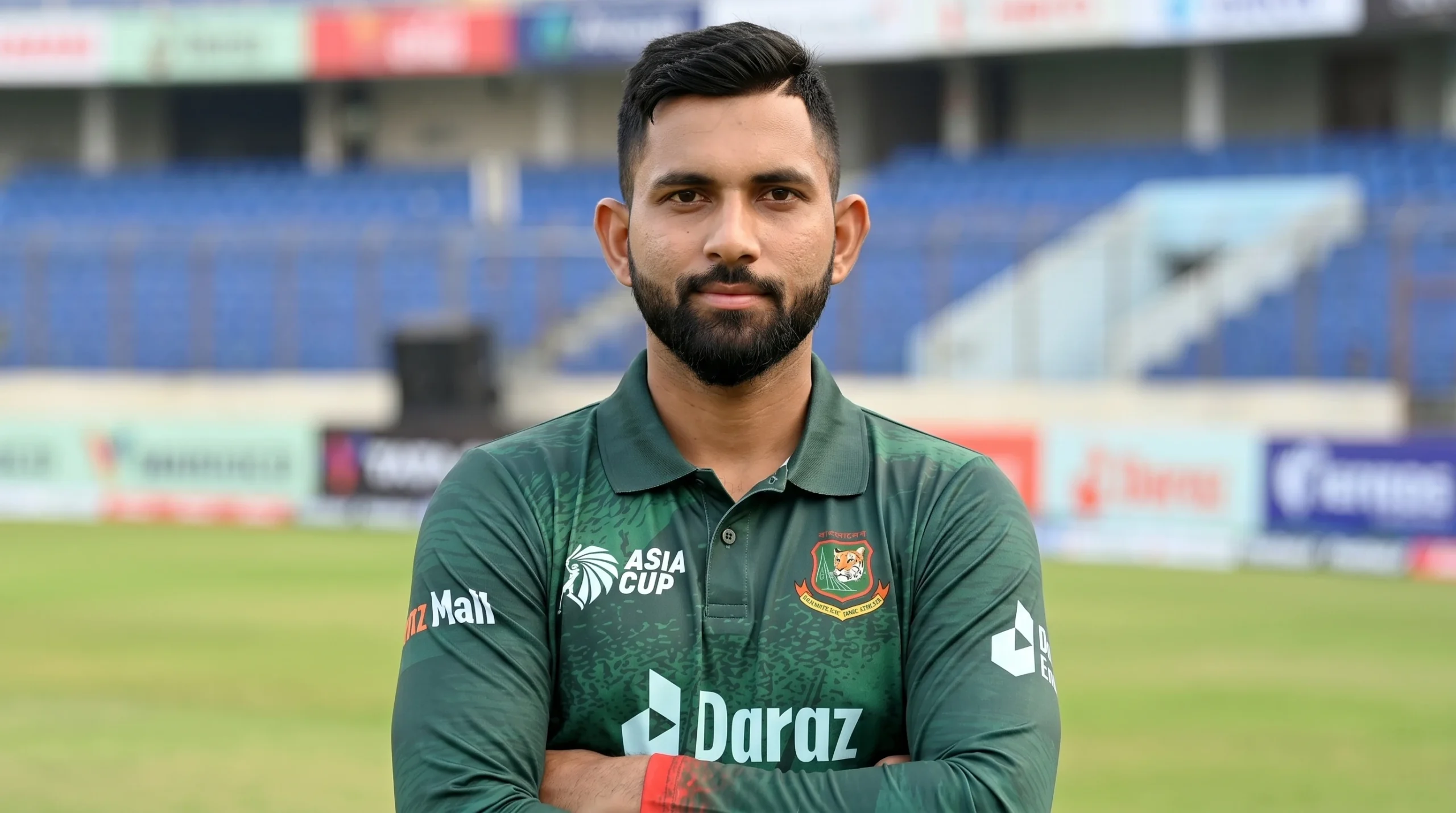
Shamim Hossain’s name carries two stories at once. To many Bangladesh cricket followers, he is part of the Under-19 generation that gave the country one of its proudest sporting moments in 2020. To selectors and fans watching the senior side, he remains a left-handed white-ball batter still trying to turn promise into permanence.
Born Shamim Hossain Patwary on September 2, 2000, in Chandpur, Bangladesh, he grew up far from the polished stage of international cricket. His public identity has been shaped less by celebrity and more by a specific cricketing need: Bangladesh’s long search for a reliable lower-middle-order hitter. That search has made Shamim both interesting and closely judged.
Early Life and Family Background
Shamim was born in Chandpur, a river district in southeastern Bangladesh known more for trade, fishing, and local community life than for producing global sports stars. Publicly available information about his parents, siblings, and private family life remains limited. That privacy is worth respecting, especially because Shamim’s profile has developed through cricket rather than personal publicity.
What is clear is that cricket became the route through which he left a local identity and entered a national one. Like many young Bangladeshi players, he came through a system where school cricket, age-group competition, and domestic opportunity matter deeply. His pathway reflects the way Bangladesh has tried to turn raw regional talent into structured professional players.
Education and Cricket Training
Shamim is associated with Bangladesh Krira Shikkha Protisthan, widely known as BKSP, the country’s best-known sports education institution. BKSP has produced many Bangladeshi athletes by combining classroom study with serious athletic training. For a young cricketer, that environment can provide coaching, competition, and discipline that are difficult to find through informal cricket alone.
That background helps explain Shamim’s early reputation as more than just a batter. At youth level, he was known as a left-handed batter who could also bowl right-arm off-spin. His fielding also became part of his identity, which mattered because Bangladesh’s white-ball teams have often needed younger players who can raise the side’s athletic standard.
The Under-19 World Cup Breakthrough
The moment that changed Shamim’s public profile came with Bangladesh’s Under-19 team. He was part of the squad that won the 2020 ICC Under-19 Cricket World Cup in South Africa, a landmark achievement in Bangladesh cricket history. That team, captained by Akbar Ali, defeated India in a tense final and gave Bangladesh its first global title at any level.
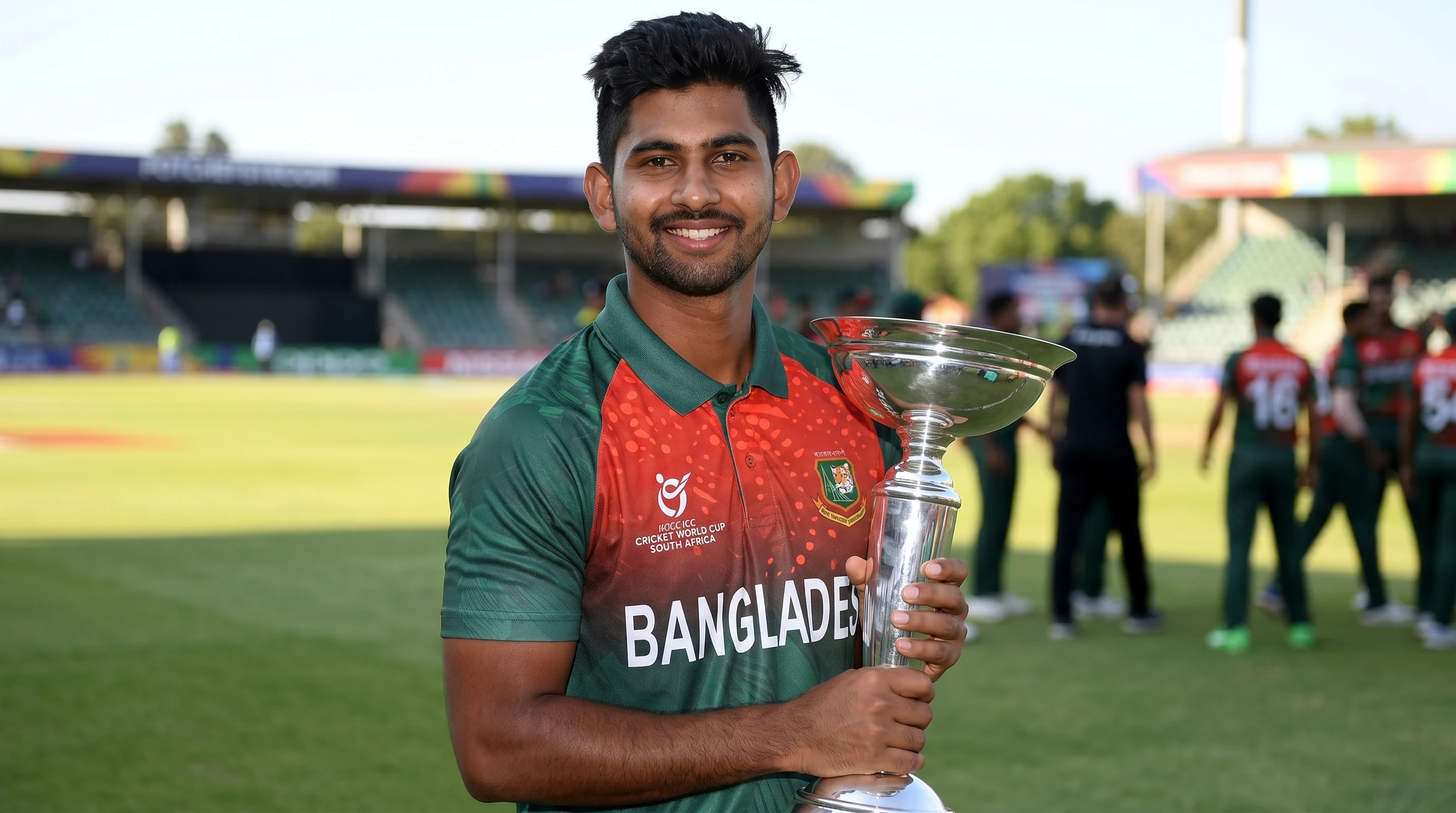
Shamim was not the only future senior player in that group. The squad included names such as Towhid Hridoy, Mahmudul Hasan Joy, Shoriful Islam, Rakibul Hasan, Tanzim Hasan Sakib, and others who later remained in the national conversation. For Shamim, being part of that group meant carrying the expectations attached to a golden youth generation.
The Under-19 title also changed how fans viewed Bangladesh’s future. It suggested the country could produce players with stronger mental toughness, better preparation, and the confidence to beat elite opposition. Shamim’s challenge after that victory was the hardest one in cricket: turning youth success into senior results.
Domestic Cricket and Early Senior Development
Before becoming a regular topic among Bangladesh fans, Shamim had already been building his record in domestic cricket. He made his first-class debut for Chittagong Division in 2017, before his Under-19 fame arrived. He later appeared in domestic one-day and T20 competitions, where his attacking style became easier to notice.
His domestic career has shown why Bangladesh kept him close to the white-ball setup. In T20 cricket, Shamim has generally offered a higher strike-rate profile than many traditional Bangladeshi middle-order players. That matters because modern T20 cricket rewards batters who can score quickly without needing a long settling period.
At the same time, domestic cricket has also shown the difference between promise and certainty. Strong bursts in franchise or local competition do not automatically translate into international reliability. Shamim’s senior career has been shaped by that gap, and by Bangladesh’s need to decide how long to invest in a player with a rare skill set.
International Debut and Early Promise
Shamim made his T20 international debut for Bangladesh against Zimbabwe in Harare on July 23, 2021. He arrived as a young player with a clear identity: left-handed, energetic, aggressive, and comfortable with the demands of short-format cricket. His early appearances gave fans glimpses of a player who could attack in the closing overs.
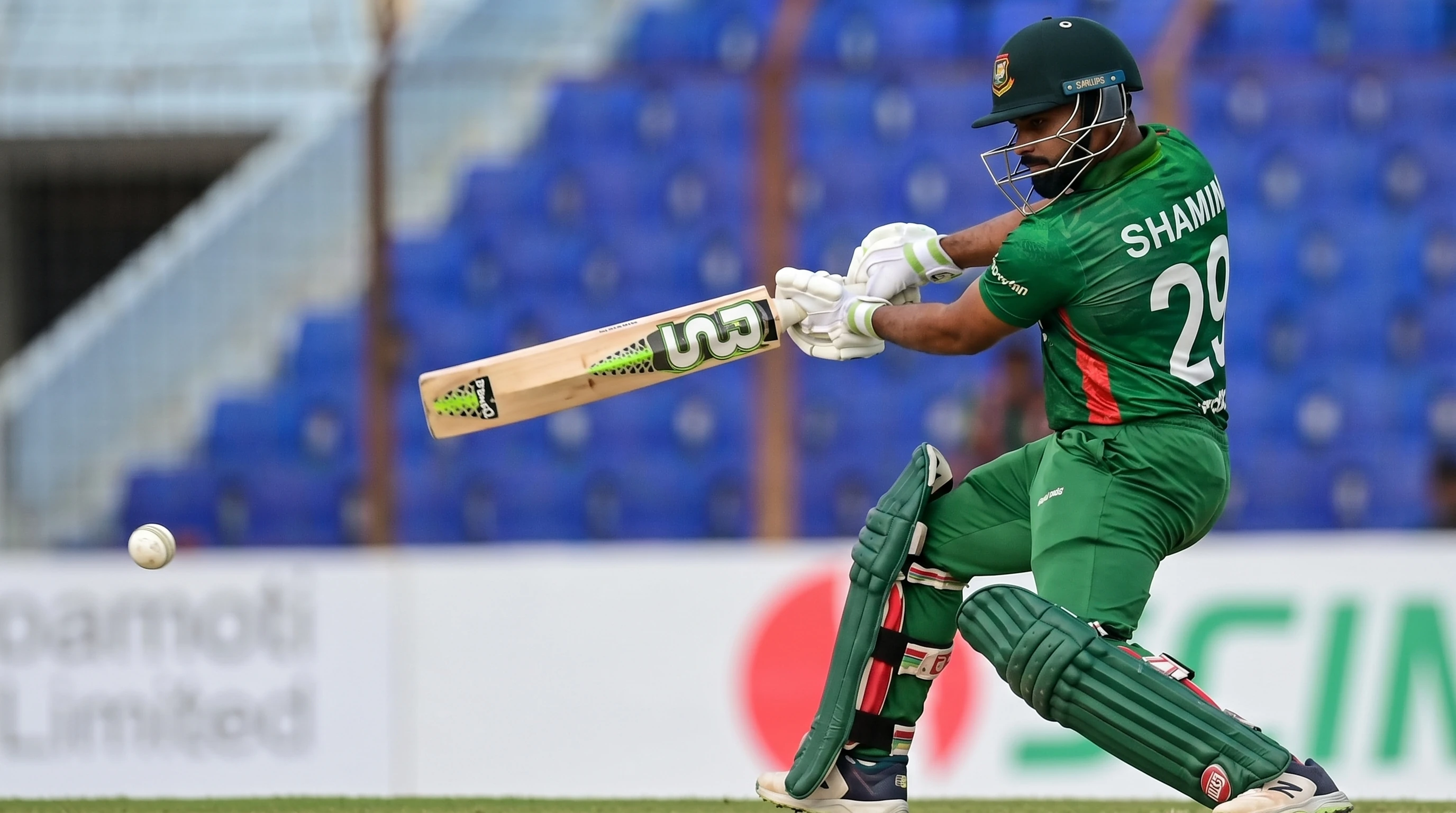
That role was never simple. Lower-middle-order batters often walk in with only a few overs left, little time to read conditions, and heavy pressure to hit immediately. A top-order player may get 20 balls to settle, but a finisher is judged after five or six deliveries.
His ODI debut came later, against Afghanistan in Lahore on September 3, 2023. The one-day format has been less central to his profile than T20 cricket, partly because Bangladesh’s ODI batting structure has had different demands. Shamim’s strongest case has always been as a short-format option who can change momentum quickly.
Batting Style and Role
Shamim bats left-handed and is usually discussed as a middle-order or lower-middle-order player. His best cricket comes when he plays with freedom, uses his quick hands, and attacks gaps or boundary options before bowlers settle. He is not built publicly as a classical accumulator; he is built as a player who can change the pace of an innings.
But here’s the thing. A finisher’s job looks thrilling from the outside and unforgiving from the inside. The same attacking instinct that makes Shamim valuable can also make him vulnerable if he chooses the wrong ball or misreads the match situation.
His career has often turned on that balance. When the shots come off, he looks like the kind of player Bangladesh badly needs. When they do not, the scorecard can make him look careless, even if the role itself demands risk.
Bowling and Fielding
Shamim bowls right-arm off-break, though his bowling has not become the main reason for his place in the Bangladesh side. At youth and domestic levels, that skill added to his value because it gave captains another option. In international cricket, he has been used far more as a batting and fielding option than as a regular bowler.
His fielding has been a more visible part of his appeal. Bangladesh cricket has increasingly valued athletic players who can save runs, take sharp catches, and bring energy inside the ring or on the boundary. Shamim’s movement and intensity have helped shape his reputation as a modern white-ball cricketer.
That athletic profile matters because teams no longer judge short-format players only by runs and wickets. A player batting at number six or seven may face only a handful of balls, so fielding can become part of his total value. Shamim’s challenge is to make sure that extra value supports, rather than replaces, stronger batting returns.
Major Career Moments
The innings most often associated with Shamim’s senior Bangladesh career is his unbeaten 51 against Ireland in Chattogram on March 31, 2023. It was his first T20 international fifty and came in a match where Bangladesh needed someone to hold the innings together. Although Ireland won the game, Shamim’s score showed he could bat beyond a cameo.
That innings mattered because it gave a fuller picture of his game. He was not simply swinging from ball one or chasing a late-over burst. He had to manage pressure, assess risk, and stay long enough to give Bangladesh a defendable total.
Even so, one innings cannot define a career. Shamim’s international record has remained uneven, with flashes of value rather than a long sequence of match-winning performances. That is why public judgment around him remains divided between patience and frustration.
Public Image and Fan Expectations
Shamim’s public image is closely tied to Bangladesh’s wider hopes for a new generation. Fans remember the 2020 Under-19 World Cup winners warmly, but they also expect them to mature quickly. That expectation can be heavy, especially for players asked to perform in the most volatile parts of a T20 innings.
He is not a celebrity in the tabloid sense. There is little reliable public information about his romantic life, private habits, or family relationships. Most public discussion of him stays where it should: on cricket, selection, performance, and future value.
That privacy has helped keep the focus on his work. It has also left gaps that readers sometimes try to fill through rumor or guesswork. A responsible biography should avoid that temptation, because not every public figure owes the public a private-life narrative.
Setbacks and Criticism
The main criticism of Shamim has been consistency. His T20 international career has included useful moments, but not enough regular high-impact innings to make his place unquestioned. For a player selected partly for finishing power, strike rate and timing matter as much as raw run totals.
There is a fair way and an unfair way to judge that record. It is unfair to compare a lower-order T20 batter directly with an opener who has more time and more balls. It is fair, though, to ask whether Shamim has produced enough late-innings value to justify repeated opportunities.
Bangladesh’s selection debate has often lived in that middle space. Shamim has skills the team needs, but skills alone do not settle a place. The next step has always been turning traits into repeatable performance against strong international attacks.
Money, Income Sources, and Net Worth
There is no reliable public record confirming Shamim Hossain’s exact net worth. Figures that appear on unsourced websites should be treated as estimates at best and guesswork at worst. For a Bangladeshi cricketer in his position, income would usually come from national-team fees, domestic contracts, Bangladesh Premier League earnings, sponsorships, and match-related payments.
His financial profile is likely smaller than that of Bangladesh’s long-established senior stars. Players such as Shakib Al Hasan, Tamim Iqbal, Mushfiqur Rahim, and Mahmudullah have had longer careers, larger endorsement profiles, and higher public visibility. Shamim’s earning power depends heavily on whether he becomes a more settled international player.
That said, cricket has already given him a professional platform that few athletes in Bangladesh reach. A sustained national-team career would change his commercial standing quickly. For now, any specific net worth number should be avoided unless supported by clear financial reporting.
Personal Life and Relationships
Shamim has kept his personal life largely private. There is no widely confirmed public record of a spouse, children, or a high-profile relationship. That does not mean such details do not exist; it means they are not part of the verified public record.
This distinction matters in modern sports coverage. Young athletes often become the subject of social-media claims that travel faster than facts. A careful profile should not turn unverified personal details into biography.
What the public can say with confidence is that Shamim’s identity remains centered on cricket. His known story is about development, opportunity, and the pressures of international sport. That is enough to understand why he matters without intruding into private life.
Where Shamim Hossain Is Now
As of 2026, Shamim remains an active Bangladeshi cricketer associated mainly with white-ball formats. He has played for Bangladesh in T20Is and ODIs, while continuing to build his case through domestic cricket. His place in the national conversation depends on form, team balance, and Bangladesh’s need for left-handed hitting depth.
He is still young enough for growth to be realistic. Born in 2000, he entered his mid-20s with international exposure, domestic experience, and a clear cricketing identity. That is a valuable position, but it also means the development phase cannot last forever.
The truth is, Shamim’s career is still being written. He has already achieved more than most young cricketers by representing Bangladesh and being part of a World Cup-winning youth side. His next challenge is to become known less for potential and more for settled senior performance.
Legacy and Importance
Shamim’s legacy is not fixed yet, but his career already says something about Bangladesh cricket. He represents the country’s attempt to produce players suited to faster, more demanding white-ball cricket. His generation was trained in a more ambitious era, where Bangladesh expected not just participation but results.
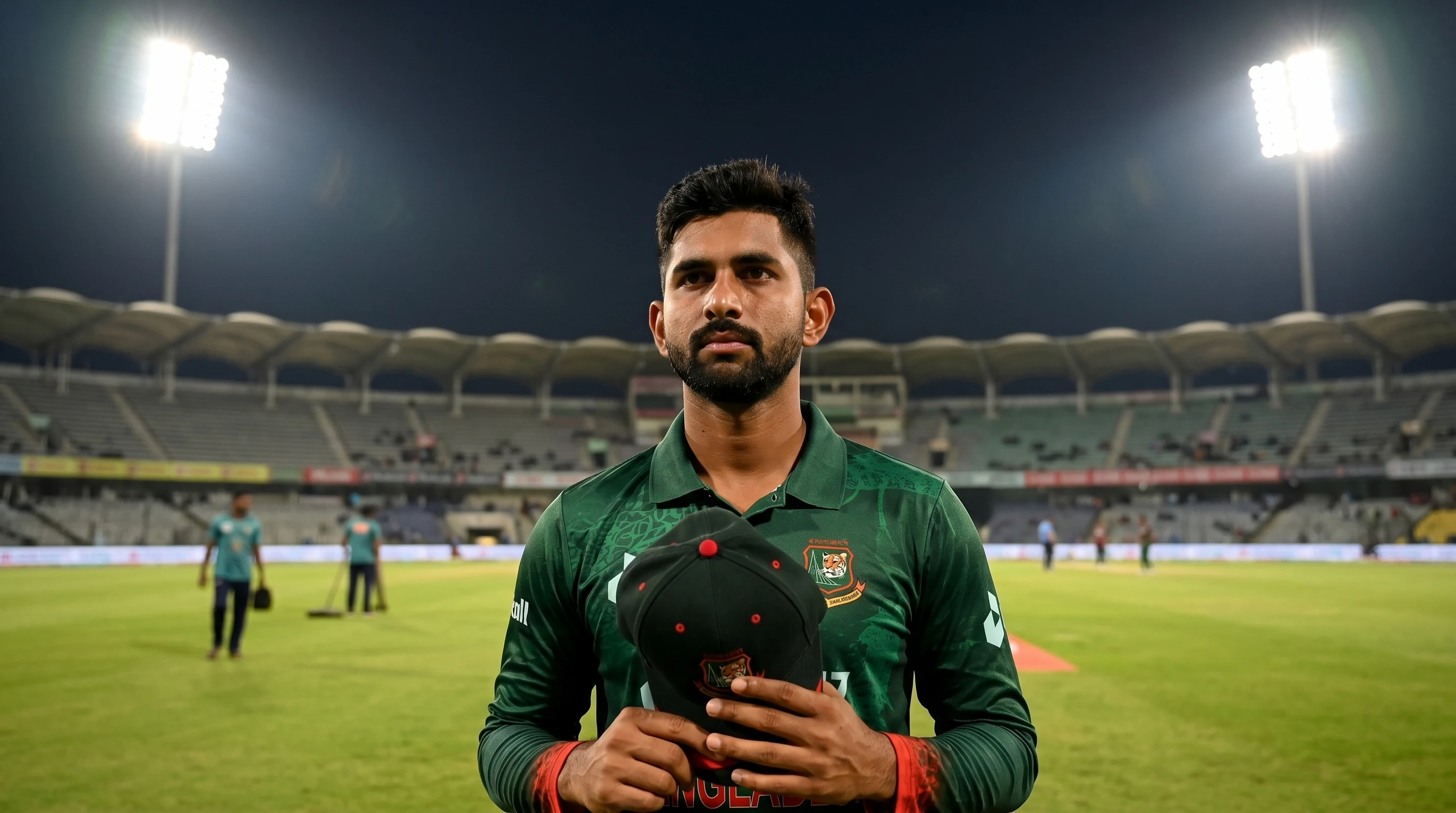
His importance also comes from the role he is trying to fill. Bangladesh has long needed lower-order batters who can clear boundaries, handle pressure, and change games quickly. Shamim may not yet have fully solved that problem, but he remains one of the players shaped by that need.
Not many people know this, but the hardest cricket careers are often not the most glamorous ones. A finisher can be praised for one six and criticized for the next mistimed shot. Shamim’s story lives in that pressure, which makes his progress worth watching.
Frequently Asked Questions
Who is Shamim Hossain?
Shamim Hossain Patwary is a Bangladeshi cricketer born on September 2, 2000, in Chandpur, Bangladesh. He is a left-handed batter and right-arm off-break bowler who has represented Bangladesh in T20 international and one-day international cricket. He is also known for being part of Bangladesh’s 2020 ICC Under-19 Cricket World Cup-winning squad.
What is Shamim Hossain famous for?
He is best known for his role in Bangladesh’s white-ball cricket setup and for being part of the 2020 Under-19 World Cup-winning generation. At senior level, he is viewed mainly as a lower-middle-order T20 batter who can score quickly. His unbeaten 51 against Ireland in 2023 remains one of his best-known international innings.
Where is Shamim Hossain from?
Shamim Hossain is from Chandpur, Bangladesh. His hometown is part of his public biography, though detailed information about his early family life is limited. His cricket development later became linked with Bangladesh’s organized sports training system.
Is Shamim Hossain married?
There is no widely confirmed public record showing that Shamim Hossain is married. He has kept his private life away from heavy public attention. Because of that, claims about his relationships should be treated carefully unless confirmed by reliable sources.
What is Shamim Hossain’s net worth?
Shamim Hossain’s exact net worth has not been confirmed by reliable public financial records. His income likely comes from cricket contracts, match fees, domestic competitions, franchise cricket, and possible endorsements. Any exact figure published without clear sourcing should be treated as an estimate rather than fact.
What is Shamim Hossain’s batting style?
Shamim is a left-handed batter who usually plays in the middle or lower-middle order. His game is based on quick scoring, boundary hitting, and late-innings momentum. He also bowls right-arm off-break, though his main senior value has come through batting and fielding.
Is Shamim Hossain still playing cricket?
Yes, Shamim Hossain remains an active cricketer. As of 2026, he continues to be part of Bangladesh’s broader white-ball cricket picture while also playing domestic cricket. His long-term place depends on whether he can turn his attacking ability into more consistent international results.
Conclusion
Shamim Hossain’s biography is not the story of a finished star. It is the story of a young Bangladeshi cricketer carrying the promise of a famous youth generation into the harder world of senior cricket. That journey has included achievement, expectation, criticism, and room for growth.
What makes him interesting is not only what he has done, but what Bangladesh still hopes he can become. He has the shape of a modern T20 player: left-handed, aggressive, athletic, and flexible enough to offer more than one skill. The missing piece is sustained impact at the highest level.
For now, Shamim stands at a meaningful point in his career. He is past the stage where promise alone is enough, but far from the stage where judgment should be final. If he can turn his best qualities into regular match-winning work, his name may come to mean much more than potential.
