

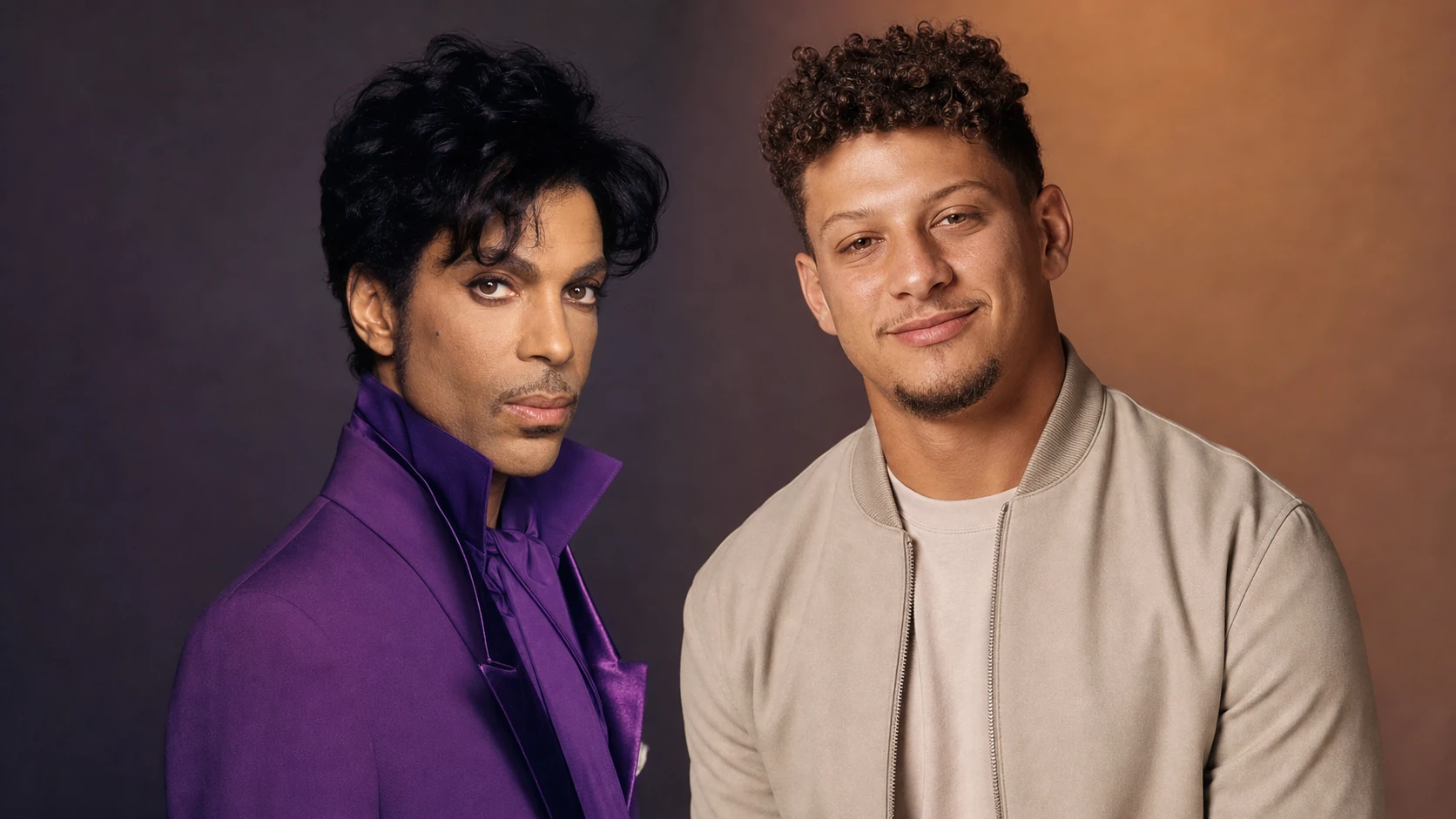
Prince Rogers Nelson and Patrick Mahomes belong to different generations, professions, and family histories. Prince became one of the most influential musicians of the modern era, while Mahomes developed into the defining NFL quarterback of his generation. They weren’t relatives, no confirmed collaboration connects them, and no reliable public record shows that they ever met.
Their names became linked through sports art, Super Bowl culture, and the habit of describing exceptional athletes with royal titles. A 2021 artwork called “Prince Patrick Mahomes II” appears to be the clearest source of the association. Created around the Kansas City Chiefs’ attempt to win Super Bowl LV, the image used Prince’s famous identity and Mahomes’ legal suffix, “II,” to portray the quarterback as football royalty.
The connection is therefore symbolic rather than personal. Prince commanded stadium stages through musicianship and improvisation. Mahomes built his reputation by creating unlikely plays under pressure. Understanding their separate lives explains why the comparison appealed to fans—and why it shouldn’t be mistaken for biography.
Are Prince and Patrick Mahomes Related?
Prince and Patrick Mahomes are not known to be related. Their publicly documented families come from different backgrounds, and no dependable biography, family statement, public record, or news report identifies a connection between them.
Prince was born Prince Rogers Nelson on June 7, 1958, in Minneapolis, Minnesota. His parents were John L. Nelson, a musician who performed under the name Prince Rogers, and Mattie Della Shaw, a jazz singer. Prince’s first name came from his father’s stage identity rather than from a royal title.
Patrick Lavon Mahomes II was born on September 17, 1995, in Tyler, Texas. His father, Patrick “Pat” Mahomes Sr., was a Major League Baseball pitcher, and his mother is Randi Martin. The “II” in Mahomes’ name shows that he was named after his father; it has no connection to Prince Rogers Nelson.
Prince died on April 21, 2016, before Mahomes entered the NFL. Mahomes was then a quarterback at Texas Tech University and was selected by the Kansas City Chiefs in the 2017 NFL Draft. No verified photograph, interview, event record, or estate statement confirms that the two met before Prince’s death.
Prince’s Early Life and Musical Foundations
Prince grew up in a musical household in Minneapolis. His parents separated when he was young, and parts of his childhood were unsettled, but music became a constant source of direction. He learned to play several instruments and began writing songs before reaching adulthood.
As a teenager, Prince developed the technical independence that later defined his career. He could sing, compose, arrange, produce, and perform many of the instrumental parts on his recordings. That degree of control was uncommon for a new artist working within the major-label system of the late 1970s.
Warner Bros. released his debut album, For You, in 1978. Prince handled much of the record himself, establishing him as more than a singer placed in front of material created by others. His second album, Prince, followed in 1979 and included “I Wanna Be Your Lover,” which helped introduce him to a wider audience.
Albums such as Dirty Mind, Controversy, and 1999 expanded his reputation. Prince combined funk, rock, pop, soul, electronic music, and sexual provocation in ways that resisted simple marketing categories. His music also helped define what became known as the Minneapolis sound.
The Success of Purple Rain
Prince’s largest commercial breakthrough arrived with Purple Rain in 1984. The project included a film, soundtrack, concert imagery, and a public persona that brought together his music, fashion, stage presence, and dramatic storytelling.
The soundtrack produced enduring songs including “When Doves Cry,” “Let’s Go Crazy,” and “Purple Rain.” It became one of the best-selling albums of its period and earned Prince an Academy Award for Original Song Score. The film also turned him into an international star whose influence extended far beyond radio.
Prince continued releasing music at a fast pace after Purple Rain. Projects such as Around the World in a Day, Parade, Sign o’ the Times, and Lovesexy showed that he wasn’t interested in simply repeating his biggest commercial success. His work could be accessible, experimental, political, spiritual, playful, or intensely personal.
His battles over ownership also became part of his public story. During a dispute with Warner Bros. in the 1990s, he changed his professional name to an unpronounceable symbol and appeared with the word “slave” written on his face. The protest challenged the control record companies held over artists, master recordings, and release schedules.
Prince’s Super Bowl Legacy
Prince’s clearest connection to Patrick Mahomes comes through the Super Bowl. On February 4, 2007, he performed during halftime of Super Bowl XLI at Dolphin Stadium in South Florida.
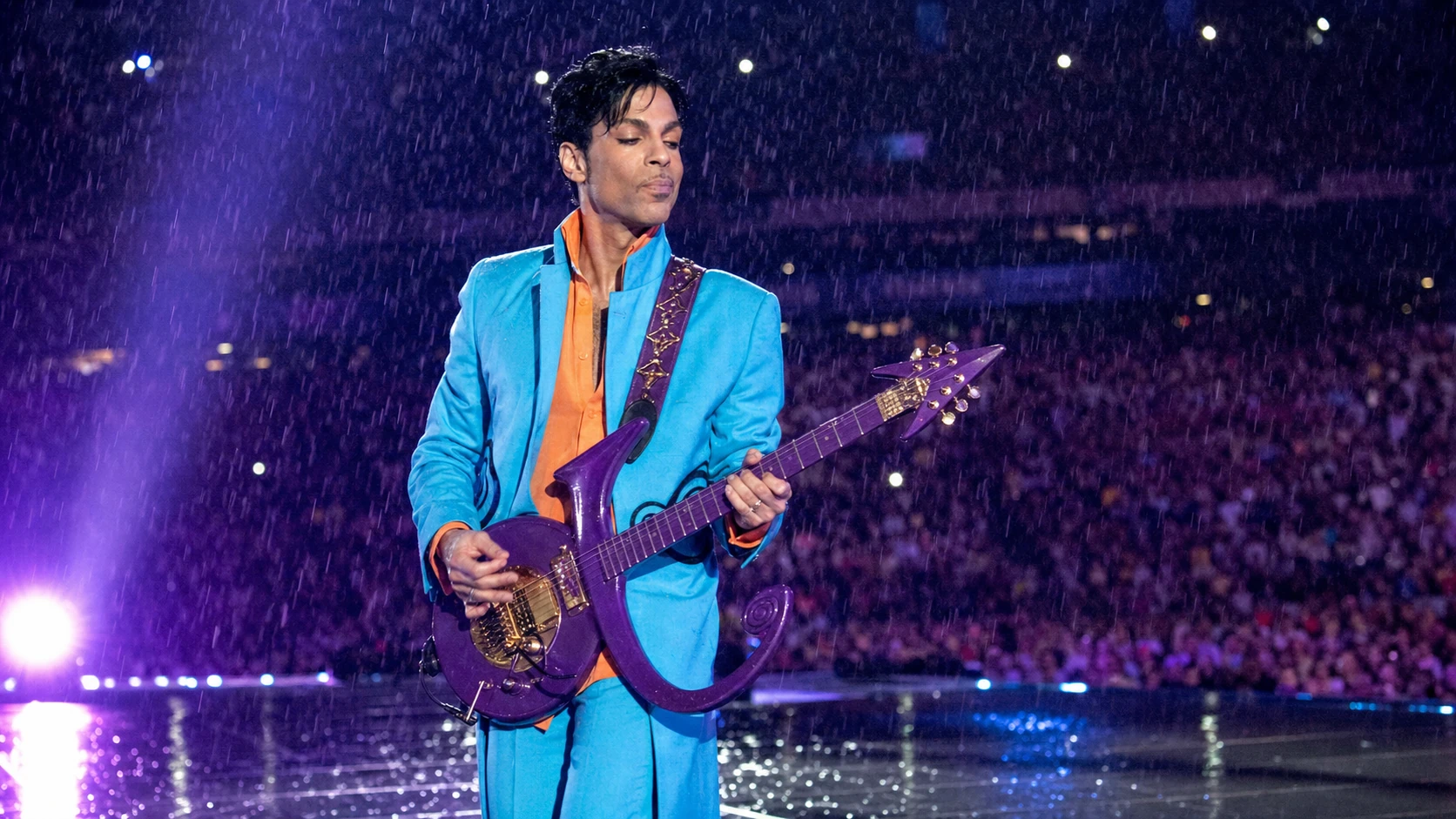
Heavy rain fell during the performance, creating conditions that could have damaged equipment or weakened the production. Instead, the weather became part of the spectacle. Prince closed with “Purple Rain” while rain poured across the stage, producing one of the most widely remembered images in Super Bowl history.
The show demonstrated the qualities that defined Prince as a performer. He relied on live musicianship, confidence, sharp visual presentation, and the ability to respond to unpredictable circumstances. The performance has remained a standard against which later halftime shows are judged.
Mahomes would later build his own Super Bowl reputation on the field. Their appearances didn’t overlap, but the event provides a genuine cultural bridge between them: Prince delivered one of its defining musical performances, while Mahomes became one of its most successful quarterbacks.
Patrick Mahomes’ Early Life and Athletic Background
Patrick Mahomes grew up around professional sports. His father’s baseball career gave him early exposure to major-league clubhouses, training habits, and the demands placed on professional athletes. Mahomes played baseball, basketball, and football while attending Whitehouse High School in Texas.
Baseball appeared to be a realistic career path, and the Detroit Tigers selected him in the 2014 Major League Baseball draft. Mahomes chose not to sign, instead attending Texas Tech, where he pursued football and also spent time with the university’s baseball program.
At Texas Tech, Mahomes became known for his arm strength, mobility, and ability to produce from unconventional positions. The program’s pass-heavy offense allowed him to compile large statistical totals, though some NFL evaluators questioned whether his style would translate to a professional system.
The Kansas City Chiefs saw enough potential to trade up and select him with the 10th overall pick of the 2017 NFL Draft. Mahomes spent most of his rookie season behind veteran quarterback Alex Smith, giving him time to learn head coach Andy Reid’s offense before becoming the starter.
Mahomes’ Career Breakthrough
Mahomes became Kansas City’s starting quarterback in 2018 and immediately changed expectations around the franchise. During his first full season, he passed for 5,097 yards and 50 touchdowns, winning the NFL Most Valuable Player award.
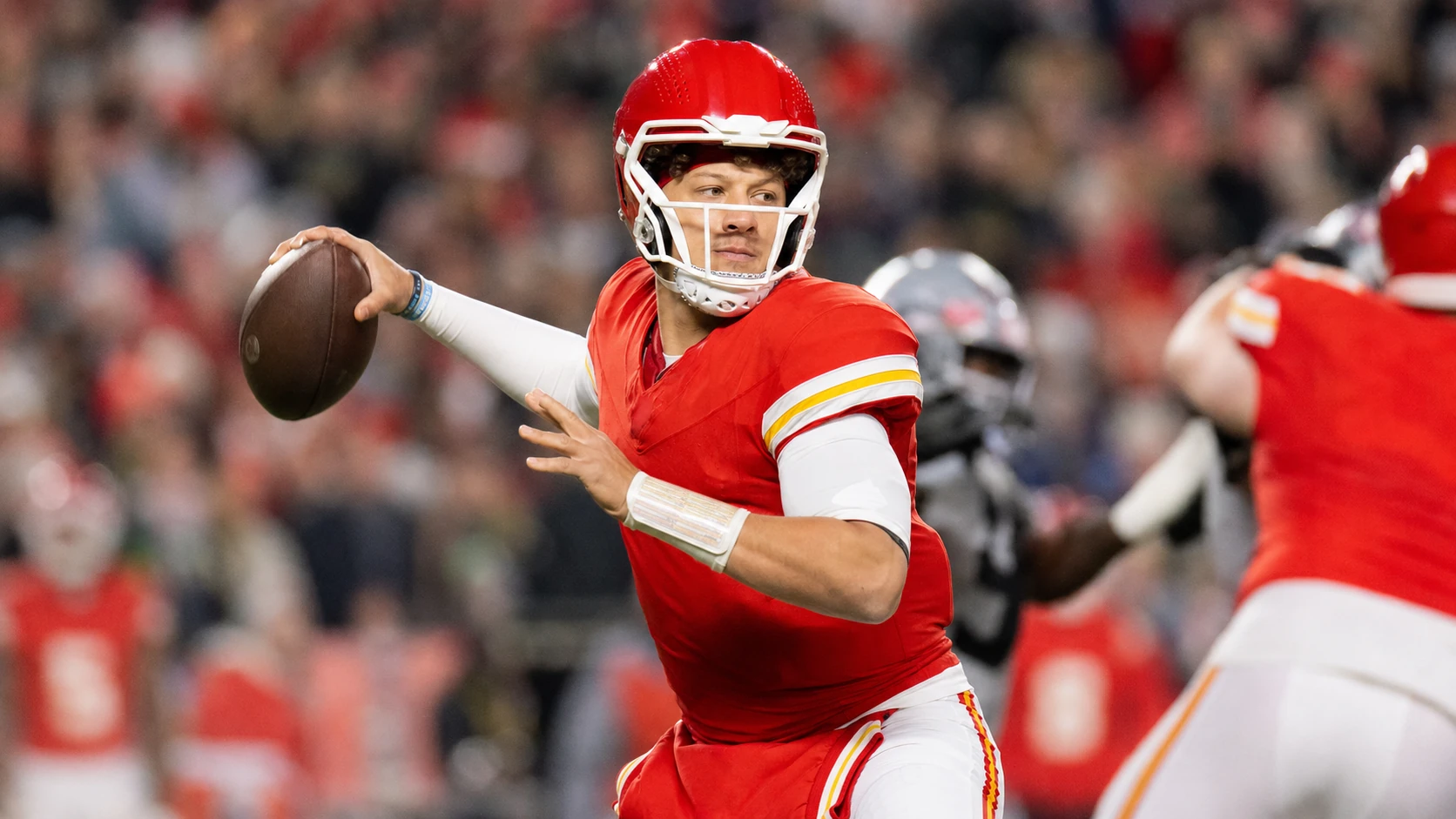
His performance stood out not only because of the numbers but because of how he produced them. Mahomes could throw accurately while moving in either direction, alter his arm angle to avoid defenders, and extend plays long after the original design had broken down. Those skills created a style that looked spontaneous but depended on preparation, timing, and unusual physical ability.
In the 2019 season, Mahomes led the Chiefs to Super Bowl LIV against the San Francisco 49ers. Kansas City trailed by 10 points in the fourth quarter before scoring 21 unanswered points and winning 31–20. Mahomes was named Super Bowl MVP.
The championship ended a 50-year wait for the Chiefs, whose previous Super Bowl victory had come in January 1970. It also confirmed that Mahomes’ early statistical success could translate into postseason results.
Championships, Setbacks, and a Chiefs Dynasty
Mahomes returned to the Super Bowl the following season, but Kansas City lost 31–9 to the Tampa Bay Buccaneers in Super Bowl LV. Injuries along the Chiefs’ offensive line left Mahomes under constant pressure, illustrating the limits even a gifted quarterback faces when a team’s structure breaks down.
Kansas City returned to the championship stage after the 2022 season. Mahomes played through an ankle injury and helped the Chiefs defeat the Philadelphia Eagles 38–35 in Super Bowl LVII. He earned his second league MVP award and his second Super Bowl MVP.
One year later, the Chiefs defeated the 49ers 25–22 in overtime in Super Bowl LVIII. Mahomes led the championship-winning drive and collected his third Super Bowl MVP award. The victory gave Kansas City consecutive titles and strengthened comparisons between the team and the NFL’s greatest dynasties.
The Chiefs reached Super Bowl LIX after the 2024 season but lost 40–22 to Philadelphia. The defeat ended Kansas City’s attempt to become the first team in the Super Bowl era to win three consecutive championships. It also served as a reminder that Mahomes’ career, despite its extraordinary success, includes major losses as well as dramatic comebacks.
Why the “Prince Patrick Mahomes II” Artwork Appeared
The phrase “Prince Patrick Mahomes II” gained attention through an artwork commissioned around Super Bowl LV in 2021. The title combined Mahomes’ actual name with a royal description and an apparent reference to Prince.
At that point, Mahomes had already won an NFL MVP award, a Super Bowl, and a Super Bowl MVP before turning 26. Presenting him as a prince fit the language commonly used in sports media, where championship teams are called dynasties and star players are described as kings, heirs, or members of football royalty.
The artwork anticipated another Chiefs victory, but Tampa Bay defeated Kansas City. It became a record of pregame expectation rather than a celebration of a second consecutive championship.
There is no public evidence that Mahomes requested the artwork, formally approved it, or adopted “Prince Patrick Mahomes II” as a regular nickname. There is also no indication that the Prince Estate presented him with that title or confirmed any official association.
Similarities Between Prince and Mahomes
The comparison works best as a comment on performance. Prince could move through a concert with precision while making each guitar solo, vocal shift, or band direction feel newly created. Mahomes produces a similar effect in football when he escapes pressure, changes his throwing motion, or finds a receiver from an unexpected angle.
Both men also gained broad recognition for expanding what audiences expected from their professions. Prince resisted narrow genre labels and assumed control over writing, production, instrumentation, and visual presentation. Mahomes helped make improvisational movement and unconventional passing angles central features of modern quarterback play.
Their careers also brought historical comparisons at unusually early stages. Prince’s output during the 1980s placed him beside major figures in popular music before he was 30. Mahomes had already won three Super Bowls and three Super Bowl MVP awards before his 30th birthday.
The similarities have clear limits. Prince worked as the central creator of recordings presented under his name, while Mahomes plays a team sport dependent on coaches, offensive linemen, receivers, defenders, and special-teams players. Their personalities and public images also differ: Prince used mystery and theatricality, while Mahomes has presented a more traditional image built around team leadership, family life, competition, and commercial partnerships.
Family and Private Lives
Prince had one known child with his first wife, dancer Mayte Garcia. Their son, Amiir, was born in 1996 with a severe genetic condition and died shortly after birth. The loss remained one of the most painful parts of Prince’s private life.
Prince married Garcia in 1996, and their marriage ended in divorce in 2000. He later married Manuela Testolini in 2001; their divorce was finalized in 2007. Prince had no surviving publicly confirmed children at the time of his death.
Mahomes married Brittany Matthews, his high school partner, in March 2022. Brittany Mahomes is a former soccer player and a co-owner of the Kansas City Current, a professional women’s soccer club. The couple have three publicly known children: Sterling Skye, Patrick “Bronze” Lavon Mahomes III, and Golden Raye.
Mahomes has kept his family visible through selected public appearances and social media while maintaining boundaries around their daily lives. His father and brother have also received media attention, but their separate actions shouldn’t automatically be treated as reflections of Mahomes’ own conduct or career.
Net Worth and Income
Prince earned money through album sales, publishing, touring, films, merchandise, licensing, and ownership of music rights. Estimates of his estate’s value have varied because music catalogs, unreleased recordings, real estate, tax obligations, and licensing opportunities can be valued differently. No single public figure should be treated as a final, precise measure of his wealth.
His estate includes valuable intellectual property and the Paisley Park complex in Chanhassen, Minnesota. Since his death, his recordings, archive, museum operations, anniversary releases, and licensing arrangements have continued generating commercial value.
Mahomes’ finances are easier to connect to public contracts, though his exact net worth remains private. In 2020, he agreed to a 10-year contract extension with the Chiefs that carried a potential value of up to $503 million under its original structure. Contract revisions and guarantees affect how much is earned and when, so the headline total shouldn’t be confused with cash received immediately.
He also earns through endorsement deals and business investments. Mahomes has been associated with companies across sportswear, insurance, food, beverage, and consumer products, while his ownership interests have included Kansas City-area sports organizations. Online net-worth estimates vary and aren’t publicly audited.
Recent Status and Lasting Influence
Prince’s legacy remains active through his music catalog, Paisley Park events, archival projects, and public recognition. He was inducted into the Songwriters Hall of Fame posthumously in 2024, adding to honors that already included the Rock & Roll Hall of Fame and multiple Grammy Awards.
The year 2026 marks a decade since Prince’s death. His work remains part of debates about artistic independence, ownership, performance, gender expression, and the boundaries between musical genres. New listeners continue discovering him through streaming, films, tribute events, and the lasting cultural reach of Purple Rain.
Mahomes entered the 2026 stage of his career as a three-time Super Bowl champion, three-time Super Bowl MVP, and two-time NFL MVP. His final historical standing can’t yet be fixed because he remains an active player. Health, team construction, coaching, and future playoff results will shape the next part of his story.
The phrase “prince and patrick mahomes” brings these two legacies together in an indirect way. One is preserved through recordings and performances; the other continues to develop through professional football. Their real connection lies in public imagination, not family history.
Frequently Asked Questions
Are Prince and Patrick Mahomes related?
No publicly verified evidence shows that Prince Rogers Nelson and Patrick Mahomes are related. Their documented parents, family histories, and places of origin are separate.
Did Prince ever meet Patrick Mahomes?
No dependable public record confirms that they met. Prince died in April 2016, when Mahomes was still playing college football at Texas Tech.
Why are Prince and Patrick Mahomes linked online?
Their names are linked mainly because of a 2021 artwork titled “Prince Patrick Mahomes II,” created around the Chiefs’ Super Bowl LV appearance. The title used royal language and a pop-culture reference rather than describing a family relationship.
Is Prince Patrick Mahomes’ real name?
No. His full name is Patrick Lavon Mahomes II. “Prince” isn’t part of his legal name and isn’t a widely established official nickname.
What connects Prince and Mahomes to the Super Bowl?
Prince performed the Super Bowl XLI halftime show in 2007, while Mahomes has led Kansas City in multiple Super Bowls and won three championships. Their separate achievements at the event are the strongest genuine connection between them.
Did Patrick Mahomes publicly identify Prince as an influence?
No widely documented interview establishes Prince as a central personal influence on Mahomes. Mahomes may privately appreciate Prince’s music, but that hasn’t been publicly confirmed in a dependable source.
Who has the higher net worth?
No fully verified comparison is possible. Prince’s estate includes music rights, recordings, real estate, and continuing licensing income, while Mahomes has major NFL earnings, endorsements, and investments. Published estimates for both vary and shouldn’t be treated as exact.
Conclusion
Prince and Patrick Mahomes became linked because both inspire the language of exceptional performance. Prince transformed concerts through musicianship, control, and theatrical confidence. Mahomes changed games through movement, arm talent, preparation, and calm under pressure.
That comparison can be meaningful without becoming literal. They weren’t known relatives, no confirmed friendship joins them, and the “Prince Patrick Mahomes II” title came from a creative sports image rather than a hidden biographical connection.
Prince’s career is complete but still culturally active. Mahomes’ career remains unfinished, with future seasons likely to change how he is ranked among football’s greatest quarterbacks.
Their shared place in Super Bowl history gives the association real substance. Prince owned one of the event’s greatest halftime stages, while Mahomes repeatedly made the championship field his own. The connection belongs to culture, performance, and memory—not genealogy.
