

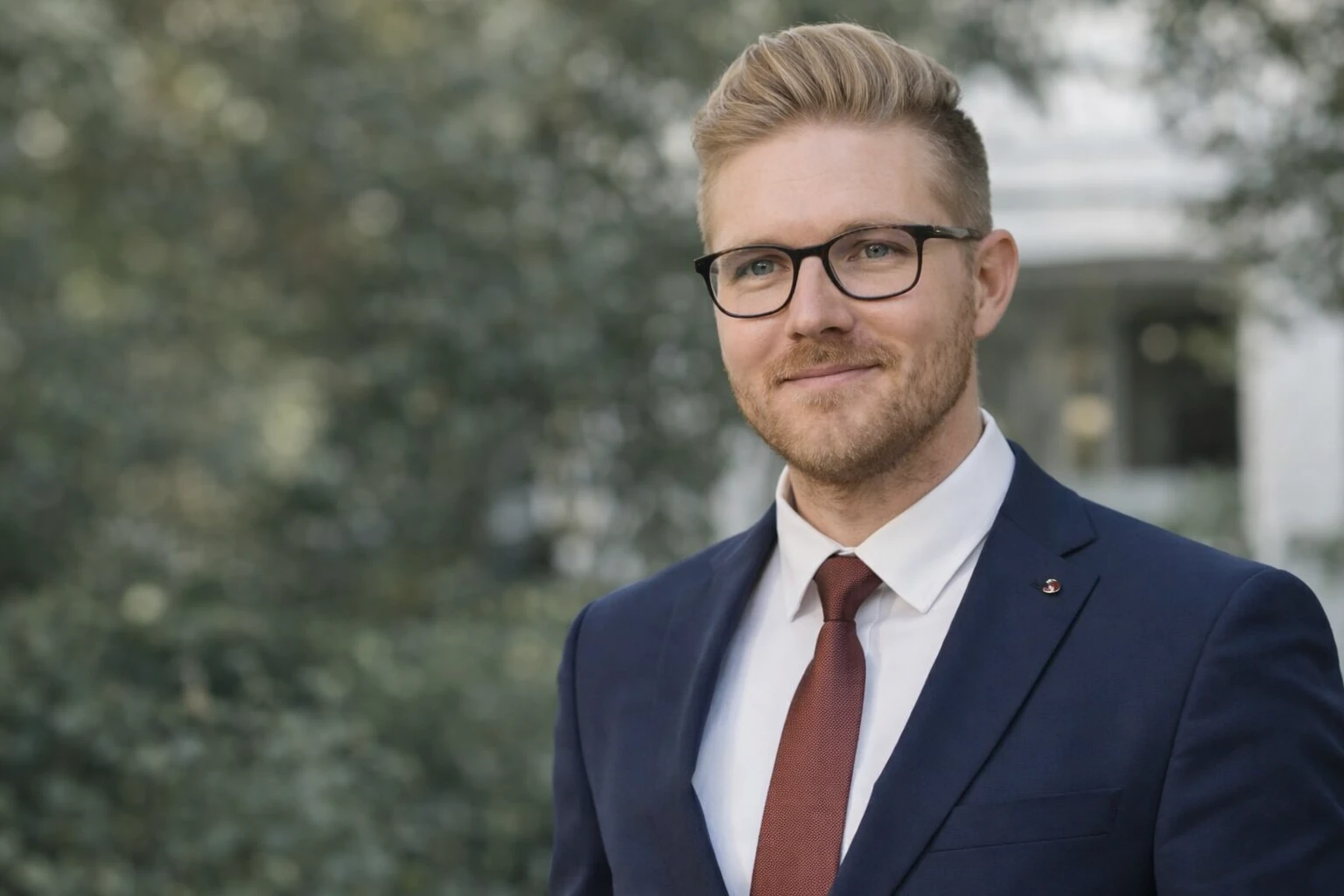
For most people, the name Brody Tate surfaces in a familiar way: a quick search sparked by curiosity, often linked to comedian and actor Janeane Garofalo. But follow the thread beyond those surface-level associations, and a very different picture emerges. Instead of a celebrity orbit, the clearest record points to a career shaped in classrooms, academic programs, and research on identity and belonging.
That contrast defines Brody Tate’s public presence. He exists at the intersection of two worlds—one driven by internet curiosity, the other by institutional work that rarely seeks attention. The result is a biography that feels incomplete if you rely on popular search results alone, but surprisingly grounded when you turn to university records and scholarly contributions. To understand Tate, you have to shift focus from speculation to the verifiable work that defines his professional life.
Early Life and Family Background
Publicly available information about Brody Tate’s early life is limited, and that absence is worth stating clearly. Unlike many figures who gain attention through entertainment or politics, Tate has not built a public identity around personal history. There are no widely confirmed records detailing his childhood, hometown, or family background in the way celebrity biographies often present them.
Some online profiles attempt to fill in these gaps with confident claims about his upbringing, age, or family structure. But these details rarely trace back to primary or institutional sources, and they often contradict one another. That makes it difficult to treat them as reliable. The truth is that Tate’s early life remains largely private, and there is no strong public documentation to suggest otherwise.
What can be inferred, cautiously, is that his later academic and professional interests—particularly in education, identity, and representation—likely grew out of personal or intellectual experiences that shaped his perspective. But without direct statements or verified records, those connections remain speculative. A responsible account keeps the focus on what is known rather than filling in blanks.
Education and Academic Formation
Where the record becomes much clearer is in Tate’s academic journey. He pursued a Doctor of Education (EdD) at Loyola University Chicago, a program known for its focus on curriculum, culture, and community engagement. His doctoral work culminated in a dissertation titled Mirrors and Windows: Exploring Queer Identity Representation in Graduate Curriculum, awarded in May 2025.
That dissertation title offers a direct window into his intellectual focus. The “mirrors and windows” framework is widely used in education to describe how students see themselves reflected in curriculum and how they gain insight into others’ experiences. Tate’s work places queer identity at the center of that conversation, suggesting a commitment to examining how higher education includes—or fails to include—diverse perspectives.
During his time at Loyola, Tate was not working in isolation. Public records show that he was also engaged in professional roles connected to higher education, bridging theory and practice. This dual track—doctoral research alongside program management—helped shape a career that blends scholarship with applied educational work.
His recognition as a research award recipient within Loyola’s School of Education further signals that his work was not only completed but also valued within academic circles. While such honors are not widely publicized outside universities, they carry weight within the field and point to a level of respect among peers.
Early Career and Work in Education
Before his current role, Tate built experience in areas that sit just outside the spotlight but are essential to modern education. He worked as a curriculum developer with Academic Programs International, an organization focused on study abroad and experiential learning. That role placed him in a position to design educational experiences that extend beyond traditional classrooms.
One example of this work includes contributions to online learning initiatives developed during periods of disruption, such as global travel restrictions. These programs required flexibility, creativity, and a strong understanding of student needs in unfamiliar contexts. Tate’s involvement suggests a professional strength in adapting educational structures to changing conditions.
He also held a position at Loyola University Chicago as Learning Portfolio Program Manager. In that role, he oversaw systems that allow students to document and reflect on their learning experiences over time. These portfolio systems are increasingly used in higher education to connect coursework with personal development, and managing them at scale requires coordination across departments and faculty.
What’s striking about this phase of his career is its consistency. Rather than shifting between unrelated roles, Tate’s work remains centered on how education is designed, delivered, and experienced. That continuity becomes a defining feature of his professional identity.
Role at the University of Chicago
Brody Tate’s current position at the University of Chicago places him within one of the most respected academic environments in the United States. He serves as Program Manager, Online, for the Master of Science in Applied Data Science program, part of the university’s Data Science Institute.
This role is not simply administrative. Online graduate programs operate at a complex intersection of curriculum design, technology, faculty coordination, and student support. As Program Manager, Tate is involved in shaping how the program functions as a whole, from course structure to the student experience.
The program itself reflects broader changes in higher education, where data science and online learning have become central areas of growth. Tate’s work sits within that shift, helping to build systems that can deliver rigorous education in a digital format. That requires balancing academic standards with accessibility, a challenge that has become increasingly important in recent years.
His involvement in conferences and discussions around ethical data science further expands his role beyond internal program management. At events such as the 2025 UPCEA Conference, he participated in conversations about the ethical implications of data science and artificial intelligence in education. These discussions are part of a larger effort to ensure that technological advancement does not outpace ethical considerations.
Research Interests and Publications
While Tate’s professional roles are grounded in program management, his research adds another dimension to his profile. His work consistently returns to themes of identity, belonging, and representation in educational settings. These topics are especially relevant in discussions about equity and inclusion in higher education.
He has contributed to academic publications exploring the experiences of queer students, particularly those from rural backgrounds. Titles such as “Too Queer for the Country, Too Country for College” capture the tension faced by individuals navigating multiple identities within institutional spaces. These works are not abstract; they are rooted in lived experience and social context.
Another area of interest in his research involves the idea of “queer joy,” particularly in relation to nature and environment. This focus reflects a broader shift in academic discourse, moving beyond deficit-based narratives toward more affirming perspectives. It also highlights Tate’s engagement with emerging conversations within his field.
Taken together, his research and professional work form a coherent whole. Both are concerned with how individuals experience education, especially when their identities are not fully represented within traditional structures. This alignment between theory and practice strengthens his profile as both a scholar and an educator.
Public Attention and Relationship to Janeane Garofalo
Despite his academic career, Brody Tate is most often searched in connection with Janeane Garofalo, a well-known comedian and actor with a long career in film, television, and stand-up. This association has brought him a level of public attention that might not otherwise exist for someone in his field.
The nature of their relationship is widely referenced online, often described as a marriage. However, detailed, independently verified public documentation about their personal life is limited. Much of what appears in search results comes from secondary sources that repeat similar claims without clear sourcing.
That does not necessarily mean the relationship details are inaccurate, but it does mean they should be approached with caution. In contrast to Garofalo, who has spent decades in the public eye, Tate has maintained a much lower profile. His personal life remains largely private, and there is little indication that he has sought public visibility beyond his professional work.
This dynamic creates an unusual situation where one half of a perceived public pairing is well documented, while the other remains largely defined by institutional records. It also explains why many readers encounter Tate’s name through curiosity rather than direct familiarity with his work.
Public Image and Media Representation
The way Brody Tate is portrayed online says as much about digital culture as it does about him. Many biography-style websites present him in a format typically reserved for celebrities, complete with sections on net worth, physical attributes, and personal trivia. Yet these sections often lack reliable sourcing and vary widely in their claims.
What’s surprising is how little overlap there is between these portrayals and the verifiable record. The academic and professional information about Tate is consistent across institutional sources, while the personal details shift depending on the site. This split highlights the difference between content designed for search traffic and information grounded in evidence.
Tate’s actual public image, as supported by credible sources, is relatively straightforward. He appears as an educator, researcher, and program manager engaged in contemporary issues within higher education. There is no strong evidence of public controversies, major disputes, or widely reported personal milestones.
In a media environment where visibility often correlates with oversharing, Tate’s profile stands out for its restraint. Whether by choice or circumstance, he has not built a public persona around personal exposure. Instead, his presence is defined by the work he does and the institutions he is part of.
Financial Profile and Net Worth
There is no publicly verified figure for Brody Tate’s net worth. Many websites provide estimates, but these numbers are typically unsupported and should be treated as speculative. Without access to financial disclosures, contracts, or verified earnings data, it is not possible to determine his net worth with confidence.
What can be said is that his career is rooted in academia and educational program management. These fields generally offer stable but not celebrity-level income, especially compared to the entertainment industry. If his financial situation is discussed online, it is often influenced by assumptions tied to his association with a public figure rather than documented earnings.
This distinction matters because it reflects a broader pattern in online biographies. Financial speculation often fills the gap when concrete information is unavailable. In Tate’s case, the absence of verified data suggests that any claims about wealth should be approached carefully.
Where Brody Tate Is Now
As of the most recent available information, Brody Tate continues his work at the University of Chicago’s Data Science Institute. His role in managing the online applied data science program places him within an area of higher education that is both expanding and evolving rapidly.
His recent participation in academic conferences indicates ongoing engagement with current issues, particularly around ethics in data science and artificial intelligence. These topics are likely to remain central to his work, given their growing importance in both academia and industry.
At the same time, there is no indication that he has shifted toward a more public-facing career. His presence remains tied to institutional and academic contexts rather than media or entertainment. For someone who attracts search interest largely through association, that consistency is notable.
Frequently Asked Questions
Who is Brody Tate?
Brody Tate is an education professional and researcher currently working at the University of Chicago. He serves as Program Manager, Online, for a graduate data science program and has a background in curriculum development and higher education.
What is Brody Tate known for?
He is primarily known for his work in online education and research on identity and representation in curriculum. Public interest in his name also stems from his reported relationship with Janeane Garofalo.
What is Brody Tate’s academic background?
Tate earned a Doctor of Education degree from Loyola University Chicago in 2025. His dissertation focused on queer identity representation in graduate-level curriculum.
Is Brody Tate married to Janeane Garofalo?
Many online sources describe him as her husband, but detailed, independently verified public documentation about their relationship is limited. The claim is widely repeated but not strongly supported by primary records.
What does Brody Tate do at the University of Chicago?
He works as Program Manager for the online Master of Science in Applied Data Science program. His role involves overseeing program operations, supporting faculty and students, and helping shape the online learning experience.
What is Brody Tate’s net worth?
There is no confirmed public information about his net worth. Estimates found online are speculative and not backed by verifiable data.
Conclusion
Brody Tate’s story is less about public spectacle and more about quiet, consistent work. His career unfolds in lecture halls, digital classrooms, and academic conferences rather than on red carpets or talk shows. That alone sets him apart from many figures who attract similar levels of online curiosity.
The tension between how he is searched and what is actually known defines his public profile. Readers arrive expecting a celebrity-adjacent biography, but the strongest material points to a professional life grounded in education and research. That contrast can feel incomplete at first, but it ultimately offers a more honest picture.
What shapes Tate’s story is not a single defining moment but a steady focus on how people experience learning. His work addresses questions that are both personal and structural, touching on identity, access, and representation in ways that resonate beyond academia.
As interest in his name continues, the most reliable understanding will come from the same place it always has: the institutions, research, and documented work that reflect what he actually does. In a digital world full of noise, that kind of clarity is rare—and worth paying attention to.
