

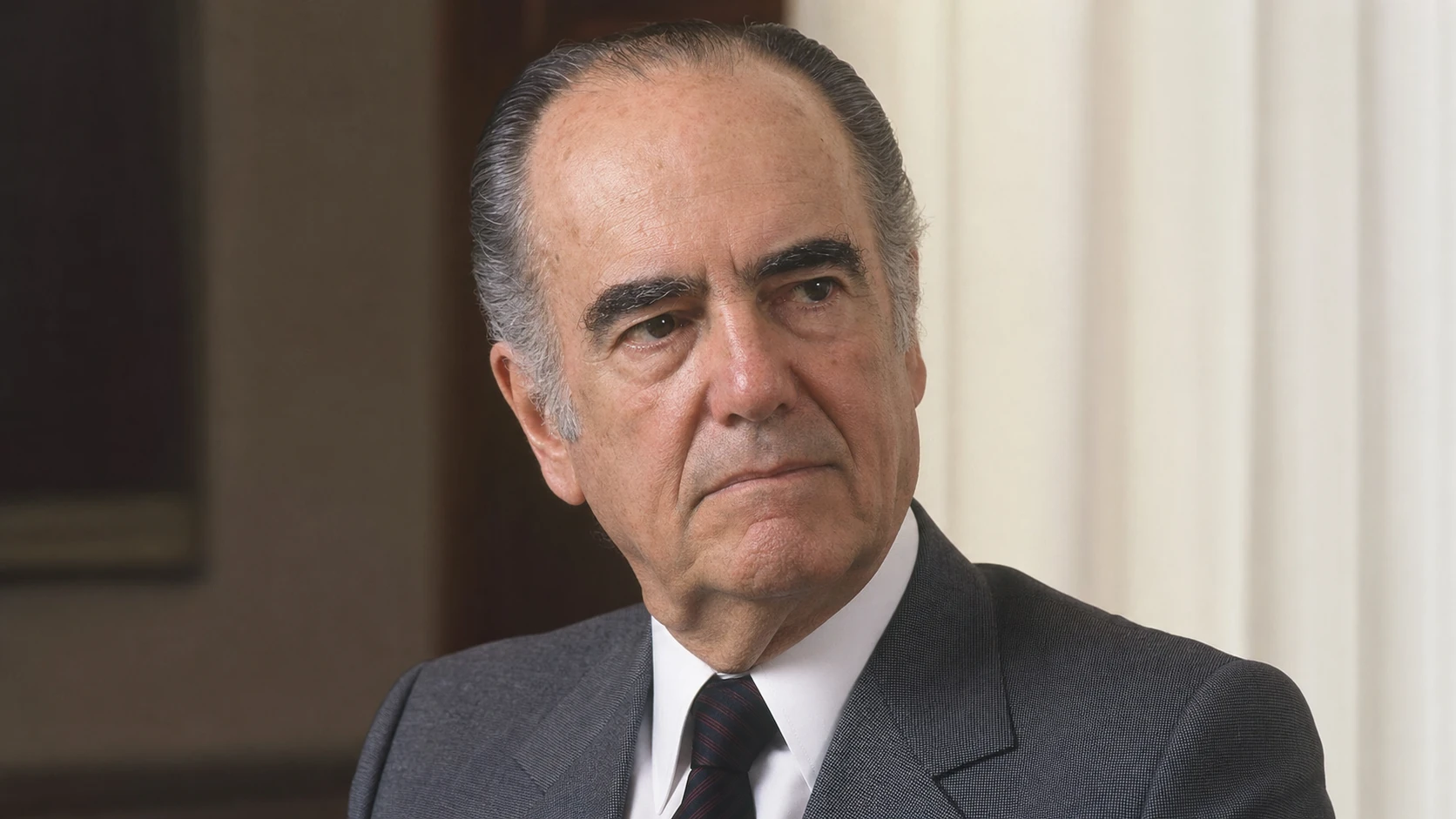
José Balmaceda Riera is a Chilean physician and reproductive-medicine specialist whose life connects political exile, medical research, family migration, and one of the most serious fertility-clinic scandals in American history. He is also widely known as the father of actor Pedro Pascal, though his own career was established long before his son became internationally famous.
Born in Santiago, Chile, Balmaceda trained in obstetrics, gynecology, and reproductive endocrinology. He later worked in the United States, contributed to early research on assisted reproduction, and became a partner in a fertility practice linked to the University of California, Irvine. His professional reputation was badly damaged in the 1990s when the clinic became the subject of allegations involving unauthorized transfers of eggs and embryos, financial misconduct, and failures of institutional oversight.
His biography requires careful distinctions. Balmaceda was accused in civil cases and university investigations connected to the clinic, but the publicly reported guilty plea he entered decades later concerned federal tax fraud, not a criminal conviction for stealing or transferring reproductive material. That difference does not diminish the harm described by former patients, but it is necessary for an accurate account of his record.
Early Life and Family Background
José Pedro Balmaceda Riera was born on August 22, 1948, in Santiago, Chile. He was raised in a family with business interests; public biographical accounts identify his mother, Juanita, as a boutique owner and his father, also named José, as an owner of timber mills.
He attended San Ignatius school before studying medicine at the Pontifical Catholic University of Chile. Balmaceda graduated in 1974 and began training in obstetrics and gynecology at the University of Chile Hospital. His education placed him on a path toward a medical specialty that would change rapidly during the following decade as doctors developed new treatments for infertility.
Balmaceda married Verónica Pascal Ureta, a child psychologist from a politically active Chilean family. They had four children: Javiera, Pedro, Nicolás, and Lux. Pedro later became an actor known for Game of Thrones, Narcos, The Mandalorian, The Last of Us, and major film roles, while Lux Pascal pursued acting and public advocacy.
Exile from Chile
The Balmaceda family’s departure from Chile followed the 1973 military coup that brought Augusto Pinochet to power. José Balmaceda and Verónica Pascal were associated with people who opposed the dictatorship and reportedly helped shelter an injured person being pursued by the authorities.
The couple eventually sought protection through the Venezuelan embassy and left Chile in 1975. Pedro Pascal was still an infant, and Javiera was a young child. The family first received asylum in Denmark before relocating to the United States.
Their move was not simply a professional decision. It came from political danger, uncertainty, and the need to rebuild their lives in another country. Balmaceda resumed his medical training in the United States while the family adapted to a new language, culture, and legal status.
Medical Education in the United States
After settling in Texas, Balmaceda completed an obstetrics and gynecology residency in San Antonio. He then received advanced training in reproductive endocrinology, a field focused on infertility, hormones, and reproductive disorders.
This period coincided with major changes in fertility medicine. The birth of the first baby conceived through in vitro fertilization in 1978 created new possibilities for patients who had previously had few treatment options. Physicians began testing different ways to retrieve eggs, combine them with sperm, and transfer reproductive material.
Balmaceda worked with physician Ricardo Asch on gamete intrafallopian transfer, known as GIFT. The procedure involved retrieving eggs, combining them with sperm, and placing the mixture into a patient’s fallopian tube so fertilization could occur inside the body.
He co-authored early papers on the procedure, including research published during the 1980s. His scientific work helped establish him as a reproductive-medicine specialist with an international profile.
Career at UC Irvine
In 1986, Balmaceda and Asch moved into work connected with the University of California, Irvine medical system. They formed the Center for Reproductive Health, a private fertility practice that operated with access to university facilities, staff, and services.
Physician Sergio Stone later joined the practice as a partner. Balmaceda eventually worked from a separate clinic location at Saddleback while remaining connected to the broader operation.
During this period, he continued writing and presenting research on fertility treatment. His work addressed GIFT, egg donation, implantation, age-related fertility decline, and outcomes in assisted reproduction. He became known among colleagues in the United States and Latin America as an experienced specialist in a developing area of medicine.
The clinic also benefited from strong demand. Fertility treatment was expensive, emotionally intense, and often carried no guarantee of success. Patients placed extraordinary trust in physicians because the treatment process involved surgery, hormone medication, laboratory handling of eggs and sperm, and decisions that could shape entire families.
The UC Irvine Fertility Scandal
The Center for Reproductive Health came under investigation in the mid-1990s after employees reported suspected medical and financial misconduct. University inquiries and later civil cases described a clinic with serious recordkeeping failures and allegations that eggs or embryos had been transferred without the informed consent of the people from whom they came.
A university clinical review found that unauthorized transfers had occurred. The investigators could not always determine which physician carried out a specific transfer because records were incomplete and the doctors did not fully cooperate with the inquiry.
Former patients brought numerous civil claims against Balmaceda, Asch, Stone, the clinic, and the university. Some patients said they later learned that children genetically related to them had been born to other families. Intended parents also faced the possibility that reproductive material presented to them as donated had not been given with valid consent.
Later reporting estimated that more than 100 patients may have been affected and that multiple births resulted from unauthorized transfers. The exact total remains uncertain because the clinic’s documentation was incomplete.
Balmaceda denied knowingly participating in illegal egg transfers. He placed much of the responsibility on Asch and argued that university administrators had failed to intervene earlier. His denials remain part of the public record, but so do the findings that serious violations occurred within a clinic he helped establish and operate.
Departure from the United States
Balmaceda returned to Chile in September 1995 while investigations and lawsuits were advancing in California. He did not return to face the case at that time.
Federal prosecutors later pursued charges related to mail fraud, insurance billing, and taxes. The legal response focused partly on financial conduct because California had not yet created a specific criminal offense covering the unauthorized use of eggs or embryos when many of the disputed transfers occurred.
Balmaceda resumed medical work in Santiago, including an affiliation with Clínica Las Condes. He continued publishing on fertility treatment and remained active in reproductive-medicine circles in Latin America.
His return to Chile created a major change for the family. Pedro Pascal and his sister Javiera remained in the United States, while their parents and younger siblings relocated. José and Verónica later separated.
Verónica Pascal died in 1999. Pedro later adopted Pascal, his mother’s family name, as his professional surname and has spoken publicly about her influence on his life.
Arrest in Argentina and the Unresolved Case
In January 2001, Balmaceda was arrested at Ezeiza International Airport in Buenos Aires in connection with the American case. He was held while authorities considered extradition, then released on bail under conditions that required him to remain in Argentina.
He later returned to Chile and did not resolve the United States charges at that time. The case remained open for more than two decades.
During those years, Balmaceda continued to be associated with fertility medicine in Chile and the wider Latin American region. Public records and older professional biographies described him as an experienced clinician and researcher, though they do not provide a fully current account of every position he held.
The 2022 Tax-Fraud Plea
Balmaceda returned to the United States in February 2022 and surrendered to federal authorities. He agreed to plead guilty to tax fraud linked to income earned through the fertility clinic in the early 1990s.
Court reporting stated that he admitted underreporting income from the clinic for the 1991 and 1992 tax years. The case involved cash payments that were not properly reported to federal tax authorities.
The plea did not establish a criminal conviction for stealing eggs or embryos. It addressed financial wrongdoing connected to the clinic. This distinction is often lost in online summaries that combine every accusation into a single criminal case.
The civil allegations, university findings, and patient accounts remain central to Balmaceda’s public reputation. But a responsible biography should not describe him as having been convicted of a reproductive-material offense when the reported conviction concerned taxes.
Marriage, Children, and Family Life
José Balmaceda Riera and Verónica Pascal had four children. Their oldest daughter, Javiera Balmaceda, built a career in film and television production and media leadership. Pedro Pascal became the family’s most internationally recognized member through acting.
Nicolás Balmaceda pursued medicine, while Lux Pascal became an actor. The siblings have maintained visible family bonds, and Pedro has frequently spoken about the support he received from his brothers and sisters.
José’s relationship with Pedro has also appeared publicly. He attended the London premiere of Gladiator II with Pedro and Lux in November 2024. Pedro later shared a lighthearted photograph of his father standing near promotional material for The Last of Us.
These appearances suggest that father and son remain in contact, but the details of their private relationship are not publicly documented. Pedro’s comments about his parents often focus on their political courage, the experience of exile, and the sacrifices they made for their children.
Net Worth and Income Sources
José Balmaceda Riera’s net worth is not publicly confirmed. Websites that publish exact wealth figures do not have access to reliable records of his assets, debts, legal expenses, settlements, or current earnings.
His known income sources came from his work as a physician, fertility specialist, clinic partner, medical researcher, and lecturer. During the early 1990s, the California fertility practice generated substantial revenue, though historical clinic income cannot be treated as evidence of his present finances.
Any estimate of his current wealth would be speculative. His legal history, professional moves, and long residence outside the United States make simple calculations especially unreliable.
Public Image
Balmaceda’s public image is divided between achievement and scandal. In medical history, he is associated with early work on GIFT and with the development of assisted reproduction during a period of rapid scientific change.
In legal and ethical discussions, he is remembered as one of the physicians connected to the UC Irvine fertility clinic. The case remains a warning about weak oversight, poor recordkeeping, financial conflicts, and the severe consequences of handling reproductive material without clear consent.
His connection to Pedro Pascal has introduced the story to a much larger audience. Many readers first encounter Balmaceda through family photographs or celebrity profiles, then discover that his professional history includes both respected research and grave allegations.
That contrast explains why careful wording matters. His scientific work is documented, as are the clinic’s failures. His denials are documented, as is his later tax-fraud plea. None of those facts should be erased to create a simpler story.
Recent Updates and Current Status
Balmaceda appeared publicly with members of his family in 2024 and was mentioned again in Pedro Pascal’s social-media activity in 2025. These moments showed him as a father attending a major career event for his son rather than as a medical public figure.
His current professional status in 2026 is not publicly confirmed. Older biographies connect him to Clínica Las Condes and regional reproductive-medicine organizations, but those references may not reflect his present duties.
His exact residence, retirement status, and day-to-day work remain private. There is no reliable public evidence that he has returned to a major clinical role in the United States.
Frequently Asked Questions
Who is José Balmaceda Riera?
José Balmaceda Riera is a Chilean physician specializing in reproductive medicine. He is also the father of actor Pedro Pascal and was a partner in the UC Irvine-affiliated fertility clinic that became the center of a major medical scandal.
How old is José Balmaceda Riera?
He was born on August 22, 1948. He is 77 years old as of July 2026.
Where was José Balmaceda Riera born?
He was born in Santiago, Chile. He later lived in Denmark and the United States after leaving Chile with his family during the Pinochet dictatorship.
What did he do in fertility medicine?
Balmaceda trained in reproductive endocrinology and co-authored research on GIFT, egg donation, fertility decline, and assisted-reproduction outcomes. He practiced in both the United States and Chile.
Was José Balmaceda Riera convicted of stealing eggs?
No publicly reported criminal conviction for stealing eggs or embryos has been established. He was accused in civil cases and investigations linked to unauthorized transfers at the clinic, but his reported guilty plea in 2022 concerned tax fraud.
Is José Balmaceda Riera Pedro Pascal’s father?
Yes. Pedro Pascal was born José Pedro Balmaceda Pascal, and José Balmaceda Riera is his father. Pedro later used Pascal as his professional surname.
What is José Balmaceda Riera doing now?
His current employment and medical status are not publicly confirmed. He has appeared at family events in recent years, including the 2024 London premiere of Gladiator II.
Conclusion
José Balmaceda Riera’s life reaches far beyond his connection to a famous son. He experienced political exile, rebuilt a medical career abroad, contributed to early fertility research, and became part of a scandal that exposed serious weaknesses in reproductive-medicine oversight.
His record cannot be judged responsibly through a single label. He was a trained specialist with published work, but he was also a clinic partner during a period when patients reported profound violations of trust. He denied direct participation in unauthorized transfers and later admitted separate financial wrongdoing through a tax-fraud plea.
The lasting importance of his story lies in the conflict between medical progress and ethical responsibility. Assisted reproduction depends on technical skill, but it also depends on consent, accurate records, and institutions willing to hold respected doctors accountable.
Balmaceda remains a private figure in many areas of his present life. What is public, however, offers a clear lesson: professional achievement does not erase institutional failure, and factual care is essential when biography, family history, medicine, and law meet in the same life.
