

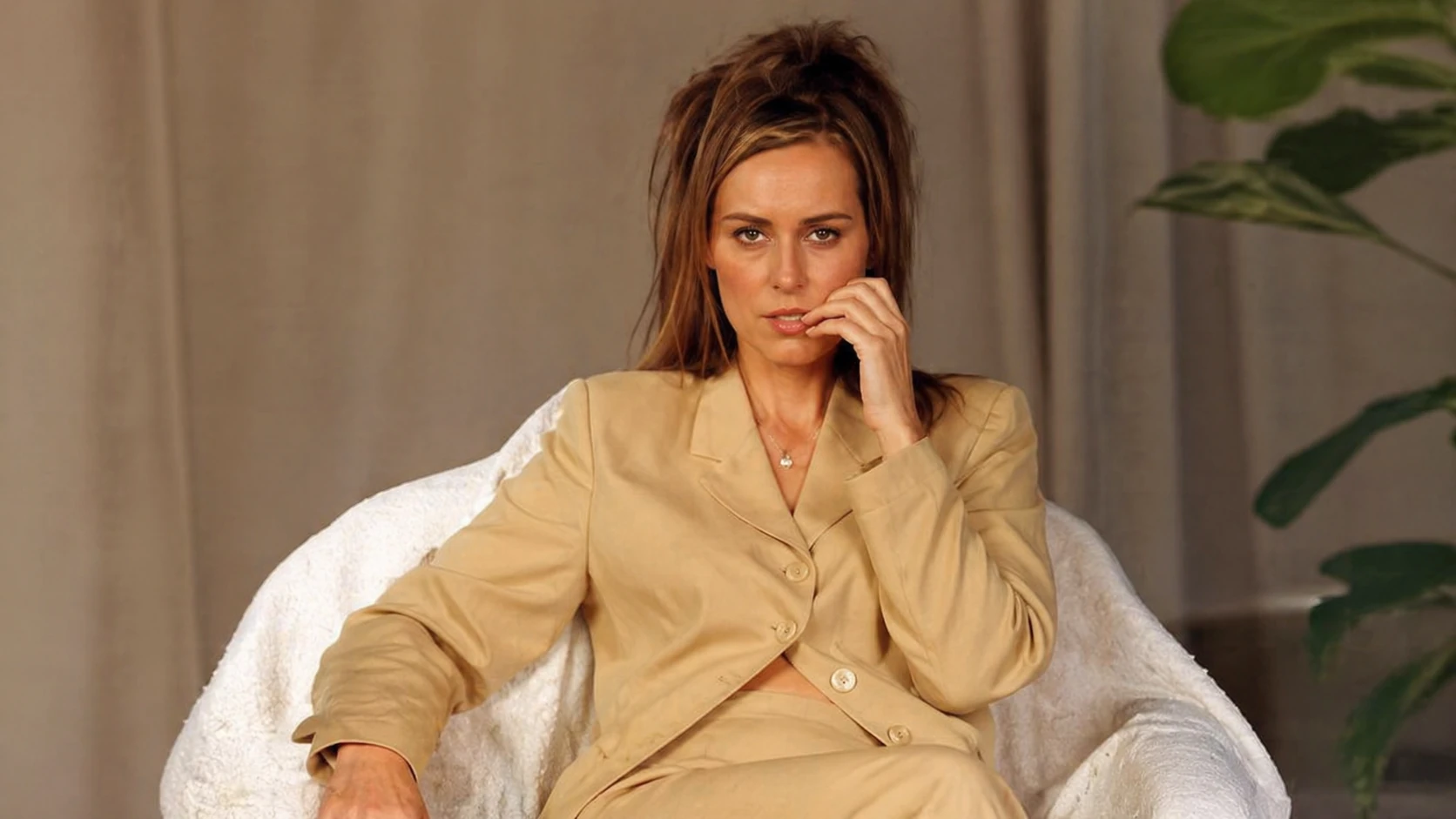
Eileen Catterson first entered public view as a young Scottish beauty queen, winning Miss Scotland in 1987 while still a teenager from Erskine. For many people, that single title would have become the defining line of a short public biography. Catterson’s name, though, has lasted for other reasons too: her modeling career, her long relationship with singer Marti Pellow, and the unusually quiet way she has lived beside fame without turning herself into a permanent celebrity. Her story is not one of constant public reinvention, but of a woman who became visible early, stayed connected to one of Scotland’s best-known pop stars, and then guarded much of her own life from the glare around him.
The curiosity around eileen catterson is easy to understand. Searchers usually want to know who she is, whether she married Marti Pellow, what happened after Miss Scotland, how she fits into his recovery story, and what she is doing now. The public record answers some of those questions clearly and leaves others incomplete. That makes her a different kind of profile subject: not a celebrity who has documented every turn, but a public figure whose life has to be understood through verified fragments, old press references, and the boundaries she appears to have kept.
Early Life and Scottish Roots
Eileen Catterson is widely identified as being from Erskine, a town in Renfrewshire, Scotland, near the River Clyde. That detail matters because her public story begins not in London, Los Angeles, or a managed entertainment machine, but in the world of Scottish regional contests, local newspapers, and 1980s beauty culture. Erskine was not a glamour capital, yet it gave her the grounding from which she stepped into a national title. Her early life before Miss Scotland has not been heavily documented, and there are no reliable public accounts that map out her childhood in detail.
Because Catterson has not made a habit of giving long autobiographical interviews, much of her family background remains private. That is not unusual for people who became known through pageants before the internet era, especially if they later chose not to build a public brand. Unlike modern influencers or reality-TV figures, Catterson did not leave behind a large archive of personal posts, school memories, or family stories. The result is a biography that must begin with a clear limit: her roots are Scottish and her hometown is part of the record, but her family life before fame has largely stayed out of public view.
What can be said is that Catterson came of age in a period when beauty contests still carried real cultural weight in Britain. Winning a national title could open doors to modeling, magazine features, television appearances, and travel. It also placed young women under a kind of scrutiny that was often intense and unforgiving. For a teenager, that mix of opportunity and attention could be both exciting and difficult to manage.
Miss Scotland 1987
Catterson’s breakthrough came in 1987, when she won Miss Scotland. Contemporary archive references identify her as “Eileen Catterson from Erskine” and place her win in April of that year. The title made her one of the recognizable young Scottish faces of the moment and linked her name permanently to the national pageant record. It remains the clearest public milestone in her own career, separate from any later association with Marti Pellow.
The Miss Scotland title had a specific meaning in that era. Winners were often expected to represent Scotland on international stages, and the titleholder became part of a wider pageant system connected to contests such as Miss Universe and Miss World. Catterson’s case is remembered partly because her path appears to have been interrupted by age rules. Public pageant records list her as Miss Scotland 1987 but indicate that she did not take part in Miss Universe that year, with the common explanation being that she was under the required age.
That detail has caused confusion for years. Some short online biographies imply that she competed internationally, while others say she was disqualified or unable to participate because she was too young. The careful version is that she won Miss Scotland but does not appear to have competed in the Miss Universe final. Her title still stands as a real achievement, but the international pageant chapter is best described with restraint rather than certainty beyond what the public record supports.
Modeling and Public Visibility
After Miss Scotland, Catterson was frequently described in the press as a model. That description fits the usual route for pageant winners of the period, many of whom moved between fashion shoots, promotional appearances, magazine features, and public events. Her modeling work made her visible enough to appear in celebrity coverage during the 1990s, especially as her relationship with Marti Pellow became known. Still, the detailed record of her modeling career is thinner than many modern profiles suggest.
This is where fact-checking matters. Many websites describe Catterson as a successful model or fashion figure, but they often do not name specific agencies, campaigns, runways, designers, or magazine covers. That does not mean she did not work consistently; it means the evidence available to the general public is limited. A responsible biography should not fill that space with invented credits or polished claims that cannot be traced.
Her modeling identity, then, should be understood in context. Catterson was a Scottish titleholder who moved into the public-facing world of fashion and celebrity media, but she did not become a heavily documented international supermodel in the way that term is usually used. Her visibility was real, especially in Britain, yet it was also selective. Over time, her name became less tied to professional bookings and more tied to a private partnership that the public continued to watch from a distance.
Meeting Marti Pellow and Life Beside Pop Fame
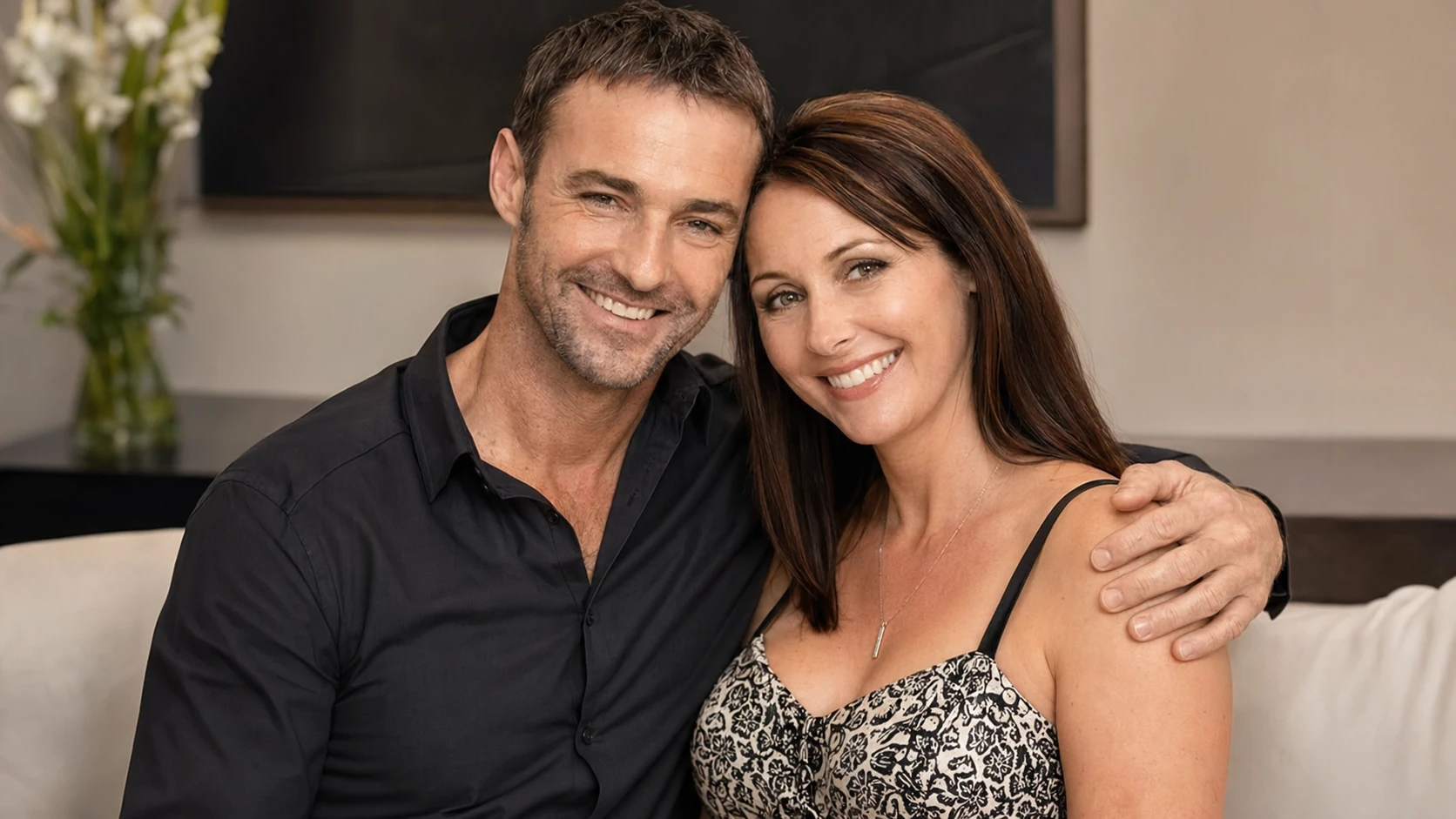
Eileen Catterson is best known to many readers as the long-term partner of Marti Pellow, the Scottish singer who rose to fame as the lead vocalist of Wet Wet Wet. The band became one of Britain’s biggest pop acts of the late 1980s and 1990s, with hits that made Pellow a household name. By the time Catterson was appearing in press coverage beside him, he was no longer just a singer from Clydebank. He was the face of a band whose songs were embedded in radio, television, weddings, and the emotional soundtrack of the decade.
Their relationship has often been described as long-lasting, private, and central to Pellow’s adult life. Media references from the 1990s placed them together during the years when Wet Wet Wet were enjoying major commercial success. Later interviews with Pellow continued to refer to Catterson as his long-term partner, which suggests a relationship that survived fame, addiction, recovery, career changes, and the ordinary strain of decades together. In celebrity terms, that kind of continuity is striking precisely because the couple has not turned it into a public performance.
The two have lived much of their relationship away from constant publicity. Pellow has spoken about music, addiction, faith, theatre, and recovery far more often than he has discussed domestic details. Catterson, for her part, has not built a public persona around being the partner of a famous singer. That silence has protected her, but it has also created space for speculation, especially around marriage, children, and family life.
Marriage, Children, and What Is Publicly Known
One of the most common questions about eileen catterson is whether she is married to Marti Pellow. The most accurate answer is that reliable public sources have usually described her as his long-term partner, not consistently as his wife. Some websites call her his wife or claim the couple married, but those claims are often unsupported or repeated without clear evidence. Unless a direct confirmation or public record is available, it is safer to say they have been partners for many years rather than state that they are legally married.
The same caution applies to children. Publicly available reliable information does not confirm that Catterson and Pellow have children together. Some online pages speculate about family details, but speculation is not biography. For a person who has kept her private life guarded, it would be unfair to present unverified family claims as fact.
This restraint is not evasive; it is good reporting. Readers may want a complete family tree, but private people do not owe the public one simply because they have been connected to fame. Catterson’s relationship with Pellow is public enough to be part of her biography, yet the couple’s inner life remains largely their own. That balance should shape any serious account of her.
The Support Behind Marti Pellow’s Recovery
Catterson’s most meaningful public role may be the one connected to Marti Pellow’s recovery from heroin addiction. Pellow has spoken openly in later years about addiction, treatment, and the work of staying sober. In accounts of that period, Catterson appears not as a decorative partner but as someone close enough to see the damage and strong enough to push for help. Her place in that story gives the public a rare glimpse of her character under pressure.
Reports from the late 1990s and early 2000s described Pellow’s addiction as a serious and frightening chapter. He later acknowledged the grip it had on him and the daily nature of recovery. Catterson was reported to have been one of the people who helped him face the need for professional treatment. That kind of support is not glamorous, and it rarely fits neatly into celebrity storytelling.
The truth is, addiction does not affect only the person using. Partners and families often live through confusion, fear, anger, secrecy, and exhaustion before recovery even begins. Catterson’s role, as described in public accounts, seems to have involved both care and firmness. It is one of the few parts of her private life that has entered the public record, and it deserves to be treated with seriousness rather than melodrama.
Pellow’s later stability gave this part of the story a different meaning. He went on to continue performing, recording, and building a theatre career, while speaking with more maturity about the past. Catterson’s support did not make the recovery story simple, because recovery is never simple. But it does show that her influence in his life extended far beyond red-carpet appearances or magazine photographs.
Public Image and the Choice to Stay Private
Catterson’s public image is unusual because it is built as much on absence as on exposure. She was visible enough to win a national title, work as a model, and appear in celebrity coverage, but she did not chase constant attention. In the years when fame became more confessional and public figures were encouraged to sell every private milestone, she remained hard to pin down. That choice has made her more interesting to some readers, not less.
Privacy can be mistaken for mystery, especially online. In Catterson’s case, the lack of interviews has led some websites to inflate her biography with claims that sound impressive but cannot be checked. Descriptions of business ventures, charity work, or personal wealth often appear without named evidence. The more careful reading is that she has lived a largely private life connected to public fame, not that she has hidden a fully documented second career from view.
Her image has also benefited from a certain steadiness. Catterson is not known for public feuds, scandal-driven interviews, or a cycle of reinvention. She has been discussed in relation to beauty, loyalty, resilience, and discretion. Those are broad labels, but they fit the pattern of what is visible: a woman who became known young, stayed attached to a famous partner, and did not make public attention her main occupation.
The Gerard Butler Connection
Another recurring point of interest is Catterson’s reported family connection to Scottish actor Gerard Butler. An old entertainment interview has been cited as saying that Butler referred to Eileen Catterson as his cousin. The claim has circulated for years and is more specific than a vague rumor. Even so, it should be handled carefully because it is not central to either person’s public career.
What makes the detail interesting is the overlap of Scottish celebrity circles. Catterson, Pellow, and Butler all come from a relatively small national entertainment culture that produced several internationally recognized names. A family link, if accepted as reported, helps explain how certain figures may have crossed paths before they were global names. It does not, however, change the main shape of Catterson’s biography.
For readers, the Butler connection is best treated as a side note rather than a defining fact. Catterson is not known because of Gerard Butler, and her public profile was already established through Miss Scotland and her relationship with Pellow. The link adds color, but it should not become the headline. Good biography keeps proportion, especially with details that are interesting but secondary.
Money, Work, and Net Worth Claims
Search interest in Catterson often includes questions about net worth. That is understandable, since online celebrity culture trains readers to expect a number attached to every public name. In Catterson’s case, there is no credible, independently verified net worth figure in the public record. Any exact number presented by a low-quality celebrity-finance site should be treated as an estimate at best and guesswork at worst.
Her likely sources of income over the years would have included modeling and public appearances during the period when she was professionally active. She may also have had private business interests or investments, but those should not be stated as fact without documentation. Being the long-term partner of a successful musician does not automatically create a public record of personal wealth. Catterson’s own finances appear to have remained private, as is her right.
The safer conclusion is simple. Eileen Catterson has been connected to high-profile circles and likely enjoyed a comfortable life, but her personal net worth is not publicly confirmed. Serious profiles should avoid invented figures because they give false precision. In her case, the absence of reliable financial records says more than any unsourced estimate would.
The 1990s Context That Shaped Her Fame
To understand why Catterson still attracts attention, it helps to remember what 1990s British celebrity culture looked like. Pop stars, models, television presenters, and beauty queens often moved through the same magazines and social pages. A partner of a major singer could become familiar to readers without giving many interviews herself. Fame was mediated by photographers, weekend supplements, glossy magazines, and newspaper columns rather than personal social-media feeds.
Wet Wet Wet were at the center of that culture for a time. Their success with songs such as “Goodnight Girl” and “Love Is All Around” made Pellow one of the most recognizable Scottish performers of his generation. Catterson’s name became attached to that moment, partly because she was already photogenic and publicly known, and partly because readers were interested in the women beside male pop stars. She became a familiar name without becoming a constant speaker.
That older media structure also explains why information about her is uneven today. Some details exist in print archives, image captions, and magazine listings rather than searchable modern interviews. Other details were never recorded publicly at all. The gaps can feel frustrating, but they are also a reminder that not every life touched by fame becomes fully indexed by the internet.
Current Status and Life Now
Eileen Catterson appears to live a private life and is still most often referenced in connection with Marti Pellow. Recent mainstream coverage of Pellow has described him as sharing a home with his long-term partner, Catterson. That suggests continuity, although it does not open a window onto her daily routine, work, friendships, or personal plans. She does not appear to maintain a high-profile public platform under her own name.
Pellow remains active as a performer, including solo music and stage work, and his continuing career keeps public curiosity alive. Each new interview or tour announcement can renew interest in the person who has been beside him for so long. Yet Catterson herself has not returned to public life in a major way. Her current status is best described as private, stable, and largely outside the celebrity economy.
There is dignity in that choice. Many people who become known young spend decades trying to manage the public’s memory of them. Catterson seems to have done the opposite, allowing only a few established facts to remain visible while the rest of her life stays personal. That may not satisfy every search query, but it gives her story a quiet consistency.
Why Eileen Catterson Still Matters
Catterson matters because her story sits at the meeting point of beauty culture, Scottish celebrity, and private endurance. She represents a type of public figure that has become less common: someone who became known before constant digital self-promotion and then did not spend the rest of her life feeding the machine. Her public record is not huge, but it is durable. Miss Scotland 1987 still anchors her biography, and her partnership with Pellow remains part of British pop history.
She also matters because of the way her story invites better standards. There is a temptation to treat private figures as unfinished pages that writers can complete with assumptions. Catterson’s life shows why that approach fails. The truth is more respectful and more interesting: a young woman from Erskine won a national title, entered modeling, became linked to one of Scotland’s biggest singers, helped weather a serious personal crisis, and then kept much of her life away from the public.
Her continued search interest is not just nostalgia. It reflects a wider curiosity about the people adjacent to fame, especially women whose identities were often flattened into “girlfriend,” “model,” or “beauty queen.” Catterson was all of those in public shorthand, but she was also a person making choices about visibility, loyalty, and self-protection. That is the fuller story, even when some details remain private.
Frequently Asked Questions
Who is Eileen Catterson?
Eileen Catterson is a Scottish former model and beauty titleholder best known for winning Miss Scotland in 1987. She is also widely known as the long-term partner of Marti Pellow, the former lead singer of Wet Wet Wet. Her public profile comes from both her own early career and her long association with one of Scotland’s most famous pop performers.
Where is Eileen Catterson from?
Catterson is publicly identified as being from Erskine in Renfrewshire, Scotland. That hometown detail appears in references to her Miss Scotland win and remains one of the clearest facts about her early public life. More detailed information about her childhood, schools, and family background has not been widely confirmed.
Did Eileen Catterson win Miss Scotland?
Yes, Eileen Catterson won Miss Scotland in 1987. The title is the key achievement in her early public career and helped introduce her to a wider Scottish audience. Public pageant records also link her to the Miss Universe pathway, though they indicate she did not compete in the final event because of age eligibility issues.
Is Eileen Catterson married to Marti Pellow?
There is no strong public confirmation that Eileen Catterson and Marti Pellow are legally married. Reliable descriptions have often referred to her as his long-term partner rather than his wife. The couple’s relationship has lasted for many years, but the exact legal status has not been clearly established in the public record.
Do Eileen Catterson and Marti Pellow have children?
There is no reliable public confirmation that Eileen Catterson and Marti Pellow have children together. Some websites speculate about their family life, but those claims should not be treated as fact without clear evidence. The couple has kept private family matters away from public discussion.
What is Eileen Catterson’s net worth?
Eileen Catterson’s personal net worth is not publicly verified. Online figures attached to her name should be treated as estimates or speculation unless they come from credible financial records, which are not available in the public record. Her past work as a model and her connection to high-profile circles do not provide enough evidence for a reliable exact figure.
Where is Eileen Catterson now?
Eileen Catterson appears to live a private life and is still most commonly mentioned in connection with Marti Pellow. She has not maintained a highly visible public career in recent years and does not seem to court media attention. The best available picture is of someone who remains connected to a famous partner while choosing a low public profile.
Conclusion
Eileen Catterson’s biography is not a story of constant reinvention or public self-promotion. It is the story of a Scottish woman who became visible through Miss Scotland, moved through modeling and celebrity culture, and then lived much of her adult life with a protective sense of privacy. That restraint makes her harder to profile, but it also makes the verified facts more important.
Her connection to Marti Pellow has kept her name in public circulation, yet it should not erase her own early achievements. Before she was known as his partner, she was a teenager from Erskine who won a national title and entered the demanding world of public beauty and modeling. After that, she became part of a much larger story involving fame, addiction, recovery, and endurance.
What remains most striking is how little she has tried to convert attention into a permanent public identity. In an age when visibility is often treated as a career by itself, Catterson stands apart as someone who allowed parts of her life to be known and kept the rest back. That may be why people still search for her: not only to find facts, but to understand a woman who lived near the spotlight without surrendering fully to it.
