


Dame Esther Rantzen built one of the most distinctive careers in British broadcasting, turning consumer journalism into prime-time television and using her public profile to create services that changed lives. She became nationally known through That’s Life!, founded Childline after confronting the scale of child abuse, and later established The Silver Line to support lonely older people.
Her long career has also led to repeated questions about her finances. Esther Rantzen’s exact net worth is not publicly confirmed. A figure of about £15 million appears frequently on celebrity biography websites, but it is not supported by an audited statement, a reliable rich list or a detailed disclosure from Rantzen herself.
What can be established is that she earned income from television presenting, production, programme development, books, journalism, public speaking and business interests. Her story is best understood not through an unsupported fortune estimate, but through more than five decades of broadcasting, campaigning and public service.
Early Life and Family Background
Esther Louise Rantzen was born on June 22, 1940, in Berkhamsted, Hertfordshire, England. She is 86 years old as of July 2026 and is British.
She grew up in a Jewish family. Her father, Henry Rantzen, was an electrical engineer, while her mother, Katherine Flora Rantzen, was active in public and community life. Esther also had a younger sister, Priscilla Taylor, who became a writer and producer.
Rantzen’s childhood included periods of displacement during the Second World War. Like many British children of her generation, she experienced the uncertainty created by bombing and evacuation. Those early experiences were separate from the public campaigns she later led, but they formed part of a life shaped by strong family ties and an awareness of vulnerability.
She attended North London Collegiate School before studying English at Somerville College, Oxford. At university, she became involved in performance and student activities, although her later career developed through journalism and production rather than acting.
Starting Her Career at the BBC
Rantzen joined the BBC in the 1960s as a sound-effects assistant in radio. It was a modest entry point, but it gave her practical experience inside one of Britain’s most influential media organisations.
She moved into television research and trained as a producer-director. In 1968, she joined Braden’s Week, a consumer-affairs programme presented by Canadian broadcaster Bernard Braden. Her work combined research, reporting and direct engagement with members of the public.
That experience helped establish the approach that later defined her career. Rantzen understood that consumer journalism could be serious without becoming remote, and entertaining without treating viewers’ problems lightly. She developed a style that mixed investigations, humour, unusual stories and campaigns designed to produce real outcomes.
Career Breakthrough with That’s Life!
Rantzen became the central presenter of That’s Life! in 1973 after Bernard Braden left the programme. The series grew into one of the BBC’s most recognisable shows and remained on television until 1994.
At its peak, That’s Life! attracted audiences reported at more than 20 million. It combined investigations into faulty products and poor services with comic newspaper mistakes, unusual inventions, talking animals and stories sent in by viewers.
The format made Rantzen one of the best-known faces on British television. She wasn’t simply reading scripts or introducing reports. She helped shape the programme’s editorial identity as a producer and presenter, giving her a degree of influence that distinguished her from many television personalities of the period.
The show also demonstrated the public power of broadcasting before social media and online complaint platforms existed. Businesses, public authorities and government departments could face national scrutiny after appearing on the programme. Viewers often contacted That’s Life! because they believed conventional complaint systems had failed them.
Rantzen’s salary during the programme’s 21-year run has not been publicly confirmed. Current BBC salary disclosures cannot be used to calculate her historic earnings because the modern reporting system did not exist during the period when she became famous.
Childline and Her Work for Children
One of the most important turning points in Rantzen’s life came through a television programme about child abuse. After the broadcast generated an overwhelming response, she helped launch Childline in 1986.

The free and confidential helpline offered children a place to discuss abuse, fear, family problems and other concerns. Demand was immediate, showing that many young people had no trusted adult or accessible service to contact.
Rantzen chaired Childline for 19 years and later became its president. She also trained as a volunteer counsellor, making her connection with the service more direct than that of a public figure who simply lent a name to a campaign.
Childline eventually became part of the NSPCC. The service remains one of Britain’s best-known forms of support for children and young people.
The charity’s money is not part of Esther Rantzen’s personal wealth. Founding or leading a charity does not make its donations, buildings or reserves the property of the founder. Claims that her charitable work directly created her fortune misunderstand how charitable organisations operate.
Other Television Work and Public Recognition
Although That’s Life! remained her defining television achievement, Rantzen worked on many other programmes. She created The Big Time, a documentary series following people given opportunities to enter demanding professions or public roles. One of its most famous participants was singer Sheena Easton, whose appearance helped launch her career.
Rantzen also developed Hearts of Gold, which celebrated ordinary people for generosity, courage and service to others. The programme reflected a recurring theme in her work: television could reward public decency rather than focusing only on celebrity.
Her later appearances included documentaries, interviews, panel programmes and reality television. She competed on Strictly Come Dancing and appeared on I’m a Celebrity…Get Me Out of Here!, introducing her to younger audiences who may not have watched That’s Life! during its original run.
She also continued working in radio, print journalism and public speaking. Her official biography states that she has appeared in more than 2,000 television programmes across her career.
Rantzen was appointed OBE in 1991 for services to broadcasting, CBE in 2006 for services to children, and Dame Commander of the Order of the British Empire in 2015 for services to children and older people. These honours recognised both her media career and the charities she helped establish.
The Silver Line and Campaigning for Older People
Rantzen founded The Silver Line after speaking openly about loneliness following the death of her husband. The service was created to offer friendship, information and support to older people who felt isolated.
The Silver Line launched nationally in 2013. It later joined Age UK in 2019 and continued operating as a free telephone service.
The project extended Rantzen’s campaigning into a different stage of life. Childline focused on young people who lacked safe support, while The Silver Line addressed older adults who could go days or weeks without meaningful conversation.
As with Childline, the charity’s funds should not be included in estimates of her personal net worth. Her role as founder strengthened her public standing, but it did not give her personal ownership of the organisation’s assets.
Marriage, Children and Private Life
Esther Rantzen married television producer and documentary filmmaker Desmond Wilcox in 1977. Their relationship began while Wilcox was still married to his first wife, Patsy, a fact Rantzen has discussed publicly rather than attempting to conceal.
The couple remained married until Wilcox died from heart disease in September 2000. His death had a lasting effect on Rantzen, who later described the loneliness and grief that followed.
They had three children: Emily, Rebecca and Joshua. Rantzen is also a grandmother. Her official biography states that she has five grandchildren.
Her children have occasionally been involved in family production businesses, but they have not all pursued highly public lives. Rantzen has spoken about her family in interviews while also keeping many personal and financial details private.
There is no publicly confirmed evidence that she remarried after Wilcox’s death. Her later public life has centred on her family, broadcasting appearances, charity work and campaigning.
Esther Rantzen Net Worth and Income Sources
Esther Rantzen’s net worth is widely estimated online at around £15 million. That figure should not be presented as verified because no reliable public source has shown how it was calculated.
Her potential income sources are clear. She spent decades working as a BBC presenter, producer and programme creator. She also earned money through books, newspaper columns, speaking engagements, television appearances and commercial work.
Rantzen has written several books, including autobiographical works, a history of Childline and fiction. Publishing contracts can include advances and royalties, but her sales figures and contract terms have not been publicly disclosed.
She has also been available for paid speeches, event hosting and panel appearances. A broadcaster with her experience and public recognition may command substantial fees, although her individual speaking rates and annual income are private.
Her long working life makes it reasonable to describe her as financially successful. It does not make it possible to prove that she is worth £15 million or any other exact amount.
Production Companies and Business Interests
Public company records connect Rantzen with two active production businesses: Testament Productions Limited and Wilcox Productions Limited. These companies provide stronger evidence of her business activity than unsourced celebrity wealth websites.
Testament Productions was incorporated in 1981 and previously traded as Esther Rantzen Productions Limited. Rantzen is an active director and holds a significant shareholding, while members of her family are also involved.
She is also an active director and controlling shareholder of Wilcox Productions Limited. Public records identify her as owning at least 75% of its shares and voting rights.
Company ownership can add value to a person’s estate, but it does not reveal the amount of money available to them personally. Corporate cash, assets and rights belong to the company until they are paid or transferred through lawful channels.
A private company may also be worth more or less than its accounting balance sheet suggests. Its value can depend on contracts, intellectual property, expected income, liabilities and whether a buyer exists. No formal public valuation of Rantzen’s production companies has established their contribution to her net worth.
Property and Personal Assets
Rantzen has lived in London and later made her home in the New Forest. Her official biography identifies the New Forest as her place of residence, but the ownership and value of her current home are not publicly confirmed.
A former Hampstead penthouse associated with her was advertised for rent in 2024 at a high monthly price. Reports stated that she had lived there between 2011 and 2021, but they did not establish whether she owned the property.
Living in a valuable residence is not proof of ownership. It also does not show whether a mortgage, joint owner, trust or other financial arrangement is involved.
No reliable public inventory exists for her savings, pensions, investments or debts. These missing details prevent any responsible calculation of her full personal fortune.
Health, Assisted Dying and Recent Updates
Rantzen announced in January 2023 that she had lung cancer. She later said the disease was stage four and had spread, although treatment gave her more time than she initially expected.
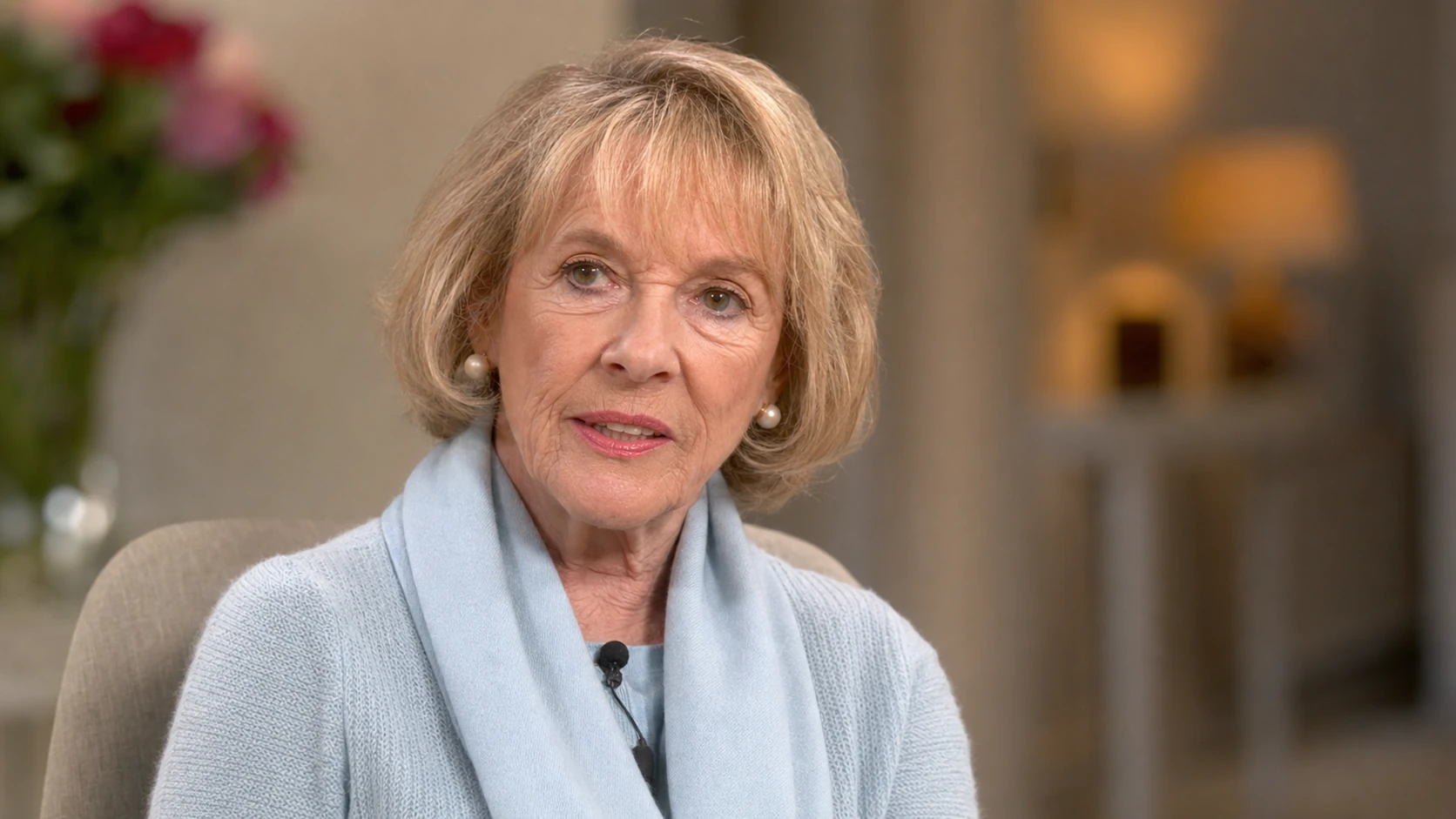
Her diagnosis led her to become a prominent supporter of assisted-dying reform. She disclosed that she had joined Dignitas in Switzerland and said she wanted the option of ending her life if her suffering became unbearable.
Rantzen’s campaign placed her at the centre of a difficult national debate. Supporters argued that terminally ill adults should have greater control over the circumstances of their deaths, while opponents raised concerns about coercion, medical ethics and the safety of vulnerable people.
She remained publicly engaged with the issue through 2024, 2025 and 2026. In March 2026, she said doctors were surprised that she had lived longer than first expected and that she was due to undergo further medical assessment.
The assisted-dying bill she supported failed to complete its parliamentary passage in April 2026 after running out of time in the House of Lords. Campaigners indicated that they intended to continue seeking a change in the law.
As of July 2026, Rantzen remained a highly visible public figure whose current work was shaped more by health, family and campaigning than by regular television presenting.
Public Image and Lasting Influence
Rantzen’s broadcasting style was direct, warm and sometimes theatrical. Viewers who grew up with That’s Life! often remember both its serious campaigns and its eccentric lighter segments.
Her work also attracted criticism. Some people found the programme sentimental or overly intrusive, while others questioned the mixture of serious investigations and comic entertainment. Yet its popularity and influence showed that the format connected with a huge audience.
Her strongest public legacy lies in converting television attention into permanent services. Childline and The Silver Line continued operating long after the programmes or personal experiences that inspired them.
That achievement explains why her reputation extends beyond celebrity. Rantzen became famous as a broadcaster, but she used that fame to create institutions designed for people who felt unheard.
Frequently Asked Questions
What is Esther Rantzen’s net worth in 2026?
Esther Rantzen’s exact net worth is not publicly confirmed. Online sources often estimate it at about £15 million, but the figure is speculative and is not supported by a public financial disclosure.
How did Esther Rantzen make her money?
She earned income through television presenting, producing, programme creation, books, journalism, speaking engagements and other media work. She also owns interests in private production companies.
How old is Esther Rantzen?
Esther Rantzen was born on June 22, 1940. She is 86 years old as of July 2026.
Who was Esther Rantzen’s husband?
She was married to documentary filmmaker and television executive Desmond Wilcox. They married in 1977 and remained together until his death in September 2000.
How many children does Esther Rantzen have?
She has three children: Emily, Rebecca and Joshua. Her official biography also states that she has five grandchildren.
Does Esther Rantzen own Childline?
No. Rantzen founded Childline and served as its chair and president, but it is a charitable service rather than her personal business. It now operates as part of the NSPCC.
What is Esther Rantzen doing now?
Her recent public activity has focused on family life, living with stage-four lung cancer and campaigning for assisted-dying reform. She has continued giving interviews and commenting on the proposed change in British law.
Conclusion
Esther Rantzen’s career cannot be reduced to a celebrity wealth estimate. She spent 21 years presenting That’s Life!, developed other successful programmes and became one of the most recognisable figures in British television.
Her financial success is believable, but the amount remains private. The frequently repeated £15 million figure has not been verified through accounts, declared assets or a reliable independent valuation.
What can be measured more confidently is her public impact. Childline gave vulnerable children a service designed around listening, while The Silver Line addressed the isolation experienced by many older people.
Rantzen’s later health struggles have added a final, deeply personal chapter to her public life. Whether discussing television, loneliness, cancer or assisted dying, she has continued to place difficult subjects before a national audience and ask that people who feel powerless be heard.
