

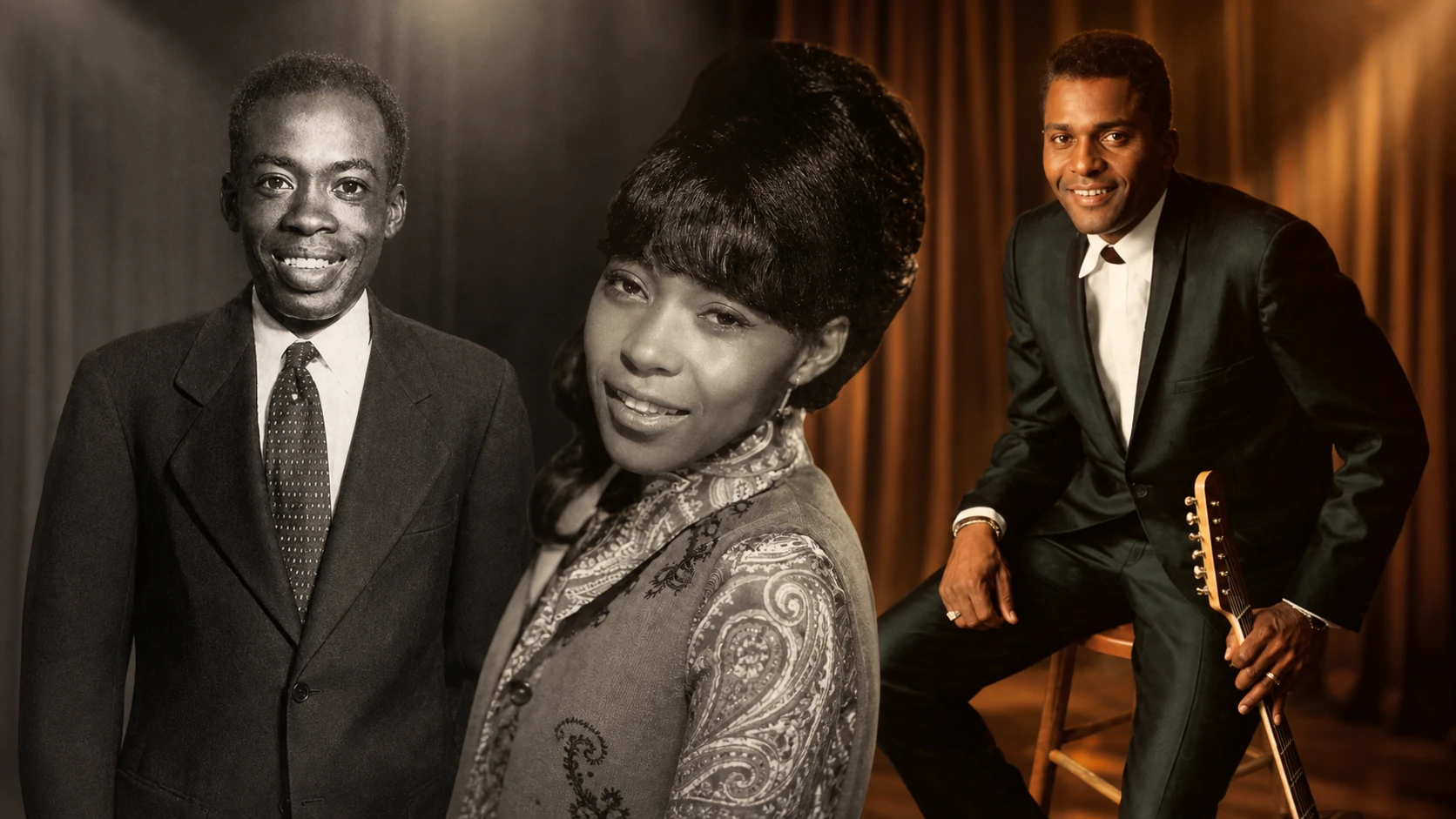
Black country singers have shaped country music from its earliest commercial years, even though the industry often presented the genre as almost exclusively white. From DeFord Bailey’s harmonica performances on the early Grand Ole Opry to Charley Pride’s historic run of chart-topping singles, Black musicians have carried country traditions through radio, records, touring, folk revival, contemporary Nashville, and streaming-era crossover success.
The story is not one biography but many connected lives. Some artists became household names, while others recorded strong work without receiving equal promotion, radio support, or historical credit. Together, their careers explain how Black performers helped create country music, fought for space inside its institutions, and expanded its sound for later generations.
The Black Roots of Country Music
Country music developed from several traditions that circulated across the American South, including ballads, fiddle tunes, gospel, blues, string-band music, work songs, and dance music. Black and white musicians often learned from one another long before record companies divided Southern music into racial marketing categories.
The banjo is one of the clearest examples of this shared history. Its ancestry can be traced to West African instruments brought to the Americas through the slave trade. Black musicians developed and played early forms of the banjo before it became strongly associated with white rural entertainment and commercial country music.
During the 1920s, record companies commonly marketed music by Black performers as “race records” and rural recordings by white performers as “hillbilly” music. Those labels helped create the false impression that blues and country had separate racial origins. In reality, the musicians, instruments, songs, and regional styles frequently overlapped.
DeFord Bailey and the Early Grand Ole Opry
DeFord Bailey was born in Smith County, Tennessee, in 1899. He became known for his skill on the harmonica and for instrumental pieces that imitated trains, animals, and sounds from rural life. His performances reached a wide audience through Nashville radio during the formative years of what became the Grand Ole Opry.
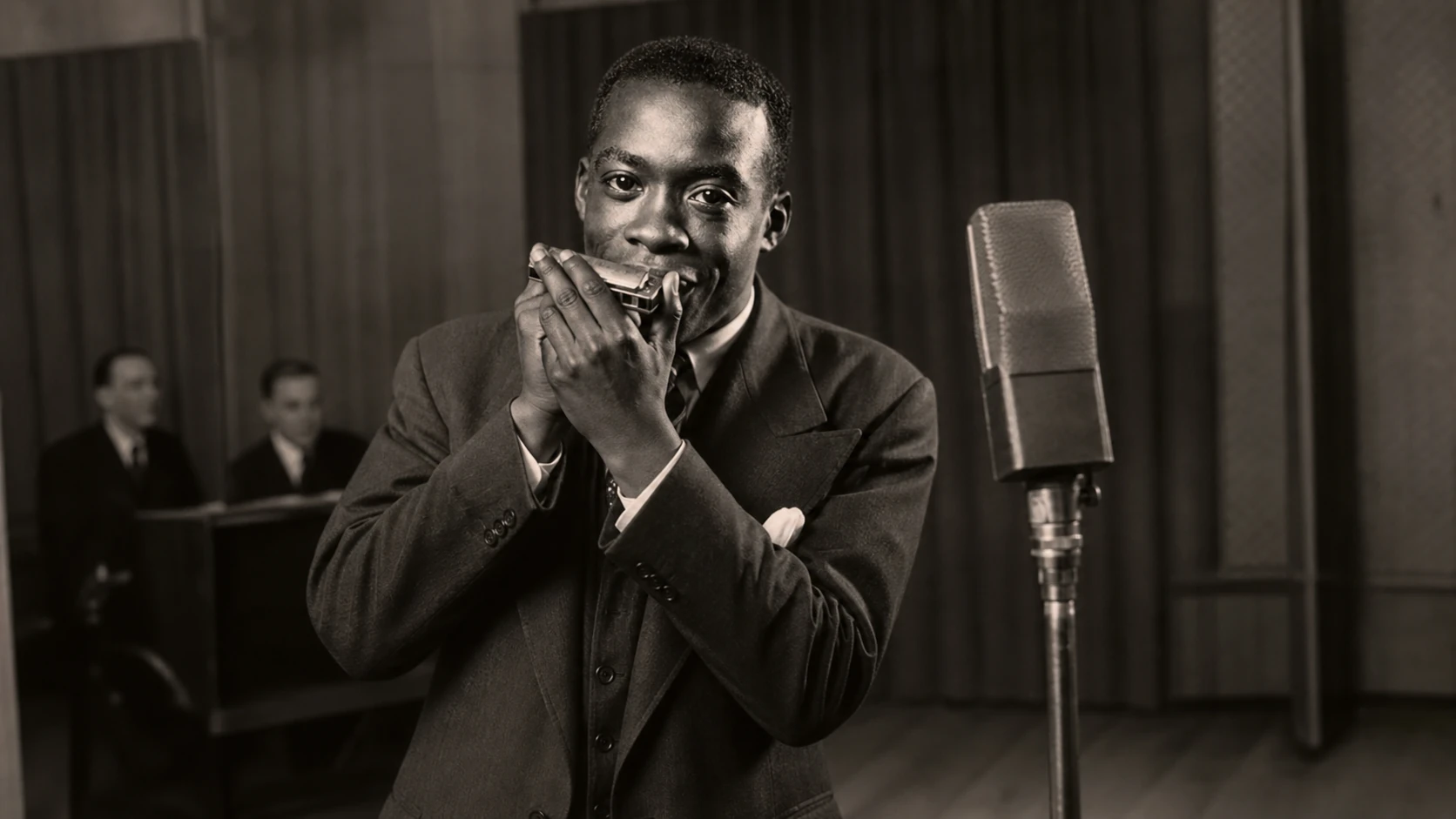
Bailey was one of the Opry’s first major stars and its first prominent Black performer. His best-known pieces included “Pan American Blues” and “Fox Chase,” which showed his technical control and ability to turn everyday sounds into musical storytelling.
His success came under the restrictions of Jim Crow segregation. Bailey toured with white country performers but could not always stay in the same hotels or eat in the same restaurants. His career at the Opry ended in 1941, and he later spent many years outside the national spotlight.
Historical recognition came slowly. Bailey was inducted into the Country Music Hall of Fame in 2005, more than two decades after his death. His legacy now stands as proof that Black performers were present at the center of country radio during the genre’s early commercial development.
Charley Pride and Mainstream Country Success
Charley Pride was born on March 18, 1934, in Sledge, Mississippi. One of eleven children in a sharecropping family, he grew up listening to country music on the radio and initially hoped to build a career in professional baseball.
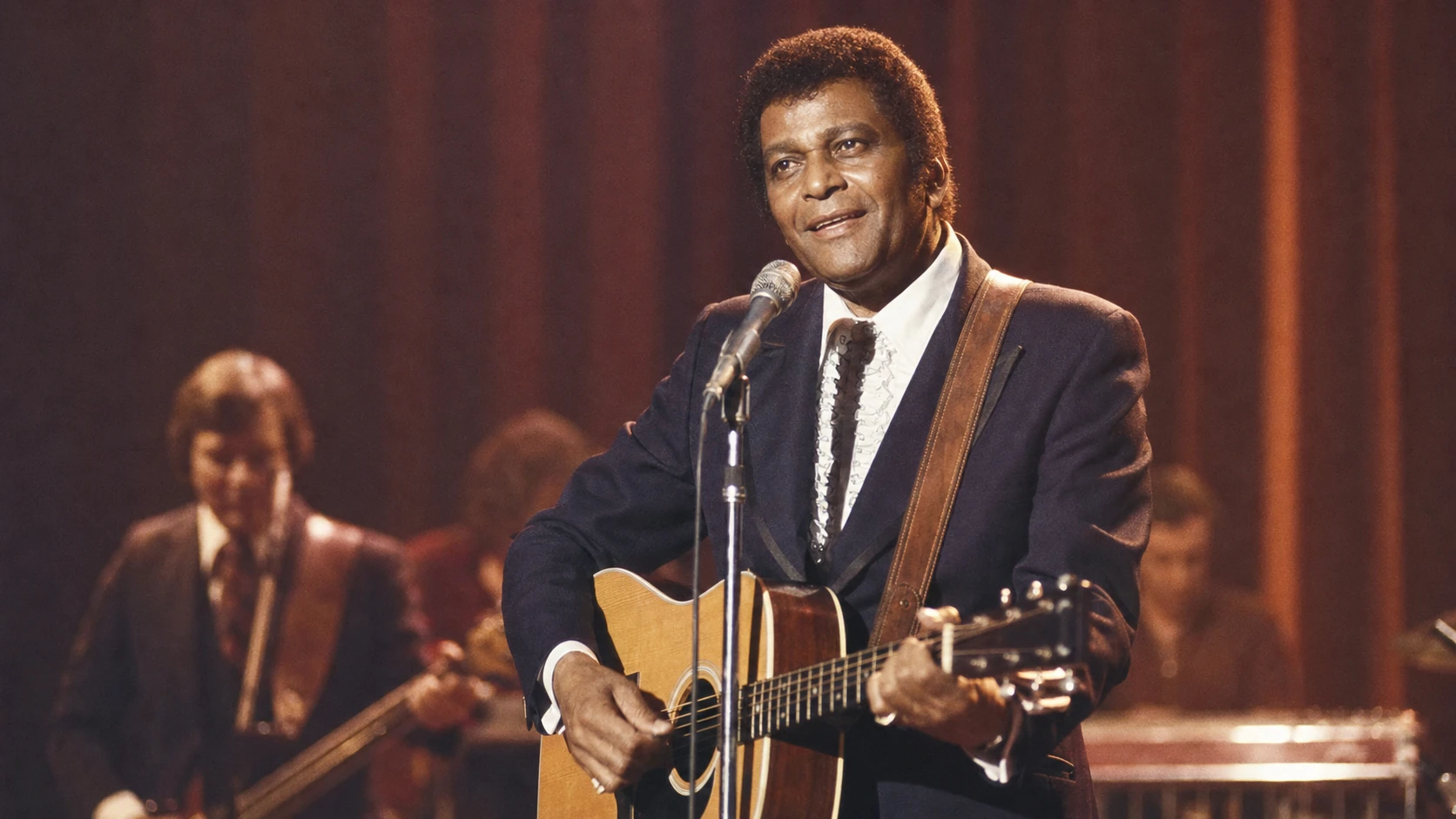
After injuries and other setbacks limited his baseball ambitions, Pride began performing music more seriously. He eventually gained the attention of Nashville producers and signed with RCA Records in the 1960s. Early promotional materials sometimes avoided showing his photograph because executives feared that racial prejudice would affect how country audiences received him.
The strategy revealed the industry’s bias, but Pride’s voice quickly established him as more than a curiosity. His calm baritone, precise delivery, and traditional song choices connected with listeners. Between 1969 and 1983, he earned 29 No. 1 singles on Billboard’s country chart.
“Kiss an Angel Good Mornin’,” released in 1971, became his signature recording and crossed into the pop market. Pride also found success with songs such as “Is Anybody Goin’ to San Antone,” “All I Have to Offer You Is Me,” and “Mountain of Love.”
He won the Country Music Association’s Entertainer of the Year award in 1971 and Male Vocalist of the Year in 1971 and 1972. In 2000, he became the first Black artist inducted into the Country Music Hall of Fame. Pride died in December 2020, leaving behind a career that remains unmatched among Black singers working within traditional commercial country.
His family life was more stable than the public careers of many touring stars. Pride married Rozene Cohran in 1956, and they had children together. He generally kept his marriage and home life away from sensational coverage, allowing his music and professional achievements to remain central to his public image.
Linda Martell and the Struggle of Black Women in Nashville
Linda Martell was born Thelma Bynem in South Carolina in 1941. She began singing with family members and performed pop, R&B, and soul before moving into country music during the late 1960s.
Her recording of “Color Him Father” reached the country chart in 1969. That year, she became the first Black female solo artist to perform at the Grand Ole Opry. Her album Color Me Country followed in 1970.
Martell’s country career was brief despite her strong voice and clear command of the genre. She faced racist treatment during performances and struggled with limited industry support. She eventually left the recording business and lived a largely private life.
Her work gained renewed attention decades later as historians and younger musicians examined the experiences of Black women in country music. Beyoncé’s 2024 album Cowboy Carter introduced Martell’s voice and name to a much larger audience, but Martell’s importance was established long before that appearance. She remains a defining figure because she entered spaces where Black women had rarely been allowed to build visible careers.
Ray Charles and Country Music Beyond Nashville
Ray Charles was born in Albany, Georgia, in 1930 and became famous through soul, gospel, jazz, blues, and popular music. Although he was not known primarily as a country singer, his relationship with country songs changed how the genre could be interpreted.
In 1962, he released Modern Sounds in Country and Western Music. The album included songs associated with country writers and performers but arranged with orchestras, gospel-influenced vocals, and pop production.
The project was a major commercial success. Songs such as “I Can’t Stop Loving You” reached listeners who may not have considered themselves country fans. Charles showed that the emotional core of country songwriting could survive major changes in arrangement and vocal style.
His work also challenged racial assumptions surrounding the genre. He treated country material as part of a shared American songbook rather than music belonging to one community. The Country Music Hall of Fame inducted him in 2021, seventeen years after his death.
Stoney Edwards, O.B. McClinton, and Overlooked Careers
Stoney Edwards was born in Oklahoma in 1929 and later settled in California. He worked in manual labor before injuries led him to focus more heavily on music. His songs often addressed working-class life, heartbreak, pride, and survival.
Edwards released several country records during the 1970s, including “She’s My Rock” and “Hank and Lefty Raised My Country Soul.” His music fit comfortably within traditional country, yet he never received the long-term commercial support given to many white singers of the same period.
O.B. McClinton also recorded country music during the 1970s. Born in Mississippi in 1940, he wrote and performed songs that mixed humor, romance, and direct references to his identity as a Black country artist.
McClinton understood that his presence in Nashville was treated as unusual, and he sometimes addressed that fact openly. His career demonstrated both personal determination and the limits placed on Black performers after Charley Pride’s success.
These singers complicate the idea that Pride stood alone because no other Black artists wanted to make country music. Many did. The larger problem was that labels, radio stations, promoters, and audiences rarely offered them equal room to develop.
Darius Rucker and a New Commercial Path
Darius Rucker was born in Charleston, South Carolina, in 1966. He first became famous as the lead singer of Hootie & the Blowfish, whose 1994 album Cracked Rear View became one of the best-selling albums of its era.
Rucker moved into country music as a solo artist in the late 2000s. His 2008 album Learn to Live produced several successful singles, including “Don’t Think I Don’t Think About It.” That song made him the first Black solo singer since Charley Pride to reach No. 1 on the country chart.
His version of “Wagon Wheel” became one of his largest hits and won the Grammy Award for Best Country Solo Performance in 2014. Rucker joined the Grand Ole Opry in 2012, confirming that his country career had become a lasting part of his professional identity rather than a temporary experiment.
Rucker’s move benefited from his established fame, but it still carried risk. Country audiences could have rejected him as a rock singer crossing formats. Instead, his success helped reopen discussion about Black participation in mainstream country.
Mickey Guyton, Rissi Palmer, and Greater Visibility
Rissi Palmer released her self-titled country album in 2007 and became one of the first Black women in decades to place a single on the country chart. Her song “Country Girl” directly asserted her belonging in the genre.
Palmer later expanded her work beyond recording. Through the Color Me Country radio program and related projects, she has highlighted Black, Indigenous, and Latino artists working in country, folk, and roots music. Her advocacy has helped listeners discover performers who receive limited commercial-radio exposure.
Mickey Guyton was born in Arlington, Texas, in 1983. After moving to Nashville, she spent years developing a career within the major-label system. Her early releases displayed a powerful voice and polished contemporary country style, but she struggled to gain consistent radio support.
In 2020, Guyton released “Black Like Me,” a song that addressed racism through personal country storytelling. The recording earned a Grammy nomination for Best Country Solo Performance, making her the first Black woman nominated in that category.
Guyton later released Remember Her Name and performed on major television broadcasts. Her work made her one of the most visible Black women in modern country, while her experiences also exposed the pressure placed on one artist to represent an entire community.
Kane Brown and the Streaming Generation
Kane Brown was born in Tennessee in 1993 and grew up in Georgia and Tennessee. He has spoken publicly about experiencing poverty, family instability, and racism during his childhood.
Brown first built an audience by posting cover performances online. His social-media popularity allowed him to reach listeners before traditional country institutions fully supported his career.
His self-titled debut album produced hits including “What Ifs” and “Heaven.” In 2017, Brown became the first artist to lead Billboard’s five main country charts at the same time.
His sound combines contemporary country with pop and R&B influences. Brown’s success reflects changes in how artists build careers, especially as streaming and social platforms reduce some of the control once held by radio programmers and record-label executives.
Brown married singer Katelyn Jae in 2018, and the couple have publicly shared parts of their family life. They have children together and have also recorded music as a duo. Unlike earlier Black country stars who were often presented as isolated exceptions, Brown built his career during a period when audiences could discover several artists outside traditional radio.
Rhiannon Giddens and the Recovery of Black Musical History
Rhiannon Giddens was born in Greensboro, North Carolina, in 1977. She trained as an opera singer but became widely known through the Carolina Chocolate Drops, a group dedicated to Black string-band traditions.
Giddens plays banjo and fiddle and has spent much of her career correcting misconceptions about the racial history of American roots music. Her recordings draw from folk, old-time music, blues, gospel, country, and original songwriting.
Her work is both musical and historical. She has written about slavery, migration, motherhood, racial violence, and survival while also drawing attention to overlooked Black instrumentalists and composers.
Giddens contributed banjo to Beyoncé’s “Texas Hold ’Em,” connecting the instrument’s African ancestry with one of the largest country-related hits of 2024. Her career shows that Black country history is not limited to Nashville radio or commercial chart success.
The War and Treaty, Brittney Spencer, and New Voices
The War and Treaty is the husband-and-wife duo of Michael Trotter Jr. and Tanya Trotter. Their music combines country, gospel, soul, and Americana, with both singers delivering emotionally forceful performances.
The duo earned major award nominations and expanded its audience through touring and television appearances. Their marriage is central to their public identity, but their work is not marketed only as a personal love story. Their songs also address faith, struggle, military experience, family, and endurance.
Brittney Spencer grew up in Baltimore and sang in church before pursuing country music in Nashville. She gained wider attention through independent releases, touring, and online performances.
Her debut album My Stupid Life was released in 2024. Spencer’s music joins country songwriting with gospel-trained vocals and modern production. She also appeared on Beyoncé’s version of “Blackbiird,” alongside Tanner Adell, Tiera Kennedy, and Reyna Roberts.
Other current Black country and roots performers include Breland, Chapel Hart, Willie Jones, Joy Oladokun, Amythyst Kiah, Tanner Adell, Tiera Kennedy, Reyna Roberts, and Jett Holden. Their music ranges from traditional country and folk to country-pop, rock, and country-rap.
Beyoncé, Shaboozey, and the 2024 Turning Point
Beyoncé released Cowboy Carter in March 2024 after years of public discussion about her relationship with country music. The album included country, folk, rock, gospel, pop, and experimental elements rather than following one fixed Nashville sound.
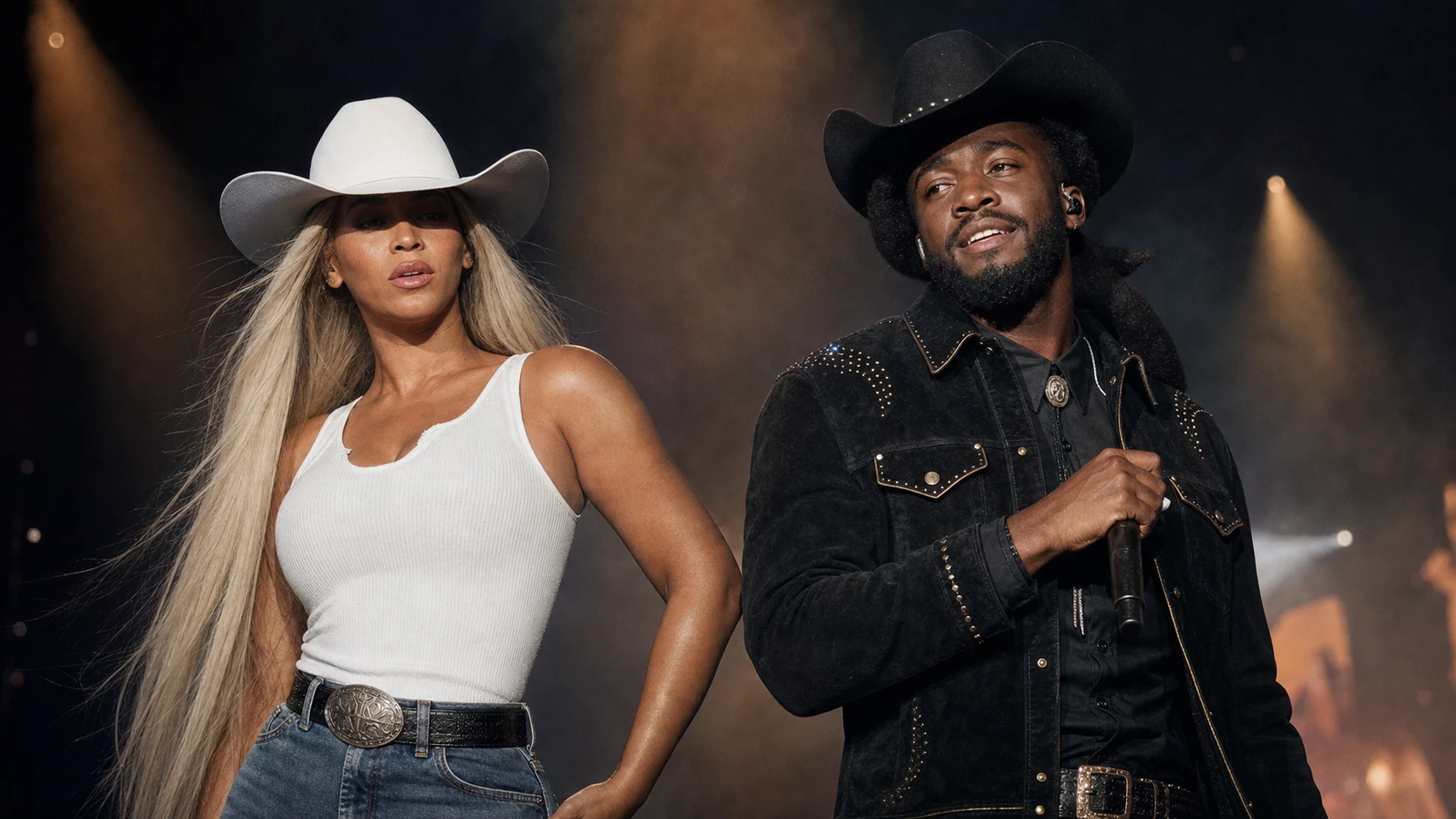
“Texas Hold ’Em” made Beyoncé the first Black woman to reach No. 1 on Billboard’s Hot Country Songs chart. Cowboy Carter also reached No. 1 on the country albums chart and won the 2025 Grammy Award for Best Country Album.
The project included appearances by Linda Martell and younger Black country artists. It also brought new attention to the banjo’s Black history and to the barriers that Black women have faced in country music.
Shaboozey experienced his own major breakthrough in 2024 with “A Bar Song (Tipsy).” The track blended country instrumentation and barroom storytelling with a reference to J-Kwon’s 2004 hip-hop hit “Tipsy.”
The song spent 19 weeks at No. 1 on the Billboard Hot 100, tying the existing record at the time. Shaboozey’s success showed that country music shaped by hip-hop could reach both country audiences and the broader pop market.
Beyoncé and Shaboozey’s achievements increased public interest in Black country singers, but their success did not erase older inequalities. A global superstar and a breakout crossover hit are not substitutes for steady investment in a larger group of artists.
Personal Lives, Relationships, and Privacy
There is no single pattern in the private lives of Black country singers. Some, including Charley Pride, Kane Brown, and the members of The War and Treaty, have had publicly known marriages that became part of their biographies.
Others keep relationships, children, and family details largely private. That choice should not be treated as evidence of secrecy or conflict. Musicians can build public careers without making their personal relationships part of their promotional identity.
Because this article covers many people rather than one individual, claims about spouses, children, sexuality, or dating history must be considered artist by artist. Unverified celebrity websites often repeat unsupported relationship claims, so details should be accepted only when confirmed through the artist or reliable public reporting.
Net Worth and Income Sources
There is no reliable combined net-worth figure for Black country singers. Individual wealth estimates published online often rely on guesses about record sales, touring, streaming, property, and endorsements without access to contracts, debts, taxes, or business expenses.
Major stars such as Beyoncé, Darius Rucker, Kane Brown, and Charley Pride have earned income through recording, publishing, touring, merchandise, licensing, and other ventures. Independent performers may depend on several smaller sources, including live shows, direct sales, teaching, grants, session work, and fan-supported platforms.
Commercial success does not always produce lasting wealth. Recording and touring require large expenses, and artists may share revenue with labels, managers, agents, publishers, musicians, and production teams. Any precise net-worth figure should therefore be treated cautiously unless it is supported by financial records or a direct statement.
Recent Work and Current Status
The period from 2024 through 2026 brought increased attention to Black country music through chart success, awards, museum projects, documentaries, touring programs, and independent organizations. Beyoncé’s Cowboy Carter and Shaboozey’s “A Bar Song (Tipsy)” reached audiences on a scale rarely seen for Black artists associated with country.
Rhiannon Giddens continued to connect performance with historical research, while Brittney Spencer, Tanner Adell, Tiera Kennedy, Reyna Roberts, and other younger singers gained broader recognition. The War and Treaty maintained a strong presence in country and Americana, and Mickey Guyton continued recording and performing.
The larger question is whether this visibility will produce durable careers for more artists. Long-term change depends on record contracts, publishing opportunities, radio support, festival bookings, media coverage, and the ability to release multiple projects without being treated as a temporary trend.
Frequently Asked Questions
Who was the first Black country singer?
There is no single confirmed first Black country singer because Black musicians performed the traditions that became country before commercial recordings created a formal genre. DeFord Bailey is widely recognized as the first major Black star of the Grand Ole Opry and one of the earliest nationally known Black country performers.
Who was the first Black female country singer?
Black women performed rural, folk, gospel, and string-band music long before the commercial country industry recognized them. Linda Martell is commonly identified as the first Black female solo country artist to perform at the Grand Ole Opry, which she did in 1969.
Who is the most successful Black country singer?
Charley Pride holds the strongest claim based on sustained traditional country-chart success. He earned 29 No. 1 country singles between 1969 and 1983 and won the CMA Entertainer of the Year award. Beyoncé, Darius Rucker, Kane Brown, and Shaboozey have achieved different forms of modern crossover and commercial success.
Is Beyoncé considered a country singer?
Beyoncé is a multi-genre artist best known for pop and R&B, but she has recorded country music. Her 2024 album Cowboy Carter topped the country albums chart and won the Grammy for Best Country Album, making it a major part of recent country history.
Which Black country singers are popular now?
Current and recent names include Kane Brown, Darius Rucker, Mickey Guyton, Shaboozey, Brittney Spencer, Breland, The War and Treaty, Tanner Adell, Tiera Kennedy, Reyna Roberts, Chapel Hart, Willie Jones, and Joy Oladokun. Rhiannon Giddens remains one of the most respected figures in folk, old-time, and roots music.
Why have there been so few Black country stars?
The shortage of widely promoted Black country stars reflects industry barriers rather than a lack of musicians. Record labels, radio stations, publishers, booking agencies, and media outlets have historically invested less in Black performers, especially Black women.
Are country and Americana the same genre?
No. Country and Americana overlap, but they have different commercial institutions, radio systems, award categories, and audiences. Americana can include folk, blues, roots rock, gospel, bluegrass, and country, which is why many Black roots artists appear in both discussions.
Conclusion
The history of black country singers is a history of creation, exclusion, persistence, and artistic range. Black musicians helped shape the instruments and traditions that formed country music, even when later marketing separated their work from the genre.
Artists such as DeFord Bailey, Charley Pride, Linda Martell, Ray Charles, Stoney Edwards, and O.B. McClinton established the record long before the current wave of public attention. Their careers show both what Black performers achieved and how much talent the industry failed to support.
Modern artists are not repeating one career model. Kane Brown built an audience online, Rhiannon Giddens recovered buried musical history, Mickey Guyton wrote directly about race, and Shaboozey connected country with hip-hop at a global scale.
Their collective place in country music is no longer reasonably treated as a side story. The next test is whether the business will support a wide range of Black artists not only during major cultural moments, but through full careers built over many years.
