

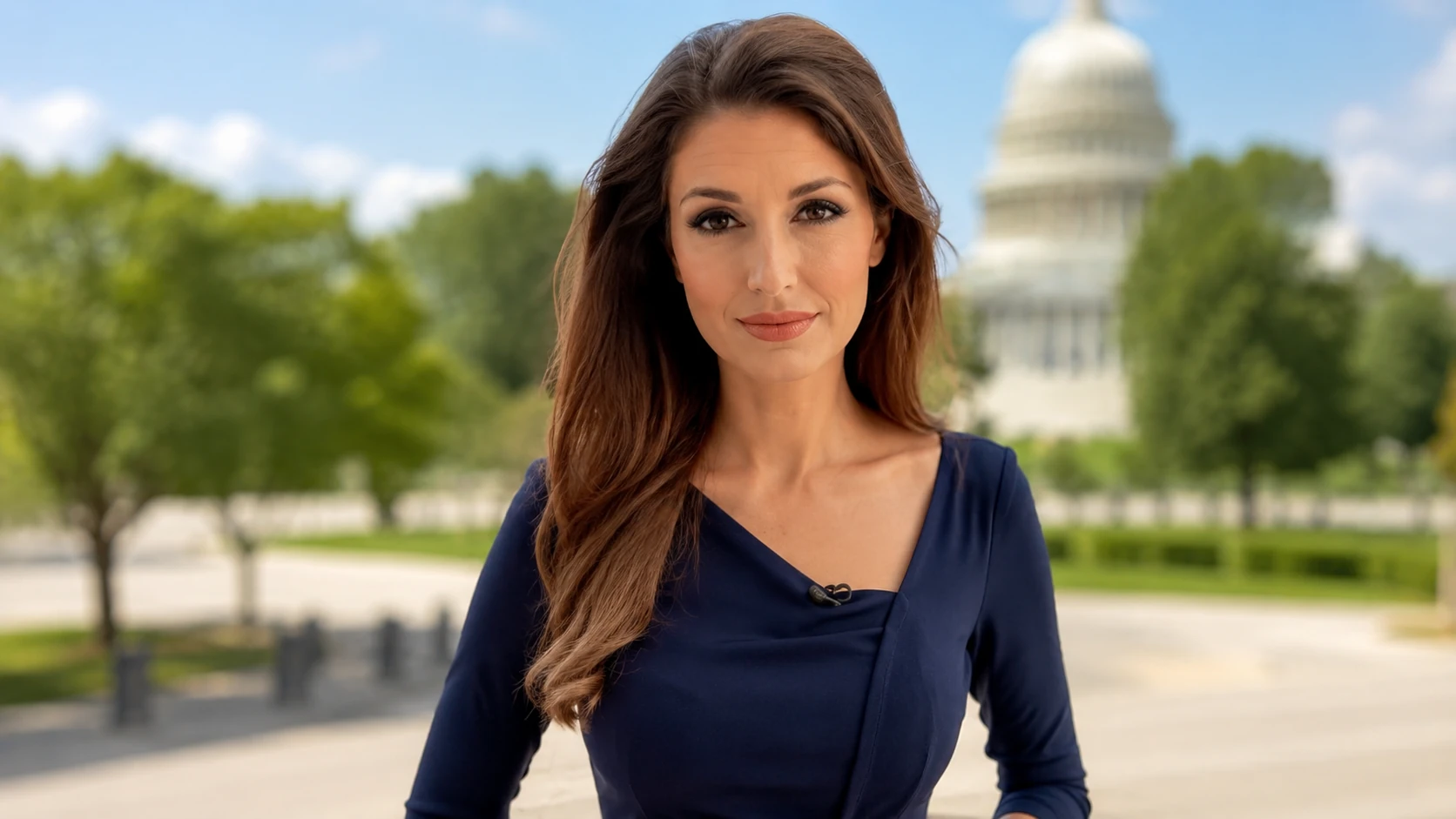
Helena Humphrey has built the kind of journalism career that looks steady from the outside but has clearly required range, discipline, and an appetite for difficult stories. She is best known to many viewers as a BBC journalist and presenter, often associated with international news, Washington reporting, and global affairs. Her public profile is not built on celebrity spectacle, but on the quieter authority of a reporter who has worked across major international newsrooms.
For readers searching her name, the interest is usually practical. People want to know who Helena Humphrey is, where she is from, what she does at the BBC, whether she is married, and what her career looked like before she appeared on their screens. The most reliable picture is of a multilingual broadcast journalist whose path has moved through European news, American political coverage, humanitarian communication, and international reporting.
Humphrey’s story also reflects a larger shift in journalism itself. Modern global news requires presenters who can move between studio explanation, field reporting, policy detail, and human impact without losing the viewer. That is where her background becomes useful: she has worked in newsrooms, humanitarian settings, and international media environments where clarity is not a luxury but a requirement.
Early Life and Family Background
Public information about Helena Humphrey’s early life is limited, and that should be stated clearly. Unlike actors, reality stars, or political figures, journalists often keep family details outside the public record. Humphrey has not built her public identity around childhood anecdotes, family drama, or personal branding, which makes many online claims about her background difficult to verify.
What can be said with more confidence is that her later career shows a strong international orientation from early on. Her education, language skills, and professional choices point toward someone who was drawn to cross-border communication before she became widely visible as a broadcaster. That kind of career rarely happens by accident, because it usually requires years of study, travel, and a willingness to work outside one familiar media culture.
Her family background has not been heavily publicized in reliable sources. That does not make it mysterious in any meaningful sense; it simply means her private life has remained private. For a working journalist, that boundary is reasonable, especially when the person’s public value comes from reporting rather than self-disclosure.
Education and Language Skills

One of the most consistent details about Helena Humphrey is her command of languages. Public professional profiles describe her as multilingual, with English, French, and German commonly associated with her work. That matters because language ability is more than a personal accomplishment in international journalism; it changes how a reporter listens, reads, interviews, and understands context.
Humphrey studied modern foreign languages, a background that fits closely with the career she later built. For a journalist working across Europe, the United States, and global institutions, language study gives more than vocabulary. It gives access to different political cultures, media habits, and ways of framing public life.
She has also been linked in public profiles to training connected with broadcast journalism. The combination of languages and television news training helps explain why she moved naturally into international broadcast roles. It also explains why her work has not been limited to one national audience or one narrow subject area.
From Humanitarian Communication to Journalism
Before becoming best known as a BBC journalist, Humphrey worked in humanitarian and international communication circles. Public speaker profiles connect her with organizations such as the United Nations and the Red Cross, including communication work around major global health and development issues. These details should be treated as professional biography rather than celebrity trivia, because they help explain the tone and range of her later reporting.
Humanitarian communication is not the same as newsroom reporting, but the two fields share certain demands. Both require accuracy under pressure, careful language, and respect for people caught in crisis. During a public health emergency or humanitarian disaster, unclear communication can make fear worse, and overstated claims can damage trust.
That background may also help explain why Humphrey’s journalism often appears grounded in consequences rather than spectacle. International news is full of large words such as policy, conflict, migration, and crisis, but each of those subjects eventually becomes personal. A reporter with experience around aid work is often better placed to remember that people are not merely examples inside a wider story.
Building a Career in International Broadcasting
Humphrey’s professional path has included several major media names, including Deutsche Welle, Euronews, NBC News, CBS News, and the BBC. That route is significant because each newsroom serves a different audience and operates with a different editorial rhythm. Moving through those institutions requires adaptability, especially for a journalist whose work crosses between live television, field reporting, interviews, and explanatory coverage.
At Deutsche Welle, her public profile connected her with international news and global subjects. DW’s audience is broad, outward-looking, and often interested in how events in one region affect people elsewhere. For a journalist building international range, that environment offers practical training in making stories clear across borders.
Her time at Euronews gave her another European platform and increased her visibility as an anchor and correspondent. Euronews has long focused on politics, international affairs, European institutions, and world events, which suited Humphrey’s language background and global interests. By the time she moved into more prominent BBC work, she had already built a résumé that looked less like a straight ladder and more like a series of international assignments.
Euronews and the Move Toward Wider Recognition
Humphrey’s Euronews period is one of the clearer public chapters in her career. She was associated with anchor work and international reporting, covering subjects that ranged from European politics to global security and U.S. public affairs. For viewers who discovered her later through the BBC, Euronews was an important step in shaping her on-air authority.
At Euronews, a presenter has to work with subjects that often come layered with history, competing national interests, and fast-changing facts. The job is not only to read news but to help viewers understand why the news matters beyond one country. Humphrey’s language skills and international background were well matched to that kind of work.
Her Euronews profile also showed her ability to handle interviews and policy-heavy subjects without making them feel remote. That is a difficult balance in broadcast journalism. If the tone is too casual, the subject loses weight; if it is too stiff, the viewer turns away before the story lands.
NBC News, CBS News, and American Reporting
Humphrey’s career has also included work connected to major American networks, including NBC News and CBS News. These experiences matter because American broadcast journalism has its own pace, style, and pressure points. Covering the United States for a global audience requires an awareness of both domestic politics and how those politics are understood abroad.
American reporting is often more personality-driven than European public broadcasting, especially during election cycles. A journalist working in that environment has to track policy, campaigns, voters, culture, and the performance of political power. Humphrey’s later Washington work suggests she became comfortable operating inside that demanding mix.
The U.S. chapter also widened her professional identity. She was no longer only a European-based international journalist covering the world from outside America. She became part of the reporting class explaining America from within it, a role that became especially important during the intense political years surrounding recent U.S. elections.
Helena Humphrey at the BBC
Humphrey’s BBC role has become the central fact of her public biography. She is known as a BBC journalist, presenter, and correspondent, with Washington, D.C., often appearing as the base for her more recent work. The BBC’s global reach has given her reporting a larger audience than many of her earlier roles.
At the BBC, Humphrey’s work fits into a long tradition of international broadcasting aimed at viewers who need context, not just headlines. The BBC audience is not one single public; it includes viewers in Britain, the United States, Europe, Asia, Africa, and elsewhere. That creates a special demand for reporters who can explain local events in a way that carries across national lines.
Her Washington role is especially important because the United States remains central to global politics, security, trade, technology, and climate policy. For a BBC correspondent, covering Washington means translating American developments for viewers who may be affected by them without living inside the American political system. Humphrey’s career before the BBC prepared her well for that task.
Reporting Style and Public Image
Helena Humphrey’s public image is professional, composed, and international rather than flashy. She does not appear to court attention through personal controversy or constant self-promotion. Her visibility comes mainly through reporting, presenting, interviews, and public-facing journalism work.
That kind of image can be harder to describe than celebrity fame, but it is often more durable. Viewers tend to remember journalists who make complicated stories feel understandable without becoming the story themselves. Humphrey’s screen presence fits that mold: clear, controlled, and focused on the material.
There is also a modern quality to her career. She belongs to a generation of broadcast journalists expected to move between television, digital clips, social media, live events, and public speaking. The job is no longer limited to one studio desk, and her career shows the wider skill set now expected from international correspondents.
Marriage, Partner, and Private Life
Many searches about Helena Humphrey focus on her marriage, partner, or family life. This is common for women in television, but it often produces weakly sourced claims. Some online biography pages connect her romantically with journalist Carl Nasman, who has also worked with the BBC and has a background in international broadcasting.
The careful answer is that Humphrey’s private life is not as firmly documented in high-quality public sources as her career. Public information confirms professional overlap with other journalists, including work connected to the BBC, but personal relationship claims should not be overstated without stronger confirmation. Responsible biography writing has to respect that difference.
There is no reliable public basis for turning her private life into the center of her story. If Humphrey has chosen to keep family details limited, that choice should be treated as normal rather than suspicious. Her public significance rests on her journalism, not on whether every private detail is available to search engines.
Children and Family Claims
Claims about whether Helena Humphrey has children appear in some corners of the internet, but they are not consistently supported by reliable public records. This is one of the areas where biography sites often copy from one another, sometimes turning an uncertain claim into something that looks established. A careful profile should avoid doing that.
Public figures are not all public in the same way. A journalist who appears on television has a professional public role, but that does not automatically make every family detail fair or verified. Unless a person has made such information public or a trusted source has reported it responsibly, it should be treated as private.
That restraint is especially important in profiles of working journalists. Their job often requires public trust, and unnecessary speculation about family life can distract from the work they actually do. In Humphrey’s case, the verified public record is strongest around career, education, language ability, and international reporting.
Net Worth, Salary, and Income Sources
Helena Humphrey’s exact net worth is not publicly confirmed. Some websites may publish estimates, but those numbers should be treated carefully because they often lack sourcing and may be based on guesses about television salaries. A credible biography should not present an estimated figure as fact.
Her income sources are easier to describe in general terms. Humphrey earns her living through journalism, broadcasting, presenting, and likely related media work such as public speaking or event moderation where professionally listed. Senior international journalists can have varied income depending on employer, contract type, role, location, and outside engagements.
Without a verified financial disclosure, any precise number would be misleading. The more honest assessment is that Humphrey appears to have built a stable, high-level media career across respected international organizations. That is meaningful on its own, even without attaching an unsupported wealth estimate.
Awards, Recognition, and Industry Standing
There is no widely circulated list of major personal awards attached to Helena Humphrey in the public record. That does not mean her career lacks standing. In journalism, recognition often comes through assignments, trusted on-air roles, and work for major outlets rather than through public awards.
Her industry standing is reflected in the institutions that have employed or featured her. Deutsche Welle, Euronews, NBC News, CBS News, and the BBC are not casual credits. They are demanding organizations with different editorial cultures, and a journalist who moves among them has usually proven professional reliability.
Humphrey’s profile as a speaker also points to recognition beyond daily broadcasting. Her listed areas of expertise include international affairs, journalism, development, climate, and crisis communication. That range suggests she is valued not just as a presenter, but as someone able to connect media practice with wider global issues.
Common Misunderstandings About Helena Humphrey
One common misunderstanding is that a lack of a full public biography means there is little to know. The truth is different. Humphrey’s professional record is substantial, but it is spread across media directories, broadcaster pages, bylines, speaker profiles, and social platforms rather than gathered neatly in one official biography.
Another misunderstanding is that every detail on a biography website is verified. Search pages often produce age, spouse, children, and net worth claims that appear certain but may not be backed by strong evidence. Readers should be especially cautious with personal facts that are repeated without original sourcing.
A third misunderstanding is that television journalists are public personalities in the same way entertainers are. Some are, but many are not. Humphrey appears to belong to the category of journalists who keep the work public and the private life mostly separate.
Where Helena Humphrey Is Now
Helena Humphrey is best understood now as a BBC journalist and international broadcaster with a Washington-centered profile. Her work sits at the intersection of U.S. politics, global news, and explanatory reporting. That position gives her a front-row role in covering stories that affect audiences far beyond the United States.
Her current career phase appears to be the most visible one so far. The BBC gives her a broad platform, and Washington gives her no shortage of consequential stories. Elections, foreign policy, public trust, conflict, climate, and social division all pass through the kind of reporting environment where her background is useful.
What stands out is not only the list of outlets on her résumé, but the coherence beneath it. Languages, humanitarian work, European broadcasting, American networks, and BBC reporting all point toward the same professional identity. Humphrey is a journalist shaped by international movement, serious subjects, and the daily discipline of making complicated events understandable.
Frequently Asked Questions
Who is Helena Humphrey?
Helena Humphrey is a broadcast journalist, presenter, and correspondent best known for her work with BBC News. She has also been associated with major international outlets including Euronews, Deutsche Welle, NBC News, and CBS News. Her career has focused on global affairs, U.S. politics, international reporting, and public-interest journalism.
What is Helena Humphrey known for?
She is known for international broadcast journalism and her work as a BBC journalist. Viewers often associate her with Washington reporting, global news coverage, and clear explanations of political and international stories. Her background in languages and humanitarian communication also shapes her public profile.
Is Helena Humphrey married?
Helena Humphrey’s private life is not fully documented in reliable public sources. Some online biography pages link her with journalist Carl Nasman, but personal relationship claims should be handled carefully unless confirmed by stronger sources. The safest answer is that her career is public, while many family details remain private.
Does Helena Humphrey have children?
There is no consistently verified public information confirming details about Helena Humphrey’s children. Some sites may make claims, but they are not always supported by reliable evidence. A responsible profile should not treat private family details as fact unless they have been publicly confirmed.
What is Helena Humphrey’s net worth?
Her exact net worth is not publicly confirmed. Online estimates should be treated as guesses unless backed by financial records or reliable reporting. Her known income sources are tied to journalism, broadcasting, presenting, and related professional media work.
Where does Helena Humphrey work now?
Helena Humphrey is best known currently for her work with BBC News. Her recent public profile is strongly connected to Washington, D.C., and coverage of U.S. and international affairs. That role places her within the BBC’s wider global news operation.
Does Helena Humphrey have a Wikipedia page?
Helena Humphrey does not appear to have the kind of widely established dedicated Wikipedia biography that many search users expect. Her public record is instead found across broadcaster announcements, media profiles, bylines, and professional speaker pages. Those sources provide a better foundation than unsourced biography pages.
Conclusion
Helena Humphrey’s career is a study in quiet professional range. She has moved through humanitarian communication, multilingual broadcasting, European newsrooms, American networks, and the BBC without turning her private life into the main event. That makes her harder to package as a celebrity, but easier to respect as a working journalist.
Her story matters because international news now needs reporters who can translate complexity without stripping it of meaning. Humphrey’s language background, global media experience, and Washington role all fit that need. She represents a kind of broadcaster whose value lies in steadiness, context, and trust.
The most honest profile of Helena Humphrey leaves room for what is not publicly known. Her family details, exact finances, and private relationships should not be padded with guesses. What is clear enough is the career: a serious international journalist whose work has placed her in some of the most important news conversations of her time.
