

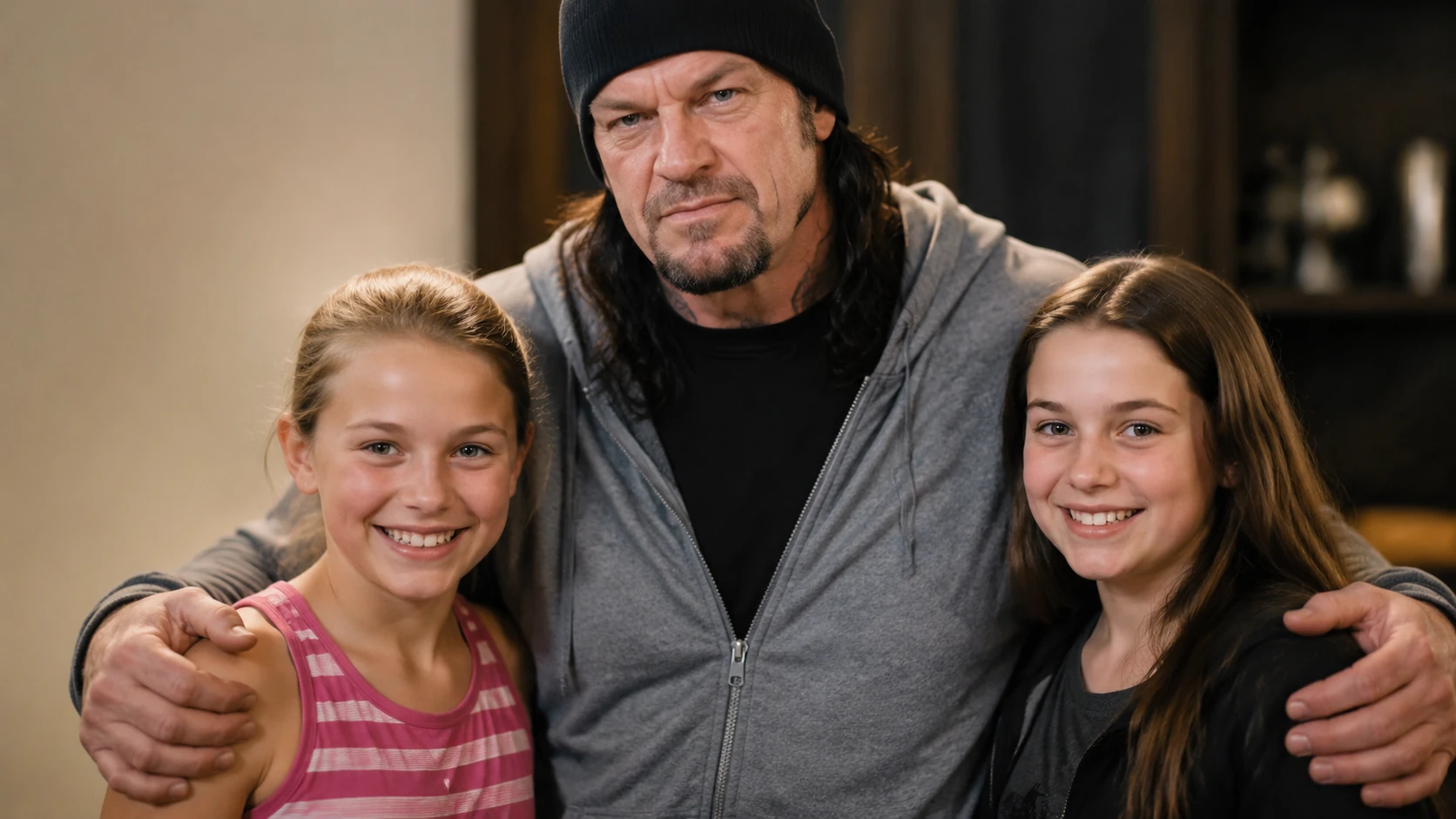
At an autograph table in a crowded arena in the early 2000s, wrestling fans shuffled past one of WWE’s most magnetic stars. Some came for photos. Some came for signed memorabilia. A few reached out to shake his hand and then — unprompted — scooped up a petite young girl standing beside him, thrusting her into the frame for their snapshot. The girl smiled patiently, her eyes curious but calm, more an observer than a brand of the family business she stood next to.
That girl was Gracie Calaway, and even then it was clear she would grow up defined by more than just her connection to The Undertaker — the towering, enigmatic icon of professional wrestling and her father. Her life has unfolded more quietly than the arc of her father’s dramatic career, but it has its own coherence: a story of private growth under public curiosity, a young woman negotiating independence within a legacy the world already thinks it knows.
This is the biography of someone who matters not for championships or contracts, but for how she navigates identity, family, legacy, and choice in the shadow of one of wrestling’s most enduring figures.
Early Life and Family
Gracie Calaway was born on May 15, 2005, in Austin, Texas, into a family already deeply associated with professional wrestling. Her father, Mark William Calaway, is best known to fans worldwide as The Undertaker, one of the most recognizable performers in the history of WWE. He debuted in the then‑WWF in 1990, spent three decades mastering his in‑ring persona, and was inducted into the WWE Hall of Fame in 2022.
Gracie’s mother is Sara Calaway (née Sara Chirie Frank), known during her brief WWE stint in 2001 as part of a storyline alongside her husband. Sara’s role, while brief, placed her within the wrestling spectacle that was defining the family’s public life at the time.
As the second daughter of Mark and Sara, Gracie grew up alongside an older sister, Chasey Calaway, born in November 2002, and in a blended family that included her half‑brother Gunner Vincent Calaway — from her father’s first marriage — and two younger half‑siblings from her father’s later marriage to WWE alum Michelle McCool. These younger siblings are Kaia Faith Calaway (born August 29, 2012) and Kolt Calaway (adopted). +1
Family life for Gracie went beyond the scripted rivalries and theatrical entrances of WWE. Her parents’ marriage, like many real‑world relationships, went through transitions: Mark and Sara married in July 2000 and divorced in 2007, when Gracie was still very young. Custody arrangements meant she and Chasey spent time with both parents, each building their lives outside the ring.
The Undertaker’s remarriage to McCool in 2010 added to Gracie’s extended family, further deepening ties to the wrestling world even as her own life was intentionally kept out of the spotlight. Gracie’s mother also moved forward, and details about Sara’s life post‑wrestling, including career direction and family transitions, have remained private.
Childhood Away From the Spotlight
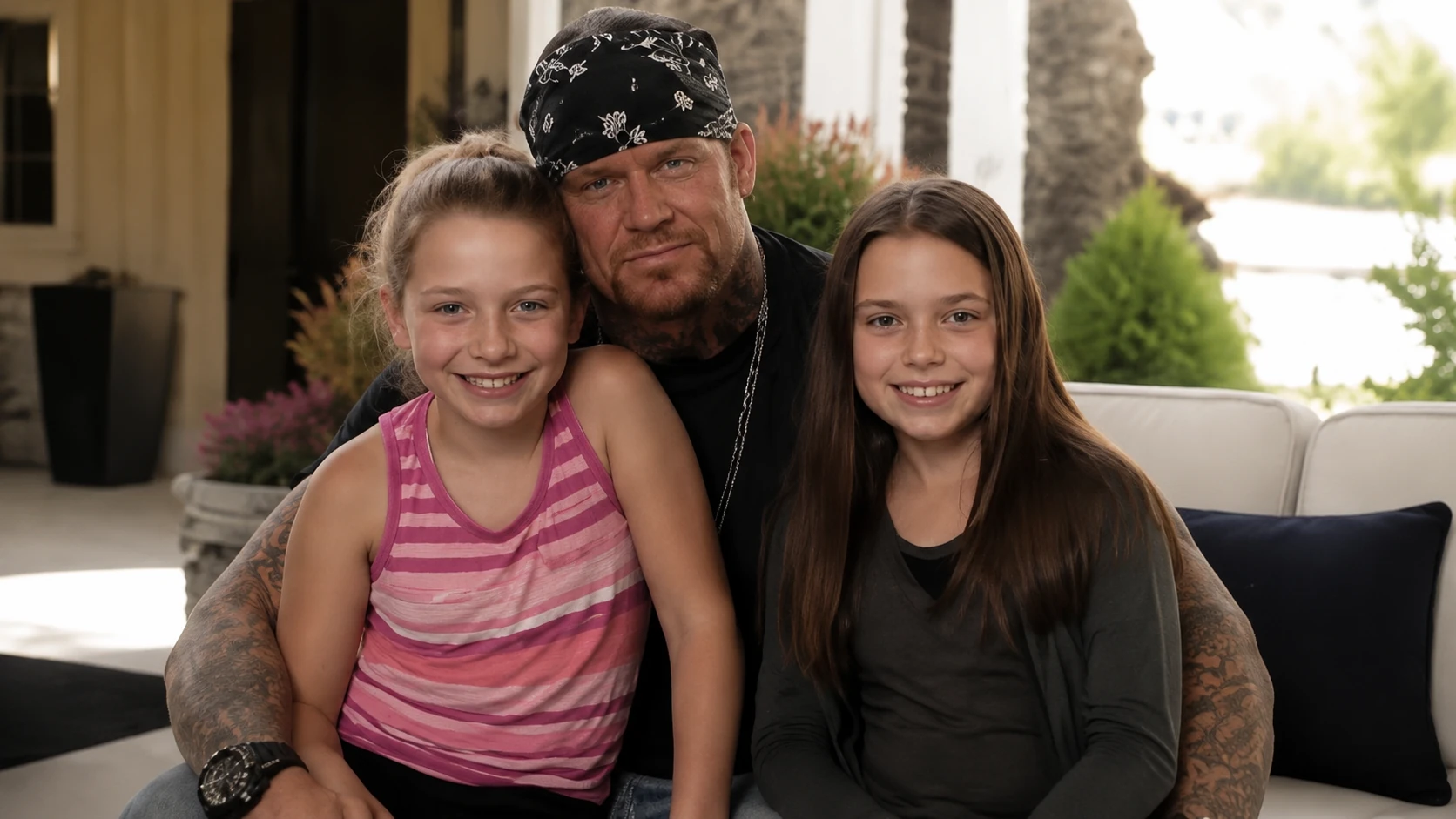
There is no public record of Gracie attending celebrity events on her own behalf, launching a social media presence under her name, or engaging in early professional projects tied to entertainment or athletics. That absence has fueled curiosity among fans and onlookers, but it has also protected the core of Gracie’s story: she did not grow up pursuing fame; she grew up living it by proximity.
Fans occasionally share photos online — often from wrestling events where Gracie and her sister were spotted in the crowd — but none of these posts come from verified accounts representing her voice. There are no official social media accounts confirmed as belonging to her, no public statements by her in mainstream press, and no documented academic or career milestones. What exists instead is the record of a family life shaped by episodes of WWE history rather than by Gracie’s own public ambitions.
Her upbringing in Austin, a city with a vibrant cultural and academic scene, likely included attending local schools, participating in ordinary childhood activities, and navigating friendships away from bright lights and broadcast cameras. But publicly verifiable details of where she went to school, what subjects she favored, who influenced her early interests, or how she spent her formative years remain unreported in reliable sources. This silence cannot be construed as absence; rather, it appears consistent with a deliberate choice to keep her childhood private.
Adolescence, Identity, and the Public Eye

Gracie turned 18 in May 2023, an age when many young adults begin to cultivate a public identity through social media, work, or creative expression. Yet in her case, no public artifacts — from verified Instagram accounts to professional profiles — have surfaced under her name. That raises a straightforward question: what does it mean to grow up famous without becoming a public figure?
The Undertaker’s own career was defined by visibility — theatrical, character‑driven, larger than life. His retirement in 2020 ended an in‑ring chapter, but by then Gracie was 15 and already well aware of her father’s professional legacy. Critics of celebrity culture often note how children of stars are thrust into performance early; Gracie’s path appears to challenge that pattern. Rather than publicly capitalizing on her father’s fame, she cultivated anonymity — a rare choice in the era of ubiquitous digital footprints.
Sources close to fan communities sometimes speculate about her interests, suggesting she may have been involved in activities like dance, gymnastics, or cheerleading during school years, but these claims appear unverified. They often spring from fan blogs or commentary sites rather than direct reporting or first‑hand confirmation. Because of this, responsible reporting must distinguish between substantiated biographical facts and speculation. The absence of confirmed personal pursuits suggests that Gracie was allowed — and possibly encouraged — to define her identity outside the public frame.
Inside the Family Dynamic
Gracie’s family is one of blended experiences and public imagination. Her sister Chasey, similarly out of the limelight, shares a sibling bond that predates much of today’s social media era. Her half‑siblings, younger by several years, are still in childhood or early teenage years. There is little public reporting about the interactions among the siblings, but there’s no credible evidence of estrangement or conflict; narratives of tension often circulate only on forums and fan‑maintained pages and lack verification.
Her father, after his in‑ring retirement, has stayed connected to the wrestling world through select media appearances, podcasts, and periodic involvement in WWE programming. His role as a cultural elder of the sport likely shaped the backdrop of Gracie’s upbringing more than any direct “coaching” or officiating of her personal choices. The Undertaker’s off‑camera persona — described by those who know him privately as grounded and family‑oriented — reflects a man committed to his children’s welfare beyond his public persona. This understanding underscores a central truth about Gracie’s story: her father’s legacy is part of her history but not the entirety of her identity.
What Gracie Is Doing Now
As of early 2026, Gracie has entered adulthood. But unlike many young adults with public profiles — models, influencers, athletes, actors — she remains largely unreported in mainstream media and entertainment databases. There is no verified record of her professional endeavors, academic pursuits, or public engagements. Conventional celebrity coverage simply hasn’t placed her in a context where such details are documented in reliable journalism.
Estimating a net worth for someone without public professional income would be misleading. There is no disclosed source of earnings attributed to Gracie, and publicly accessible information offers no indication of business ventures, modeling work, or other income streams. Any figure floated online without direct reporting or financial disclosure is speculative and should be treated with caution.
What can be said with certainty is that Gracie has navigated her transition into adulthood with a degree of privacy practiced by few children of global entertainers. Whether she intends to pursue public work in the future — academic, artistic, athletic, or otherwise — remains her decision and one she has not publicly articulated.
Public Perception and Fan Curiosity
Among wrestling fandom, Gracie represents both familiarity and mystery. She is known — often affectionately — as the WWE legend’s daughter, yet when the conversation turns to her own aspirations or accomplishments, information thins quickly. That gap fuels speculation: fans wonder if she might follow her father into the ring, if she will choose a creative field, or if she will remain outside the entertainment industry entirely. These narratives, however, are fan constructions unless validated by statements or public work originating from Gracie herself.
The truth is simpler: a young woman who grew up amid performance, narrative arcs, and public spectacle has opted so far for a private path. That choice itself is a statement in a culture that rewards visibility. In this respect, Gracie Calaway’s life challenges commonplace assumptions about celebrity children: that they must appear, perform, or broadcast to matter. Her presence — quiet, personal, self‑possessed — speaks without a spotlight.
Frequently Asked Questions
Who is Gracie Calaway?
Gracie Calaway is the daughter of retired WWE superstar The Undertaker (Mark William Calaway) and his second wife, Sara Calaway. She was born in 2005 in Austin, Texas, and has largely lived her life outside the public spotlight despite her father’s fame.
How old is Gracie Calaway?
Gracie was born on May 15, 2005, making her 20 years old as of 2025.
Does Gracie Calaway have a public career or social media?
There are no verified public profiles or known professional endeavors attributed to Gracie. She has no widely recognized social media accounts confirmed to be hers.
Is Gracie pursuing wrestling like her father?
There is no public evidence that Gracie has begun training or performing in wrestling. Speculation about her possible interest in wrestling appears on fan sites but lacks verification.
Who are Gracie’s siblings?
Gracie has an older sister, Chasey, a half‑brother Gunner, and two younger half‑siblings, Kaia and Kolt.
Conclusion
Gracie Calaway’s story is not a tale of championship belts or viral fame. It’s the quiet narrative of a young woman emerging into adulthood while consciously staying out of the spotlight that has surrounded her family for decades. In an age when every teen’s milestones can be documented and broadcast, Gracie’s life so far is defined by what we don’t see: a privacy preserved, identities formed without performance, choices made away from cameras.
Her father’s career cast a long public shadow, but Gracie’s life illustrates how someone raised within a famous family can choose a different path — one anchored in personal definition rather than inherited spectacle. As she moves forward, the world may come to know her on her terms, should she decide to share more of her story.
For now, she stands as an intriguing, grounded figure: familiar by association and singular by choice.
