

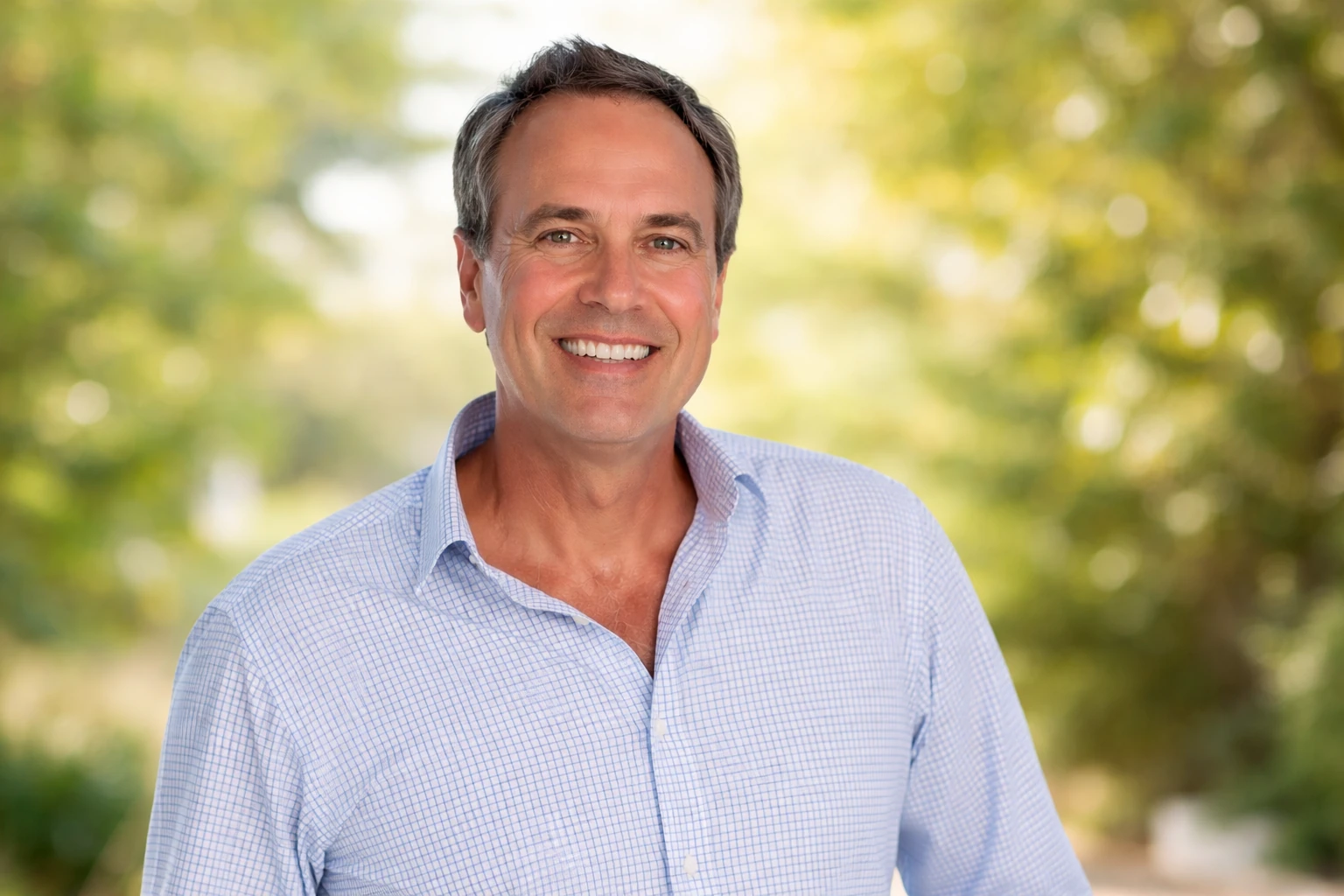
For most people, a name like Caleb James Goddard surfaces in passing—usually attached to a larger story about Hollywood, family disputes, or the enduring mystique of Jack Nicholson. But the more you look at the public record, the more that framing begins to feel incomplete. Goddard’s life, while tethered to a famous narrative, appears to have unfolded largely outside it. He is not a celebrity in the traditional sense, and yet his name persists, carried by a mix of documented history and unresolved curiosity.
That tension—between visibility and privacy—is what defines Caleb James Goddard’s story. He was born into a world where personal relationships became public conversation, yet he seems to have spent much of his adult life building something quieter and more structured. To understand who he is, you have to separate what is confirmed from what has simply been repeated, and then follow the thread that leads away from Hollywood rather than toward it.
Early Life and Family Background
Caleb James Goddard was born on September 26, 1970, in Los Angeles, California, a city that often blurs the line between personal life and public narrative. His mother, Susan Anspach, was an established actress by the time of his birth, known for her work in films such as Five Easy Pieces (1970), Play It Again, Sam (1972), and Blume in Love (1973). She was respected for her intelligence and emotional range, and her career placed her squarely within the New Hollywood era.
His father, in the most widely circulated account, is more complicated. Anspach publicly maintained for years that Jack Nicholson was Caleb’s biological father. Nicholson, one of the most recognizable actors of his generation, did not initially confirm that claim in public, which left the issue unresolved in the media for a long time. Reports over the years suggest that Nicholson later acknowledged Goddard privately and, eventually, more openly, though the timeline and nature of that acknowledgment remain less precisely documented.
Caleb carried the surname Goddard through his mother’s marriage to actor Mark Goddard, best known for his role in Lost in Space. This detail often causes confusion in online biographies, some of which simplify the situation too neatly. The reality appears more layered: a child raised within one family structure while publicly associated with another, a distinction that shaped how his identity was discussed in entertainment circles.
Growing up in Los Angeles during the 1970s and 1980s meant growing up in proximity to celebrity culture, whether or not one chose to participate in it. For Caleb, the environment likely included exposure to actors, writers, and filmmakers, but also to the scrutiny that comes with being connected to well-known figures. There is limited publicly verified detail about his childhood, which itself is telling; unlike many children of actors, he did not become a regular subject of press coverage during his early years.
Education and Early Influences
Reliable information about Caleb James Goddard’s formal education is scarce in public records, and most detailed claims about specific schools or degrees come from sources that do not provide verifiable documentation. What can be inferred, however, is that he had early exposure to storytelling and media through his mother’s career and his surroundings in Los Angeles.
There are indications that he developed an interest in journalism and media production before moving into more formal professional roles. Some biographical summaries suggest he worked in broadcast journalism, though specifics about outlets or positions are not consistently documented across reliable sources. That lack of detail is a recurring feature of his story: glimpses of a professional path without the kind of extensive documentation that accompanies high-profile careers.
What’s surprising is how this early trajectory contrasts with the expectations often placed on children of actors. Many pursue acting, directing, or entertainment careers directly tied to their family’s influence. In Goddard’s case, the available evidence suggests a more indirect relationship to the industry, one that may have provided early opportunities but did not define his long-term direction.
Early Career and Work in Media
Caleb James Goddard’s connection to film and television is real, though often overstated. He has credits associated with productions such as The Slap Maxwell Story and Guilty as Charged, according to industry databases like IMDb. These credits indicate involvement in the entertainment industry, but they do not amount to a major acting or directing career.
The truth is, his time in media appears to have been part of a broader exploration rather than a defining professional identity. Some accounts describe him as working behind the scenes or in production roles, while others link him to journalism. Without detailed, independently verified records, it is difficult to map a precise timeline, but the overall picture suggests a period of engagement with storytelling professions.
That phase of his life is often overshadowed by the persistent focus on his family background. Yet it may be more important than it appears at first glance, because it likely laid the groundwork for skills that would later translate into a very different field. Communication, analysis, and the ability to navigate complex environments are all traits valued both in media and in public service.
The Shift Toward Public Service
One of the most significant developments in Caleb James Goddard’s life—and one that receives far less attention than his parentage—is his reported career in diplomacy. Publicly available information, including references from U.S. embassy materials, identifies him as a Foreign Service Officer with the U.S. State Department.
By 2025, he was serving as Acting Deputy Chief of Mission at the U.S. Embassy in Mauritius, a role that involves overseeing diplomatic operations, supporting bilateral relations, and representing U.S. interests abroad. This position is not ceremonial; it requires years of training, experience, and demonstrated competence within the State Department.
Accounts associated with his professional biography suggest that he joined the Foreign Service around 2012. They also link him to postings in multiple countries, including Guinea, Thailand, Pakistan, Belgium, and Mauritius. While these details come partly from secondary biographical sources, they align with the kind of career progression typical for Foreign Service officers.
Here’s where it gets interesting. This path represents a clear departure from the narrative most people expect when they first encounter his name. Instead of building a public identity around Hollywood connections, Goddard appears to have pursued a career defined by discretion, international policy work, and institutional responsibility.
Personal Life and Privacy
Caleb James Goddard has maintained a notably private personal life, especially compared to the visibility of his family background. There is no widely confirmed information about a spouse or children in reliable public records, despite numerous online articles making specific claims. Those claims often lack sourcing and should be treated cautiously.
This level of privacy is consistent with both his apparent personality and his professional role. Diplomatic work often requires a degree of separation from public attention, and individuals in such positions typically avoid extensive media exposure. In that context, the absence of personal detail is not unusual; it is part of the job.
The truth is, much of what people think they know about his personal life comes from repetition rather than confirmation. Biographical websites frequently mirror one another, creating the impression of certainty where none exists. Without direct interviews or primary documentation, it is more accurate to acknowledge the limits of what can be said.
Relationship with Jack Nicholson
No aspect of Caleb James Goddard’s life has drawn more attention than his connection to Jack Nicholson. The story has been told in various ways over the decades, often depending on the source and the time period. At its core is Susan Anspach’s assertion that Nicholson was Caleb’s biological father.
Nicholson’s public stance has evolved over time. In earlier years, he reportedly expressed uncertainty about the claim, which kept the matter unresolved in media coverage. Later accounts suggest that he acknowledged Goddard as his son and that their relationship improved, though the specifics of that evolution are not consistently detailed in primary sources.
What matters most is how this story has shaped public perception. For many readers, Goddard’s identity is filtered through this relationship, even though it represents only one part of his life. That framing can obscure the rest of his biography, reducing a complex individual to a single point of curiosity.
Not many people know this, but the absence of a definitive, widely documented narrative has allowed the story to remain open-ended. It is neither fully confirmed in the way official records might confirm it, nor entirely dismissed. Instead, it exists in a space where public statements, private acknowledgments, and media interpretation intersect.
Financial Standing and Net Worth
There is no verified public record of Caleb James Goddard’s net worth. Many websites provide estimates, often ranging from moderate to substantial figures, but these numbers are typically unsupported by financial disclosures or credible reporting.
Given his apparent career path, it is reasonable to assume that his primary income comes from his work in diplomacy, which follows standardized government salary structures rather than the high earnings associated with entertainment careers. If he has additional income sources, they have not been publicly documented in a reliable way.
The tendency to assign net worth figures to individuals like Goddard reflects a broader pattern in online biography culture. Readers expect financial details, and websites often supply them whether or not they are grounded in evidence. In this case, the more honest answer is that his financial situation is private and not publicly quantified.
Public Image and Media Representation
Caleb James Goddard’s public image is shaped less by his own actions and more by how others have written about him. He does not maintain a visible public persona through interviews, social media, or public appearances, which leaves a gap that media narratives fill.
That gap often results in a simplified portrayal. He is described as “Jack Nicholson’s son” or “Susan Anspach’s son” before anything else, even in articles that claim to be full biographies. While those connections are relevant, they do not capture the full scope of his life.
The contrast between perception and reality is striking. On one hand, he is associated with one of the most famous actors in Hollywood history. On the other, he appears to have chosen a career that emphasizes service, anonymity, and institutional work. The two identities coexist, but they do not necessarily define each other.
Where Caleb James Goddard Is Now
As of the most recent publicly available information, Caleb James Goddard is serving in a senior diplomatic role with the U.S. State Department. His position as Acting Deputy Chief of Mission in Mauritius places him in a key leadership role within the embassy structure.
This current chapter of his life reflects a long-term commitment to public service rather than celebrity. It also suggests a level of stability and professional achievement that contrasts with the fragmented way his story is often told online.
The truth is, his present life is likely far removed from the questions that continue to follow his name. While the public remains interested in his origins, his day-to-day work appears focused on international relations, policy implementation, and diplomatic engagement.
Frequently Asked Questions
Who is Caleb James Goddard?
Caleb James Goddard is the son of actress Susan Anspach and is widely associated with Jack Nicholson through longstanding public claims about his parentage. He has also been linked to work in media and, more recently, to a career as a U.S. Foreign Service Officer.
Is Caleb James Goddard Jack Nicholson’s son?
Susan Anspach publicly stated that Jack Nicholson was Caleb’s biological father. Nicholson’s public position evolved over time, with later accounts suggesting acknowledgment, though the full details are not consistently documented in primary sources.
What does Caleb James Goddard do now?
He is reported to be a Foreign Service Officer with the U.S. State Department and has served as Acting Deputy Chief of Mission at the U.S. Embassy in Mauritius, indicating a senior role in diplomatic service.
Did Caleb James Goddard work in Hollywood?
He has credits associated with film and television projects, but his involvement appears limited compared to full-time actors or filmmakers. His career path eventually moved away from the entertainment industry.
Is Caleb James Goddard married?
There is no publicly verified information confirming his marital status. Claims about a spouse or children exist online but are not supported by reliable sources.
What is Caleb James Goddard’s net worth?
There is no confirmed public estimate of his net worth. Any figures found online should be treated with caution, as they are often speculative and unsupported by credible data.
Conclusion
Caleb James Goddard’s life resists easy categorization. He is both part of a well-known Hollywood story and separate from it, connected to fame but not defined by it. That duality is what keeps his name in circulation, even decades after the events that first brought attention to it.
What stands out, though, is the direction his life appears to have taken. Rather than leaning into the visibility that came with his background, he seems to have chosen a path that values privacy, professionalism, and service. That choice shapes not only how little is known about him, but also how his story should be understood.
There is a tendency to look for hidden drama or definitive answers in biographies like this. But sometimes the more meaningful story is quieter. In Caleb James Goddard’s case, it is the story of someone who stepped away from the expectations attached to his name and built a life that, while less visible, carries its own weight.
And that, more than any unresolved question about his past, may be the most telling part of who he is.
