

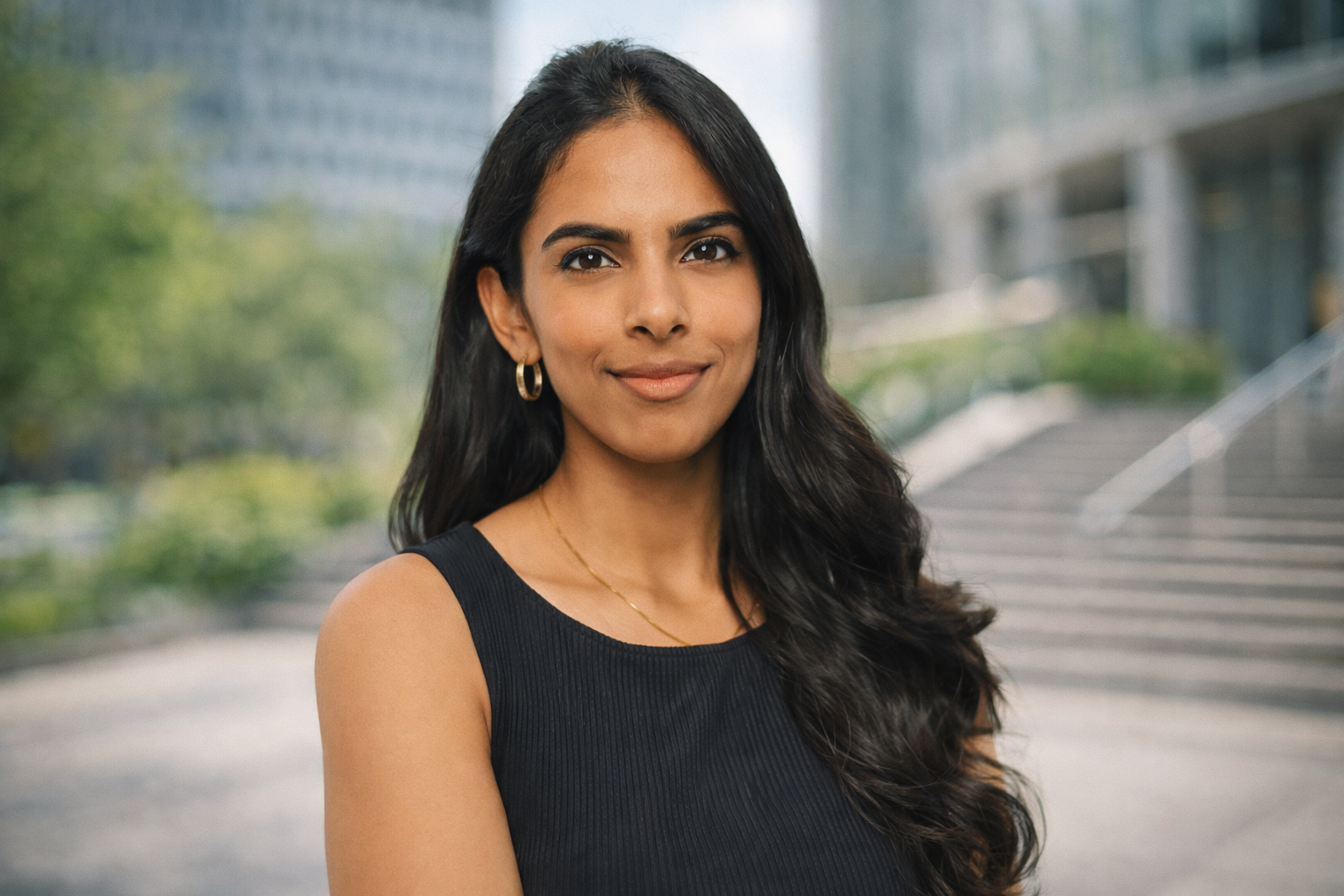
In a newsroom increasingly defined by uncertainty, Merlyn Thomas has built her reputation on something deceptively simple: proving what is real. Her reporting rarely begins with access to powerful figures or exclusive interviews. Instead, it often starts with fragments—a video clip, a satellite image, a claim circulating online—and the slow, methodical process of testing whether those fragments can withstand scrutiny. That approach has made her a recognizable name for audiences trying to make sense of conflict, disinformation, and the blurred line between truth and propaganda.
Thomas is part of a new generation of journalists whose work is as much about method as it is about outcome. As a reporter with BBC Verify, the BBC’s specialist unit focused on fact-checking and evidence-based reporting, she has helped shape coverage of some of the most contested global stories in recent years. Her byline appears on investigations into war footage, state claims, and viral narratives that demand verification rather than repetition. For readers who search her name, the interest is rarely casual. It reflects a desire to understand who is behind the reporting that attempts to cut through noise when facts themselves are disputed.
Early Life and Background
Public information about Merlyn Thomas’s early life is limited, and that absence is worth acknowledging clearly. Unlike public figures in entertainment or politics, she has not built a personal brand around her private history. There is no widely confirmed record detailing her exact place of birth, family background, or early upbringing in the way that often exists for high-profile personalities. That makes her story somewhat different from traditional biography subjects, where personal narrative is foregrounded.
What can be inferred with more confidence is that her path into journalism followed a trajectory familiar to many reporters working in specialist investigative roles. Her later work suggests a strong grounding in research, critical analysis, and an ability to interpret complex material under pressure. Those skills are not accidental. They point to a formative period of education and training that emphasized evidence, skepticism, and clarity, even if the specific institutions or mentors involved are not publicly documented in detail.
The lack of personal disclosure also reflects a broader shift in certain corners of journalism. Reporters working on disinformation and conflict verification often maintain a lower personal profile for both professional and security reasons. In Thomas’s case, the focus has consistently remained on the work itself rather than the life behind it.
Education and Early Ambitions
While specific details about Thomas’s academic background are not widely confirmed in public records, her reporting indicates familiarity with disciplines that intersect journalism, data analysis, and international affairs. Her work regularly engages with legal frameworks, scientific claims, and technical evidence, all of which require a level of subject fluency that goes beyond general reporting.
Not many people know this, but the skill set behind verification journalism is often built at the intersection of multiple fields. It draws on traditional reporting instincts—asking questions, checking sources—but also on newer techniques such as geolocation, metadata analysis, and the interpretation of visual evidence. Thomas’s ability to operate in this space suggests she developed both the curiosity and the discipline needed to adapt to a rapidly changing media environment.
Early in her career, she gravitated toward topics that demanded careful handling of contested information. Climate change reporting, particularly around misinformation, became one of her early areas of focus. That choice was significant. Climate disinformation sits at the intersection of science, politics, and public perception, and it requires journalists to navigate both technical detail and ideological conflict. It also foreshadowed the kind of work that would later define her role at BBC Verify.
Entering Journalism and Finding a Beat
Thomas’s early professional work at the BBC positioned her within the organization’s efforts to tackle misinformation head-on. She became associated with coverage that examined how false or misleading claims spread online, particularly in relation to climate science. This was not a peripheral assignment. It placed her at the center of one of the most contested information battles of the past decade.
Her reporting during this period included contributions to BBC programming such as The Climate Question, where she explored how misinformation affects both public understanding and the individuals targeted by it. The work highlighted a recurring theme in her career: a focus on the human consequences of false narratives. Climate scientists facing abuse, communities misled by inaccurate claims, and audiences struggling to separate fact from fiction all featured in her reporting.
What’s surprising is how quickly that specialization translated into broader investigative work. The techniques used to track climate misinformation—verifying sources, checking claims against evidence, understanding how narratives spread—are directly applicable to other areas where truth is contested. As global events became more complex and visually documented, those skills became increasingly valuable.
The Launch of BBC Verify and a Career Turning Point
In May 2023, the BBC formally launched BBC Verify, bringing together several existing teams focused on fact-checking, data analysis, and user-generated content. The initiative was designed to respond to a media environment where misinformation travels quickly and audiences demand transparency about how news is produced. For journalists like Thomas, it marked a turning point.
BBC Verify was not simply a rebranding exercise. It represented a shift in how the BBC approached certain types of reporting. Instead of presenting conclusions without explanation, the unit aimed to show audiences how those conclusions were reached. That meant publishing the steps taken to verify a video, explain a dataset, or challenge a claim made by a government or organization.
Thomas’s work fit naturally into this model. Her reporting began to appear more frequently in high-profile investigations where the process of verification was central to the story. She was no longer just reporting on misinformation. She was actively demonstrating how it could be identified and countered in real time.
Major Investigations and Reporting Work
One of the defining aspects of Thomas’s career has been her involvement in investigations that sit at the intersection of politics, conflict, and evidence. Her work on Saudi Arabia’s Neom project is a notable example. The BBC investigation, to which she contributed, examined allegations that authorities had authorized the use of lethal force to clear land for the planned mega-city. The reporting drew on testimony and documentary evidence, and it gained international attention, including responses from political leaders.
That investigation showed Thomas operating within a traditional investigative framework, combining sources, documentation, and verification. But much of her later work has taken place in environments where evidence is less structured and more fragmented. Conflict zones, in particular, produce a constant stream of images and claims that require rapid but careful assessment.
Her reporting on Gaza illustrates this shift. In one investigation, she and her colleagues analyzed videos posted by Israeli soldiers that appeared to show detainees being stripped and restrained. The BBC Verify team reviewed a large volume of footage, verified specific clips, and consulted legal experts to assess whether the actions shown could breach international law. The result was not just a report on what might have happened, but an explanation of how those conclusions were reached.
Another investigation examined the distribution of aid in Gaza, with analysis suggesting that some drops had occurred in areas designated as dangerous combat zones. The reporting combined visual evidence, geographic analysis, and official statements, reflecting the layered approach that defines verification journalism.
Thomas has also contributed to reporting on military strikes in Iran, where experts were asked to analyze footage and assess the type of weapons used. These stories highlight a key feature of her work: collaboration. Verification journalism often involves teams of reporters, analysts, and external experts, each contributing a piece of the puzzle.
How Verification Journalism Works
To understand Thomas’s role, it helps to look at the mechanics of verification journalism itself. At its core, the process involves gathering available evidence—videos, images, data—and testing it against known facts. This might include identifying landmarks in a video to confirm its location, analyzing shadows to estimate the time of day, or comparing footage with satellite imagery.
The process also involves assessing credibility. Not all evidence is equal, and part of the job is deciding which material can be trusted and which cannot. That requires judgment as well as technical skill. It also requires transparency. BBC Verify’s approach has been to show audiences how these decisions are made, rather than presenting them as invisible editorial processes.
But here’s the thing. Verification is not about certainty in every case. Often, the outcome is a clearer understanding of what remains unknown. Thomas’s reporting reflects that reality. Her work frequently includes caveats, acknowledging the limits of available evidence and the possibility that new information could change the picture.
Public Image and Professional Recognition
Despite working in a field that often keeps journalists out of the spotlight, Thomas has received professional recognition for her work. She has been associated with awards and commendations that highlight her contribution to journalism, including acknowledgment from organizations that support emerging reporters.
Her profile has also grown through her association with BBC Verify, which has become a recognizable brand in its own right. Research by Ofcom in 2024 suggested that a significant portion of UK audiences were aware of the service, with many having used it to check information. That visibility has extended to the journalists working within it, including Thomas.
At the same time, her public image remains closely tied to her work rather than her personality. She is not a commentator or a media personality in the traditional sense. Her presence in public discourse is defined by the stories she contributes to and the methods she uses to tell them.
Private Life and Personal Details
There is limited publicly confirmed information about Merlyn Thomas’s private life, and that appears to be by design. She has not shared extensive details about her family, relationships, or personal circumstances in the public domain. This is not unusual for journalists working in sensitive areas, where maintaining a degree of privacy can be important.
The truth is, many of the personal details that circulate online about public figures are based on speculation rather than verified information. In Thomas’s case, responsible reporting requires separating what is known from what is assumed. The known facts relate to her professional work and achievements. Beyond that, there is little that can be stated with confidence.
This absence of detail does not diminish her profile. If anything, it reinforces the idea that her career has been built on substance rather than personal narrative.
Financial Standing and Net Worth
As with many journalists, there is no publicly confirmed figure for Merlyn Thomas’s net worth. Estimates that appear online are speculative and should be treated with caution. BBC journalists are typically salaried employees, and while experienced reporters can earn competitive incomes, those figures are rarely disclosed in detail.
It is more accurate to say that Thomas’s professional value lies in her expertise and the significance of the work she contributes to. In a media environment where trust is increasingly important, the ability to verify information and explain it clearly is a valuable skill. That value does not always translate into public financial figures, but it does shape career opportunities and professional standing.
Criticism, Challenges, and the Nature of the Beat
Verification journalism operates in a difficult space, and Thomas’s work is not immune to criticism. Reports produced by BBC Verify have been examined by academics and media analysts, some of whom have raised questions about the balance of coverage and the sources used in verification.
One critique is that verification work tends to focus heavily on international conflicts, where visual evidence is abundant, while domestic political claims may receive less attention. Another concern is that official sources, such as governments and military organizations, often play a central role in corroborating information, which can influence the framing of a story.
These criticisms are not directed at Thomas alone, but they are part of the environment she works in. Verification journalism requires navigating competing narratives, limited evidence, and high public scrutiny. It is a field where mistakes can be costly and where every conclusion is subject to challenge.
Where Merlyn Thomas Is Now
As of recent reporting, Merlyn Thomas continues to work with BBC Verify, contributing to coverage of global events that require careful analysis and verification. Her byline remains associated with stories involving conflict, misinformation, and contested evidence, reflecting the ongoing demand for this type of journalism.
The broader trajectory of her career suggests a reporter who has found a clear specialization and is continuing to build on it. Verification journalism is still evolving, shaped by new technologies and changing audience expectations. Thomas’s work sits within that evolution, contributing to how major news organizations respond to the challenges of the information age.
Frequently Asked Questions
Who is Merlyn Thomas?
Merlyn Thomas is a journalist with the BBC, known for her work with BBC Verify. She focuses on fact-checking, open-source investigation, and reporting on misinformation and conflict-related stories. Her reporting often involves analyzing visual evidence and explaining how claims are verified.
What does Merlyn Thomas do at BBC Verify?
At BBC Verify, Thomas works on stories that require careful verification of evidence. This includes checking videos, analyzing data, and consulting experts to assess the accuracy of claims. Her work is part of a broader effort to make the reporting process more transparent to audiences.
What is Merlyn Thomas known for?
She is known for her reporting on climate disinformation, investigations into major international issues such as the Neom project, and her work on conflict-related stories involving Gaza and Iran. Her approach emphasizes evidence and method rather than opinion.
Is Merlyn Thomas’s personal life publicly known?
Very little about her personal life is publicly confirmed. She has kept her private details out of the spotlight, and most reliable information about her relates to her professional work rather than her family or relationships.
Has Merlyn Thomas won any awards?
She has received professional recognition, including being shortlisted or commended in journalism awards. These acknowledgments reflect her growing reputation within the industry, though she is still early in her career.
What makes her reporting style different?
Her reporting focuses on verification, meaning she often shows how conclusions are reached rather than simply presenting them. This includes analyzing visual evidence and explaining the steps taken to confirm or challenge a claim.
Conclusion
Merlyn Thomas represents a shift in how journalism is practiced and presented. Her work shows that reporting is no longer just about gathering information, but about demonstrating how that information can be trusted. In a time when audiences are often skeptical of what they see and hear, that approach carries real weight.
Her career so far has been defined less by personal narrative and more by professional focus. She has chosen to work in an area where the stakes are high and the margins for error are small. That choice has brought both visibility and scrutiny, but it has also placed her at the center of some of the most important conversations in modern journalism.
What lies ahead for Thomas will likely depend on how the field of verification continues to develop. As technology changes and the flow of information becomes even more complex, the need for journalists who can test and explain evidence is unlikely to diminish. Her work suggests she is well positioned to remain part of that effort.
For readers trying to understand her significance, the answer is straightforward. Merlyn Thomas is not defined by celebrity or personal mythology. She is defined by the work she does and the standards she applies to it. In a media environment where those standards are constantly tested, that may be the most important story of all.
