

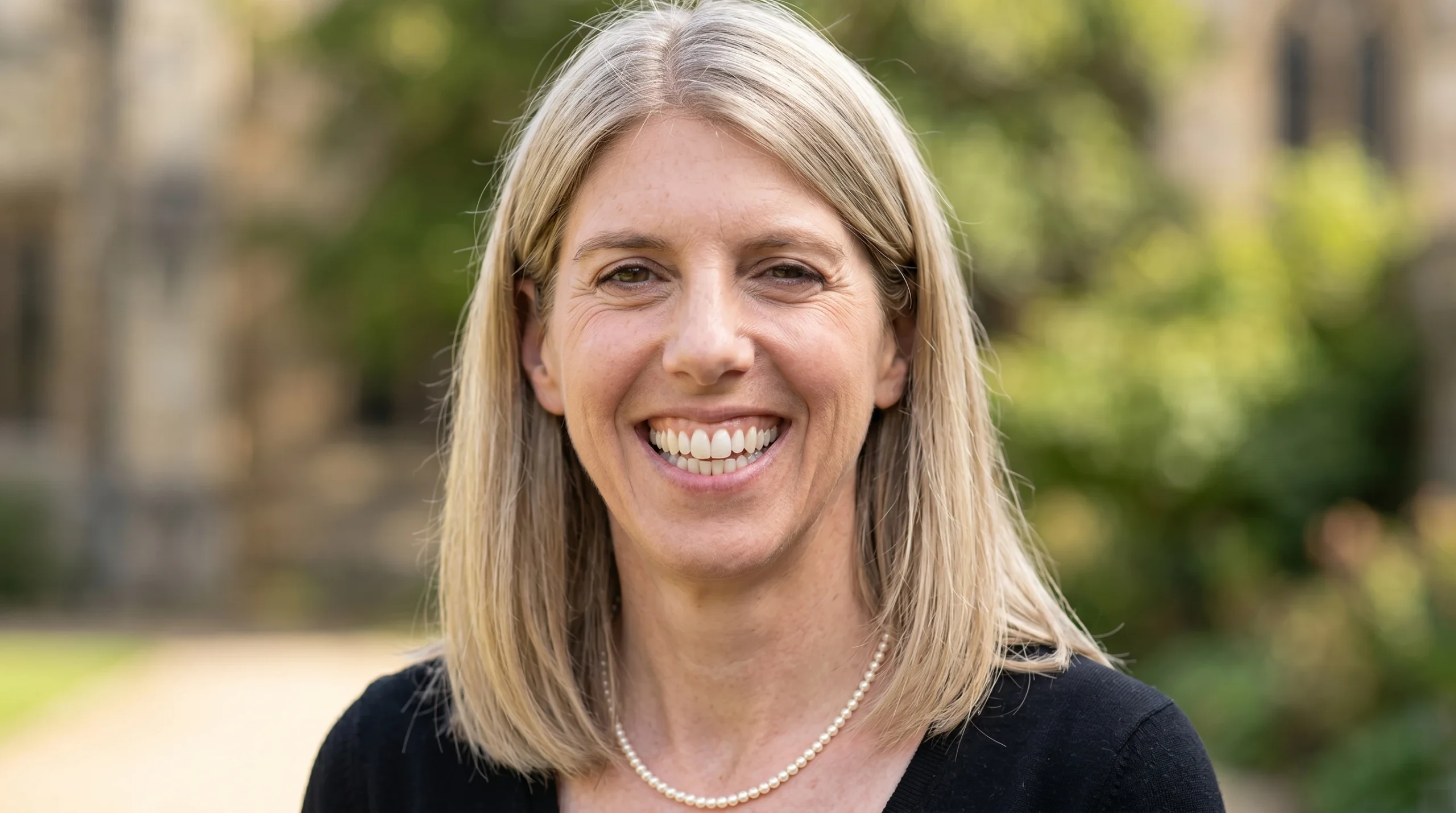
Judith Moritz is not the sort of journalist who became familiar by making herself the story. Viewers know her because she has often appeared at the edge of difficult public events, explaining court cases, inquiries, tragedies, and institutional failures with a calmness that stands out. That is why the search term “judith moritz age” has become more than a quick biographical query. People are trying to place the woman behind the reporting: how old she is, where she came from, how she built her career, and why her work has carried such weight on BBC News.
The best available public record indicates that Judith Moritz was born in March 1976, which makes her 50 years old as of 2026. The exact day of her birth is not confirmed in the strongest public sources, and readers should treat websites giving a precise birthday with caution unless they show primary evidence. What is clearer is her professional identity. Moritz is a British broadcast journalist and BBC News Special Correspondent whose work has reached audiences across television, radio, online news, documentaries, and long-form reporting.
Judith Moritz Age and Why It Is Searched
The verified answer to the age question is straightforward: Judith Moritz is 50 years old in 2026. Public company records linked to Judith Moritz Ltd list her date of birth as March 1976. Because UK company records usually show only the month and year of birth for directors, they support her age but do not confirm the exact day. That distinction matters because several online biography pages have published full birth dates without showing reliable evidence.
Search interest in Judith Moritz’s age grew partly because of her visibility during high-profile BBC reporting. She has covered some of the most closely watched British stories of recent years, including the Lucy Letby case and public inquiries connected with major tragedies. Viewers often search for a journalist’s background after seeing them explain a case over many weeks or months. In Moritz’s case, curiosity about her age sits alongside questions about her career, family, and authority as a reporter.
There is also a broader reason the query appears online. Moritz is a senior journalist with a public role, but she does not present herself as a celebrity. That leaves fewer polished personal profiles for readers to consult, and weaker websites often fill the gap with copied or guessed details. A careful biography has to do the opposite: state what can be verified, flag what cannot, and resist turning private life into filler.
Early Life and Background
Judith Moritz has kept much of her early life out of the public record, which is not unusual for serious news journalists. Unlike actors, influencers, or politicians, correspondents often build public trust through their work rather than through personal storytelling. Her birth month and year are available through public records, but details about her childhood, parents, and early home life are not widely confirmed. That privacy should be treated as a boundary rather than a mystery to be decorated with guesses.
What can be said with confidence is that Moritz belongs to a generation of British journalists who came of age before social media changed the profession. Born in the mid-1970s, she would have entered adulthood in the 1990s, a period when broadcast journalism was still shaped by television bulletins, radio reporting, local newsrooms, and the discipline of field reporting. That background helps explain the tone of her work. She is associated less with commentary and more with careful explanation from scenes where facts are still being tested.
Her public career suggests a reporter formed by the older rules of the craft. Accuracy, restraint, and clarity matter in every newsroom, but they matter even more in court reporting and public-inquiry coverage. Moritz’s work has often required her to explain what is known, what is alleged, what has been proven, and what remains unresolved. Those habits do not come from personality branding; they come from years of professional practice.
Education and First Ambitions
Publicly confirmed details about Judith Moritz’s education are limited. There are no widely established records, in the strongest available biographical material, that set out her school, university, degree subject, or early training path in full. That does not make her career any less traceable, but it does mean a responsible profile should avoid inventing an academic journey. Too many online biographies of journalists quietly insert assumed schools or qualifications, and that is not good reporting.
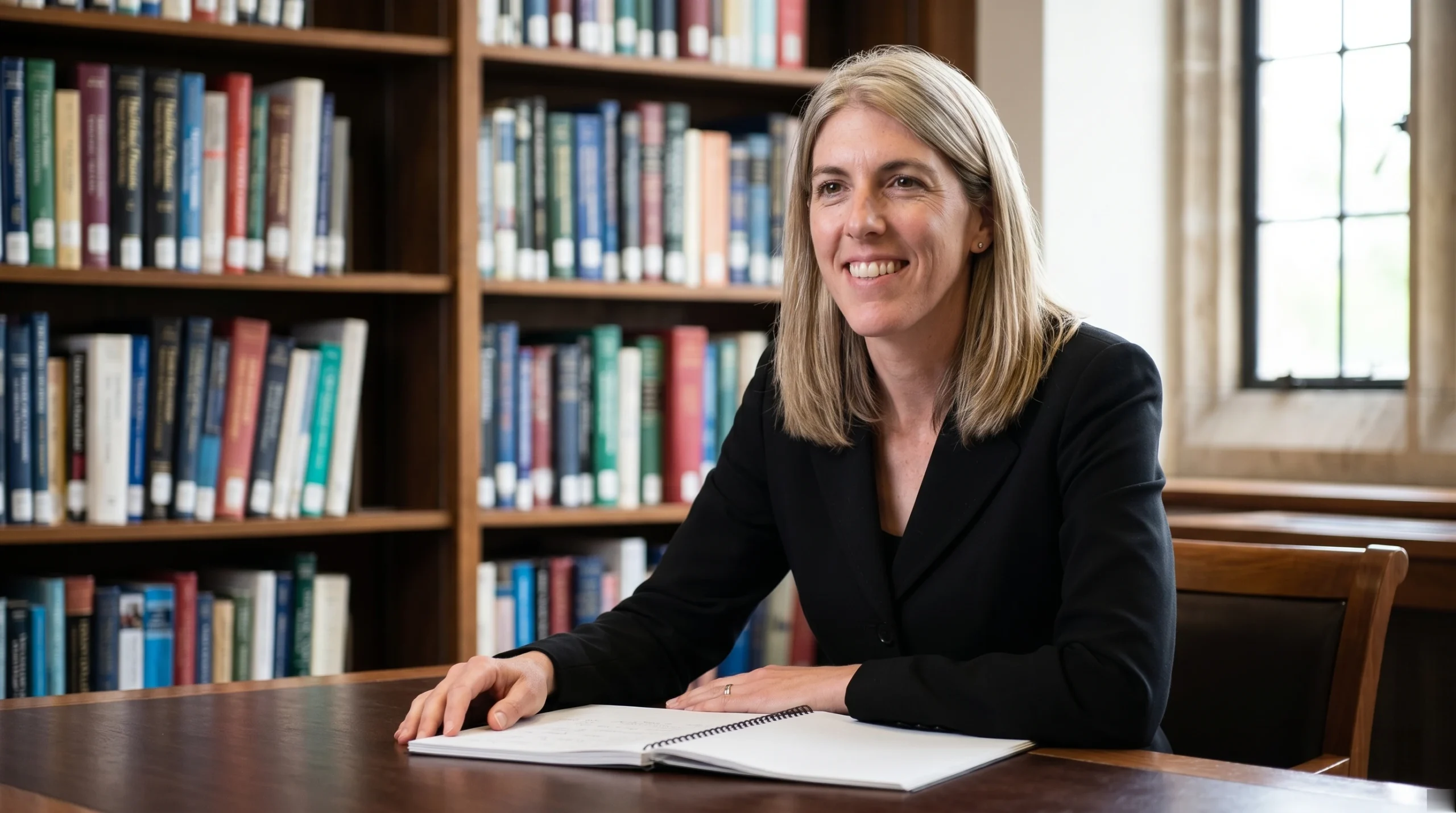
Her career path, though, points to the kind of preparation required for national broadcast journalism. Reporters who work across BBC television, radio, and online platforms need strong writing, live-broadcast judgment, editorial discipline, and the ability to translate complex information under pressure. Moritz’s later work also shows familiarity with legal process, public institutions, and the emotional demands of reporting on grief and trauma. Whether those skills were first developed through formal journalism training or newsroom apprenticeship, they became the foundation of her public reputation.
The absence of a detailed education profile may frustrate readers looking for a neat origin story. But here’s the thing: in Moritz’s case, the work tells us more than a school list would. Her career is defined by reporting from courtrooms, inquiry rooms, crime scenes, and public events where accuracy carries real consequences. That is a more useful measure of her professional formation than an unsupported claim about a degree.
Building a Career at the BBC
Judith Moritz is best known for her work with BBC News, where she has reported across national and international output. Professional biographies describe her as a BBC News Special Correspondent who contributes to major BBC platforms including television, radio, the World Service, and the BBC website. She has also been associated with coverage from the North of England, a region central to many of the stories she has reported. Her career reflects the BBC tradition of correspondents who move between live reports, edited packages, written analysis, and documentary work.
Her role has required the ability to speak to different audiences at once. A television viewer may need a clear 90-second explanation during a bulletin, while a radio audience may need a sharper sense of atmosphere and detail. Online readers often need background, chronology, and links between events. Moritz’s work has sat across all of those formats, which is one reason she is familiar to people who may not always know her title.
Much of her reporting has centered on serious public-interest journalism. She has covered criminal trials, health-related cases, institutional failings, public inquiries, and stories that sit at the intersection of law and human suffering. That beat is demanding because the journalist must respect victims and families while also staying fair to legal process. It is not a field that rewards easy drama, and Moritz’s public style has generally been measured rather than theatrical.
Career Breakthrough and Public Recognition
Moritz’s wider public recognition did not come from one glamorous media moment. It built gradually through repeated appearances on major stories where audiences needed a reporter they could trust. In Britain, correspondents often become known not because they chase fame, but because they are present when the country is trying to understand something painful or complex. Moritz fits that pattern closely.

Her work on the Lucy Letby case brought her name to a much larger audience. Letby, a former neonatal nurse, was convicted of murdering babies and attempting to murder others at the Countess of Chester Hospital. The case drew intense national and international attention because of the horror of the crimes, the length of the trial process, and the difficult medical evidence involved. Moritz was one of the BBC journalists most closely linked with sustained coverage of the case.
That reporting required patience as much as visibility. Court cases of that scale unfold slowly, with evidence, witness testimony, expert interpretation, and legal argument spread over months. The public may encounter the story through headlines, but court reporters must sit with the detail. Moritz’s later work on the case showed how her reporting had moved beyond daily updates into longer-form explanation.
Judith Moritz and the Lucy Letby Book
Judith Moritz co-authored Unmasking Lucy Letby with Jonathan Coffey, a book that drew on their close reporting of the case. Public descriptions of the book identify Moritz as a BBC News special correspondent who spent nearly a year observing Letby in court. That detail matters because it distinguishes sustained reporting from later commentary. A journalist who has watched evidence unfold in court has a different relationship to the material than someone entering the debate after verdicts have been reported.
The book arrived in a charged atmosphere. The Letby case continued to attract questions, grief, anger, and scrutiny long after the verdicts. Any writer approaching the story had to deal with legal findings, medical evidence, institutional failure, and the pain of families who had lost children. Moritz’s involvement gave the book the authority of someone who had followed the case at close range through the BBC’s coverage.
It also showed a broader shift in her public profile. For many years, Moritz was known mainly as a correspondent appearing within BBC news coverage. With the book, she became part of a longer public record about one of the most disturbing criminal cases in modern Britain. That does not turn her into a celebrity author, but it does place her work in a more permanent form than a broadcast segment.
Reporting on Public Tragedy and Institutional Failure
Beyond the Letby case, Moritz has been associated with reporting on major public tragedies and inquiries. Her documentary and news work has included coverage connected with the Manchester Arena bombing inquiry, where the questions were not only about what happened on the night, but also about security, preparedness, and institutional responsibility. These are stories that ask a great deal of a reporter. The facts are sensitive, the families are grieving, and the public needs more than emotion.
This kind of journalism depends on structure. The reporter must explain timelines, official findings, failures, warnings, missed chances, and the limits of what an inquiry can establish. Moritz’s value in such coverage lies in making difficult proceedings understandable without draining them of human meaning. That balance is harder than it looks.
Public-inquiry reporting also requires restraint. A journalist must avoid sounding like an advocate while still making clear when evidence points to failure. Moritz’s work has often appeared in that space between accountability and care. It is one reason audiences search for her background after seeing her on air: the subject matter is heavy, and the reporter becomes part of how people process it.
Marriage, Family, and Private Life
Judith Moritz is sometimes linked in online searches with BBC journalist Nick Garnett. Some public-facing biography pages and media references identify Nick Garnett as her husband, but the most careful approach is to treat personal details with restraint unless they are confirmed by strong public sources. What is clear is that Moritz has not built her career by making her family life a public brand. Her public identity is rooted in journalism, not in domestic exposure.
This distinction matters because search-driven biography pages often treat family information as a box to be filled. They may name spouses, children, relatives, and private details without showing how the information was confirmed. For a working journalist, especially one who reports on sensitive subjects, privacy is not just personal preference. It can also be part of professional safety and normal family protection.
There is public curiosity about whether Judith Moritz has children, where she lives, and how she balances work with family life. Reliable public information on those subjects is limited, and that should be stated plainly. A respectful biography can acknowledge curiosity without pretending that every private fact is available for publication.
Is Judith Moritz Related to Eleanor Moritz?
Another common search question asks whether Judith Moritz is related to Eleanor Moritz. The question appears to come from the shared surname and the fact that both names have been connected in readers’ minds with British media. There is no strong public evidence confirming a family relationship between them. A shared surname is not enough to establish kinship.
This kind of question often spreads because search engines reward repetition. Once a few sites answer or speculate about a relationship, other pages copy the framing, and the question begins to look more established than it is. That does not mean the underlying claim has been proven. It only means people have searched for it enough to create content around it.
The responsible answer is simple. Judith Moritz may share a surname with other public figures, but no verified family link should be stated without evidence. Readers should be especially careful with biography pages that turn “are they related?” into a confident claim.
Net Worth, Salary, and Income Sources
There is no reliable public figure for Judith Moritz’s net worth. Some online pages publish estimates for journalists and broadcasters, but those numbers are often speculative and unsupported. Unless a figure comes from salary disclosures, company filings, verified contracts, court documents, or direct reporting, it should be treated as a guess. For Moritz, the available public record does not support a precise net worth claim.
Her income likely comes from her journalism work, broadcasting, and related professional activity, including book authorship. That is a reasonable description of income sources, but it is not the same as knowing her wealth. BBC salaries are public only for certain high-earning presenters and senior figures, and many correspondents are not individually listed in a way that reveals total compensation. Book income also varies widely by contract, sales, rights, and publishing arrangements.
This is one of the areas where restraint is especially important. A biography can say that Moritz is an established BBC journalist and author, which signals professional standing. It cannot honestly say she is worth a specific amount without better evidence. Readers deserve that distinction more than they need a made-up number.
Public Image and Reporting Style
Judith Moritz’s public image is built around seriousness, steadiness, and clarity. She is not known for flamboyant presenting or opinion-led commentary. Her on-screen presence tends to serve the story rather than compete with it. That style fits the kind of work she does, where the subject is often painful and the evidence can be dense.
Audiences often value correspondents who can explain without overperforming. Moritz’s reporting has frequently involved cases in which viewers are trying to understand legal findings, institutional failures, or the aftermath of tragedy. In those settings, a journalist who sounds careful can become more trusted than one who sounds dramatic. The work needs moral seriousness without emotional display for its own sake.
There is also a quiet authority in experience. By 2026, Moritz is 50 and has spent many years working in national broadcast journalism. Her age is not the reason she has authority, but it helps place her career in perspective. She is not a newcomer discovering difficult stories for the first time; she is a seasoned reporter whose public role has been shaped by repeated exposure to high-stakes news.
Current Status and Recent Work
Judith Moritz remains publicly identified with BBC News and with serious long-form reporting. Her recent public profile has been closely tied to the Lucy Letby case and the book she co-authored with Jonathan Coffey. That work placed her in the continuing public conversation about evidence, hospitals, accountability, and justice. It also reminded readers that broadcast correspondents often gather far more material than can fit into daily news coverage.
Her current status is best understood as that of an experienced specialist correspondent rather than a general media personality. She appears in contexts where the BBC needs authority, not spectacle. That includes stories requiring legal knowledge, sensitivity, and the ability to summarize complex proceedings for a broad audience. For viewers, her name has become associated with explanation at moments when clarity is needed.
The public record also shows a professional life that extends beyond a single story. While Letby coverage brought renewed attention, Moritz’s career includes broader reporting on public institutions, safety failures, and national news. That breadth is important because it prevents her biography from being reduced to one case. Her reputation rests on a body of work, not just one assignment.
Common Misunderstandings About Judith Moritz
The first misunderstanding is that Judith Moritz’s exact birthday is widely confirmed. It is not. The strongest public record supports March 1976 as her birth month and year, which makes her 50 in 2026. Claims giving a precise day should be treated as unverified unless they cite a primary source.
The second misunderstanding is that all biography websites are equally reliable. Many pages about public figures are written from copied snippets, search guesses, or material borrowed from other weak pages. That can create false confidence because the same claim appears in many places. Repetition does not make a detail true.
The third misunderstanding is that privacy equals secrecy. Moritz’s limited public discussion of family and early life is normal for a journalist whose work is the focus. She is a public professional, not someone whose private life is central to her role. A fair profile should respect that line while still explaining the public facts clearly.
Why Judith Moritz Still Matters
Judith Moritz matters because she represents a kind of journalism that becomes most visible when the public is under strain. Court cases, public inquiries, and institutional scandals can be overwhelming for ordinary readers and viewers. They involve documents, testimony, expert evidence, legal language, and raw human grief. A correspondent’s job is to make that material clear without simplifying it beyond recognition.
Her career also shows the continuing value of broadcast journalists who can work across formats. Moritz is not only a television presence; she has contributed to radio, online reporting, documentary work, and book-length journalism. That range matters because modern audiences encounter the same story in many places. A strong correspondent has to keep the facts coherent across all of them.
There is another reason her biography attracts interest. Moritz’s work has often concerned accountability: hospitals, security systems, official decisions, and the gap between what institutions say and what evidence later shows. Those stories stay with the public because they affect trust. The journalist explaining them becomes part of the public memory of how the story was understood.
Frequently Asked Questions
How old is Judith Moritz?
Judith Moritz is 50 years old as of 2026. The strongest public record gives her date of birth as March 1976, which supports that age. The exact day of her birthday has not been confirmed in the most reliable publicly available records.
What is Judith Moritz’s date of birth?
Judith Moritz’s public company record lists her birth month and year as March 1976. That is the safest verified formulation. Websites giving a full date should be treated with caution unless they provide stronger sourcing.
What is Judith Moritz known for?
Judith Moritz is known as a BBC News Special Correspondent and broadcast journalist. She has reported on major criminal cases, public inquiries, and national news stories. Many viewers know her from her coverage of the Lucy Letby case and related long-form reporting.
Did Judith Moritz write a book about Lucy Letby?
Yes, Judith Moritz co-authored Unmasking Lucy Letby with Jonathan Coffey. The book grew from close reporting on the case and placed Moritz’s work into a longer written account. It is one of the main reasons readers outside regular BBC audiences have searched for her background.
Is Judith Moritz married?
Some online profiles connect Judith Moritz with BBC journalist Nick Garnett, but personal-life details should be handled carefully unless confirmed by strong sources. Moritz has not made her family life the center of her public profile. Her established public identity is her work as a journalist.
What is Judith Moritz’s net worth?
There is no reliable confirmed figure for Judith Moritz’s net worth. Online estimates should be treated as speculation unless they cite salary records, company filings, book contracts, or direct reporting. The fair statement is that she earns from journalism and related professional work, including authorship.
Is Judith Moritz still with the BBC?
Judith Moritz is publicly identified as a BBC News Special Correspondent. Her recent profile has included BBC-related reporting and public attention around the Lucy Letby case. She remains best known for serious public-interest journalism rather than celebrity media appearances.
Conclusion
The search for “judith moritz age” has a clear answer: Judith Moritz is 50 years old in 2026, with the strongest public record placing her birth in March 1976. But age is only the entry point to a more interesting story. Moritz has built a career not by seeking attention, but by reporting events that demand accuracy, patience, and care.
Her public life is defined by journalism under pressure. She has worked on stories involving criminal justice, public safety, medical institutions, grief, and accountability. These are not easy subjects, and they require a reporter who can keep the audience oriented without turning pain into performance.
What stands out about Moritz is the seriousness of her role. She belongs to the group of correspondents who become familiar because they are trusted at difficult moments. That may explain why readers want to know more about her, but it also explains why the best profile of her should begin with facts and end with respect.
Judith Moritz remains an important public-interest journalist because her work helps people understand events that are hard to face and harder to explain. Her age places her in mid-career seniority, but her value comes from the years of judgment behind the reporting. In a media culture crowded with noise, that kind of steadiness still matters.
