

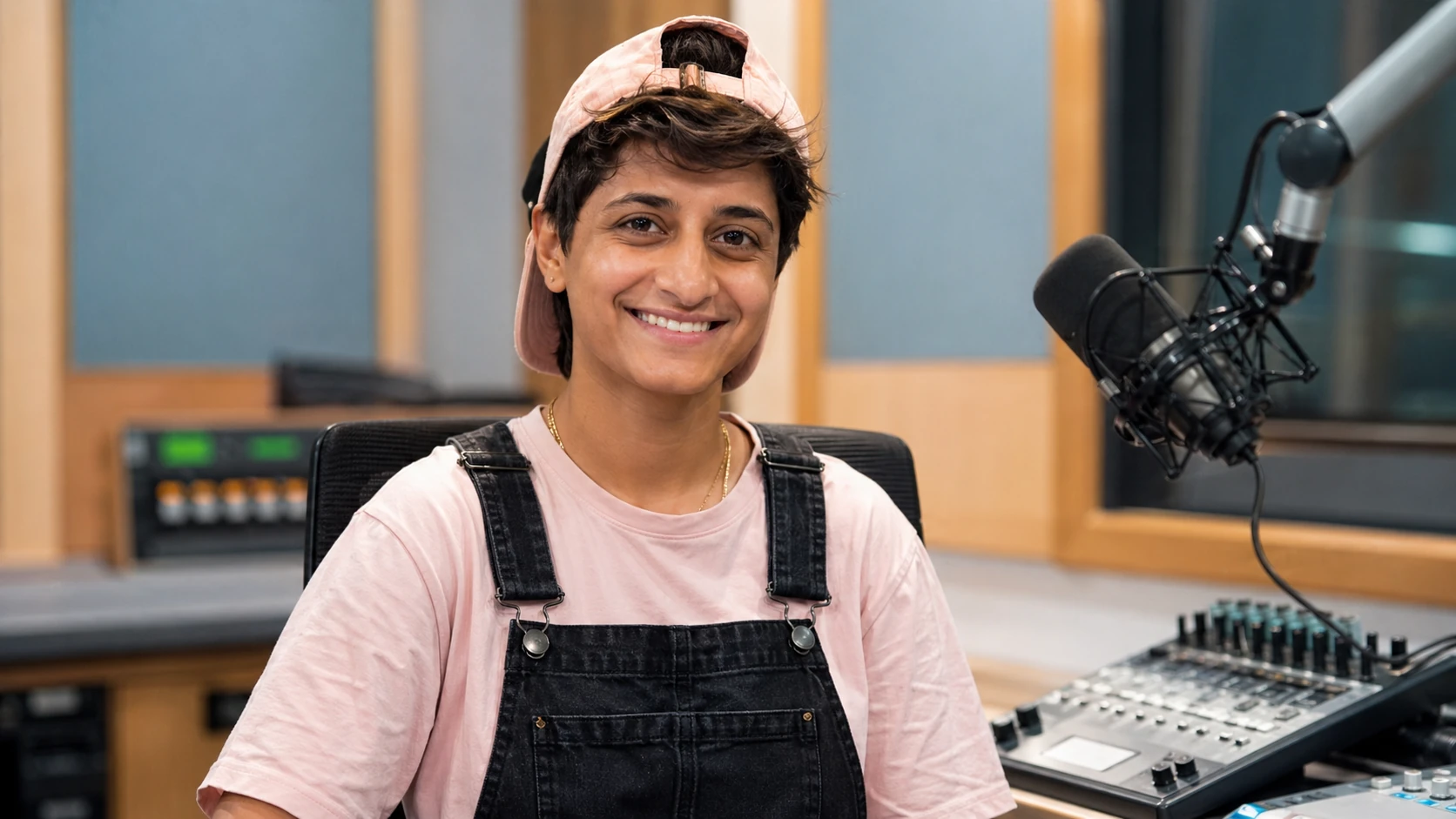
Shivani Dave’s public life is built around a rare combination of science, radio, queer history and live political debate. They are known to many listeners as a warm radio presenter, to podcast audiences as one of the voices behind LGBTQ+ archive storytelling, and to television viewers as a commentator willing to speak plainly about identity, rights and public life. Dave uses they/them pronouns and has become part of a generation of British media figures whose work crosses old broadcast institutions and newer digital spaces. Their story is not one of overnight fame, but of a steady career shaped by curiosity, visibility and the discipline of explaining complicated subjects clearly.
Early Life and Family Background
Publicly available information about Shivani Dave’s early family life is limited, and responsible biography should not pretend otherwise. Dave has spoken and written about being South Asian and queer, and that part of their identity has shaped the way they discuss representation, belonging and media visibility. They have also reflected on growing up without seeing many people from their ethnic background represented openly in LGBTQ+ public life. Those comments give readers a meaningful sense of context without turning private family details into speculation.
Dave’s exact date of birth, parents’ names, siblings and childhood hometown have not been widely confirmed in reliable public records. Their own public materials describe them as part of Gen Z, but that does not provide a precise age. This matters because many celebrity-style biography pages fill those gaps with guesses, especially around age, family and money. A careful account of Dave’s life should stay with what is known and be honest about what remains private.
What can be said with confidence is that Dave grew up with strong academic interests, especially in science. Their later education in physics suggests an early comfort with analytical thinking, problem solving and curiosity about how the world works. That scientific grounding did not disappear when they moved toward media. Instead, it became one of the threads that runs through their journalism and broadcasting.
Education and First Ambitions
Dave studied physics at the University of Nottingham, a choice that placed them far from the usual path into entertainment or political commentary. Physics is a demanding subject, and Dave has described the value of learning how to break down information, read data and think through problems carefully. Those habits would later become useful in journalism, where clarity matters as much as confidence. The skill is not only knowing facts, but knowing how to explain them without losing the listener.
During university, Dave became interested in radio and storytelling. Student media often gives future broadcasters their first real test: speaking live, editing audio, finding an angle and learning what keeps an audience listening. For Dave, that experience helped point toward a career that could combine science, communication and public service. The direction was not a rejection of physics, but a different way of using it.
After Nottingham, Dave completed a master’s degree in Science Media Production at Imperial College London. That move helps explain their later career better than any single job title does. They were not simply becoming a presenter; they were learning how specialist knowledge becomes public knowledge. It is a useful background for someone who would later work across science podcasts, news, LGBTQ+ reporting and political discussion.
The Move Into Broadcasting
Dave’s early professional media work included time at the BBC, including the BBC World Service. That kind of environment gives young journalists an education in pace, accuracy and production standards. It also teaches the difference between having a good voice and being a broadcaster: a broadcaster has to listen, respond, structure information and stay calm when the clock is moving. Dave’s later ease across formats reflects that training.
Their BBC work expanded into radio, digital content and science-related programming. They presented and produced across different parts of the organisation, building the kind of varied experience that rarely fits neatly into one public label. Some audiences may have first heard Dave in science content, while others encountered them through local radio, youth-facing audio, or later LGBTQ+ programming. That range is one reason their career resists a narrow description.
The BBC period also gave Dave a platform during an important personal and public moment. In August 2020, during a BBC Radio Wiltshire Pride special, Dave came out publicly as non-binary. The broadcast took place during a year when many Pride events had been cancelled or changed because of the pandemic. In that context, a radio Pride special became more than a replacement event; it became a space where identity, community and public voice met in real time.
Coming Out Publicly as Non-Binary
Dave’s public coming-out moment is one of the most widely reported parts of their biography. During the 2020 BBC Radio Wiltshire Pride special, they explained that being non-binary meant they did not identify as a man or a woman. They had already been publicly known as bisexual, but speaking about being non-binary on air added another layer to how audiences understood them. It was a personal disclosure made inside a professional broadcast, which is never a simple thing.
The moment mattered because non-binary people have often been discussed in media more than they have been allowed to speak for themselves. Dave’s on-air explanation gave listeners a direct, human account rather than a debate format built around someone else’s interpretation. For some listeners, it may have been their first time hearing a broadcaster describe non-binary identity calmly and clearly. For others, it was a rare moment of recognition.
That said, Dave’s identity should not be treated as the whole story. Their public profile includes advocacy and representation, but it also includes reporting, presenting, production, science communication and archive-based storytelling. Reducing them to identity alone misses the professional body of work behind their visibility. The fuller picture is of a broadcaster whose personal truth and professional craft developed together.
Work After the BBC
Dave left the BBC in 2021 and continued building a freelance and multi-platform media career. Their post-BBC work has included audio projects with The Guardian, Virgin Radio, Mermaids, Pride-focused programming and independent podcast production. That path reflects a broader shift in media, where skilled presenters often move between institutions rather than staying tied to one network. It also gave Dave room to work more directly on LGBTQ+ stories and science-led communication.
One of their major credits is The Guardian’s Science Weekly, a podcast that takes scientific questions and makes them accessible to a wider audience. Dave’s physics background made them a natural fit for this kind of work. Science journalism requires more than enthusiasm; it demands care with evidence, a sense of proportion and the ability to translate without distorting. Dave’s education gave them a useful foundation for that task.
Their radio work also expanded through Virgin Radio and Virgin Radio Pride. These platforms allowed Dave to bring personality, music, conversation and community into the same space. Pride radio, at its best, is not only about celebration; it is also about giving LGBTQ+ listeners voices that sound familiar and stories that feel close to real life. Dave’s presence in that space helped strengthen their reputation as both presenter and community-facing broadcaster.
The Log Books and LGBTQ+ History
One of the most meaningful projects in Dave’s career is The Log Books, the award-winning podcast based on the archives of Switchboard, the LGBTQ+ helpline founded in 1974. Dave co-produced the first three seasons, helping bring decades of handwritten call logs into the present through audio storytelling. The project is powerful because it treats queer history not as an abstract subject, but as a record of real people asking for help, connection and understanding. It is history told through fragments of ordinary need.
The Log Books covers themes such as coming out, loneliness, family rejection, public health, friendship, desire and survival. Those themes could easily become heavy in the wrong hands, but the podcast’s strength lies in its careful human scale. It shows how helpline volunteers became witnesses to private moments that later formed part of a public archive. Dave’s role in the project places them within a serious tradition of LGBTQ+ memory work.
The podcast also broadened Dave’s profile beyond live presenting. It showed that they could work with archival material, emotional testimony and long-form audio structure. That kind of production requires patience and judgment, especially when dealing with sensitive personal histories. For readers trying to understand why Dave matters, The Log Books is one of the clearest answers.
Virgin Radio, Pride Vibes and Public Presence
Dave’s later work with Virgin Radio Chilled, Virgin Radio Pride and Pride Vibes brought them to audiences looking for music, company and LGBTQ+ conversation. Radio remains an intimate medium because it enters people’s daily routines without demanding full attention. A presenter becomes part of the morning, the commute, the kitchen, or the quiet hour after work. Dave’s style fits that medium because they can move between warmth and seriousness without sounding forced.
Pride Vibes, including its Irish radio presence, has been another important platform. Dave has been identified as one of the station’s presenters and became part of its public-facing launch and programming identity. The station’s purpose is rooted in LGBTQ+ visibility, but its value also comes from everyday broadcasting. Representation becomes stronger when it is not reserved only for crisis or debate.
Dave’s public persona has also grown through television commentary and online video. They have appeared on programmes including Good Morning Britain, Sky News, BBC channels and TalkTV. These appearances often place them in conversations about politics, gender, equality and media culture. The format can be difficult, especially when the subject is personal as well as political, but Dave has become known for staying direct under pressure.
Public Debate and Media Scrutiny
Dave’s appearances in debates about gender and trans rights have made them more widely visible, especially through clips shared online. One widely discussed moment came during a TalkTV appearance in 2024, when host Julia Hartley-Brewer introduced Dave with the wrong pronouns and Dave corrected her on air. The exchange became part of a larger public conversation about pronouns, respect and the way broadcasters handle guests whose identities are themselves part of the discussion. It also showed how quickly a short clip can shape public perception.
These moments can be clarifying, but they can also flatten a person. A viewer who meets Dave only through a tense television exchange may miss their work in science media, audio production, radio and queer history. The modern media cycle often rewards conflict because conflict travels quickly. Dave’s career, though, is broader and more considered than the viral moments suggest.
The scrutiny around Dave also reflects the wider British media climate. Discussions of trans rights, non-binary identity and equality law have become highly charged, especially on television panels. Guests from marginalised communities are often asked not only to offer analysis, but to defend their own existence or language. Dave’s public role has therefore required both professional competence and emotional steadiness.
Writing, Advocacy and South Asian Queer Representation
Dave has written and spoken about the need for more South Asian queer stories in public life. That part of their work is especially important because LGBTQ+ representation is often treated as if it were culturally uniform. The truth is that people experience queerness through family, language, religion, migration, race, class and community expectations. Dave’s reflections have helped bring some of those intersecting experiences into public conversation.
Their advocacy is not separate from their journalism, but it should not be mistaken for a lack of professionalism. Many respected journalists build authority from lived knowledge as well as reporting skill, especially on beats involving identity, health, rights or social policy. Dave’s work shows how personal experience can sharpen public communication when it is handled with care. They speak from a position that combines lived context with media training.
For South Asian LGBTQ+ listeners and viewers, Dave’s visibility has particular weight. Seeing someone who shares parts of your background speak openly on national platforms can shift what feels possible. It does not solve the deeper problems of exclusion or family pressure, but it can break the silence around them. That is one reason Dave’s career has cultural meaning beyond their individual credits.
Awards, Recognition and Industry Standing
Dave has received recognition from radio, podcast and LGBTQ+ platforms. They have been listed in the Radio Academy’s 30 Under 30, a programme that highlights emerging talent across UK radio and audio. That recognition matters because it comes from within the industry, where craft, promise and professional reputation carry weight. It signals that Dave is not only visible, but regarded as a serious media worker.
They have also been recognised in LGBTQ+ awards and honours lists, including Attitude-related recognition and British LGBT Awards listings. In 2025, Dave was listed among Top 10 LGBTQ+ Public Figure nominees at the British LGBT Awards. The category was won by Alex Scott, so the accurate description is that Dave was shortlisted rather than named the winner. That distinction is small but important in a fact-checked biography.
The Log Books also brought award attention through the podcast world. Its recognition at the British Podcast Awards helped mark it as one of the standout LGBTQ+ audio projects of its period. Dave’s contribution to that project adds depth to their public standing. Awards are not the whole measure of a career, but in Dave’s case they help confirm the breadth of their work.
Personal Life, Relationships and Privacy
There is no reliable public record confirming Shivani Dave’s marriage, spouse, children or long-term partner. Some readers search for those details because biography pages often treat relationship status as required information. But public figures are not required to make private relationships part of their professional identity. In Dave’s case, the responsible answer is that their family and romantic life appear to be largely private.
Dave has shared meaningful information about identity, including being queer, bisexual and non-binary. They have also spoken about the importance of representation for South Asian LGBTQ+ people. Those disclosures are public because Dave chose to make them part of their voice and work. That does not mean every private detail should be treated as available.
This boundary is especially important for LGBTQ+ public figures. The public may feel curious, but curiosity does not create a right to unconfirmed personal information. A respectful biography can acknowledge what Dave has shared while leaving space for what they have not. That approach gives readers clarity without crossing into gossip.
Money, Income Sources and Net Worth
There is no credible public estimate of Shivani Dave’s net worth. Any website that gives a precise figure without transparent sourcing should be treated with caution. Dave’s income likely comes from the normal mix available to freelance and multi-platform media workers: presenting, producing, podcast work, writing, public appearances, commentary and related creative projects. But the exact amounts are not publicly confirmed.
This is a common issue with broadcasters who are known but not conventional celebrities. Their work may be visible across well-known platforms, but their contracts, freelance fees and production agreements are usually private. Public salary records are not available for most of Dave’s current work. Estimating wealth from visibility alone would be misleading.
What can be said is that Dave has built a diverse professional base. Radio presenting, podcast production, TV commentary and digital journalism create several possible income streams. That diversity can make a media career more resilient, especially in an industry where long-term staff roles are less common than they once were. Still, any exact net worth figure would be speculation unless Dave or a reliable financial source confirms it.
Public Image and Cultural Impact
Dave’s public image is shaped by three overlapping qualities: intelligence, openness and composure under pressure. Their science background gives them credibility as someone comfortable with evidence and explanation. Their LGBTQ+ work gives them a clear public purpose. Their media appearances show an ability to handle tense conversations without losing focus.
For supporters, Dave represents a newer kind of British broadcaster: queer, South Asian, non-binary, scientifically trained and fluent across radio, podcasts, television and social platforms. That combination challenges older ideas about who gets treated as authoritative in public conversation. It also broadens the range of voices available to listeners and viewers who rarely see themselves reflected in mainstream media. Representation, in this sense, is not symbolic decoration; it changes the room.
Critics sometimes frame Dave mainly through political disagreement, especially around gender identity and pronouns. That is part of the public record too, because Dave works in subjects that attract strong reactions. But disagreement should not erase the professional facts of their career. Dave’s work deserves to be measured by the full record, not by one contested clip or one culture-war argument.
Where Shivani Dave Is Now
Dave remains active as a broadcaster, presenter and commentator. Their current public profile includes radio work, Pride-focused programming, media appearances and commentary on LGBTQ+ rights and public affairs. They continue to be associated with Virgin Radio Chilled, Virgin Radio Pride and Pride Vibes, along with appearances across broadcast outlets. Their career is still developing, which means any biography of them should be seen as a record of a moving public life rather than a closed story.
What stands out now is the range of Dave’s platform. They can appear in a music-led radio setting, discuss queer history through podcasting, comment on political television and communicate science to general audiences. Few presenters move across those spaces comfortably. Dave does, and that flexibility has become one of their defining professional strengths.
The next stage of Dave’s career will likely depend on how they choose to balance presenting, journalism, advocacy and longer-form storytelling. Their strongest work has often come when those areas overlap. They are at their best when explaining something that matters to people who may not feel represented in the usual media conversation. That is the through line from physics to Pride radio to The Log Books.
Frequently Asked Questions
Who is Shivani Dave?
Shivani Dave is a British journalist, broadcaster, presenter, producer and science communicator. They are known for work with the BBC, The Guardian, Virgin Radio, Virgin Radio Pride, Pride Vibes and The Log Books. Dave uses they/them pronouns and is publicly non-binary and queer.
What is Shivani Dave famous for?
Dave is best known for their broadcasting work, LGBTQ+ media presence and public commentary on gender, rights and representation. They also co-produced The Log Books, an award-winning podcast based on the archives of Switchboard, the LGBTQ+ helpline. For some viewers, Dave is also known through televised debates and viral clips involving pronouns and trans rights.
Is Shivani Dave non-binary?
Yes, Shivani Dave is publicly non-binary and uses they/them pronouns. They came out as non-binary during a BBC Radio Wiltshire Pride special in August 2020. Since then, their pronouns and identity have been part of their public profile and media work.
What did Shivani Dave study?
Dave studied physics at the University of Nottingham and later completed a master’s degree in Science Media Production at Imperial College London. Their education helped shape their path into science communication, journalism and broadcasting. They have spoken about how physics helped them develop useful skills in analysis and clear thinking.
Is Shivani Dave married?
There is no reliable public information confirming that Shivani Dave is married. Their romantic life, spouse or partner status has not been clearly established in trusted public sources. A careful biography should not invent those details or treat rumor as fact.
What is Shivani Dave’s net worth?
Shivani Dave’s net worth is not publicly confirmed. Their income likely comes from presenting, producing, writing, podcasting, commentary and related media work, but exact figures are private. Any precise online estimate should be treated cautiously unless it comes from a reliable source with clear evidence.
What is Shivani Dave doing now?
Dave continues to work as a broadcaster, presenter and commentator. Their public work remains connected to radio, LGBTQ+ media, science communication and political discussion. They are still an active media figure rather than someone whose career belongs only to a past period.
Conclusion
Shivani Dave’s biography is not a simple celebrity story built around fame, scandal or inherited status. It is the story of a skilled communicator who moved from physics into media and found a public voice across radio, podcasts, science journalism and LGBTQ+ broadcasting. Their career shows how intellectual curiosity and personal honesty can exist in the same public life.
What makes Dave significant is not only that they are visible, but that they have used visibility with purpose. They have helped tell queer history, made space for South Asian LGBTQ+ experience, explained science to wider audiences and entered difficult public debates with clarity. That range gives their work a lasting value beyond the media cycle.
There is still much about Dave’s private life that remains private, and that should be respected. The public record already offers enough to understand why they matter. Shivani Dave stands as a broadcaster of the present moment: careful with language, open about identity, rooted in evidence and willing to speak where silence would be easier.
