

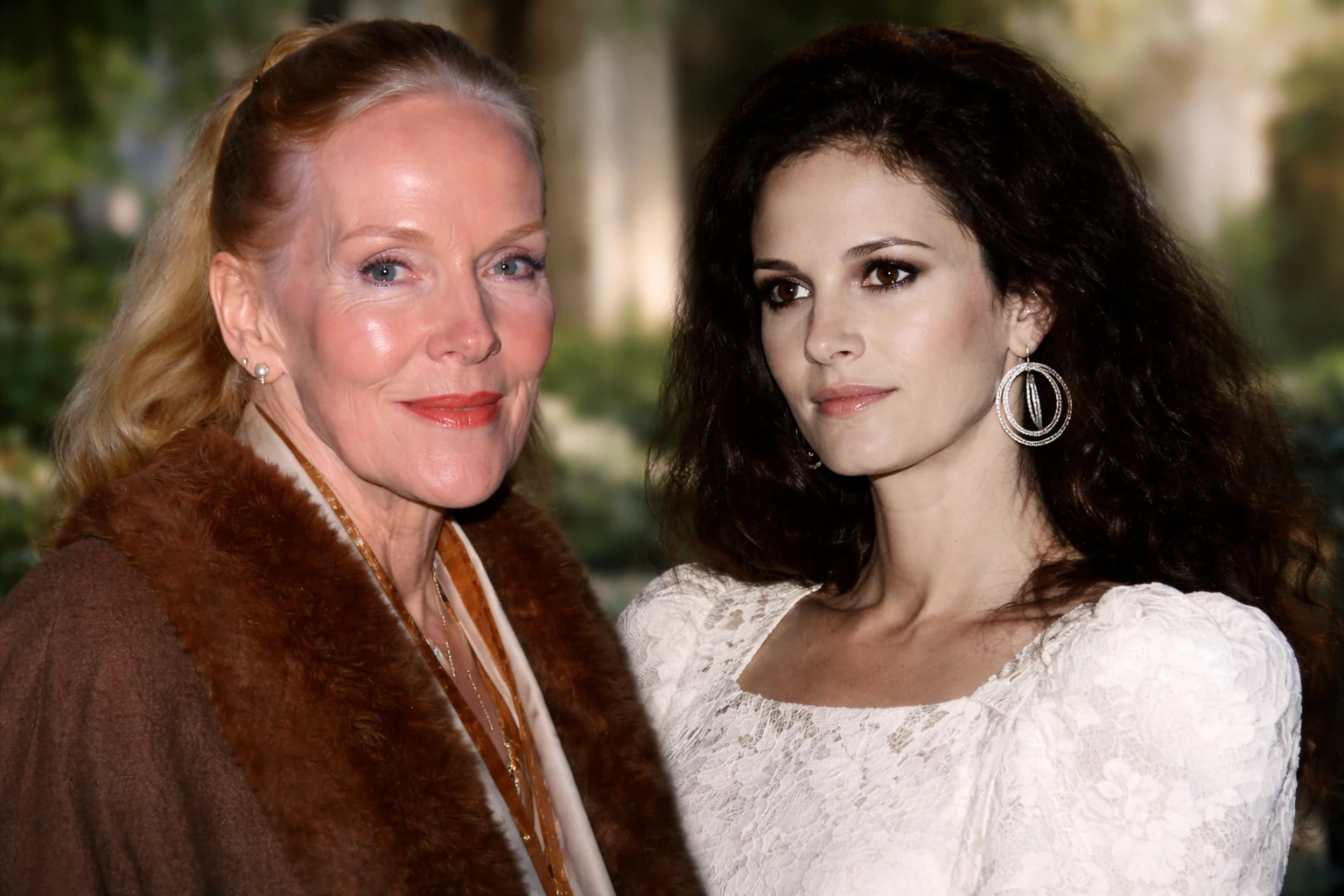
Charlene Gail Heffner entered public consciousness not through a career in entertainment, politics, or business, but through a deeply unusual and emotionally charged connection to one of America’s richest women. In 1988, when tobacco heiress Doris Duke adopted her as an adult, Heffner’s life shifted from near-total privacy into the glare of national attention. Within a few years, that relationship would collapse, leading to a high-profile inheritance dispute that raised lasting questions about wealth, influence, and the fragile boundaries of family.
For many readers, her name surfaces decades later with a simple question: who was Charlene Gail Heffner, and what really happened between her and Doris Duke? The answers are both clearer and more complicated than the internet often suggests. Her story is anchored in a handful of well-documented events, surrounded by a haze of rumor, speculation, and retelling. To understand her, you have to follow the record carefully and accept where it stops.
Early Life and Background
Publicly verifiable details about Charlene Gail Heffner’s early life are limited, and that absence is an important part of her story. Before her association with Doris Duke, she lived outside the national spotlight, and contemporary reporting did not dwell heavily on her upbringing. Many modern online biographies attempt to fill in these gaps with specific claims about her birthplace, education, and family, but those details often lack strong sourcing.
What can be said with confidence is that Heffner was an adult woman living an ordinary life before entering Duke’s orbit. She was not a public figure, nor was she known for any widely documented professional career that would have drawn media attention on its own. This context matters because it explains the dramatic shift that occurred once she became associated with Duke.
The transition from anonymity to public scrutiny happened quickly. Unlike celebrities who build public identities over time, Heffner’s visibility was sudden and tied almost entirely to her relationship with one person. That dynamic would shape how she was portrayed in the press and how she is remembered today.
Meeting Doris Duke
Doris Duke was already a figure of fascination long before Charlene Gail Heffner entered her life. Born in 1912, Duke inherited a vast fortune from her father, tobacco magnate James Buchanan Duke, and spent decades in the public eye. She was known for her philanthropy, her global travels, and her unconventional personal choices.
By the late 1980s, Duke was in her mid-70s and increasingly isolated. Reports from the time describe her as deeply interested in spiritual ideas, including beliefs that some around her found unusual or difficult to interpret. It was in this context that she met Charlene Gail Heffner.
Accounts differ on the exact nature of their first connection, but the relationship developed rapidly. What stands out in every serious retelling is the intensity of Duke’s attachment. She came to believe that Heffner had a profound personal significance, sometimes described in connection to Duke’s deceased infant daughter, Arden. While the specifics of that belief remain difficult to verify, its emotional impact is clear in what followed.
The Unusual Adoption
In 1988, Doris Duke made the extraordinary decision to adopt Charlene Gail Heffner as her legal daughter. Adult adoption is permitted in some jurisdictions, but it remains rare, especially when it involves individuals with such a large disparity in age and wealth.
The adoption transformed Heffner’s legal and symbolic status overnight. She was no longer simply a companion or confidante; she was now Duke’s daughter in the eyes of the law. For observers, the move raised immediate questions about inheritance, influence, and intent.
At the time, Duke’s fortune was widely estimated to be in the range of $1 billion or more. That figure alone ensured that any decision affecting her estate would be closely scrutinized. By adopting Heffner, Duke appeared to be establishing a clear line of succession, even if she never publicly framed it in those terms.
But here’s where it gets complicated. While the adoption suggested permanence, the relationship itself proved unstable. The legal bond did not guarantee emotional continuity, and the years that followed would show just how fragile that arrangement was.
Life Inside Duke’s World
For Charlene Gail Heffner, entering Doris Duke’s life meant stepping into an environment defined by wealth, control, and constant attention. Duke maintained multiple properties, employed a large staff, and lived within a structure where personal relationships often overlapped with financial and managerial roles.
Heffner’s position within that world was not always clearly defined. As Duke’s adopted daughter, she held a unique status, but that status existed alongside other figures who wielded influence in Duke’s household. Among them was Bernard Lafferty, Duke’s longtime butler, who would later become central to the estate controversy.
Reports from the period suggest that tensions developed within this environment. Relationships shifted, alliances formed and dissolved, and Duke’s own decisions appeared to change over time. For Heffner, navigating this space likely meant balancing personal connection with the pressures of a highly structured and closely watched household.
The truth is, much of what happened during these years remains filtered through the perspectives of those who later spoke about it. That makes it difficult to reconstruct a definitive narrative, but it also highlights the complexity of life inside such an extraordinary setting.
The Breakdown of the Relationship
By the early 1990s, the relationship between Doris Duke and Charlene Gail Heffner had deteriorated. The reasons for this breakdown have been widely debated, but no single explanation has been universally accepted.
Some accounts point to conflicts within Duke’s household, including the influence of people around her. Others suggest that Duke’s own views and decisions became less consistent over time. There are also suggestions that misunderstandings or disagreements between Duke and Heffner themselves played a role.
What is clear is that the closeness that led to the adoption did not endure. By the time of Duke’s final illness, Heffner was no longer in the position she had once occupied. This shift set the stage for what would become one of the most talked-about estate disputes of the decade.
The contrast between the adoption and the eventual estrangement is striking. A relationship that began with a dramatic declaration of family ended in separation and legal conflict, raising questions that would linger long after Duke’s death.
Doris Duke’s Death and the Will
Doris Duke died on October 28, 1993, at the age of 80. In the aftermath, attention quickly turned to her will and the distribution of her estate. Given her wealth and public profile, the details were expected to draw scrutiny, but the actual contents of the will surprised many observers.
Charlene Gail Heffner, despite having been legally adopted as Duke’s daughter, was not included as a primary beneficiary. Instead, significant authority and benefits were granted to Bernard Lafferty, whose role in Duke’s final years became a focal point of public debate.
The exclusion of Heffner from the will created immediate controversy. For many, it seemed inconsistent with the earlier adoption, prompting questions about what had changed and why. The situation was further complicated by concerns about Duke’s state of mind and the circumstances under which the will had been finalized.
This moment marked the transition of Heffner’s story from private drama to public legal battle. It also ensured that her name would remain tied to Duke’s legacy in a lasting way.
The Legal Battle and Settlement
Following Duke’s death, Charlene Gail Heffner challenged the estate, asserting claims that reflected both her legal status as an adopted daughter and her understanding of Duke’s intentions. The case drew significant media attention, not only because of the money involved but also because of the unusual personal history behind it.
The legal proceedings raised complex questions about promises, influence, and the validity of Duke’s final decisions. While the details of the arguments were technical, the underlying narrative was easy to grasp: a woman who had been publicly recognized as a daughter was now contesting her exclusion from a vast inheritance.
In 1995, the dispute was resolved through a settlement. Heffner agreed to accept $65 million, relinquishing her broader claims to the estate. The settlement ended the legal conflict, but it did not fully resolve the questions that had fueled it.
From a financial perspective, the settlement represented a significant sum. At the same time, it was only a fraction of Duke’s overall wealth. That contrast has often shaped how the outcome is interpreted, with some viewing it as a compromise and others as a reflection of the limits of Heffner’s position.
Public Image and Media Portrayal
Charlene Gail Heffner’s public image has always been shaped by the narrative of her relationship with Doris Duke. She has not maintained a visible media presence, and much of what is known about her comes from reporting tied to the estate dispute.
During the 1990s, coverage often framed her in contrasting ways. Some portrayals emphasized her role as an adopted daughter seeking recognition and fairness. Others cast her as a controversial figure within a story already filled with competing claims and perspectives.
This duality reflects the broader challenge of interpreting her story. Without extensive direct statements from Heffner herself, much of the narrative is constructed through the voices of others. That dynamic can make it difficult to separate perception from reality.
Over time, her profile has faded from mainstream coverage, but interest in her story persists. The combination of wealth, mystery, and unresolved questions continues to draw attention, especially as new generations encounter the story for the first time.
Financial Outcome and Net Worth
Any discussion of Charlene Gail Heffner inevitably turns to the financial outcome of the estate dispute. The $65 million settlement she received in 1995 is the most concrete figure associated with her.
Estimating her current net worth is more difficult. Public records do not provide a clear, up-to-date accounting of her financial situation, and many online estimates are speculative. The settlement itself, while substantial, does not automatically translate into a specific long-term net worth without information about investments, spending, or other financial decisions.
What can be said is that the settlement placed Heffner in a position of significant financial security by most standards. At the same time, it did not grant her control over the broader Duke estate, which remained under different management.
This distinction is important because it underscores the difference between receiving a large sum and inheriting a fortune of historic scale. The gap between those two outcomes is central to understanding the case.
Private Life and Where She Is Now
One of the most persistent questions about Charlene Gail Heffner is what happened to her after the settlement. The answer, based on reliable reporting, is that she largely withdrew from public view.
There is no strong, consistent body of recent reporting that details her current activities, residence, or personal life. While various websites offer claims about her later years, these accounts often lack verifiable sources and should be approached with caution.
This relative silence is not unusual for someone whose public profile was tied to a specific event rather than an ongoing career. Once the legal dispute ended, there was little reason for continued media attention, and Heffner appears to have returned to a more private existence.
What’s striking is how sharply the public narrative ends. For a figure once at the center of a national story, the lack of confirmed recent information highlights the limits of public knowledge and the persistence of unanswered questions.
Legacy and Cultural Interest
Charlene Gail Heffner’s place in public memory is closely tied to the broader story of Doris Duke. She is remembered less as an individual celebrity and more as a key figure in a narrative about wealth, family, and legal conflict.
That said, her story continues to resonate because it touches on themes that remain relevant. Questions about inheritance, influence, and the meaning of family are not limited to the ultra-wealthy, even if the scale of the Duke estate makes the story more dramatic.
The case also serves as a reminder of how quickly personal relationships can become public controversies when significant assets are involved. In that sense, Heffner’s experience reflects a larger pattern rather than a one-of-a-kind anomaly.
Not many people know this, but adult adoption cases tied to wealth have appeared in other legal disputes as well. What sets this one apart is the scale, the personalities involved, and the lasting intrigue it continues to generate.
Frequently Asked Questions
Who is Charlene Gail Heffner?
Charlene Gail Heffner is best known as the woman adopted by American heiress Doris Duke in 1988. She later became involved in a legal dispute over Duke’s estate after Duke’s death in 1993, which brought her into public attention.
Is Charlene Gail Heffner the same as Chandi Heffner?
Yes, Charlene Gail Heffner is commonly referred to as Chandi Heffner in media coverage. The different names have contributed to confusion, but they refer to the same person.
Why did Doris Duke adopt her?
Doris Duke’s reasons for adopting Heffner are described as deeply personal. Some reports suggest Duke believed Heffner had a special connection to her deceased daughter, though the exact motivations remain uncertain and have been interpreted in different ways.
Did she inherit Doris Duke’s fortune?
She did not inherit the main estate. After challenging the will, she settled for $65 million in 1995, giving up broader claims to the fortune, which was estimated to be worth around $1 billion.
What is Charlene Gail Heffner’s net worth today?
There is no confirmed, up-to-date public figure for her net worth. The $65 million settlement is the most reliable financial reference point, but current estimates vary and are often speculative.
Where is Charlene Gail Heffner now?
Her current whereabouts and activities are not well documented in reliable public sources. After the estate dispute, she appears to have stepped away from public life.
Conclusion
Charlene Gail Heffner’s story is unusual not because it fits a familiar pattern, but because it resists one. She did not seek fame, build a public career, or remain in the spotlight after her moment of visibility. Instead, her life intersected with one of the most closely watched fortunes in America, and that intersection defined how the world came to know her.
The arc of her story is shaped by contrast. A private individual became a legal daughter to a billionaire, then found herself excluded from that same fortune and drawn into a public dispute. The shift from intimacy to conflict gives the story its lasting emotional weight.
What remains today is a narrative built from a mix of confirmed events and unanswered questions. The adoption, the estrangement, and the settlement are clear. The deeper motivations and personal experiences behind them are less so, and may never be fully understood.
For readers, that uncertainty is part of what keeps the story alive. Charlene Gail Heffner stands as a reminder that even in the most documented lives, there are limits to what can be known, and that sometimes the most compelling stories are the ones that leave space for doubt.
